
Nanjing: China’s Haunted, Beautiful Former Capital
Nanjing (南京, Nán Jīng — “Southern Capital”) carries more historical weight per square kilometer than almost any city in China. Capital of the Ming dynasty (1368-1421), seat of the Republic of China government (1912-1949), site of one of the 20th century’s worst atrocities (the Nanjing Massacre of 1937-38), and now the prosperous capital of Jiangsu province — Nanjing has lived many lives, and all of them are visible if you know where to look.
Travelers who expect a straightforward tourist destination may be surprised. Nanjing demands engagement — with its complexity, its sorrow, its pride, and its extraordinary beauty. The city rewards thoughtful visitors.
Understanding Nanjing’s History
Ming Dynasty Capital (1368-1421)
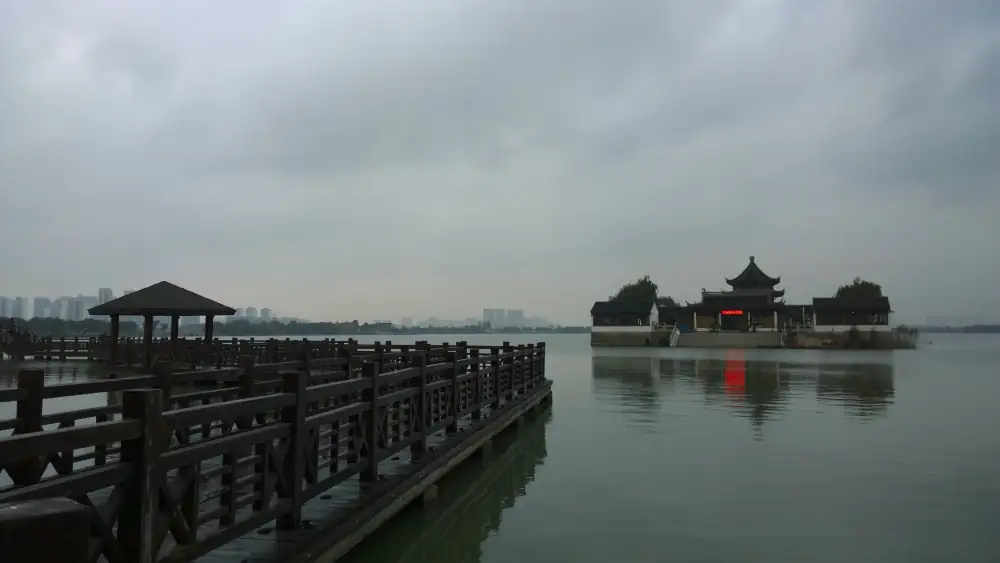
The Ming dynasty (1368-1644) established its capital at Nanjing, and the city was built at enormous scale. The Ming city walls — still largely intact — were the longest city walls in the world at the time of construction, stretching over 35 km around the old city. The Ming Tombs of Xiaoling Mausoleum remain one of China’s most important imperial burial sites.
Emperor Yongle moved the capital north to Beijing in 1421, but Nanjing retained “southern capital” status and remained an important imperial city throughout the Ming and Qing dynasties.
The Taiping Heavenly Kingdom (1853-1864)
An extraordinary and tragic episode: the Taiping Heavenly Kingdom, a syncretic Christian millenarian movement led by Hong Xiuquan, occupied Nanjing for 11 years and declared it the “Heavenly Capital” of their alternative China. The Taiping Rebellion resulted in an estimated 20-30 million deaths and vast destruction. The Taiping History Museum in Nanjing addresses this period.
Republic of China (1912-1949)
Nanjing served as the capital of the Republic of China government under Sun Yat-sen and later Chiang Kai-shek. Many of the Republic-era buildings (Western-influenced, grand, government-scale) are still standing and in use. The Presidential Palace (总统府) is the best-preserved example.
The Nanjing Massacre (1937-38)
When Imperial Japanese forces captured Nanjing in December 1937, a six-week period of mass killing, rape, and looting followed. Casualty estimates range from 100,000 to 300,000 Chinese civilians and soldiers. The Nanjing Massacre Memorial Hall (侵华日军南京大屠杀遇难同胞纪念馆) addresses this history in detail and with great solemnity. Every visitor to Nanjing should include this memorial; it is one of the most important historical sites in Asia.
Getting to Nanjing
By High-Speed Train: Nanjing is a major hub on China’s high-speed rail network.
- From Shanghai: approximately 1 hour (G-class trains, frequent service)
- From Beijing: approximately 3.5-4 hours (G-class trains)
- From Hangzhou: approximately 1.5 hours
- From Wuhan: approximately 2 hours
Nanjing South Station (南京南站) is the main high-speed rail station, connected to the city center by Metro Line 1 and 3. The journey to the city center takes 15-20 minutes.
Nanjing Station (南京站) handles older rail lines and some high-speed services; it’s closer to the historic center.
By Air: Nanjing Lukou International Airport (NKG) has direct international connections to Japan, Korea, Southeast Asia, and a few European cities. Domestic connections are extensive. The airport express train (S1 line) connects to the downtown metro network.
Major Attractions
Nanjing City Wall (南京城墙)
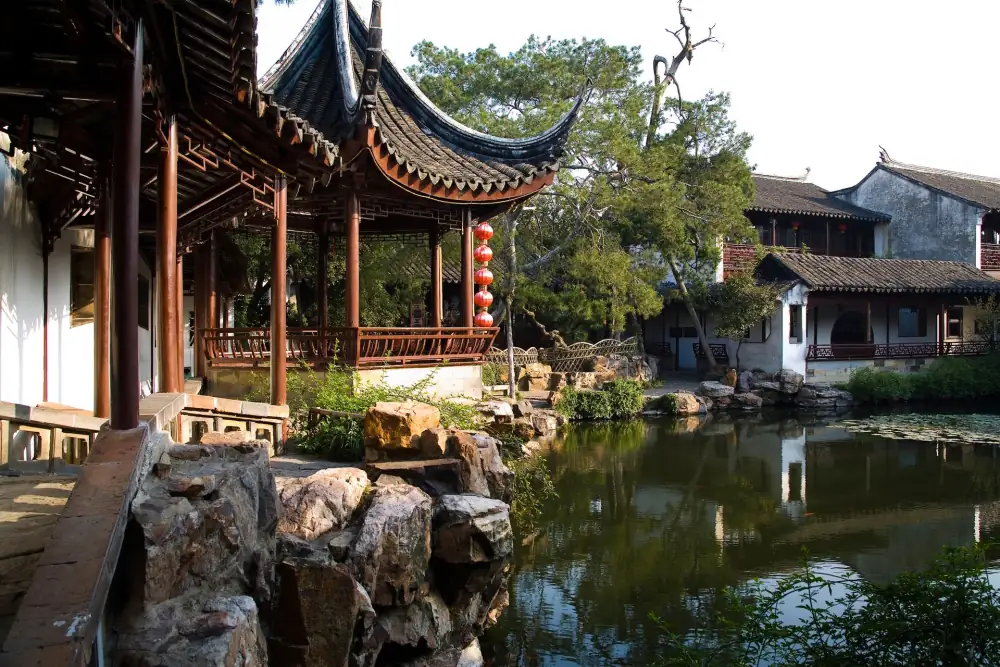
The Ming city walls are Nanjing’s most distinctive feature and one of the most impressive pieces of military architecture in China. Built between 1366 and 1393 using over 100 million specially fired bricks (each inscribed with the date and maker), the walls originally enclosed an area of about 43 square kilometers.
Today, approximately 25 km of the original 35 km wall survives. Visitors can walk along the top of the wall at several access points; the most popular are Zhonghua Gate and the section near Xuanwu Lake.
Zhonghua Gate (中华门): The largest surviving gate tower in China, with an extraordinary defensive system of concealed rooms and tunnels within the gatehouse structure. Archaeological excavations have revealed multiple soldier-concealment chambers. Entry: ¥50.
Walking the Wall: The best wall walk is the 6 km stretch between Zhonghua Gate and Jianning Road, passing through several access points. Rent electric bikes at the wall access points for a more leisurely experience.
Nanjing Massacre Memorial Hall (侵华日军南京大屠杀遇难同胞纪念馆)
This is not a comfortable visit, and it shouldn’t be. The memorial is built on an excavation site where 10,000 massacre victims are buried, and the museum uses historical photographs, survivor testimonies, and recovered artifacts to document the 1937-38 atrocity in detail.
Key exhibits:
- The “Ten Thousand Man Pit” excavation site with skeletal remains visible
- Detailed photographic documentation of the massacre (some images are very graphic)
- Documentation of Japanese military commanders’ responsibility
- International witnesses’ accounts (including Nazi German businessman John Rabe, who protected some Chinese civilians)
Practical considerations: Free admission (reservation required). Allow 2-3 hours. The emotional weight is substantial; many visitors find they need quiet time afterward.
Address: 418 Shuiximen Street, Jianye District. Metro Line 2, Yunlinjie Station.
Japanese visitors: The memorial receives Japanese visitors who often express personal sorrow and contrition. The presence of international visitors can add to the memorial’s weight.
Confucius Temple Area (夫子庙/Qinhuai River)
The Confucius Temple area combines one of China’s best-preserved Confucian temple complexes with the scenic Qinhuai River (秦淮河) and a lively heritage commercial street.
Confucius Temple (夫子庙): Dedicated to Confucius, the complex includes the temple itself, an examination hall (贡院, where civil service exams were conducted), and several museums covering Nanjing’s academic history. Entry: ¥30.
Qinhuai River Cruise: Short boat trips on the river through the historic entertainment district are available from ¥45-80, depending on length. Evening cruises with red lantern illuminations are particularly atmospheric.
Qinhuai Food Street: The streets around the temple are dense with restaurants serving Nanjing’s distinctive street food. Must-try items: duck blood and vermicelli soup (鸭血粉丝汤), Nanjing salted duck (盐水鸭), and various fresh-fried pastries.
Ming Xiaoling Mausoleum (明孝陵)
The burial complex of Zhu Yuanzhang, the founding emperor of the Ming dynasty, is located in Purple Mountain (紫金山) and represents an extraordinary combination of imperial architecture and natural landscape.
The Sacred Way (神道): The approach to the mausoleum along the Sacred Way, flanked by massive stone animals (elephants, camels, lions, horses, mythological creatures) and human figures, is one of China’s most awe-inspiring ceremonial processions. The animals here are larger and more naturalistic than similar stone avenues at other imperial tombs.
The Tomb Mound: The actual burial mound has never been excavated (following a policy of protecting major imperial tombs for future archaeologists). It’s visible as a large wooded hill.
Entry: ¥70. Allow 2-3 hours.
Getting There: Metro Line 2 to Zhongshan Ling Station, then bus or taxi. A cable car operates within Purple Mountain scenic area.
Dr. Sun Yat-sen’s Mausoleum (中山陵)
Located on Purple Mountain near the Ming Tombs, this is the formal burial site of Sun Yat-sen (1866-1925), the “Father of the Nation” for both the People’s Republic of China and the Republic of China. The mausoleum, completed in 1929, is a masterwork of early 20th-century Chinese architectural nationalism — a grand staircase of 392 steps (representing the 392 million Chinese people at the time) leads to the main memorial hall.
Entry: The site is free (reservation required). The mountain cable car is separate.
Time needed: 1-2 hours for the mausoleum; longer if combining with Purple Mountain walks.
Presidential Palace (总统府)
The largest preserved compound of Republic-era architecture in China, this was the seat of the Republic of China government during the Nanjing decade (1927-1937) and briefly after World War II. The complex includes both the formal presidential offices and the Garden of the Two Gardens (煦园), a classical Qing dynasty garden.
Visitors can walk through the former offices, which have been preserved and partially furnished to reflect the Republican period. The combination of Chinese and Western architectural elements is characteristic of early 20th-century Chinese official buildings.
Entry: ¥40. Allow 1.5-2 hours.
Getting There: Metro Line 3/4, Daxinggong Station.
Nanjing’s Food Culture
Salted Duck (盐水鸭)
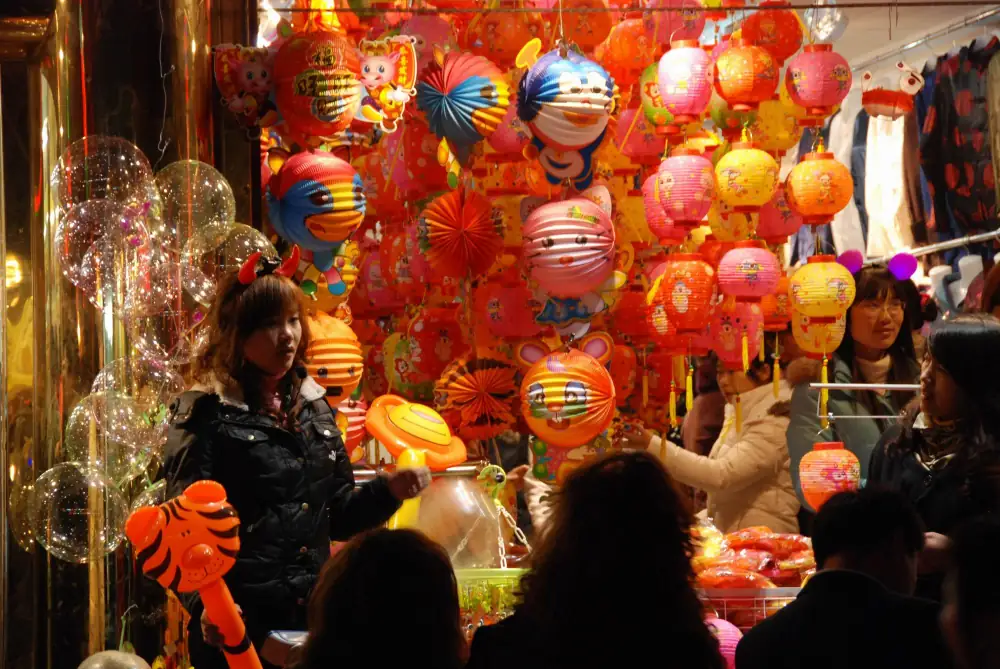
Nanjing’s most famous food is its salted duck (盐水鸭), which appears in a different form than Peking duck. Nanjing’s version is cured (not roasted), with a pale skin and extraordinarily tender meat seasoned with anise, cinnamon, and salt. The flavor is subtle and deeply satisfying. It’s sold everywhere in Nanjing, from specialty shops to night markets.
Duck Blood Vermicelli Soup (鸭血粉丝汤)
This soup — translucent rice vermicelli with cubed duck blood, duck liver, fried tofu, and duck offal in a clear, fragrant broth — is the city’s signature street food. Originally a dish of the urban poor using parts of ducks not sold in upmarket markets, it became one of Nanjing’s most beloved dishes and has now spread throughout China.
Look for it at any Qinhuai area noodle shop; the small street vendors around the Confucius Temple market district serve the best versions.
Other Nanjing Specialties
Tangbao (汤包): Nanjing’s soup dumplings are smaller than Shanghai’s xiaolongbao and use a slightly different filling. The Nanxiang-style versus Nanjing-style debate among dumpling enthusiasts is lively.
Yanshuiya (盐水鸭): Available pre-packaged at Nanjing train stations for the journey home — one of China’s approved food souvenirs.
Small Basket Buns (小笼包): Available at virtually every breakfast shop.
Nanjing Lake and Parks
Xuanwu Lake Park (玄武湖公园): One of the largest city parks in China, centered on a lake that was part of the Ming imperial parkland. The combination of lake, islands, weeping willows, and distant city wall views is genuinely lovely. Free admission to the main park; charges for island ferries.
Purple Mountain Scenic Area (紫金山): Encompasses the Ming Tombs, Sun Yat-sen Mausoleum, and significant natural forest. A full day of hiking connects all the major historical sites.
Practical Information
Weather: Nanjing is famous for its extreme summer heat — it’s one of China’s “Three Furnaces” cities (along with Chongqing and Wuhan). July and August temperatures regularly exceed 38°C with high humidity. Spring (March-May) and autumn (September-November) are ideal visiting times.
Getting Around: Nanjing Metro is extensive and covers all major attractions. Taxis and DiDi are widely available. The city is also good for cycling (flat terrain, dedicated bike lanes in many areas).
Language: Mandarin is the dominant language; Nanjinese dialect is a Mandarin variety and fairly mutually intelligible with standard Mandarin. English is limited outside major tourist sites and international hotels.
Accommodation: Abundant options from budget hostels (¥80-150/night in dorms) to luxury hotels (¥500-2000/night). The Qinhuai district area provides good access to historical sites.
Recommended Duration: 2-3 days minimum to cover the main historical attractions. 4-5 days for a thorough visit including Purple Mountain, the city wall walks, and day trips to nearby Yangzhou or Suzhou.
Nanjing asks more of its visitors than most Chinese cities. It offers something in return that’s rare: genuine historical depth, a complex national narrative honestly presented, and the beauty of a city that has survived enormous trauma to become something worth celebrating.