
Purple Mountain (紫金山, Zǐjīn Shān, also known as Zhongshan) rises 448 metres above eastern Nanjing, a forested promontory that has served as burial ground for emperors, revolutionary leaders, and dynasties. Today it’s a vast park complex where Nanjing residents come to hike and where tourists encounter some of the most significant historical sites in eastern China.
The name comes from the purple-gold colours the mountain reportedly glows at sunrise. Whether or not you catch the dawn light, the combination of mature forest, Buddhist architecture, Republican-era stone and marble, and Ming Dynasty grandeur makes Purple Mountain one of those places that merits a full day rather than the half-day most itineraries allow.
Table of contents
Open Table of contents
Sun Yat-sen Mausoleum (中山陵)
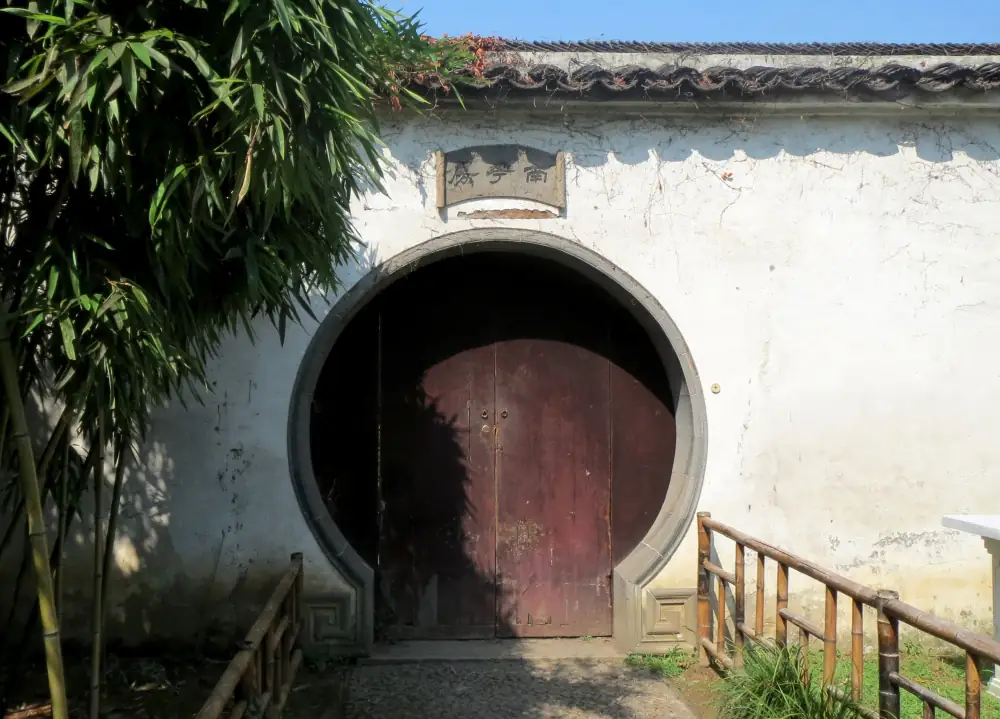
The mausoleum of Sun Yat-sen (中山陵, Zhōngshān Líng) is the dominant landmark of Purple Mountain and one of the most visited heritage sites in China. Sun Yat-sen (孙中山, 1866–1925) was the founder of the Republic of China and remains a rare figure revered across both mainland China and Taiwan.
The mausoleum is reached by climbing 392 steps — representing the 392 million Chinese people at the time of construction. The stairway is wide, flanked by pine trees, and offers progressively better views as you ascend. At the top, the blue-glazed tile roofs of the burial hall are visible.
The burial hall contains the seated marble statue of Sun Yat-sen and his sarcophagus in the chamber below. The scale and solemnity of the space is considerable.
Practical details:
Entry: ¥80 (includes the mausoleum and several other minor sites in the scenic area)
Hours: 6:30am–6:00pm
Time needed: 1–1.5 hours to climb, view, and descend
Crowds: Busy on weekends and holidays; early morning or late afternoon is quieter
Ming Xiaoling Mausoleum (明孝陵)
The Ming Xiaoling Mausoleum is the burial site of Zhu Yuanzhang, founder of the Ming Dynasty (reigned 1368–1398). It’s a UNESCO World Heritage Site and one of the finest examples of early Ming imperial architecture.
The Sacred Way (神道): The approach road lined with stone animals and officials is the most photogenic element. The 800-metre avenue has pairs of stone elephants, lions, camels, horses, and human figures standing alternately — a standard imperial tomb convention. The scale is impressive and the forest setting makes it particularly atmospheric.
The burial mound: The actual burial mound is a large earthen hill that has never been excavated. The underground palace remains undisturbed.
Entry: ¥70
Time needed: 1.5–2 hours for the main sites
Access: From the Sun Yat-sen Mausoleum area, about 1.5km walk through the scenic area
Linggu Scenic Area (灵谷寺)
The eastern section of Purple Mountain contains the Linggu Temple complex, the Wuliang Hall (a rare beamless hall built entirely without wooden beams in 1381), and the Linggu Pagoda (built in the 1930s as a memorial to those who died in the Northern Expedition).
The beamless hall (无梁殿) is architecturally extraordinary — a completely brick-vaulted structure that has survived 600 years without any timber structural members. The interior is dim and resonant.
Entry: Included in the ¥80 scenic area ticket, or ¥35 separately
Hiking the Mountain
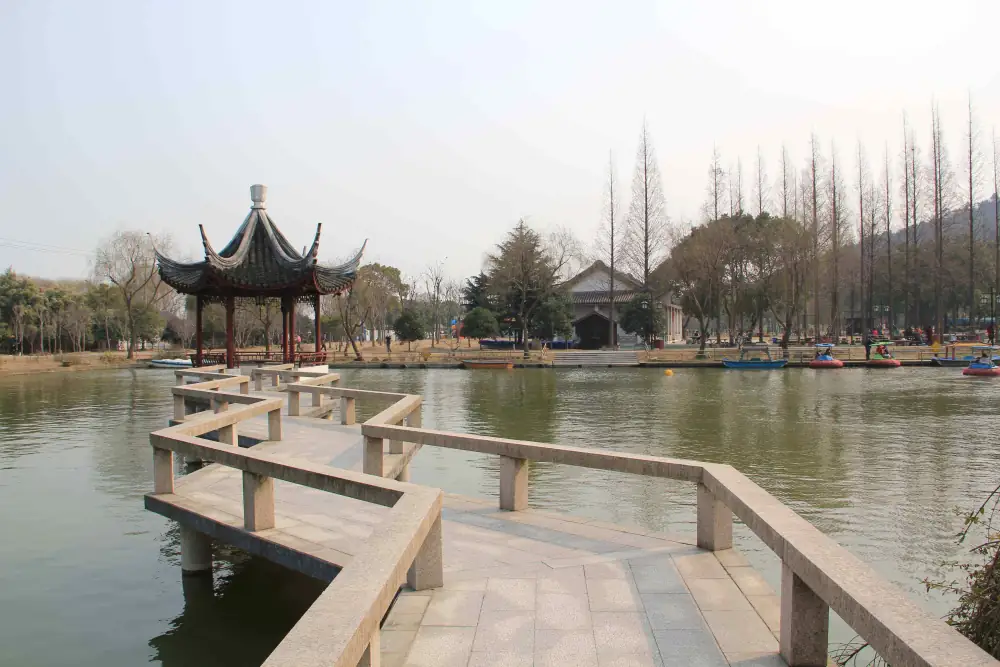
Several hiking trails criss-cross Purple Mountain through mature forest. The trails are well-marked and the forest provides welcome shade in summer.
Main summit path: Approximately 2 hours one-way from the Sun Yat-sen Mausoleum area to the summit (448m). The views from the top take in Nanjing, the Yangtze River, and on clear days, the surrounding Jiangsu plains.
Cable car: Operates from the Linggu area to near the summit, ¥60 one-way, ¥100 return.
Forest walking: The paths between the main sites can be walked through forest rather than along the paved tourist routes. Slower but considerably more pleasant.
Best season for hiking: Spring (March–May) for azalea flowers along the trails, or autumn (October–November) for foliage.
Observatory (紫金山天文台)
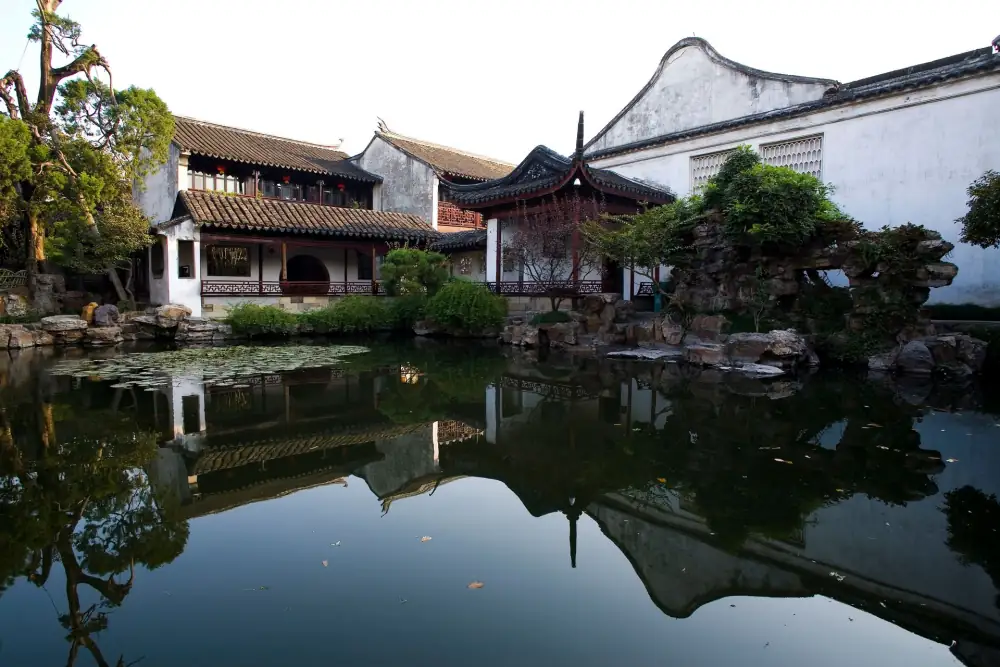
The Purple Mountain Observatory at the summit is one of China’s oldest, founded in 1934. There’s a small museum of historical astronomical instruments including Chinese armillary spheres and bronze globes. Occasionally open to visitors for star-gazing evenings — check the website for events.
Getting There & Around
The Purple Mountain Scenic Area is in eastern Nanjing, about 7km from the city centre.
Metro: Line 2 to Muxuyuan (苜蓿园) station, then it’s a 20-minute walk to the scenic area, or a short taxi/electric cart ride.
Bus: Routes 120 and 313 from the city centre.
Electric carts: Run within the scenic area connecting the main sites. ¥40 for a circuit ticket. Useful if you want to see multiple sites without significant walking.
Bike: You can rent a bike and cycle through the scenic area — a pleasant way to cover the distance between sites.
Practical Tips
- Full day budget: Combining the mausoleum, Ming tombs, and Linggu area with hiking takes a full day if you do it properly
- Wear comfortable shoes — even the tourist route involves several hundred steps
- Bring water — while there are stalls selling drinks, prices are elevated and the hike in summer requires more hydration than expected
- Cherry blossoms: The scenic area has significant cherry plantings; late March to early April brings colour, though the area fills with Chinese domestic tourists during this period
- Combination with other Nanjing sites: The Purple Mountain area is near the Nanjing Massacre Memorial Hall (about 8km by taxi), which many visitors combine into a Nanjing history day