
Table of contents
Open Table of contents
Top Attractions
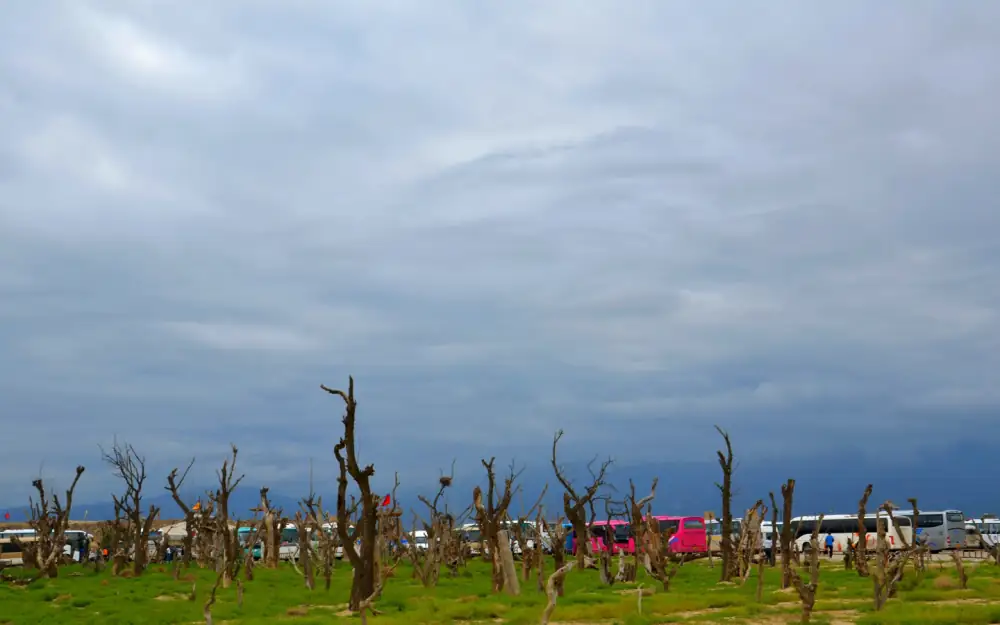
Western Xia Imperial Mausoleum (西夏王陵)
Located at the foot of the Helan Mountains, 35 km west of Yinchuan, the Western Xia Royal Mausoleum is often called “China’s Pyramids” — nine royal tombs and 253 associated burial sites spread across a desert plain against the dramatic backdrop of the mountain range. The above-ground tomb structures (earth mounds clad with fired tiles, now mostly eroded) resemble flat-topped towers in the desert landscape.
The associated museum is excellent and provides the clearest available narrative of Western Xia history in English. The artifacts — Western Xia Buddhist sculptures, ceramics and the extraordinary Western Xia characters — are remarkable.
Tickets: ¥75 ($10). Open daily 08:00–18:00 (17:00 in winter). Allow half a day. Transport: Bus from Yinchuan’s Nanguan Bus Station or taxi (¥80–¥120 one way, $11–$17).
Helan Mountain Rock Art (贺兰山岩画)
In the Helan Mountain pass just north of the Western Xia mausoleum area, one of China’s largest collections of prehistoric rock art covers the cliff faces. The petroglyphs date from approximately 3,000 BCE to 1,000 CE and depict animals, hunting scenes, human figures and abstract symbols — accumulated over 4,000 years of human presence in this valley.
Tickets: ¥60 ($8). Can be combined with the Western Xia mausoleum as a half-day visit.
Shapotou Desert Resort (沙坡头)
Where the Yellow River flows beneath the edge of the Tengger Desert, the Shapotou area offers one of China’s most visually striking landscape contrasts: the river’s brown water, lined with green reeds and trees, at the base of enormous golden sand dunes. Cable car and chairlift rides provide access to the dune tops.
Activities include camel riding, sand sliding, Yellow River sheepskin raft rides (羊皮筏子 — an ancient form of river transport using inflated sheep hides lashed together; still operated for tourists) and the highly instagrammable “desert post office” from which you can mail postcards.
Tickets: ¥120 ($17). Located near Zhongwei City, 150 km south of Yinchuan by high-speed rail (30 minutes; ¥35).
Twin Lakes of Shahu (沙湖景区) and Shengli Lake
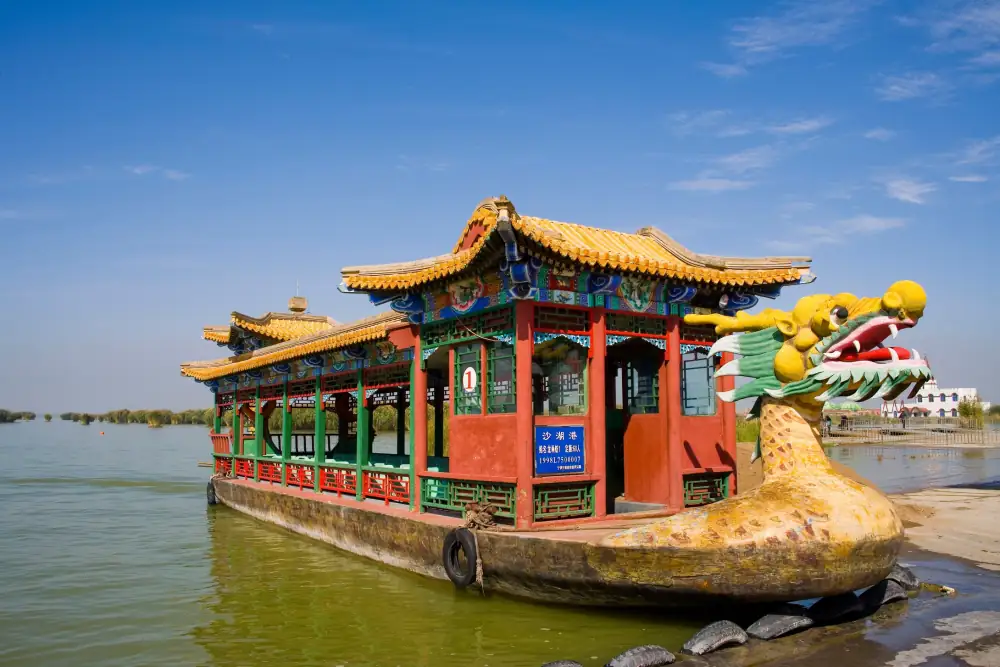
About 56 km north of Yinchuan, Shahu is a remarkable landscape where freshwater lake meets the Tengger Desert dunes directly — reeds, lotus flowers and migratory birds on one side; sand dunes on the other. Boat rides and bird watching are the main activities.
Tickets: ¥85 ($12). Best visited in summer for birds and lotus bloom.
The Hui Muslim Culture
Ningxia is the core of Chinese Hui Muslim identity — the Hui being Han Chinese-descended Muslims whose ancestors converted during the Tang and Song dynasties when Silk Road merchants settled in China. Unlike other Chinese Muslim minorities, the Hui speak Mandarin as their primary language but maintain distinct religious practices, dietary restrictions (halal food, no pork) and architectural traditions.
Yinchuan’s mosques and the surrounding towns reflect this distinctiveness. The most important mosque for visitors:
Nanguan Mosque (南关清真大寺): Central Yinchuan’s main congregational mosque, built in an Arabic-influenced style with large prayer halls and a distinctive minaret. Non-Muslim visitors are welcome outside prayer times. Free.
Tongxin Mosque (同心清真大寺): 130 km south of Yinchuan in Tongxin County, this Song-Ming period mosque is one of the oldest surviving examples of traditional Chinese-Islamic architectural fusion — a mosque that looks like a Chinese temple complex but is architecturally halal. An extraordinary example of cultural syncretism.
Ningxia Wine (贺兰山东麓葡萄酒)
The east slope of the Helan Mountains has emerged in the past 20 years as one of China’s most serious wine regions, producing red wines that have won international competitions and attracted attention from sommeliers globally. The desert climate (hot days, cold nights, low rainfall, alkaline soil) creates conditions that some winemakers compare to Bordeaux’s Médoc or Napa Valley’s eastern bench.
Wineries open to visitors:
- Chateau Changyu Moser XV (夏桐酒庄): The most accessible; guided tours ¥100 ($14) including tasting. Good English-speaking guides available.
- Helan Qingxue Estate (贺兰晴雪酒庄): The winery that won “Best Bordeaux Varietal from Outside Europe” at Decanter 2011, launching Ningxia’s international reputation. Tours available on weekdays; ¥80 ($11) with tasting.
- Silver Heights (银色高地): A boutique family estate making genuinely excellent wine; advance appointment required.
Wine tasting tours: Multiple travel agencies in Yinchuan offer half-day and full-day Helan Mountain winery routes for ¥300–¥500 per person ($42–$70) including transport.
Hui Muslim Food in Yinchuan
Yinchuan’s food is entirely halal and deeply flavourful, drawing on central Asian and Arabic spice traditions adapted to Chinese cooking techniques.
Must-eat:
- Hand-pulled mutton noodles (手抓羊肉面): The regional staple; mutton braised until tender, served on wide flat noodles with a rich broth
- Lamb rack (烤羊排): Cumin-rubbed and roasted; available at countless restaurants
- Hui-style fried rice (盖浇饭): Stir-fried with beef, tomato and egg; a humble everyday dish
- Ningxia wolfberry (枸杞): The Zhongning area produces the finest Chinese wolfberries; available dried, in tea, or in liquor everywhere in Yinchuan
- Steam cake (发糕): Steamed millet cake sold from street stalls; ¥2–¥3 per piece
Restaurant streets: The Gulou Pedestrian Street area in central Yinchuan has the best range.
Getting to Yinchuan
From Xi’an
High-speed rail (recommended): Xi’an North to Yinchuan, approximately 3.5–4 hours; tickets ¥180–¥260 ($25–$36). Good frequency.
From Lanzhou
High-speed rail: Lanzhou West to Yinchuan, approximately 2.5–3 hours; tickets ¥130–¥200 ($18–$28).
From Zhongwei (Shapotou)
High-speed rail: Yinchuan to Zhongwei South, approximately 30 minutes; tickets ¥35–¥55 ($5–$8). Easy day trip or overnight.
By Air
Yinchuan Hedong International Airport (INC) has direct flights from Beijing (1.5 hours), Shanghai (2 hours), Chengdu, Guangzhou, Xi’an and major regional cities.
Getting Around
Yinchuan is moderately sized; most sites within the city are accessible by DiDi or taxi. The Western Xia mausoleum, Helan Rock Art and winery districts require a half-day or full-day organised approach — most hotels can arrange tour packages.
City bus: Covers major routes; ¥1–¥2 per trip. Hard to navigate without Chinese reading ability. DiDi: Reliable and reasonably priced; most practical for independent visitors.
Where to Stay
Budget (¥120–¥220 / $17–$31): Guesthouses and chain hotels near the Yinchuan main station area. 7 Days Inn Yinchuan is clean and reliable.
Mid-range (¥280–¥500 / $39–$70): Shengda International Hotel (盛达国际大酒店) is centrally located with good facilities. Kempinski Hotel Yinchuan offers European-standard service.
Upscale (¥700+ / $98+): Kempinski and Wanda Realm Yinchuan are the premium options.
Winery boutique hotels: Two or three of the Helan Mountain wineries operate small guesthouses or boutique hotels within their vineyard properties — an atmospheric choice for wine enthusiasts. From ¥500–¥900/night ($70–$126).
Best Time to Visit
September–October: Grape harvest season at the wineries is the absolute best time — the landscape is beautiful, temperatures perfect (20–28°C) and tasting events are in full swing.
Spring (April–May): Helan Mountain wildflowers; rock art photography is excellent.
Summer (June–August): Hot and dry (30–38°C) but Shahu lake and the lotus bloom are at their peak. Evenings are comfortable.
Winter (November–March): Cold (-10 to 5°C); the Western Xia mausoleum in snow has its own stark drama. Very few tourists.
Practical Tips
- Halal food: Yinchuan is entirely halal (Muslim dietary law — no pork). If you eat pork-based dishes, be aware that standard Chinese pork dishes are simply not available here. The variety of available halal food is substantial — this is not a limitation.
- Modest dress near mosques: Cover shoulders and knees when visiting Nanguan Mosque and other Islamic sites.
- Language: Limited English outside major hotels. Translation apps essential for menus and street communication.
- Wine buying: Ningxia wines are significantly cheaper bought directly from wineries than through resellers. Chateau Changyu retail prices are ¥60–¥250/bottle ($8–$35).
Final Word
Yinchuan is one of China’s most coherent regional capital experiences for an independent traveller — compact, accessible, historically extraordinary (Western Xia mausoleum), culturally distinctive (Hui Muslim food and architecture) and unexpectedly excellent for wine tourism. Give it two or three days; it delivers more than its modest profile suggests.