
Ningxia Wine Country: China’s Most Surprising Bottle
When Western wine critics began noticing Chinese wine in the early 2010s, most assumed it would be a novelty — technically competent perhaps, but lacking the terroir depth that makes wine interesting. What they found instead was that one region — the eastern foot of the Helan Mountains (贺兰山) in Ningxia — was producing wines that could stand alongside mid-tier Bordeaux, and in exceptional years, something more interesting than that.
The Helan Mountain East Foot wine region (贺兰山东麓) now has more than 100 wineries, covers over 40,000 hectares, and has accumulated international awards that no one predicted 20 years ago. A visit to this region is, simultaneously, a wine tour, a landscape experience in one of China’s most arresting desert environments, and an encounter with the centuries-old Hui Muslim and Han Chinese farming culture of the Yellow River valley.
Why Ningxia Produces Good Wine
The Terroir
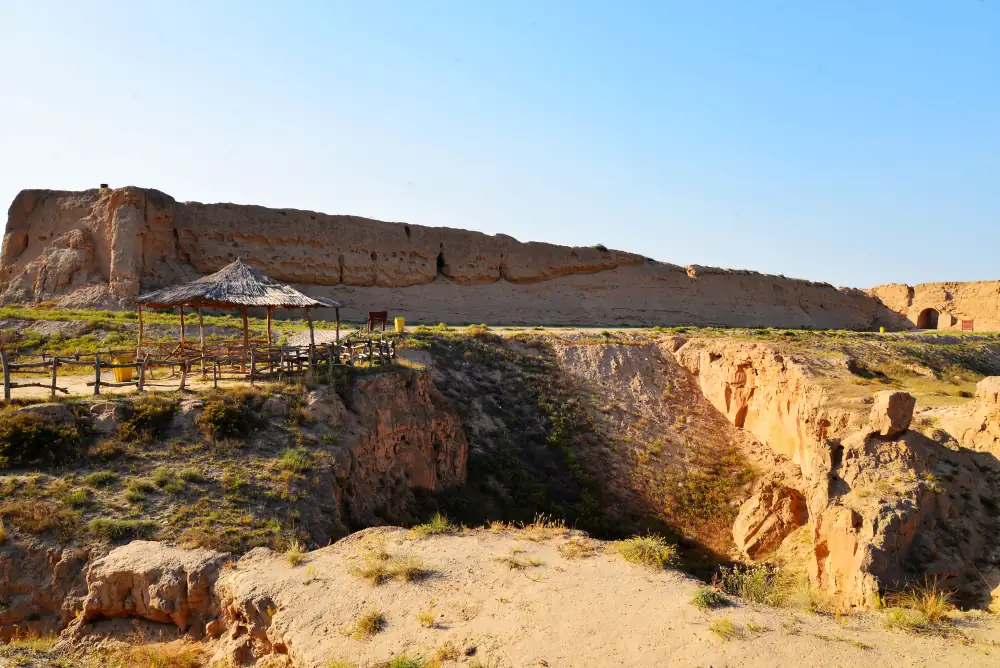
The grape-growing conditions on the Helan Mountain eastern slope are exceptional:
Altitude: 1,100–1,300 metres above sea level — cool nights even in summer, preserving grape acidity. Climate: Continental desert conditions — very hot days, very cold nights, extremely low rainfall (200 mm/year). Dry conditions mean almost no fungal disease; grapes grow with minimal chemical intervention. Soil: Alluvial desert soil — well-drained, nutrient-poor (good for intensity of flavour), slightly alkaline. Similar in character to the soils of Châteauneuf-du-Pape. Sun hours: Over 3,000 hours of sunshine annually — more than Burgundy or Bordeaux. Yellow River: Irrigation from the Yellow River provides the single most important input the vineyards cannot get from rainfall.
The combination produces wines with high natural sugar, good acidity retention, and deep colour — characteristics that make for age-worthy reds.
The Grapes
Cabernet Sauvignon is the flagship variety — it accounts for approximately 60% of planting. The region’s best Cabs are dark-fruited, structured, and capable of 10+ years of ageing.
Merlot, Chardonnay, and Petit Verdot are also significant. Some experimental plantings of Marselan (a Cabernet × Grenache cross) have produced wines that wine critics describe as uniquely suited to Chinese cuisine — lower tannin, brighter acidity.
Key Wineries to Visit
Silver Heights (银色高地)
Founded by Emma Gao, a Ningxia native who trained in Bordeaux, Silver Heights is the most internationally recognised single-estate winery in China. Its flagship wines — the Summit and Emma’s Reserve — have been lauded in Decanter, Wine Spectator, and by Robert Parker’s team.
Tastings by appointment only (English-speaking staff available). ¥200–¥500 for tasting flights; cellar tours ¥300 extra.
Helan Qingxue Winery (贺兰晴雪)
The winery that put Ningxia on the international map — its Jia Beilan Cabernet won the Decanter World Wine Awards Trophy in 2011, the first Chinese wine to win the award. The winery offers harvest season tours (September) with hands-on grape picking and a meal pairing wines with Hui cuisine.
LXZP (NinuXuXue) Reserve Winery
A mid-size producer that has invested heavily in European-trained winemaking staff. Its reserve tier Cabernet is among the better-value options in the region. Walk-in tastings welcome (¥100–¥150 for standard tasting).
Pernod Ricard Ningxia (Helan Mountain Winery)
The French spirits giant entered Ningxia’s wine market in 2009, planting over 1,000 ha of Cabernet on the mountain slope. Their scale allows consistent production; their best wines compare favourably to their Pernod-owned Bordeaux operations.
The Desert Landscape
Beyond the wine itself, the Helan Mountain region offers a landscape that few visitors to China anticipate: desert vineyards extending toward sand dunes and rocky desert hills, with the snow-capped Helan range as backdrop.
In April and May, the vines are still bare — the desert landscape dominates, with occasional snow visible on the peaks.
In August–September, mature vines heavy with grapes create a surprisingly lush middle band between the irrigated valley and the arid mountain slope. The colour contrast — vivid green vines, ochre desert, white peaks — is exceptional for photography.
September harvest season is the most atmospheric time: workers from Ningxia’s rural communities fill the rows; tractors move between rows; the smell of fermenting grape juice drifts across the winery zones.
Combining with Ningxia Cultural Sights
Western Xia Mausoleum (西夏王陵)
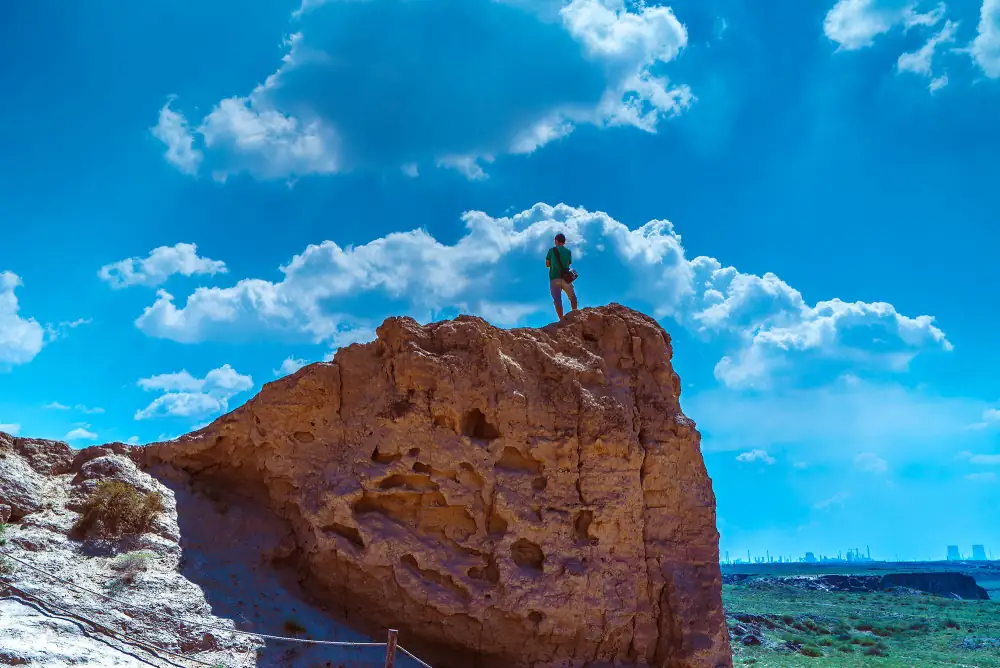
Fifty kilometres south of Yinchuan, the imperial tombs of the Western Xia Kingdom (1038–1227 CE) rise from the desert like eroded pyramids — a strikingly different architectural tradition from Han Chinese tombs. The Western Xia were a Tangut people who formed an independent kingdom for nearly 200 years before being destroyed by Genghis Khan; their culture was so thoroughly eliminated that their written language was not fully deciphered until the late 20th century. Admission: ¥58.
Shapotou Desert (沙坡头)
Where the Yellow River meets the southern edge of the Tengger Desert — sand dunes rising directly from the riverbank, with zipline rides, camel treks, and yellow river rafting in summer. The Yellow River at Shapotou turns an unusual turquoise-blue due to upwelling spring water. Located 90 km south of Yinchuan.
Helan Mountain Rock Carvings (贺兰山岩画)
On the flanks of the Helan Mountains, thousands of Neolithic to Tang-era rock carvings depict animals, human figures, hunting scenes, and sun symbols. Some of the human faces carved here — with round eyes and elaborate headdresses — are among the most striking rock art in China. Admission: ¥75.
Practical Information
Getting There
By Air: Yinchuan Hedong Airport (INC) has direct flights from Beijing, Shanghai, Guangzhou, Chengdu, and Xi’an. 30-minute taxi to city. By Train: High-speed rail from Lanzhou (2 hours), Xi’an (3.5 hours), Beijing (4 hours).
Wine region access: Rent a car (¥300–¥500/day with driver is recommended) or join an organised winery tour from Yinchuan (¥200–¥400/person/day, available through city tour operators).
Best Time for Wine Tourism
- September–October: Harvest season; most wineries active; tastings of current-vintage juice available.
- April–June: Off-season; quieter; several wineries offer significant discounts; desert landscape most dramatic.
- Summer (July–August): Hot (35–40°C in valley); bring water and sun protection.
The existence of fine wine in the Ningxia desert is, frankly, improbable — and that improbability is precisely what makes it interesting. The vines survive by virtue of Yellow River water and human stubbornness; the wines taste of both.