
Ningxia Hui Autonomous Region is one of China’s smaller provinces and one of its most overlooked by international visitors. It sits at the great bend of the Yellow River, where the river turns north before cutting south again — the river’s presence has defined the region for thousands of years, enabling agriculture in an otherwise semi-arid landscape.
Two things make Ningxia distinctive: the Hui Muslim culture that gives the province its identity (about 35% of the population is Hui, the largest proportion of any Chinese province), and the Western Xia tombs — remnants of a dynasty that ruled here for 200 years, was obliterated by the Mongols in 1227, and then largely vanished from historical memory until archaeologists rediscovered their extraordinary monuments.
Table of contents
Open Table of contents
Western Xia Imperial Tombs (西夏王陵)
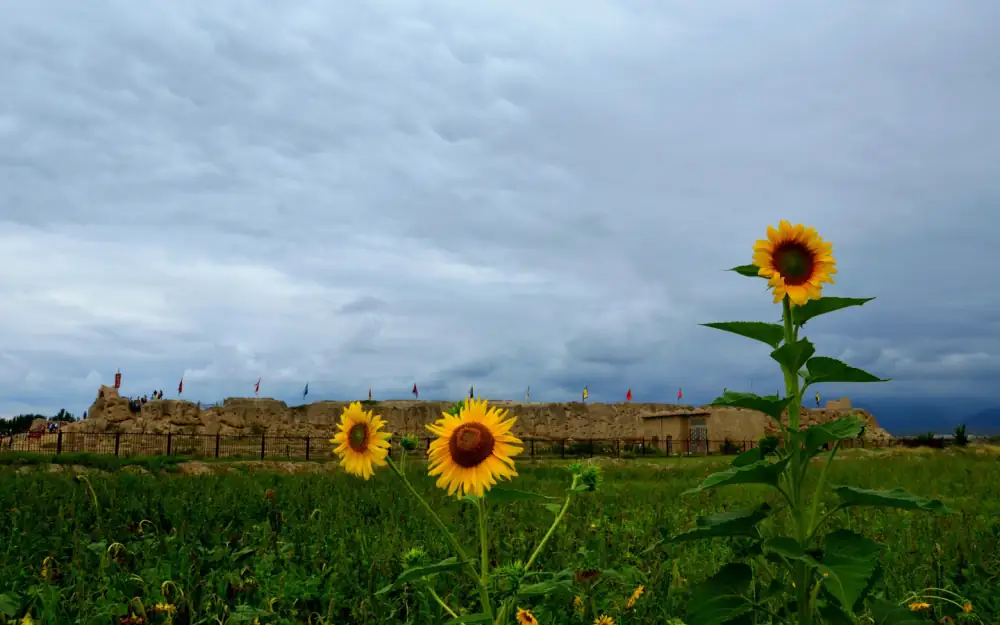
The Western Xia Dynasty (Tangut people, 西夏) ruled a powerful state in northwestern China from 1038 to 1227. At their peak, they controlled a territory larger than many European countries, had their own writing system, maintained Buddhist temples of artistic brilliance, and traded extensively along the Silk Road. Then Genghis Khan destroyed them in 1227, and the Mongols were so thorough in their destruction that subsequent Chinese dynasties barely recorded the Western Xia in their histories.
The result is that the Western Xia are one of history’s great disappeared civilizations — and their tombs, discovered in the 20th century, are extraordinary.
Location: 35km west of Yinchuan at the foot of Helan Mountain
Opening hours: 8:30am–6:00pm
Entry fee: ¥75 per person
Getting there: Bus or taxi from Yinchuan (¥50–70 by taxi, 40 minutes)
The tomb complex contains nine imperial mausoleums and 253 subsidiary tombs spread across a 53 sq km area. The tombs are built in an unusual style — a central wooden pagoda-like tower (now reduced to earthen stumps) rising from a rectangular enclosure, with a spirit way extending to the south. The overall layout and profile, viewed from a distance, is genuinely reminiscent of Egyptian pyramids.
Mausoleum No. 3 (三号陵): The largest and best-preserved, believed to be the tomb of the founder of the dynasty. The earthen core of what was once a multi-story timber tower still rises about 23 metres. The scale of the original complex — marked by stone bases and wall remnants extending hundreds of metres — gives a sense of the ambition involved.
Western Xia Museum (西夏博物馆): On-site museum with recovered artifacts — Buddhist sculptures, glazed roof tiles, iron coins, and documents in the Western Xia script (still not fully deciphered). Excellent for context.
Helan Mountain Rock Art (贺兰山岩画)
On the eastern face of Helan Mountain, about 50km north of Yinchuan, thousands of petroglyphs carved into dark red rock surfaces span from Neolithic through medieval periods. The carvings depict humans, animals (deer, tigers, wolves), celestial objects, and abstract symbols.
Opening hours: 8:30am–5:30pm
Entry fee: ¥75 per person (includes museum)
The site is spread across a gorge — you walk up through the canyon along a path, with carved rocks on both sides. Some carvings are 6,000+ years old; others were made by the Western Xia people in the medieval period. The density and variety is impressive.
Combination: The rock art site and Western Xia tombs are 20km apart; most visitors do both in the same day.
Helan Mountain Vineyards (贺兰山东麓葡萄酒)
This is one of the more surprising developments in Chinese gastronomy. The eastern face of Helan Mountain has, over the past 20 years, become China’s most acclaimed wine-producing region. The combination of altitude (around 1,100 metres), long sunshine hours, large day-night temperature variations, and dry air produces conditions similar to parts of Bordeaux or the Rhône Valley.
Ningxia wines — particularly Cabernet Sauvignon and Merlot — have won international awards and begun appearing in serious wine lists globally. Estates like Helan Qingxue (贺兰晴雪), Kanaan Winery (迦南美地), and Silver Heights (银色高地) produce wines that would not be out of place in France.
Visiting the wineries: Most estates in the cluster welcome visitors (with advance booking) for tastings and cellar door sales. A tasting flight typically costs ¥100–300. Several also have restaurants and accommodation.
Winery route: The main wine-producing area is along the east face of Helan Mountain between Yinchuan and Qingtongxia — a 60km corridor with over 80 registered wineries.
Hui Muslim Culture in Yinchuan
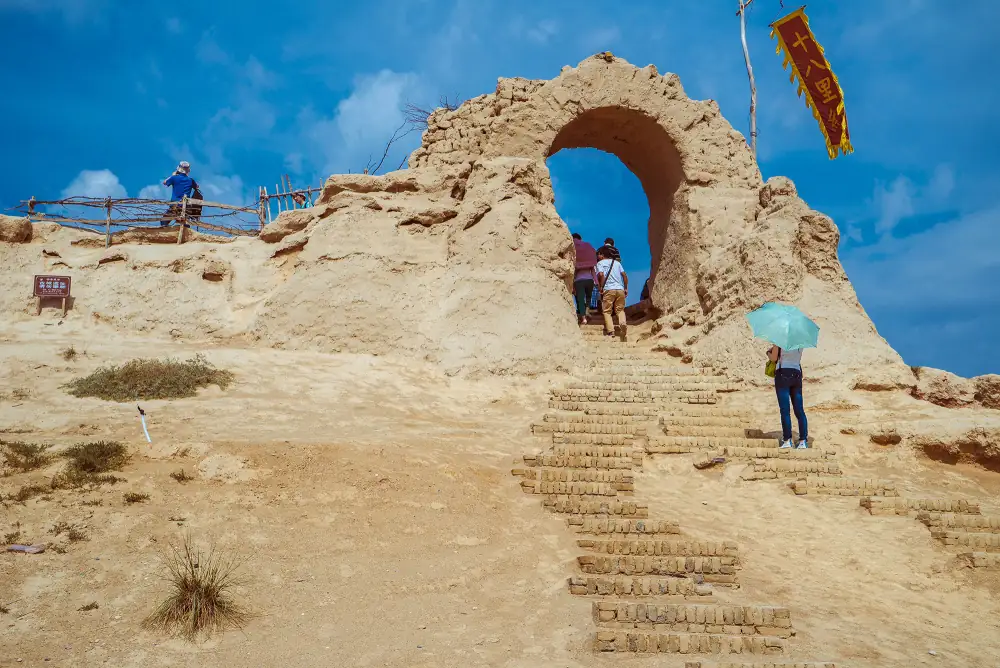
The Hui people are Chinese Muslims — ethnically Han but following Islam for generations, with a culture that blends Chinese and Islamic elements distinctively. Ningxia is the heartland of Hui culture in China.
Nan Guan Mosque (南关清真寺): The largest mosque in Yinchuan, with a capacity of 3,000 worshippers. The architecture is a remarkable fusion — white minarets and Islamic geometric decoration in a building that otherwise resembles a Chinese palace hall. Visitors are welcome outside prayer times.
Yinchuan Muslim Food Street (清真美食街): The northwest Chinese halal food tradition is one of the country’s great cuisines. Key dishes:
- Lamb skewers (羊肉串): The standard, everywhere, ¥3–5 each; the Ningxia version uses thicker cuts of fattier lamb than the Xinjiang style
- Hand-pulled noodles with lamb (拉面): Pulled to order in long thin strands, in a clear lamb broth; ¥15–25
- Braised lamb steamed over potatoes (土豆炖羊肉): A complete one-pot meal; ¥25–45
- Ningxia wolfberry (枸杞): The region is famous for its goji (wolfberry) crop; the berries here are plumper and sweeter than elsewhere; available at markets everywhere, ¥30–80 per 500g
Shuidonggou Site (水洞沟): About 30km east of Yinchuan, a Palaeolithic site at a gorge where tools from 40,000 years ago were found — the earliest evidence of human habitation in the region. The gorge itself is dramatic; sections of the Great Wall built under the Ming Dynasty run along the ridge above.
Entry: ¥75; open 8:30am–5:30pm
Getting to Yinchuan
From Xi’an: High-speed train, about 2.5 hours, ¥150–200.
From Zhongwei (southern Ningxia, gateway to the Shapotou sand dunes): High-speed train, about 40 minutes, ¥40–60.
From Lanzhou: High-speed train, about 2 hours, ¥130–180.
By air: Yinchuan Hedong International Airport (INC) has flights from Beijing (1.5 hours), Shanghai (2.5 hours), and other major cities.
Yinchuan’s city centre is compact and navigable by taxi or the limited metro network (Lines 1 and 2 connect the main sights).
Shapotou Sand Dunes (沙坡头)
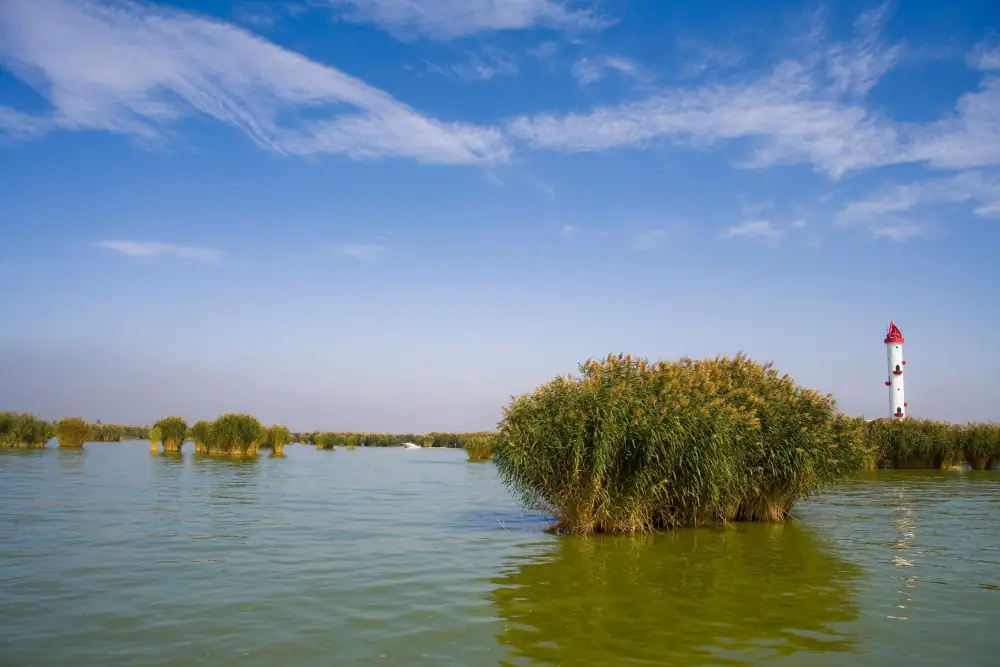
Shapotou, about 140km south of Yinchuan near Zhongwei city, is where the Tengger Desert meets the Yellow River. The dunes drop directly to the river bank — a dramatic contrast of sand and water. Activities include sand surfing, camel riding, and river rafting on traditional sheepskin-bladder rafts.
Entry: ¥160; 1.5 hours from Yinchuan by high-speed train to Zhongwei, then bus
Suggested Itinerary (3 Days)
Day 1: Arrive Yinchuan, Nan Guan Mosque, Muslim food street, local markets
Day 2: Western Xia Tombs + Helan Mountain Rock Art (same day, hire car), winery visit and tasting in the afternoon
Day 3: Shapotou day trip (via Zhongwei by HSR), return evening or next morning
Where to Stay
Yinchuan: Mid-range hotels ¥200–500/night. Kempinski Hotel Yinchuan (¥600–1,000) is the best-known international hotel. Budget options in the central city from ¥150–280.
Winery guesthouses: Several wineries offer boutique accommodation; stay overnight at a winery for the full experience.