
Yangshuo is about 83km south of Guilin, at the end of the classic Li River cruise. Most people arrive here by boat, look around, and then take a bus back to Guilin — and miss what makes Yangshuo genuinely special. The town is the hub for some of the best outdoor activities in southern China: cycling through a landscape of karst peaks and rice fields on quiet rural roads, rock climbing routes on vertical limestone towers, kayaking on the slower Yulong River, and early morning views of cormorant fishermen on bamboo rafts as the mist clears from the water.
The town center (particularly West Street) is heavily commercialized — bars, souvenir shops, Western food restaurants catering to backpackers. It’s not offensive but it’s not the reason to come. The reason to come is outside the town, in the landscape.
Table of contents
Open Table of contents
Cycling the Yulong River Valley (遇龙河)
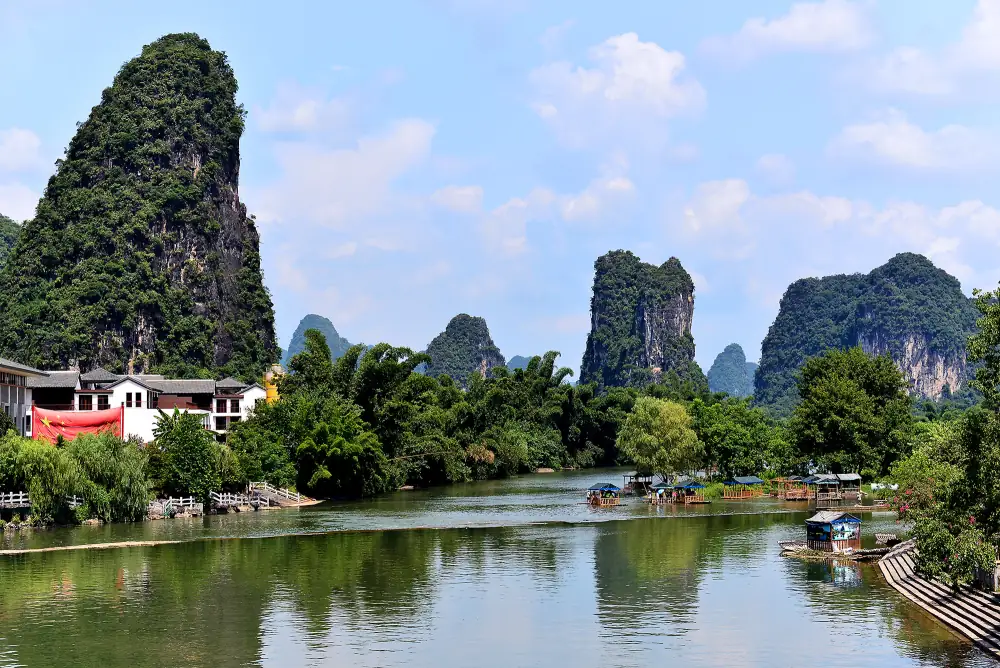
The Yulong River runs parallel to the Li River in a quieter, more rural valley with no motorboat traffic. Cycling along the Yulong valley is the activity most visitors cite as the highlight of their Yangshuo trip.
The route: The classic cycle is approximately 20–30km from Yangshuo town southward along the east bank of the Yulong River, through the villages of Jiuxian (旧县), Chaoyang (朝阳), and Xiatang (下塘), before looping back via country roads. The terrain is flat to gently rolling.
What you see: Limestone karst peaks rise from flat green fields; farmers work rice terraces; water buffalo cross the road; old men fish from bamboo rafts. The karst here is at its most intimate — the peaks are smaller and closer together than in the main Li River valley, and the rural scale feels proportional.
Bicycle rental:
- Basic mountain bikes: ¥30–50/day from shops throughout Yangshuo town
- Electric bikes (e-bikes): ¥60–100/day — worth it for longer routes in summer heat
- Better-quality bikes: Available from specialty rental shops for ¥80–150/day
Starting point: Most rental shops will provide a map. The standard route starts from the Yulong River Bridge (遇龙桥) and works southward.
Best time for cycling: Early morning (7–9am) before peak heat in summer; October–November for the best light and temperatures.
Rock Climbing
Yangshuo has developed into one of China’s premier sport climbing destinations — and one of the most accessible in Asia. The limestone karst towers have thousands of bolted climbing routes at all grades, from beginner-friendly multi-pitch routes to challenging overhangs.
Why Yangshuo for climbing: The limestone is good-quality (solid, with varied texture), the setting is spectacular, and there’s an established community of local guides and international climbers who have developed routes over 20+ years.
Key climbing areas:
Moon Hill (月亮山): The most famous single feature — a natural arch in a karst peak, with routes through the arch and on the surrounding faces. Beginner to intermediate grades. 8km south of town.
Thumb Peak (拇指山): Moderate to advanced routes; panoramic views from the top.
White Mountain (白山): Beginner-friendly crags near the river; good for first-day climbing.
Dragon River (龙颈河 area): Advanced multi-pitch routes in a more remote area.
Climbing guides and operators: Several established outfitters run climbing trips from Yangshuo:
- Half-day introduction: ¥300–450 per person (equipment included, guide, 2–3 easy routes)
- Full-day climbing: ¥500–700 per person
- Multi-day intensive courses available (¥1,500–3,000+ for 3-day course)
Most guides speak English and Chinese; book in advance for peak season (September–November).
Bamboo Raft Drifting on the Yulong (竹筏漂流)
Bamboo raft drifting on the Yulong River is the slower, more relaxing alternative to cycling. Two-person bamboo rafts are poled slowly downstream through the karst scenery, typically over a 2–3 hour section.
Options:
- Self-guided raft rental: ¥150–200 for a raft, you pole yourself (not difficult on the slow Yulong)
- Guided raft: ¥200–300 including a poler/guide; you sit and observe
Best section: From Gongnong Bridge (工农桥) to the old bridge at Fuli (福利) — about 15km, takes 3–4 hours at a leisurely pace.
What you see: The same karst valley as cycling, but from water level — the peaks seem higher from the raft, and the river life is more visible. Cormorant fishermen working from rafts, herons in the reed banks, turtles on exposed rocks.
Cormorant fishing: A traditional fishing practice where trained cormorant birds dive for fish and bring them to their handler. It’s now largely performed for tourists, but genuine practitioners do still use it as a supplementary fishing method. Early morning (6–8am) is when you’re most likely to see it in the valleys.
Kayaking and Paddleboarding
The Yulong River is also excellent for kayaking — the current is gentle, the scenery is constant, and the water is calm enough for inflatable boards.
Kayak rental: Available from multiple operators along the river; ¥80–120/hour.
Guided half-day kayak trip: ¥280–380 per person including transport to starting point.
Li River Dawn: Xingping Village (兴坪古镇)
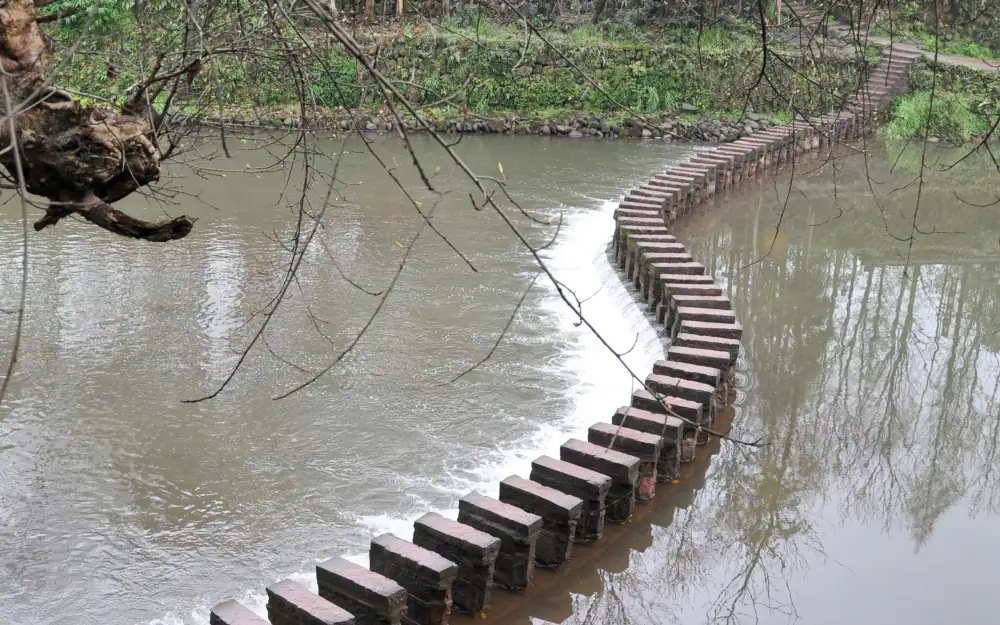
About 30km upriver from Yangshuo, Xingping village is the location of the landscape shown on the Chinese 20-yuan note. The old town itself has well-preserved Qing Dynasty architecture.
The classic photo — karst peaks behind the river with a bamboo raft — is taken from a viewpoint above Xingping at dawn or dusk. The light is best in the 30 minutes after sunrise.
Getting to Xingping: Bicycle (about 2 hours each way from Yangshuo, via the river road), bus (¥15, 45 minutes from Yangshuo Bus Station), or motorcycle taxi (¥60–80 one way).
Cooking Classes
Yangshuo has several established cooking schools offering half-day Guilin cuisine classes.
What’s typically covered: Market visit, preparation of 3–5 local dishes (beer fish, stuffed Li River snails, Guilin rice noodles), eating your result.
Price: ¥250–400 per person
Duration: Half-day (4 hours)
Recommended: Yangshuo Cooking School (阳朔烹饪学校) has been operating for over 20 years with good English-language instruction.
West Street and Eating in Yangshuo
West Street (西街) is the backpacker hub of Yangshuo — bars, restaurants with English menus, and souvenir shops concentrated in a 500-metre pedestrian zone. It’s heavily touristy but the energy in the evenings is good, and there are decent bars for an evening drink.
Beer fish (啤酒鱼): Yangshuo’s signature dish — fresh Li River fish braised in local beer with peppers and spices. Available everywhere on West Street and in the surrounding villages. ¥45–80 per fish (350–500g). The version at village restaurants along the Yulong is better and cheaper than tourist-centre versions.
Guilin rice noodles (桂林米粉): Thin rice noodles in a pork broth, with braised pork, peanuts, and seasonings added at the table. ¥8–15 at local breakfast stalls; look for places away from West Street for the authentic version.
Li River snails stuffed with herbs (螺蛳): A Guilin specialty — freshwater snails stuffed with garlic and herbs, grilled or fried. ¥25–40 per plate; excellent with cold beer.
Evening West Street drinks: The Craft Beer Bar area off West Street has several small bars with local Guilin craft beers (¥15–30 per bottle). The atmosphere from about 8pm onwards is genuinely enjoyable — a mix of backpackers, Chinese travelers, and the remnants of day-tour groups.
Getting to Yangshuo
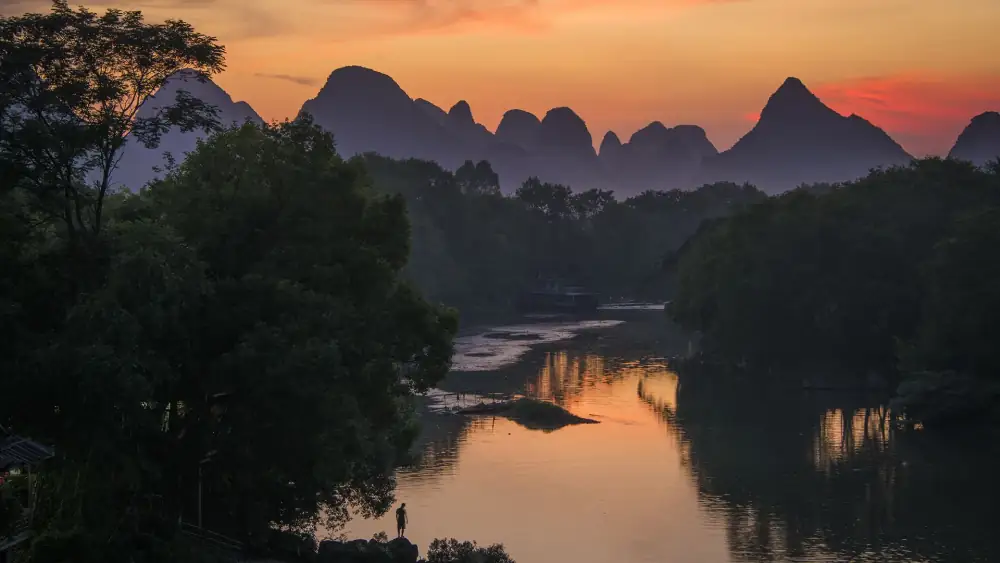
By Li River cruise: The most scenic and traditional arrival — 4 hours from Guilin. Arrive at Yangshuo Pier (阳朔码头), 3km south of the town centre.
By bus from Guilin: 1.5 hours, ¥25–35; buses run every 30 minutes from Guilin Bus Station. More practical for arrivals later in the day or when the cruise is sold out.
By taxi from Guilin: About 1.5 hours on the expressway, ¥150–200.
Getting around Yangshuo: Bicycle (as described above) is the standard for the valley routes. For the town itself, walking covers everything.
Where to Stay
In Yangshuo town: Wide range from budget hostels (¥80–200/night dorms, ¥150–350 private rooms) to mid-range hotels (¥300–700). The West Street area has the highest concentration.
Yulong River guesthouses: Small family guesthouses along the river road, ¥150–400/night; quieter and more scenic than the town centre. Best for cycling-focused visits.
Boutique riverside accommodation: Several upmarket retreat-style hotels on the river; ¥800–2,500/night; often the most memorable accommodation choice in the area.
When to Visit
October–November: Best conditions — cooler temperatures (18–25°C), post-monsoon clear skies, lower humidity, good water levels in the rivers.
April–June: Green and misty; rain can add atmosphere. Water levels high for rafting.
December–March: Cool (10–18°C), minimal crowds, low prices, occasional mist.
July–August: Peak season; hot (32–36°C), humid, crowded. Book accommodation well in advance.