
Table of contents
Open Table of contents
The Rock: Why Yangshuo’s Climbing Is Special
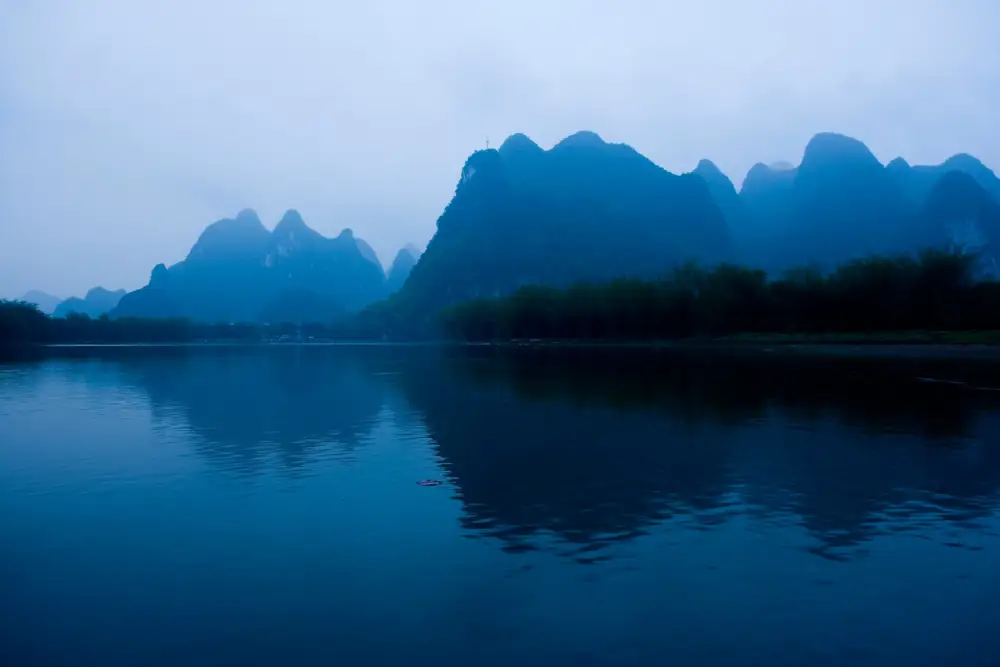
Yangshuo’s karst towers are composed of Devonian and Carboniferous limestone — some of the oldest and most compact limestone in China. The features that make karst visually dramatic (the sharp erosion patterns, the pocketed surfaces, the hanging caves) translate directly into interesting climbing terrain.
Compared to limestone climbing destinations in Europe (Siurana, Kalymnos) or the USA (Red River Gorge), Yangshuo has:
- More visual drama: Every route has a view. Rice paddies, river, and other karst towers frame every pitch.
- More humid conditions: The subtropical climate means rock can be greasy in summer months — timing matters
- More variety of styles: From gentle beginner slab routes to overhanging pockets that test any climber
- Better weather in winter: While European limestone crags are cold, Yangshuo’s winters are pleasantly cool — one of the best December/January climbing destinations anywhere
Main Climbing Areas
Moon Hill (月亮山)
The most famous climbing area in Yangshuo, centered on a tower with a natural arch (the “moon hole”) visible from town. The climbing here is introductory to moderate difficulty — mostly 5.8 to 5.11a, with some harder routes.
Character: Slabby faces and vertical routes on good rock. The area is popular with beginners because the routes are well-bolted and the grades are accurate.
Access: 8km south of Yangshuo Town. Bicycle ride (30 minutes) or taxi (¥20–25). Look for the obvious tower with the hole; the main climbing wall is on the west face.
Notable routes:
- “Moon Hill Direct” (5.9): Classic beginner route, 30m
- “Hidden Moon” (5.11a): More technical face climbing, excellent quality
White Mountain (白山)
The main destination for intermediate and advanced climbers. More variety than Moon Hill, including some excellent multi-pitch routes.
Character: Multiple sectors with different styles — from vertical face climbing to overhanging pockets. The rock here is particularly good quality.
Notable routes:
- Sector “Butterfly Spring”: 5.10b–5.11c range, 15–25m pitches
- Multi-pitch routes to the summit: Full-day commitment for experienced climbers
Riverside Crags (Li River side)
Several crags along the Li River embankment south of Yangshuo Town give the iconic climbing situation: rock directly above the river, with bamboo-rafted boats passing below and karst towers in the background.
These routes tend to be moderate grade (5.9–5.11b) but heavily photogenic. The Riverside Wall and Bamboo Wall areas are popular for this reason.
Gold Cat (金猫山)
A taller formation giving some of the longest single-pitch routes in the area (up to 40m). The grades are harder here — mostly 5.11 and above. Excellent multi-pitch climbing requiring gear and route-finding skills.
Egg Tops (鸡蛋石群)
A cluster of smaller formations with beginner-friendly routes. Some of the flattest approach terrain in the area, making it accessible without a guide.
Climbing Schools
Yangshuo has numerous climbing operators. Quality varies — here are the established names with good reputations as of 2026:
China Climb (中国攀岩)
The longest-established professional climbing school in Yangshuo. British and Chinese certified instructors, excellent safety record, and the broadest curriculum from absolute beginner to multi-pitch leadership.
- Half-day intro course: ¥350/person (includes gear rental, instructor, transport)
- Full-day course: ¥550/person
- Multi-day instruction packages: ¥1,200–2,000 for 3-day progression from beginner to leading single-pitch
Contact through their website (chinaclimb.com) or via booking at the office on West Street, Yangshuo.
Yangshuo Outdoor Club
A locally-run operation with Chinese-speaking instructors and lower prices. Better suited to experienced climbers who need a guide for specific routes rather than beginners needing full instruction.
- Guided climbing day: ¥200–300/person for 2+ people
- Multi-pitch guide day: ¥500–800 for a team of 2
Nihao Climbing
A newer operation (est. 2021) with good English instruction and a focus on outdoor trad climbing development.
Gear and Equipment
What climbing schools provide: Harness, shoes, helmet, belay device, rope — all included in most lesson prices.
What to bring yourself:
- Comfortable athletic wear (stretchy pants work better than regular shorts)
- Approach shoes or trail runners for the walk-in to crags
- Sun protection — you’ll be on exposed rock in subtropical sun
- Water (minimum 2 liters per person per day)
- Snacks — there’s no food at most crags
For independent climbers (bringing your own gear):
- Draws: 12 for most single-pitch routes
- 60m rope is standard
- Helmet always recommended on karst (rock fall is possible)
Gear rental: Available from climbing schools and several outdoor shops on West Street in Yangshuo Town. Expect ¥50–80/day for shoes, ¥30–50 for harness.
Seasonal Guide
Best Season: November to April
The subtropical climate makes Yangshuo a “winter climbing” destination by Western standards. November–March gives temperatures of 10–22°C — ideal for limestone climbing. The rock is dry, the humidity low, and the skies often blue.
January–February: The best shoulder-season option. Cool, dry, and quiet. Some routes on south-facing walls are warm even in January.
Good Season: October and May
Shoulder seasons with decent conditions. October is particularly good — the rice harvest frames the karst towers in golden stalks, temperatures are ideal, and the town has a pleasant energy.
Avoid: June–September
Hot (35°C+) and humid — the limestone becomes greasy and footwork deteriorates. Afternoon thunderstorms can make outdoor climbing dangerous. Some routes are climbable in morning sessions, but this is not the right season for a climbing-focused trip.
Combining Climbing with Yangshuo Tourism
Cycling the Li River Valley
The classic non-climbing activity that pairs perfectly with rest days. Rent a bicycle in town (¥20–30/day) and ride the riverside paths south toward Xingping, passing some of the most famous karst tower views. Allow 4–6 hours for the Xingping circuit.
River Activities
Bamboo rafting on the Li River (¥90/person, 2–3 hours) or kayak rental (¥80–120/day self-guided) provide water-level perspective on the limestone you’ve been climbing.
Night Market Food
Yangshuo’s West Street tourist area is full of restaurants and bars, but the better eating is in the local market area one block north. Guilin rice noodles (桂林米粉, ¥8–12) for breakfast, local beer fish (啤酒鱼, ¥50–80 for a whole fish cooked with local beer) for dinner.
Visiting Minority Villages
Several Zhuang and Yao minority villages are accessible from Yangshuo by bicycle or motorbike. Xingping (兴坪) in particular is a traditional village with old architecture and views that are in the background of the 20 RMB banknote.
Getting to Yangshuo
Yangshuo Town is 65km southwest of Guilin.
From Guilin:
- Bus: From Guilin Bus Station (桂林汽车站) or Guilin Railway Station, buses run every 15–30 minutes. Journey: 1.5 hours, ¥17–22.
- Li River Boat: The famous Li River cruise from Guilin to Yangshuo takes 4–5 hours downstream. Beautiful but slow. One-way cruise tickets: ¥210–290/person.
- Taxi: 1.5–2 hours, approximately ¥200–250 each way.
Flying to Guilin: Guilin Liangjiang International Airport (KWL) is well-connected, with direct flights from all major Chinese cities. Flights from Shanghai: 2 hours; from Beijing: 2.5 hours; from Chengdu: 1.5 hours.
Where to Stay
Most climbers stay in Yangshuo Town for the food, bar, and social scene, then taxi/cycle to crags.
Climber-friendly guesthouses:
- Yangshuo Mountain Retreat (阳朔山居): Run by climbers, knows the climbing scene. From ¥180/night. Has gear storage, drying areas, and a knowledgeable team.
- West Street area guesthouses: Multiple options ¥100–250/night
- Riverside guesthouses south of town: Good for access to riverside crags. ¥120–200/night.
For those wanting to be on the rock at dawn:
- Ask about accommodation in Moon Hill village (月亮山村) — a few family guesthouses right at the base of Moon Hill, ¥80–120/night, no frills.
Safety Considerations
Check bolt condition: The climbing community maintains bolt replacement programs, but check each route before clipping. Some older bolts need replacing — a reputable climbing school will guide you to well-maintained routes.
Watch the weather: Thunderstorms develop fast in the wet season and even in shoulder seasons. Descend at the first sound of thunder.
Hydration: Subtropical heat combined with physical climbing depletes fluids quickly. Drink more than you think you need.
Guide for multi-pitch: If you’re not an experienced multi-pitch leader, hire a guide for routes that go to the top of the towers. Route-finding on karst can be confusing and the descents are sometimes complex.
Yangshuo rock climbing is one of the world’s genuinely special outdoor experiences — the combination of world-class rock, extraordinary scenery, and a developed infrastructure for beginners and experts alike makes it hard to imagine a better single destination for a climbing vacation in Asia.