
Table of contents
Open Table of contents
Erlianhaote — Where Dinosaurs Guard the Border
Erlianhaote (二连浩特, known as Erenhot in Mongolian and international contexts) is one of those places that exists primarily because of geography. Sitting on the China-Mongolia border in the middle of the vast Eurasian steppe, it’s the primary rail gateway between the two countries and a crucial logistics hub. But what makes Erlianhaote genuinely interesting — and worth the considerable effort to reach — is its dinosaur heritage. This area is one of the most important dinosaur fossil sites in Asia, and the city has embraced its prehistoric fame with a enthusiasm that borders on the obsessive.
Driving into Erlianhaote from the south, the first thing you see is a pair of enormous dinosaurs arching over the highway in a kissing pose. It’s kitsch, it’s magnificent, and it sets the tone perfectly. This is a city that knows it’s in the middle of nowhere and has decided to be memorable about it.
I visited Erlianhaote in August, when the grasslands were green and the border trade was bustling. It’s not a conventional tourist destination — there are no five-star hotels or curated cultural experiences. But for those who appreciate the quirky, the remote, and the genuinely different, Erlianhaote delivers something that no other Chinese city can.
The Dinosaur Heritage
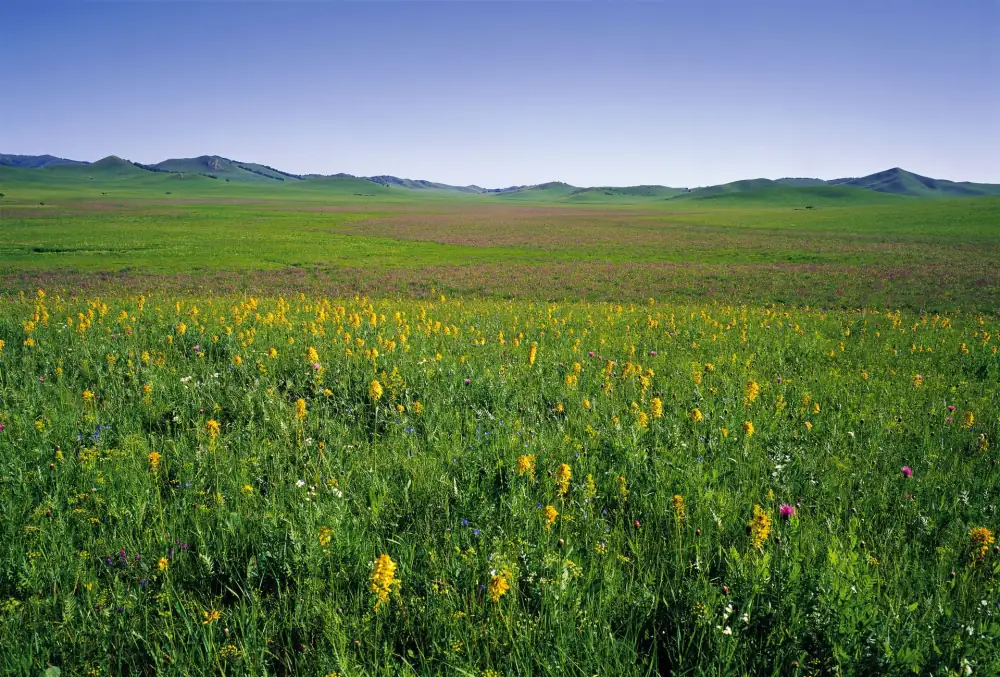
Erlianhaote Dinosaur Museum
The Erlianhaote Dinosaur Museum (二连浩特恐龙博物馆) is the city’s premier attraction and one of the best dinosaur museums in China. The Gobi Desert region around Erlianhaote has produced some of the most significant dinosaur finds in the world, including several species first discovered here.
Key exhibits:
- Gigantoraptor erlianensis: Discovered in 2005 just 15 km from the city, this 8-metre-long, 1,400 kg oviraptorosaur was the largest of its kind ever found. A full reconstruction dominates the main hall.
- Protoceratops andrewsi: Hundreds of specimens have been found in the Erlianhaote basin. The museum has several excellent specimens.
- Oviraptor nests: Fossilised dinosaur eggs and nests found in the region — evidence of parental care in dinosaurs that was first identified from Erlianhaote specimens.
- Therizinosaurus: The bizarre, sickle-clawed dinosaur. The museum has a fine reconstruction.
The museum also covers the geological history of the region and the process of fossil excavation. English labels are limited, but the visual displays are largely self-explanatory.
Entrance fee: ¥40 ($5.50 USD). Open 9:00 AM — 5:00 PM, closed Mondays. Allow 1.5-2 hours.
The Dinosaur Fossil National Geopark
About 9 km northeast of the city, this protected area preserves actual fossil excavation sites. A boardwalk trail leads through the badlands to areas where you can see fossils still embedded in the rock — or at least replicas of the most significant finds, as the genuine specimens have been removed for study and display.
The landscape itself is striking — eroded red sandstone badlands that look more like the American Southwest than Inner Mongolia. The barrenness is part of the appeal; this is what makes the area so productive for fossil hunting, as the erosion constantly exposes new material.
Entrance fee: ¥50 ($7 USD) including shuttle bus from the visitor centre. Open 8:30 AM — 5:00 PM.
Dinosaur Sculpture Plaza
Back in the city, the Dinosaur Sculpture Plaza features dozens of life-sized dinosaur models arranged in a park setting. It’s aimed at families and is genuinely fun, even for adults who should know better. The models are surprisingly accurate (for the most part), and the kids’ dinosaur playground is well-designed. Free to visit.
The Border Crossing
China-Mongolia Gateway
Erlianhaote is the most important overland crossing between China and Mongolia. The Zamiin Uud border post on the Mongolian side connects to Ulaanbaatar via the Trans-Mongolian Railway.
For travellers crossing to Mongolia:
By train: The international train from Beijing to Ulaanbaatar passes through Erlianhaote. The journey from Beijing takes about 30 hours, with Erlianhaote being the last Chinese stop before the border. Soft sleeper tickets from Beijing to Ulaanbaatar cost approximately ¥1,200-1,800 ($166-249 USD).
By bus: Cross-border buses run daily from Erlianhaote to Zamiin Uud (the Mongolian border town, 20 minutes) and onward to Ulaanbaatar (12 hours). Bus tickets to Ulaanbaatar: ¥250-350 ($35-48 USD).
Walking across: You can walk across the border between Erlianhaote and Zamiin Uud. The crossing area has a strange duty-free shopping zone that exists in a kind of border no-man’s-land.
Visa requirements: Most nationalities need a Mongolian visa, which can be obtained at the Mongolian consulate in Erlianhaote (processing time: 2-3 working days). Check requirements well in advance.
Border Market Shopping
The area around the border crossing is filled with shops selling Mongolian and Russian goods — cashmere sweaters, vodka, chocolate, fur hats, and leather goods. The cashmere is genuine and significantly cheaper than in Chinese department stores. A good quality Mongolian cashmere sweater costs ¥300-600 ($42-83 USD), compared to ¥1,000+ ($138+ USD) for comparable quality in Beijing.
Bargaining tip: Start at about 40-50% of the asking price for non-cashmere items, 70-80% for cashmere. The vendors are used to haggling and will respect a good-faith negotiation.
The Grasslands
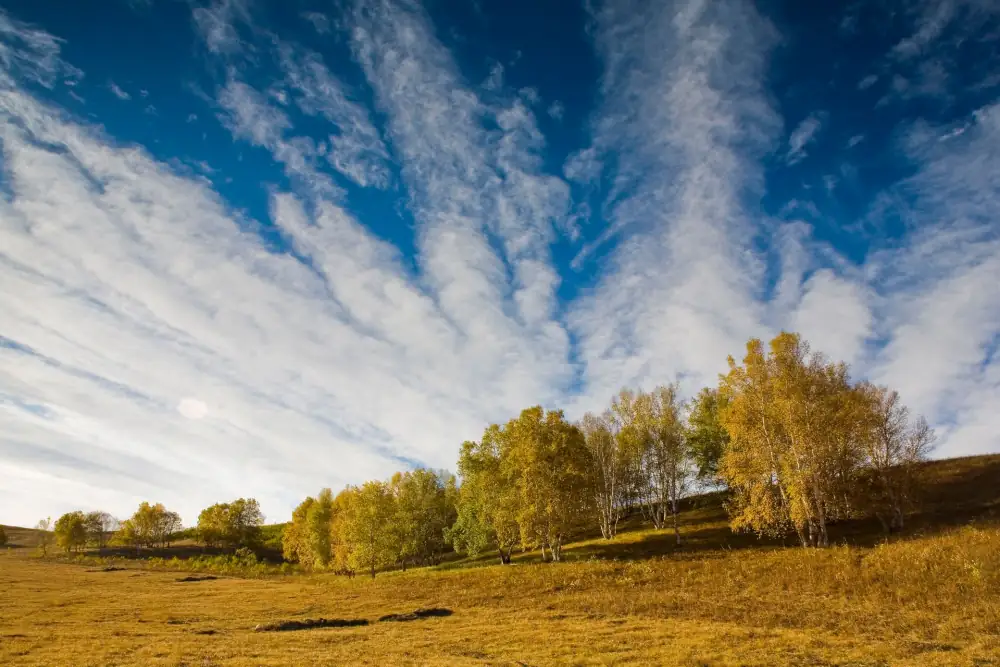
Erenhot Grassland
The steppe surrounding Erlianhaote is classic Mongolian grassland — vast, flat, and seemingly infinite. Several grassland tourist areas operate within driving distance of the city:
Bayan Gasha Grassland (巴彦查干草原): About 30 km from Erlianhaote, this is the most accessible grassland experience. Yurt accommodation is available from ¥150-300 ($21-42 USD) per night, including traditional Mongolian meals. Horse riding ¥80 ($11 USD) per hour.
What to expect: The grassland experience involves staying in a yurt (more accurately a ger — the Mongolian term), eating mutton and dairy products, and riding horses across the steppe. It’s simple, elemental, and oddly moving. The night sky here, free from light pollution, is absolutely spectacular.
Best time: June — September when the grass is green. July and August are the warmest months (20-25°C during the day, dropping to 10-15°C at night).
Local Cuisine — Mongolian Meets Chinese
The food in Erlianhaote reflects its borderland position — a blend of Mongolian, Inner Mongolian Chinese, and some Russian influences:
Roasted Whole Lamb (烤全羊): The ultimate Mongolian feast. A whole lamb, marinated and slow-roasted for hours, served with flatbread and pickled vegetables. Usually requires a group of 8-10 people. ¥800-1,500 ($111-208 USD) per lamb.
Mutton Hotpot (涮羊肉): Thinly sliced mutton cooked in boiling broth at the table — the Mongolian original that Beijing’s famous lamb hotpot derives from. ¥60-100 ($8.30-14 USD) per person.
Milk Tea (奶茶): Mongolian-style salty milk tea, served in a bowl, often with millet and curd. An acquired taste but warming on the steppe. ¥5-10 ($0.70-1.40 USD).
Borts (风干牛肉): Air-dried beef, a traditional Mongolian preserved meat. Excellent as a snack or trail food. ¥60-100 ($8.30-14 USD) per 500g.
Russian Bread and Sausages: The border influence means you can find proper dark rye bread and smoked sausages from Russian and Mongolian suppliers. The bread is outstanding — dense, sour, and satisfying. ¥10-20 ($1.40-2.80 USD) per loaf.
Recommended Restaurants
Menggu Renjia (蒙古人家): A block from the main square. Reliable Mongolian food in a ger-themed restaurant. Meals ¥40-80 ($5.50-11 USD) per person.
Border Trade Area Food Court: A cluster of small restaurants near the border crossing serving cheap, hearty food. Chinese, Mongolian, and Russian options. Meals ¥20-40 ($2.80-5.50 USD) per person.
Practical Information
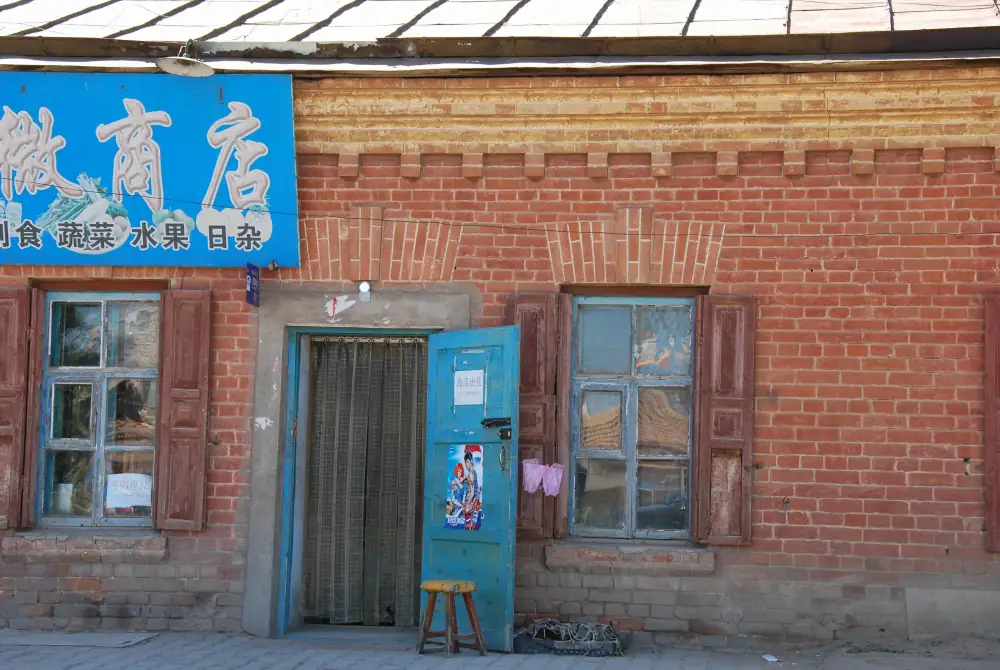
Getting to Erlianhaote
By train: Overnight train from Beijing (about 13 hours, hard sleeper ¥200-280/$28-39 USD, soft sleeper ¥300-420/$42-58 USD). This is the most practical option and the train is comfortable.
By air: Erlianhaote Saiwusu Airport (ERL) has flights from Beijing (1.5 hours), Hohhot (1 hour), and a few other Inner Mongolian cities. Flights from Beijing ¥400-800 ($55-111 USD).
By bus: Long-distance buses from Hohhot (6-7 hours, ¥150/$21 USD) and Beijing (8-9 hours, ¥200/$28 USD).
Accommodation
Erenhot Hotel (二连浩特宾馆): The city’s best hotel, near the main square. Doubles from ¥200-400 ($28-55 USD). Clean and comfortable if unremarkable.
Border Area Guesthouses: Several budget options near the crossing, from ¥80-150 ($11-21 USD) per night. Basic but adequate.
Grassland Yurt Camps: As mentioned above, ¥150-300 ($21-42 USD) per night including meals.
Best Time to Visit
- June — September: Warm and pleasant, green grasslands. The best all-round season.
- July: Naadam Festival — the Mongolian festival of wrestling, horse racing, and archery. Erlianhaote celebrates with its own version. Colorful and authentic.
- Winter: Extremely cold (-25 to -15°C), but the stark white landscape is beautiful and the border trade continues unabated.
What to Bring
- Warm layers even in summer — steppe nights are cool
- Passport — required for border area access and any cross-border activity
- Cash — ATMs are limited and some don’t accept foreign cards
- Patience — this is a frontier town, and things move at their own pace
Budget Estimate (2 Days)
| Item | Budget (¥) | Mid-Range (¥) |
|---|---|---|
| Train from Beijing (round trip) | 400 | 600 |
| Accommodation (1 night) | 100 | 300 |
| Meals | 120 | 300 |
| Dinosaur museum + geopark | 90 | 90 |
| Grassland visit | 150 | 350 |
| Shopping/miscellaneous | 100 | 500 |
| Total | ¥960 ($133 USD) | ¥2,140 ($296 USD) |
A City of Curiosities
Erlianhaote won’t be everyone’s cup of milk tea. It’s remote, it’s rough around the edges, and its attractions are niche. But if you’re the kind of traveller who gets excited by border towns, by places where cultures collide, by the idea of standing at a dinosaur dig site where the next fossil discovery might be waiting under your boots — then Erlianhaote offers an experience that simply can’t be found anywhere else in China. It’s a frontier town in every sense, and that’s exactly what makes it worth visiting.