
Qinghai Lake at dawn — China’s largest lake and Asia’s largest saltwater lake at 3,196 metres, on the edge of the Tibetan Plateau, with snowcapped mountains all around
Qinghai Province (青海) is China’s third-largest province by area and most sparsely populated — 720,000 km² of the Tibetan Plateau at an average elevation of 3,000+ metres, with the source springs of Asia’s three greatest rivers (the Yellow, Yangtze, and Mekong). The province is culturally Tibetan, geologically extreme, and largely inaccessible to mass tourism.
Table of contents
Open Table of contents
Kumbum Monastery (塔尔寺, Ta’er Si)
25 km south of Xining (西宁) — one of the six most important Gelug Buddhist monasteries in the world. Founded in 1583 to mark the birthplace of Tsongkhapa (宗喀巴), the 14th-century reformer who founded the Gelug lineage (the “Yellow Hat” sect of the Dalai Lama and Panchen Lama).
The scale: Over 9,000 monks at its peak; approximately 1,000 monks in current residence. 52 temple buildings and chapels covering a mountain slope.
The butter sculpture tradition: Kumbum is famous for its extraordinary butter sculptures (酥油花) — elaborate three-dimensional scenes of Buddhist cosmology and narrative, created from coloured yak butter each year for the Lantern Festival (15th day of the first lunar month). The sculptures are created in winter (to keep the butter solid) and displayed once; the tradition has been maintained for over 400 years.
Morning prayers: The most authentic experience — arriving at 7 AM for morning chanting in the main assembly hall (大金瓦殿). The sound of 200+ monks chanting in unison, with butter lamp smoke and the smell of the specific Tibetan incense blends, is profoundly atmospheric.
Ticket: ¥80. Getting there: 1 hour by bus from Xining.
Sanjiangyuan Nature Reserve (三江源自然保护区)
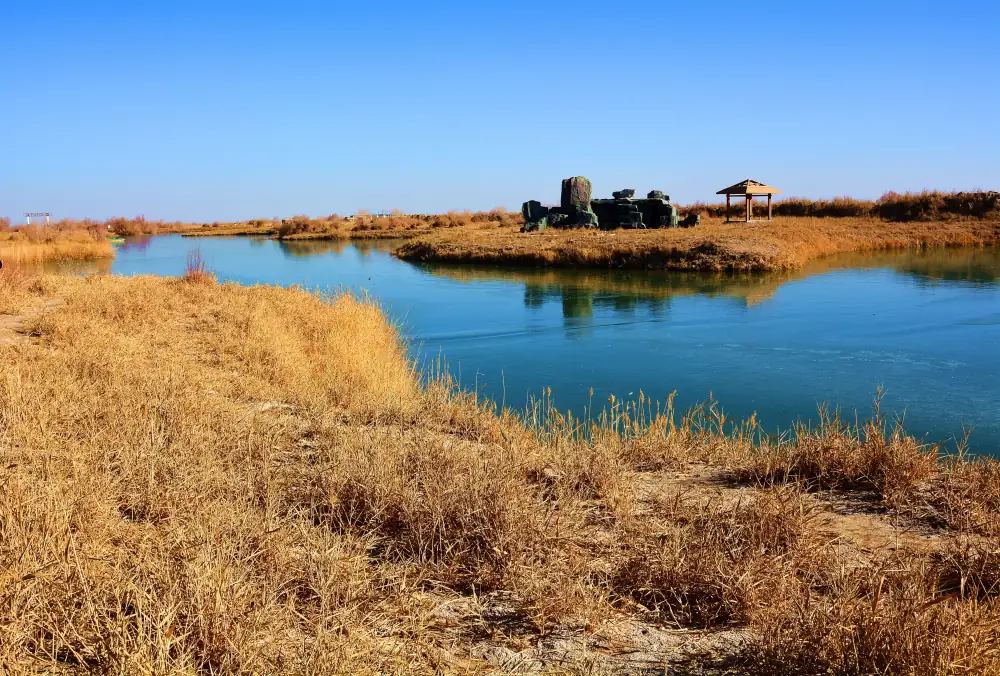
The “Three River Source” — the area of the southern Qinghai-Tibet Plateau where the Yellow River (黄河), Yangtze River (长江/通天河), and Mekong River (澜沧江) all originate within a relatively small highland area.
The ecology: Alpine meadow (高寒草甸), wetlands, glaciers, and high-altitude desert at 4,200–5,000 metres. Wildlife: Tibetan antelope (藏羚羊), wild yak (野牦牛), snow leopard (雪豹), Tibetan sand fox, blue sheep (岩羊).
Maduo County (玛多): The highest county town in China (4,272 m) — at the Yellow River source area. The landscape here is high-altitude grassland with thousands of small lakes (the area is known as “the land of ten thousand lakes”), yak herds, and the nomadic Tibetan herding families whose summer camp movements follow the grazing seasons.
Access: Maduo is 5 hours from Xining by car; the roads are largely unpaved beyond Maduo. Visitor permit required for the core nature reserve area.
Tibetan Nomadic Culture
The nomadic pastoralists (牧民) of the Qinghai Plateau maintain a way of life centred on yak herding — the black yak-hair tents (黑帐篷) visible across the summer grasslands are still the primary accommodation for nomadic families on summer migration.
Yushu Tibetan Autonomous Prefecture (玉树): The most culturally Tibetan area of Qinghai — fully Tibetan-speaking, with the Yushu Horse Racing Festival (玉树赛马节) in July being one of the most spectacular nomadic festivals accessible to visitors.
Rebkong/Tongren (热贡/同仁): The centre of the Rebkong art tradition — a 600-year-old Tibetan Buddhist painting school producing thangkas of extraordinary quality. The Wutun Village (吾屯) artist community near Tongren has multiple thangka-painting workshops.
Practical Tips
Getting to Xining: Xining Caojiabao Airport (XNN) — flights from major cities. High-speed rail from Lanzhou (1.5 hrs), Xi’an (3.5 hrs), Beijing (5 hrs).
Altitude acclimatisation: Xining (2,275 m) is high enough that many visitors experience mild symptoms. Allow 1–2 days in Xining before proceeding to higher elevations.
Best season: June–September for the grassland (warm, green, accessible). The plateau in winter is extremely cold and many routes impassable.
Last updated: May 2026