
Kanas Lake Autumn: Northern Xinjiang’s Most Spectacular Season
Kanas Lake (喀纳斯湖) in autumn is northern Xinjiang at its most spectacular — a glacial lake of extraordinary transparency filling a valley carved by Ice Age glaciers, in the far northern tip of the region where the Altay Mountains form the border with Russia and Mongolia. China’s deepest freshwater lake, fed by snowmelt from Friendship Peak (友谊峰, 4,374 m), it is surrounded by a forest that, in the brief weeks between late September and mid-October, transforms into one of the most spectacular autumn colour displays in Asia.
Why Autumn in Kanas Is Special
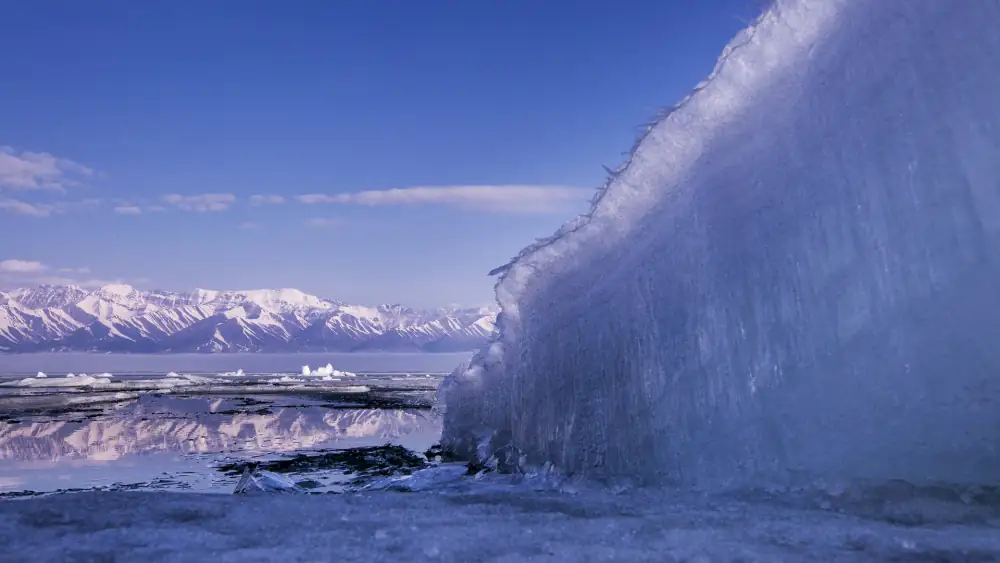
The Kanas region sits at a temperate continental latitude (approximately 49°N — the same as Paris or Vancouver) with a climate heavily influenced by Siberian weather systems. The forest is predominantly Siberian birch, Siberian aspen, Siberian larch, and Xinjiang spruce — a forest type essentially identical to those of the Russian taiga.
In October, when temperature swings between freezing nights and mild days trigger chlorophyll breakdown, the birches and aspens turn a remarkable egg-yolk gold while the larches turn soft amber. The spruce and fir stay deep green. The contrast — gold and amber and green above cobalt-blue lake water, under the white of early-season snow on the peaks — is a colour composition of extraordinary intensity.
Peak colour window: Typically September 25 – October 15. The window shifts slightly year to year depending on first frost date.
Kanas Lake
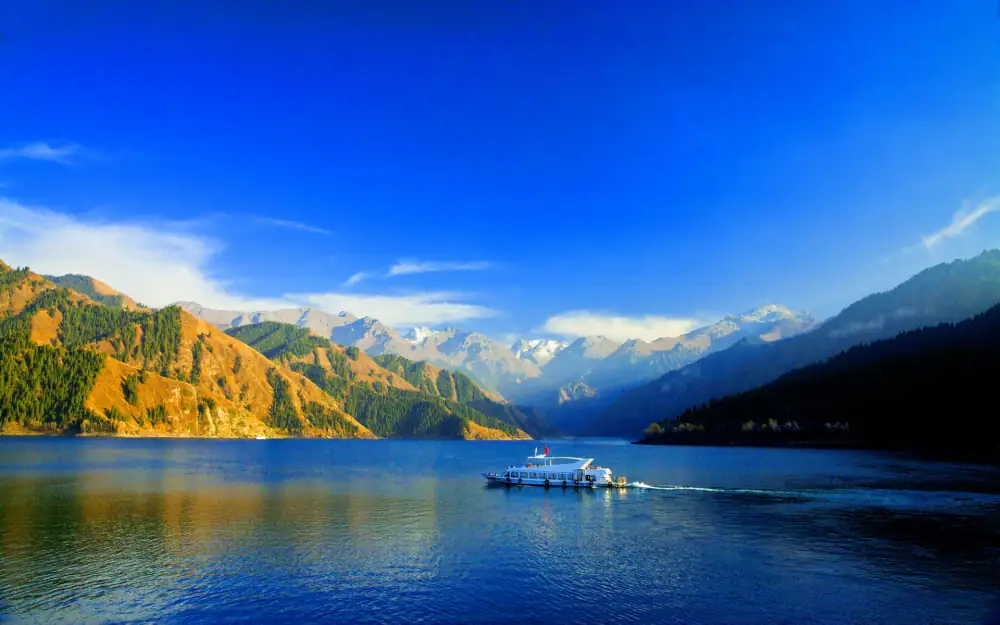
The lake itself is 24 km long, up to 2.5 km wide, and up to 188 metres deep — deeper than any other alpine lake in China. The water colour ranges from turquoise to deep blue depending on sediment load; early spring meltwater makes it greenish; by September it has settled to a cold, clear blue.
The lake is famous among Chinese tourists for an alleged resident monster — giant fish (hucho taimen, a salmonid that can exceed 2 metres in length) have been photographed from observation platforms. The monster theory is dismissed by ecologists but persists in popular imagination, adding a mythological dimension to what is already an extraordinary landscape.
Observation Tower (观鱼台)
A platform on the hillside above the northern end of the lake allows a panoramic view over the full length of the water. During October the surrounding forest from this viewpoint looks like a painter’s accident — streaks of gold and green across the valley. Allow 30–40 minutes to walk up from the lake shore.
Hemu Village (禾木村)
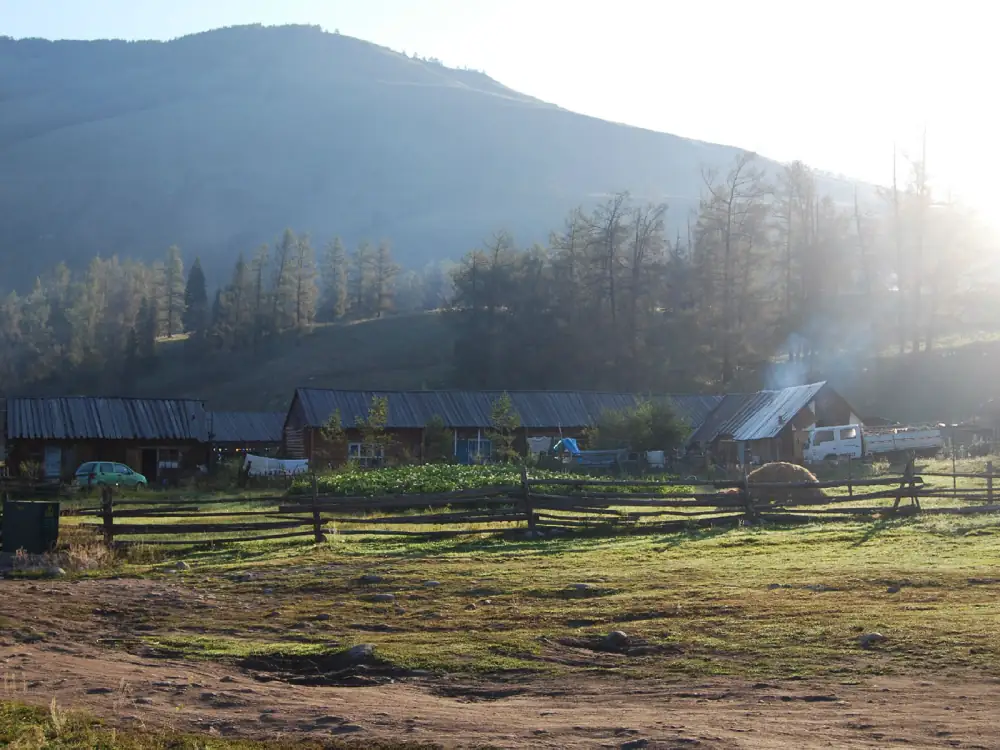
Hemu Village — 60 km south of Kanas Lake through a forest road — is the most beautiful village in the Kanas area and arguably one of the most photogenic rural settlements in China.
Its approximately 700 residents are Tuva Mongolian people — a small ethnic group whose ancestors were stranded in this valley when political changes closed the route back to their Siberian homeland in the 20th century. Their wooden log houses, smoking chimneys, and herds of horses and cattle grazing in frost-touched meadows create a scene that appears to belong to northern Russia.
Photography in Hemu
The classic shot — misty forest valley at dawn with wooden houses in the foreground and birch gold in the middle distance — is taken from the Hemu Observation Platform roughly 1 km above the village. Arrive before sunrise (around 7:30 AM in October) to catch the mist rising from the valley.
The village lanes themselves, with their roughhewn log fences and handmade wooden barns, repay slower exploration throughout the morning before the day-trip crowds from Kanas arrive.
Horse-riding in Hemu
Local Tuva families offer horse rentals for tours of the surrounding meadows and forests: ¥200–¥300 for 2–3 hours with a guide. The meadow above the village, framed by golden birch forest on three sides and snow-dusted peaks behind, is one of the most romantic riding landscapes in China.
Baihaba Village (白哈巴)
The third major village in the Kanas area, Baihaba sits at 1,905 metres on a tributary valley near the Chinese border with Kazakhstan. It is smaller and quieter than Hemu — perhaps 200 permanent residents, mostly Tuva and Kazakh families — and feels even more remote.
The village has no mobile signal and limited electricity; accommodation (in family guesthouses, ¥100–¥200/night) requires booking in advance through a tour operator or the scenic area management centre.
The forest around Baihaba is the most pristine in the area — large-diameter Siberian spruce and fir trees that have never been logged, with a forest floor of deep moss. Walking the unmarked trails requires a guide; the risk of getting lost in fog is real.
Wildlife
The Kanas region has one of China’s best-preserved temperate forest ecosystems:
- Snow leopard: Present in the high Altay above the treeline; tracks occasionally found in snow. Extremely rare to see.
- Siberian roe deer: Common in forest clearings at dawn and dusk.
- Brown bear: Present; rare incidents with hikers reported; make noise when walking in dense forest.
- Wolf: The region has a healthy wolf population; shepherds lose occasional livestock.
- Birds: Siberian rubythroat, Altai snowcock, black woodpecker, and numerous raptors.
Practical Information
Getting There
By Air: Fly to Altay (阿勒泰, ATY airport) from Ürümqi (1-hour flight, from ¥400). From Altay Airport, the scenic area is 180 km (3 hours by road). By Bus: Long-distance buses from Ürümqi to Altay (9–10 hours, ¥200); then minibus or chartered vehicle to Kanas (3 hours).
Scenic Area Logistics
The main Kanas Scenic Area requires a scenic area bus system — private vehicles are not permitted beyond the parking area. The internal bus connects the entrance, Kanas Lake, Hemu Village, and observation platforms.
Admission: ¥245 (includes internal bus; valid 2 days). Book online in advance during peak October season when daily visitor limits apply.
Accommodation
- Kanas Lake area: Scenic area guesthouses and eco-lodges, ¥400–¥800/night.
- Hemu Village: Family guesthouses, ¥150–¥350/night. Highly recommended for authentic atmosphere.
- Altay city: Full range of hotels for the journey in/out.
What to Bring
- Very warm clothing: Temperatures in October reach -5°C at night; snowfall possible.
- Waterproof hiking boots: Morning dew and frost makes paths slippery.
- Camera with wide-angle and telephoto lenses: Both forest close-ups and landscape panoramics reward different focal lengths.
- Cash: Limited ATM access within the scenic area.
Kanas in autumn asks a specific question of you: when have you last been somewhere genuinely remote? Where the signal is gone, the roads end, and what’s left is just the creak of birch trees in cold wind and the smell of woodsmoke from a Tuva house in the early morning.