
Table of contents
Open Table of contents
- Why Wanding Belongs on Your Yunnan Itinerary
- Getting There
- The Wanding Bridge and WWII History
- Jade and Amber Markets
- Dai and Jingpo Culture
- Tropical Rainforest and Nature
- Practical Border-Crossing Information
- Food in Wanding
- Where to Stay
- Best Time to Visit
- Budget Breakdown
- Tips for a Smooth Visit
- Suggested Two-Day Itinerary
Why Wanding Belongs on Your Yunnan Itinerary
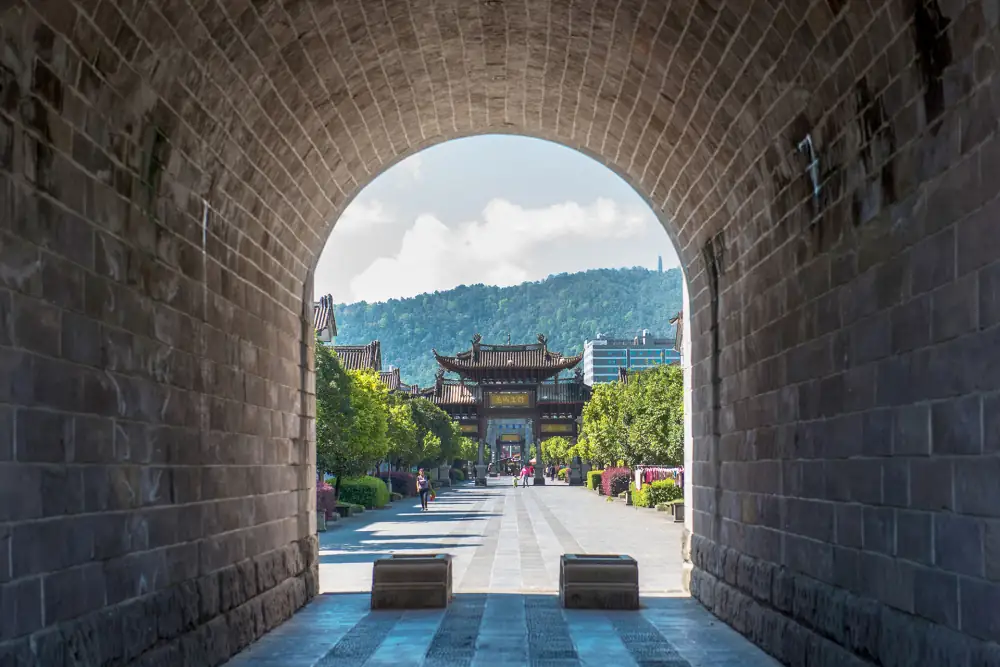
Most travellers racing through Yunnan stick to the Dali–Lijiang–Shangri-La corridor and never venture south of Xishuangbanna. That is a shame, because Wanding (畹町) offers something none of those places can: the electric, slightly surreal feeling of standing at China’s edge, watching a different country unfold just across a narrow river. This tiny border city — population roughly 30,000 — sits in Dehong Dai and Jingpo Autonomous Prefecture, pressed so tightly against Myanmar that you can literally throw a stone from one country into the other.
Wanding earned its place in history during World War II, when the Burma Road crossed the Wanding Bridge to ferry supplies into war-torn China. Today, it is better known for jade trading, tropical fruit, and a slow-paced border-town atmosphere that feels unlike anywhere else in the country. If you have already ticked off Yunnan’sgreatest hits and want something genuinely different, Wanding is your answer.
Getting There
By Plane
The nearest airport is Dehong Mangshi Airport (LUM), about 80 km from Wanding. It operates daily flights from Kunming (roughly 1 hour, ¥600–1,200 depending on season), Chengdu, and Chongqing. From the airport, you can take a taxi to Wanding for approximately ¥200–250, or catch a bus from Mangshi’s long-distance bus station (¥30, 1.5 hours).
By Bus
Long-distance buses run from Kunming to Mangshi (10–12 hours, ¥250–350 overnight sleeper), then a local bus or taxi to Wanding. There are also direct buses from Ruili, which is only 25 km away (40 minutes, ¥15). If you are already in Xishuangbanna, the bus to Mangshi takes about 8 hours.
By Car
Self-driving is increasingly popular. The Hangrui Expressway (G56) connects Kunming to Mangshi in about 8 hours. From Mangshi, National Highway 320 runs straight to Wanding. The road conditions are good, though the mountain stretches can be winding — drive carefully in rain.
The Wanding Bridge and WWII History
The old Wanding Bridge is the town’s most iconic landmark and the reason most outsiders have even heard of this place. Built in 1938 as part of the Burma Road, this modest steel-truss bridge carried everything from ammunition to medical supplies into China when the country’s eastern ports were under Japanese occupation. At its peak, thousands of trucks rolled across every month, driven by overseas Chinese volunteers and mechanics who kept the lifeline open under constant bombing.
A small museum beside the bridge (open 9:00–17:00, free admission) displays grainy photographs, old truck parts, and personal letters from drivers who never made it home. The exhibit is modest but genuinely moving. English captions are limited, so having a translation app handy helps.
The bridge itself is now closed to vehicle traffic but you can walk out to the midpoint and peer through the railings into Myanmar. The Nandian River below is barely 10 metres wide. On the opposite bank, you will see Myanmar’s town of Namkham — low-rise buildings, the occasional pagoda spire, and a pace of life that feels even slower than Wanding’s.
Jade and Amber Markets
The Border Trade Zone
Wanding’s economy revolves around cross-border trade, and the most visible manifestation is the bustling market area near the border crossing. Here, merchants from Myanmar sell raw jade, amber, teak furniture, and tropical hardwood carvings alongside Chinese vendors hawking electronics and daily necessities going the other direction.
The jade market operates daily but is most active in the mornings (7:00–12:00). Prices for small jade pendants start around ¥50 for low-grade pieces and climb into the tens of thousands for high-quality jadeite. If you are serious about buying, bring a loupe (10x magnifier) and a small flashlight — and remember that bargaining is expected. Opening offers are typically 2–3 times the real price.
Amber Row
Myanmar’s Kachin State produces some of the world’s finest amber, and Wanding is one of the easiest places to buy it directly from traders. A row of shops along the main road near the border specializes in amber jewelry and raw specimens containing insects — some dating back 100 million years. A small pendant with a visible insect inclusion costs ¥200–800 depending on clarity and species rarity.
A word of caution: The amber trade has ethical dimensions, as mining conditions in Myanmar can be dangerous and unregulated. Buy from established shops with proper receipts, and be aware that exporting certain amber specimens may require permits.
Dai and Jingpo Culture
Dai Villages
The countryside around Wanding is dotted with Dai villages, where stilted bamboo houses, Buddhist temples, and lush tropical gardens create a landscape that feels more Southeast Asian than Chinese. The village of Wanding Dai Garden (畹町傣族园), about 3 km from town, is the most accessible. Entry is free, and you can wander through traditional homes, watch Dai women weaving on looms, and sample fresh coconut rice.
If you visit during the Water Splashing Festival (mid-April), Wanding’s celebration is far less crowded than Xishuangbanna’s version but every bit as spirited. Expect to get thoroughly soaked — bring a waterproof case for your phone.
Jingpo Communities
The Jingpo (also spelled Jinghpaw) people are one of China’s smaller ethnic minorities, with a population of around 150,000 concentrated in Dehong Prefecture. Their villages cluster in the hills north of Wanding. The Jingpo are known for their Munao Zongge festival (usually held in February), featuring enormous log drums, group dances in traditional black-and-red attire, and sacrificial ceremonies that predate written history.
If you cannot time your visit for the festival, the Jingpo Mountain Villa (景颇山寨) near Mangshi offers cultural demonstrations including crossbow shooting, traditional singing, and a Jingpo-style feast of grilled meat with fermented soybean dipping sauce.
Tropical Rainforest and Nature
Moli Tropical Rainforest
About 20 km from Wanding, the Moli Tropical Rainforest (莫里热带雨林, ¥50 entry) is a lush, steamy wonderland of towering dipterocarp trees, strangling figs, and screaming cicadas. A well-maintained boardwalk trail (about 3 km round trip) leads through the forest to the Zhaduo Waterfall, a 60-metre cascade that crashes into a jade-green pool. The walk takes about 2 hours at a leisurely pace.
Bring insect repellent and wear long trousers — leeches are common on the forest floor during the rainy season (May–October). A small restaurant near the entrance serves decent Dai-style curry rice for ¥25–40.
Nanjingli Bamboo Forest
Closer to town, the Nanjingli area features dense bamboo groves and small streams popular with local families on weekends. There is no formal entry fee, and the area is ideal for a gentle morning stroll or picnic. Birders should bring binoculars — the region hosts hornbills, blue-bearded bee-eaters, and several kingfisher species.
Practical Border-Crossing Information
Day Trip to Myanmar
Wanding is one of the few land borders where foreign tourists can cross into Myanmar for a day trip without a pre-arranged visa. Here is how it works:
- Bring your passport to the Wanding Border Checkpoint before 11:00 AM
- Pay a border fee of approximately ¥200–350 (varies; cash only)
- You will receive a temporary entry permit valid until 6:00 PM the same day
- You must return before the deadline — overstaying incurs serious penalties
You can visit Namkham and nearby markets on the Myanmar side. Arrange a motorcycle taxi at the border for about ¥30–50 for a short tour. Important: Regulations change frequently. Confirm current rules at your hotel or with the border police before attempting to cross. Chinese nationals have different procedures from foreign passport holders.
Food in Wanding
What to Eat
Wanding’s food sits at the delicious intersection of Dai, Jingpo, and Burmese cuisines. Must-try dishes include:
- Dai lemon grass fish (柠檬草烤鱼): Whole fish stuffed with lemongrass, garlic, and chili, grilled over charcoal. ¥40–60 at riverside restaurants.
- Jingpo ghost chicken (景颇鬼鸡): Shredded chicken tossed with lime, cilantro, chili, and a local herb called “ghost grass.” Spicy, tart, and addictive. ¥35–50.
- Burmese tea leaf salad (茶叶拌菜): Fermented tea leaves mixed with peanuts, sesame, dried shrimp, and lime. Available at most border-area restaurants for ¥20–30.
- Mango sticky rice: Available everywhere during the summer months for ¥10–15.
- Barbecue street stalls: Night-time grill stalls along the main road serve skewered pork, chicken feet, and eggplant with Dai dipping sauces. Expect to pay ¥2–5 per skewer.
Where to Eat
- Wanding Border Restaurant (畹町国门饭店): Solid Dai and Burmese dishes, generous portions. ¥50–80 per person.
- Night market along Renmin Road: Dozens of stalls from 6:00 PM onwards. Great for snacking and people-watching.
- Jade Market snack stalls: Quick, cheap, and authentic. Perfect for breakfast — try the rice noodle soup with pork offal for ¥12.
Where to Stay
Wanding’s accommodation options are limited but adequate:
- Wanding Hotel (畹町宾馆): The town’s most established hotel. Clean rooms with air-conditioning, decent Wi-Fi. ¥180–280/night.
- Dai Garden Homestay: A family-run guesthouse in the Dai village 3 km from town. Basic but charming, with home-cooked breakfast included. ¥100–150/night.
- Ruili alternative: If Wanding’s options are full (common during holidays), Ruili has a wider selection. The Ruili Jingcheng Hotel (¥250–400) is a solid mid-range choice, and it is only a 40-minute drive back to Wanding.
Best Time to Visit
The optimal window is October through March, when temperatures range from 15–26°C and rainfall is minimal. April brings the Water Splashing Festival but also intense heat (often 35°C+). The rainy season from May to September turns roads muddy, increases leech activity in the forests, and makes the border crossing occasionally unreliable due to flooding.
Budget Breakdown
| Category | Budget (¥/day) | Mid-range (¥/day) |
|---|---|---|
| Accommodation | 100–150 | 250–400 |
| Food | 60–100 | 120–200 |
| Transport (local) | 20–40 | 50–100 |
| Attractions | 30–50 | 50–80 |
| Total | 210–340 | 470–780 |
Tips for a Smooth Visit
- Bring cash. ATMs in Wanding are limited, and many smaller vendors do not accept mobile payments from foreign apps.
- Learn a few Dai phrases. “Sawadee” (hello) and “kop chao” (thank you) go a long way in the villages.
- Dress modestly at temples. Cover your shoulders and knees when entering Dai Buddhist temples.
- Photography at the border. Do not photograph military installations or border guards without permission — this can result in your camera being confiscated.
- Mosquito protection. Wanding sits in a tropical zone. Bring DEET-based repellent and consider packing a mosquito net if you are staying in village homestays.
- Check border regulations. They change with little notice. Your hotel front desk or the local tourism bureau (0692-515-1888) can provide current information.
- Haggle respectfully. In the jade and amber markets, bargaining is part of the culture. Start at about 40% of the asking price and work upward with a smile.
Suggested Two-Day Itinerary
Day 1: History and Markets
- Morning: Walk the old Wanding Bridge and visit the WWII museum
- Late morning: Explore the jade and amber markets
- Lunch: Dai lemon grass fish at Wanding Border Restaurant
- Afternoon: Visit Wanding Dai Garden village
- Evening: Night market dinner and people-watching along Renmin Road
Day 2: Nature and Border Crossing
- Morning: Drive to Moli Tropical Rainforest for a 2-hour hike to Zhaduo Waterfall
- Lunch: Restaurant at Moli entrance
- Afternoon: Day trip across the border to Namkham, Myanmar (confirm regulations first)
- Evening: Return to Wanding for a farewell dinner of Jingpo ghost chicken
Wanding is not a place of grand sights. It is a place of atmosphere — the hum of a border that has seen war and trade for centuries, the scent of lemongrass and diesel mingling in the tropical air, and the quiet thrill of standing at the very edge of China. Come for the jade, stay for the ghost chicken, and leave with stories that nobody back home will believe.