
Chongqing’s Jiefangbei: Where the Mountain City Lives
Jiefangbei (解放碑, meaning “Liberation Monument”) is Chongqing’s traditional city center — the commercial and cultural heart of a city that defies conventional urban logic. Built across multiple mountain ridges above the confluence of the Yangtze and Jialing rivers, Chongqing’s downtown has no true ground level. What appears to be a ground-floor entrance may actually be on the 10th floor from another angle. Overpasses run through buildings. Subway stations exit directly into skyscraper lobbies.
The Jiefangbei district exemplifies this vertically complex city at its most extreme — and its most fascinating.
The Liberation Monument
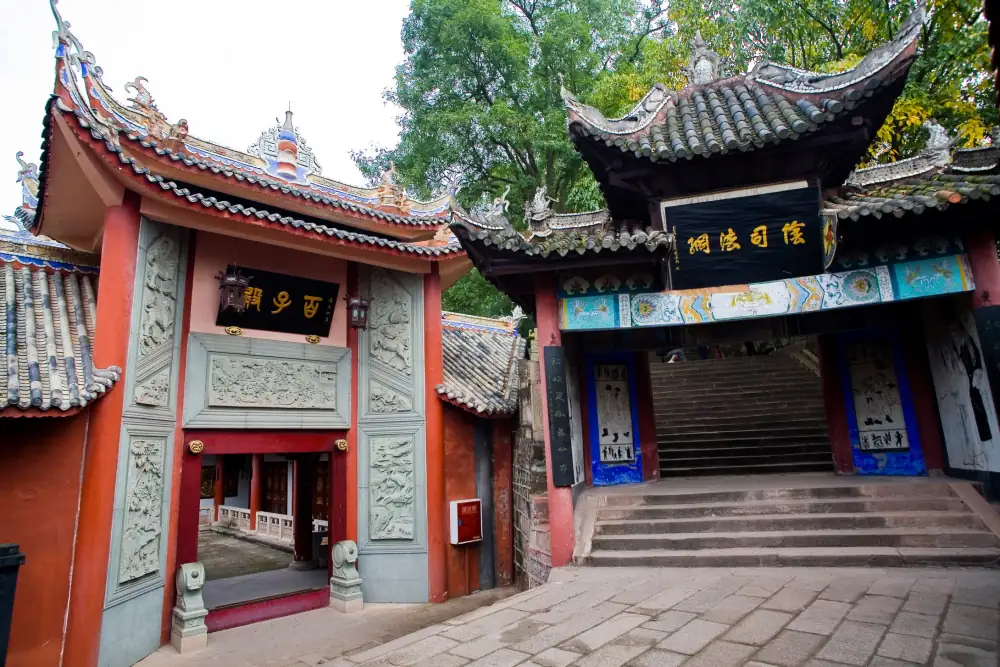
The Shengli Bei (Victory Monument) was built in 1945 to celebrate Japan’s defeat and China’s victory in World War II. In 1950, it was renamed and redesignated as the “Liberation Monument” to mark the Communist Party’s “liberation” of Chongqing. The 27-meter neoclassical column stands at the center of a pedestrian plaza that is one of China’s most bustling public spaces.
The monument is frankly less impressive than its location demands — it’s relatively small compared to the surrounding modern buildings. Its value is historical and symbolic rather than architectural.
The Clock: The monument features four clock faces (rarely synchronized with each other, for unclear reasons that locals find charming) and has been a meeting point for Chongqing residents for 70+ years.
The Underground Shopping City
Beneath Jiefangbei’s streets lies one of China’s most extensive underground commercial networks. The Jiefangbei underground city (解放碑地下商业街) connects multiple metro stations, hotel lobbies, shopping malls, and commercial spaces through a largely climate-controlled underground network.
Navigating this underground city is genuinely confusing — even for locals. The lack of street-level reference points, combined with the multiple building connections and the varying floor levels, creates a spatial puzzle. Most visitors simply flow with the crowd and emerge somewhere they didn’t intend to be.
The underground retail focuses on fast fashion, food courts, cosmetics, and phone accessories. Quality is mid-range at best, but the atmosphere and scale are worth experiencing.
Hongya Cave (洪崖洞)
Hongya Cave is the most iconic visual element of the Jiefangbei area — an 11-story stilted building complex built into a cliff above the Jialing River, with tier upon tier of restaurants, bars, and shops cascading down the hillside in a configuration that looks physically impossible.
The building complex was inspired by the traditional Diaojiao Lou (吊脚楼) stilt houses that historically covered Chongqing’s riverbanks before the city’s modern development. The reconstructed version preserves this architectural typology at much larger scale.
By day: A moderately interesting heritage commercial district with restaurants and shops. Entry is free; individual restaurant/bar charges apply.
By night: Transformed. The entire structure is illuminated with warm lighting, creating a layered spectacle of light and shadow that has made it one of China’s most shared images on social media. The view from the Qianxi pedestrian bridge below, looking up at the lit structure against the night sky, is genuinely spectacular.
Best time: 6-9 PM on clear evenings. Arrive around 5:30 PM to secure a riverside viewing position before the crowds peak.
Restaurants: The restaurants within Hongya Cave range from tourist-priced to actually-good. The hotpot restaurants on the middle floors (floors 4-6) tend to be more authentic than the ground-floor tourist traps. Look for restaurants where locals are eating rather than those with photo menus in multiple languages.
The 3D City Experience
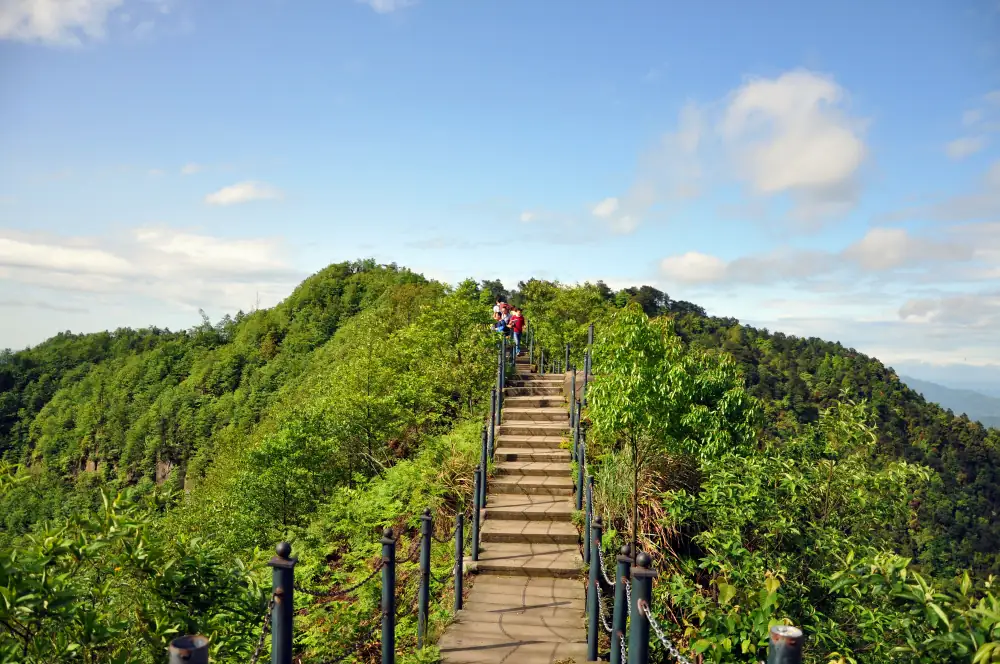
Chongqing’s topography creates urban experiences that feel literally impossible. A few Jiefangbei-area examples:
Liziba Light Rail Station (鹤皋岭轻轨站): On Chongqing’s Light Rail Line 2, the station is built directly through a 19-story residential building. The train passes through the building between the 6th and 8th floors. Residents are essentially sharing their building with public transit infrastructure. This is not a tourist attraction per se, but many travelers make a specific detour to ride through this station or watch from street level. It exemplifies Chongqing’s approach to urban infrastructure.
The “8D City”: Chongqing earned the nickname “8D City” on Chinese social media after videos went viral showing the layered, multi-level urban environment. A building’s “ground floor” may be the 10th floor from the street below and the 3rd floor from the street above. Multiple bridges intersect at different heights. What appears to be a flyover may be a pedestrian bridge connecting two buildings.
The most extreme concentration of this effect is in the Yuzhong peninsula’s narrowest parts, near the Jiefangbei metro station. Spend time wandering without purpose and the city will reveal its spatial complexity.
Food and Dining
Hotpot
Chongqing hotpot (重庆火锅) is the origin form of the dish now found throughout China. The authentic Chongqing version is dramatically different from milder variants: the broth is made from beef tallow (牛油) rather than oil, with huge quantities of dried chilies (干辣椒) and Sichuan peppercorns (花椒) creating a profoundly numbing, intensely spiced base.
The experience: A communal pot of furiously boiling red broth sits on a gas burner at the center of the table. Diners order raw ingredients — offal, meat, vegetables, tofu, noodles — and cook them in the pot. The meal proceeds at whatever pace the diners set, accompanied by sesame dipping sauce and considerable drinking.
In Jiefangbei specifically:
- Dezhuang Hotpot (德庄火锅): A Chongqing chain with a location near Jiefangbei; reliably authentic, middle-priced, popular with local business groups.
- Little Swan Hotpot (小天鹅): Another reliable chain. The local Chongqing-style broth option is what to order.
- Older alley restaurants: The most authentic hotpot experiences are in the small restaurants in the back alleys of the older residential neighborhoods north of Jiefangbei.
Other Street Food
Ci Ba (糍粑): Glutinous rice pounded into a sticky cake, available filled with sesame and sugar or plain.
Mahua (麻花): Twisted fried dough sticks — sweet or savory — that are one of Chongqing’s most visible street snacks.
Xiaomian (小面): Chongqing’s extremely spiced noodle soup (using Sichuan peppercorn, chili oil, sesame paste, and various aromatics). Radically different from any other Chinese noodle soup.
Chuan Chuan (串串): Street skewers dipped in a communal pot of hotpot broth — essentially portable hotpot. An extremely Chongqing experience.
Ciqikou Ancient Town (磁器口古镇)
About 20 km west of Jiefangbei, Ciqikou (磁器口) is a heritage commercial street in a river-bend location that gives it a different character from most Chinese tourist streets. The town has authentic Ming/Qing dynasty architecture (though much has been restored) and sits above the confluence of two small rivers.
What makes it different: Despite significant commercialization, the street food scene in Ciqikou preserves genuinely local products: Mahua (fried dough), Jiaoyan Duck (椒盐鸭), and freshwater fish preparations from the adjacent rivers.
Getting there: Metro Line 1 to Ciqikou Station. Entry to the street is free.
Practical Information
Getting to Jiefangbei:
- Metro Line 1 or 2, Jiefangbei Station (解放碑站)
- Exit 9 for the pedestrian plaza area
Navigation: Download offline maps before arriving. Baidu Maps handles Chongqing’s complexity better than Google Maps (which is less current for the city’s rapidly changing urban environment).
Weather: Chongqing earns its “foggy city” (雾都) reputation — the city sits in a river basin and is often covered in thick fog, especially November-March. This creates an atmospheric, noir-like city experience but limits photography opportunities. Summer (June-September) is hot and humid; the heat is trapped by the mountainous topography.
Accommodation: The Jiefangbei area has numerous hotels from budget chains to luxury properties. The Westin and Marriott both have properties here; budget options exist in the streets behind the main commercial area. Prices tend to be higher than comparable facilities in other Chinese cities, reflecting Chongqing’s growing tourism popularity.
Safety: Chongqing is a safe city. The major risks are the steep steps and narrow pathways that connect different levels — take care with footing, especially when wet. Nighttime crowds around Hongya Cave can be significant.
Jiefangbei is exhausting and exhilarating in equal measure. It’s a city center that refuses to make spatial sense, built by a people who found solutions to topographic challenges that most urban planners would never attempt. Leave time to get genuinely lost.