
If you want to understand why the Chinese tea ceremony exists, go to Chaoshan. The Chaoshan region — the historically distinct cultural area encompassing Chaozhou (潮州) and Shantou (汕头) in eastern Guangdong Province — has a tea-drinking culture so intensive and specific that the rest of China treats it as a separate category. The “gongfu cha” (功夫茶, “skill tea”) ceremony that has been adopted across China originated here, and Chaoshan people drink their Dancong oolong with a seriousness and frequency that borders on the ritualistic.
Why Tea Is Different Here
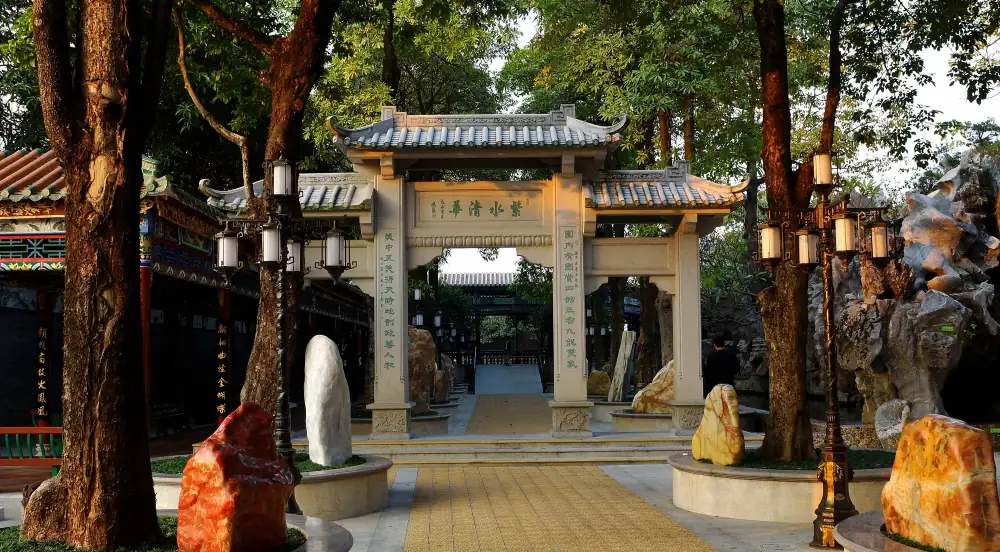
Chaoshan people drink tea all day. Not tea as a casual drink — tea as the organizing social activity of daily life. Meeting a business partner: tea first. Guest arrives: tea immediately. Family gathering: tea throughout. The frequency, the care with which each cup is prepared, and the sophisticated palate for different Dancong varieties distinguish Chaoshan tea culture from any other region.
The reason: The Chaoshan people are an Han subgroup with their own language (Chaoshan dialect — almost incomprehensible to standard Mandarin speakers), their own cuisine, and their own cultural traditions. Tea in this community is the universal social lubricant that has been refined over at least four centuries.
The Gongfu Tea Ceremony (功夫茶道)
The Chaoshan version of gongfu tea differs from the Taiwan or Fujian versions in several specific ways:
Scale: Tiny. The pot (literally called a “teapot” — 茶壶 cháhú) holds 50–100ml — enough for 3–4 shots. Three small cups (equally tiny) are placed on a “tea boat” that catches overflow.
Process:
- Heat the water to a full boil (100°C for Dancong; slightly lower for more delicate teas)
- Rinse the pot with boiling water
- Fill the pot with leaves — very generously (30–40% full or more)
- First pour: Rinse the leaves (1 second pour, discard — this is called “washing the tea” 洗茶)
- Second pour: Fill to overflow, sweep the bubbles off the surface with the lid, replace lid
- Pour with a single decisive circular motion filling all three cups equally
- Pass cups; drink in one small sip (not sipped slowly — it’s too hot and the point is the temperature)
- Repeat. Immediately. A good Dancong can be infused 10–15 times with variable character at each stage
The social choreography: In traditional Chaoshan tea service, the host manages the ceremony; guests do nothing except receive and drink. Refusing a cup is a social offense. The rhythm of offer, receive, drink, refill creates an intimate social framework that sustains conversation over hours.
Dancong Oolong (单丛乌龙)
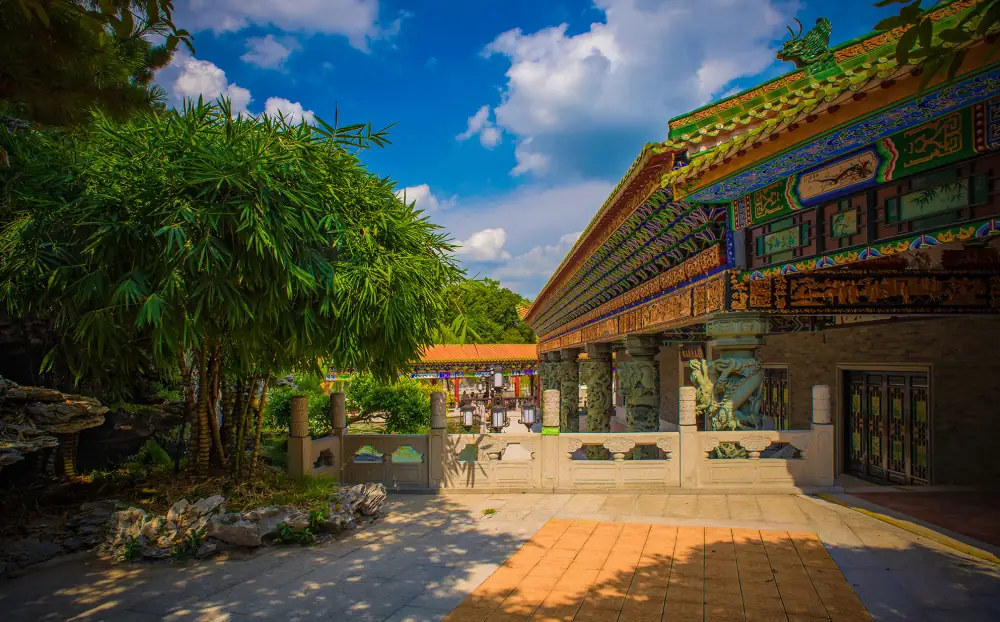
Phoenix Mountain (凤凰山) behind Chaozhou produces the Dancong family of oolongs — the most fragrance-diverse group of teas in China. “Dancong” means “single bush” — traditionally, each variety was propagated from a single old-growth tea tree with distinctive characteristics.
Major Dancong varieties by aroma:
- Honey orchid (蜜兰香): Most common; sweet floral honey character; accessible to new drinkers
- Yellow branch (黄枝香): Osmanthus flower aroma; lighter body
- Almond scented (杏仁香): Distinctive marzipan note; one of the rarest
- Duck shit (鸭屎香): The most famous despite its name — the grower supposedly gave it this name to discourage theft; intensely complex, deep oolong fragrance; extremely popular and expensive
Grade indicators: Dancong quality is indicated by harvest season (spring > autumn), elevation (higher = better) and age of the tea tree (old trees command premium prices). A tea from a 300-year-old single tree might cost thousands of yuan per 50g.
What to buy: For a first encounter with Dancong, buy a mid-range Honey Orchid (蜜兰香) as the most approachable style. Expect to pay ¥100–300 per 50g for a genuinely good version. Avoid suspiciously cheap Dancong — it likely isn’t real Phoenix Mountain tea.
Where to Experience Gongfu Tea
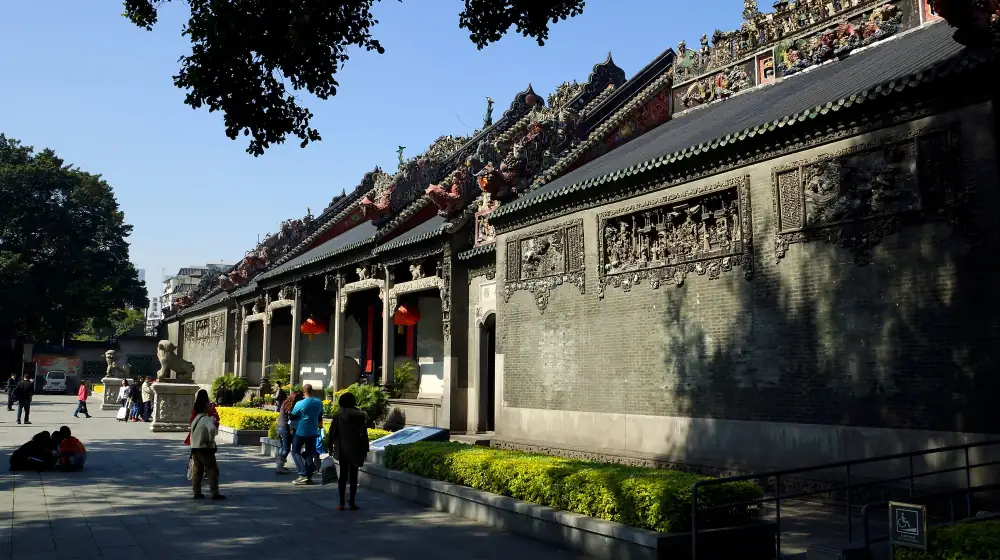
In Chaozhou (潮州古城)
Chaozhou’s old city (reached by high-speed train from Shantou or Guangzhou) contains several traditional tea houses on the narrow stone-paved streets near the Han River embankment:
Guang Ji Lou Tea House (广济楼茶馆): Near the famous Guangji Bridge; traditional setting; formal gongfu service available ¥80–200 per person depending on tea chosen.
The old city streets: Many small tea shops along the old city lanes (特别是上水门街 Shangshuimen Street) sell Dancong direct from the grower. Most will serve you tea to taste before buying.
In Shantou (汕头)
A larger modern city; the tea culture is expressed more in family and private settings than formal establishments. Hotel lobbies and the old Xiaogongyuan park area have tea service options.
Ordering at Any Chaoshan Restaurant
At any Chaoshan-run restaurant (you’ll find them throughout Guangdong, in Hong Kong and in Southeast Asian Overseas Chinese communities), tea is automatic. The gongfu set arrives at the table before the menu. This is the natural habitat of the ceremony.
Chaoshan Cuisine Connection
Chaoshan cuisine is considered one of the great regional cuisines of China — celebrated for delicacy, seafood expertise and a preference for natural flavors without heavy saucing. Tea drinking and Chaoshan food are intertwined: specific teas are consumed before, between and after specific dishes to cleanse the palate and aid digestion.
Particularly with: Goose (卤水鹅 braised goose is the Chaoshan signature dish), oyster pancakes, steamed seafood with dipping sauces.
Getting to Chaoshan
By high-speed train:
- From Guangzhou East: 2 hours to Shantou or Chaozhou; ¥100–150
- From Xiamen: 1.5 hours; ¥80–120
- From Shenzhen: 2.5 hours; ¥120–180
The area is easily combined with Xiamen (Fujian coast) and Guangzhou in a southeastern China circuit.
The Chaoshan tea ceremony doesn’t need to be formally performed to be experienced — simply sitting in a local tea shop in the Chaozhou old city and being served three rounds of Dancong by an unhurried proprietor while watching the street outside is a more complete encounter with the ceremony than most formal demonstrations.