
Chaozhou: The City That Shaped Southeast Asia’s Chinese Communities
Chaozhou (潮州) sits on the Han River in eastern Guangdong, 40 km from the South China Sea. For centuries, its geographic isolation from the Cantonese-speaking heartland of Guangdong allowed it to develop a completely distinct culture: the Teochew language (unintelligible to Cantonese and Mandarin speakers), a cuisine of extraordinary refinement, and a tradition of seafaring and migration that carried Teochew culture to Singapore, Thailand, Cambodia, Vietnam, Malaysia, and Indonesia.
An estimated 10 million people of Teochew descent live outside China today — the largest component of Southeast Asia’s overseas Chinese communities. When they maintain Chinese cultural practices, it is predominantly Chaozhou culture they are maintaining: Gongfu tea ceremonies, Chaozhou opera (潮剧), ancestral hall rituals, and a cuisine that Shanghai and Beijing have never heard of but that serious food people rank among China’s most sophisticated.
The Ancient City
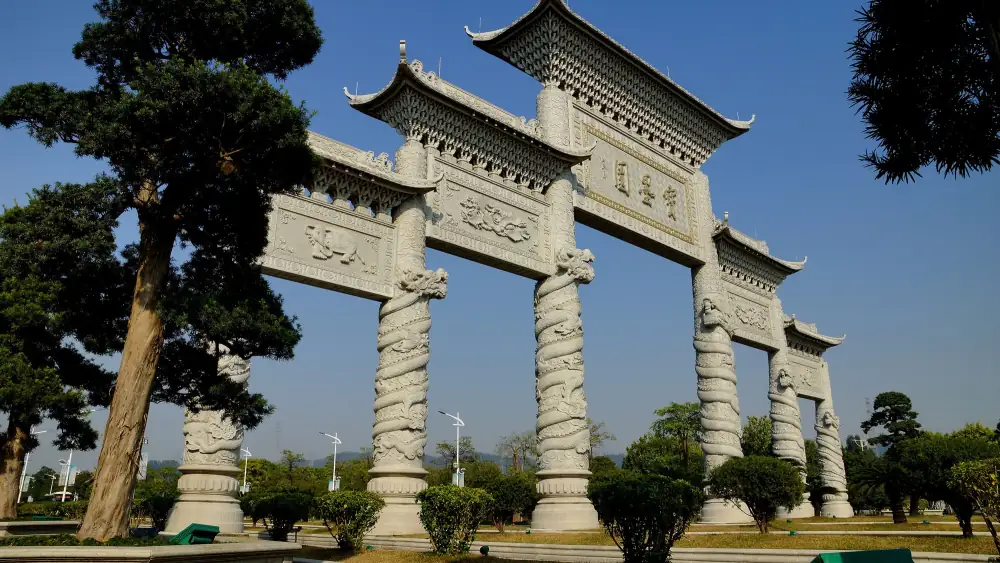
Chaozhou’s walled old city (潮州古城) is one of the best-preserved in Guangdong — its main street, Paifang Street (牌坊街, Memorial Arch Street), is lined with 22 stone memorial arches erected during the Ming and Qing dynasties, reconstructed in the early 2000s.
The Old City Streets behind Paifang Street preserve the actual urban fabric: narrow lanes flanked by traditional shophouses with carved wooden facades, ancestral halls, and 17th–19th century courtyard residences. This area is genuinely inhabited — residents hang laundry between carved wooden screens and cook on charcoal stoves in medieval courtyards.
Key buildings:
- Kaiyuan Temple (开元寺): A Tang dynasty Buddhist temple founded in 738 CE, rebuilt in Qing dynasty form; the largest and most important Buddhist temple in Chaoshan.
- Guangji Bridge (广济桥, Xiangzizhou Bridge): Built in 1170 CE, a 505-metre bridge combining fixed stone piers with a floating pontoon centre section — unique in Chinese bridge engineering. The floating section was removed every evening and replaced each morning to allow boats to pass; the tradition is still enacted daily.
- Han Wengong Temple (韩文公祠): Dedicated to Han Yu (768–824 CE), the Tang poet and official exiled to Chaozhou whose advocacy for the local people made him the city’s patron figure.
Gongfu Tea (功夫茶)
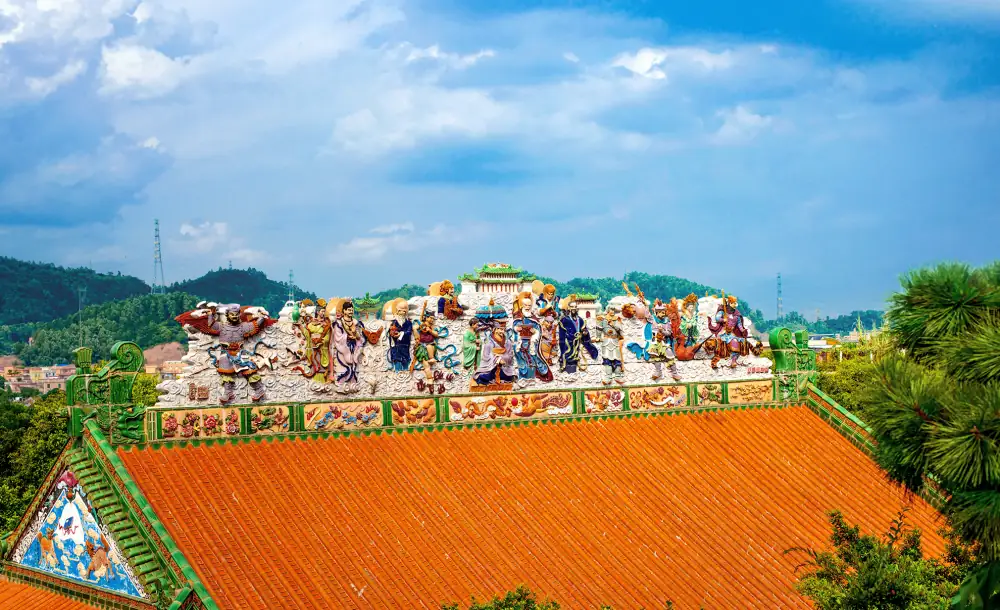
Chaozhou is the birthplace and heartland of Gongfu tea (功夫茶) — the elaborate tea service using tiny teapots (宜兴 Yixing clay or even smaller Chaozhou red clay pots), tiny cups, and a meticulous preparation ritual that is the foundation of all formal Chinese tea culture.
The Chaozhou version is more intense than the Japanese tea ceremony and less theatrical: it is conducted as part of conversation, as hospitality, and as daily ritual. The tea used is primarily Phoenix Single Trunk Oolong (凤凰单丛) — grown on the Phoenix Mountains (凤凰山) north of Chaozhou, a range of high-altitude teas with extraordinary aromatic variation (individual trees produce scents described as orchid, honey, ginger flower, or gardenia, depending on genetics).
Where to experience Gongfu tea:
- Any traditional Chaozhou household will serve tea to visitors — if you are invited into an ancestral hall or home.
- Phoenix Mountain (凤凰山) tea villages: A day trip from Chaozhou; farmers brew fresh single-trunk oolong at the farm.
- Tea houses on West Lake (西湖): Several traditional tea houses with lake views serve proper Gongfu tea service.
Teochew Cuisine
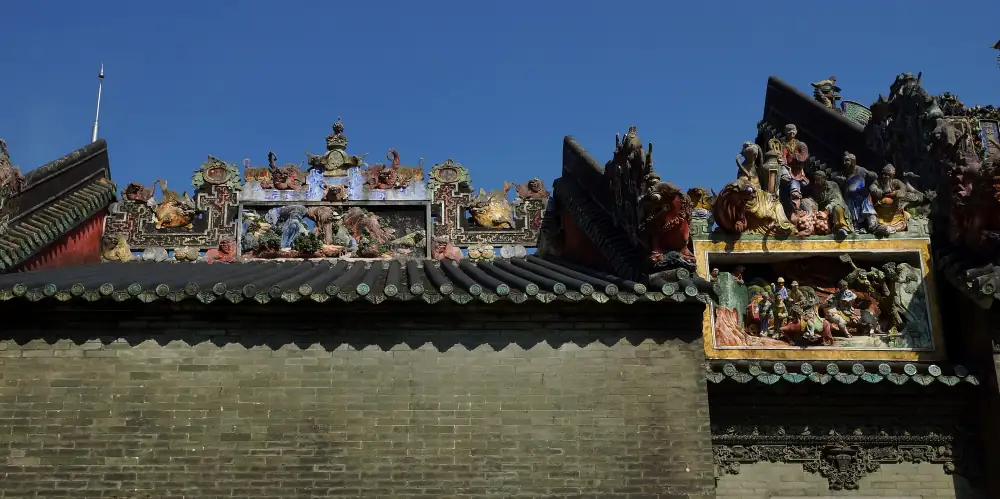
Teochew cuisine is known for:
Chilled crab (冻蟹): Raw or briefly steamed crab refrigerated and served cold — a technique that concentrates the flavour. Steamed fish: Minimal seasoning; the quality of the fish itself is the point. Oyster omelette (蚝烙): A crispy pan-fried oyster and egg dish with starchy texture — one of Southeast Asia’s most popular street foods, originated here. Teochew congee (潮州粥): Extremely thin rice porridge served with elaborate small side dishes — salted egg, preserved vegetables, braised pork, marinated tofu. Braised goose (卤鹅): The Teochew master braising tradition applied to goose — the technique involves gradual braising in spiced soy sauce with periodic resting.
Best eating: The streets around the old city; Guiyan Road (桂园路) and the food stalls near the old bridge for authentic local dining.
Practical Information
Getting there: High-speed train from Shenzhen (1.5 hours) or Guangzhou (1.5 hours) to Chaoshan Station; taxi to Chaozhou old city (20 min, ¥30). Duration: 2–3 days to experience old city, cuisine, and Phoenix Mountain tea. Best time: October–April (avoid the hot and humid summer).
Chaozhou is the Chinese city that most clearly demonstrates how culture can persist across distance and diaspora — the 10 million overseas Teochew maintain ceremonies, recipes, and tea rituals from this city, 50 years and 3,000 km removed.