
Taishan (台山) occupies a peculiar position in the history of the Chinese diaspora. When the transcontinental railway was being built in North America in the 1860s, when the gold rushes drew migrants to California and British Columbia, when the sweatshops and laundries of early Chinatowns were being established — the vast majority of those migrants came from a small cluster of counties in western Guangdong, with Taishan (then called Hoisaan or Toisaan) supplying the largest share.
At the peak of this emigration wave, it’s estimated that as many as 60% of all ethnic Chinese in North America traced their origins to Taishan. The Taishanese dialect (台山话) — not Cantonese (广东话) — was therefore the dominant Chinese language in North American Chinatowns for decades. The word “chop suey” itself is a Taishanese phrase (杂碎).
Today, Taishan is a mid-sized city with excellent hot springs, a fascinating Overseas Chinese Museum, unique architectural heritage, and food culture that has been shaped by both Guangdong tradition and remittance money from abroad.
Table of contents
Open Table of contents
Getting to Taishan
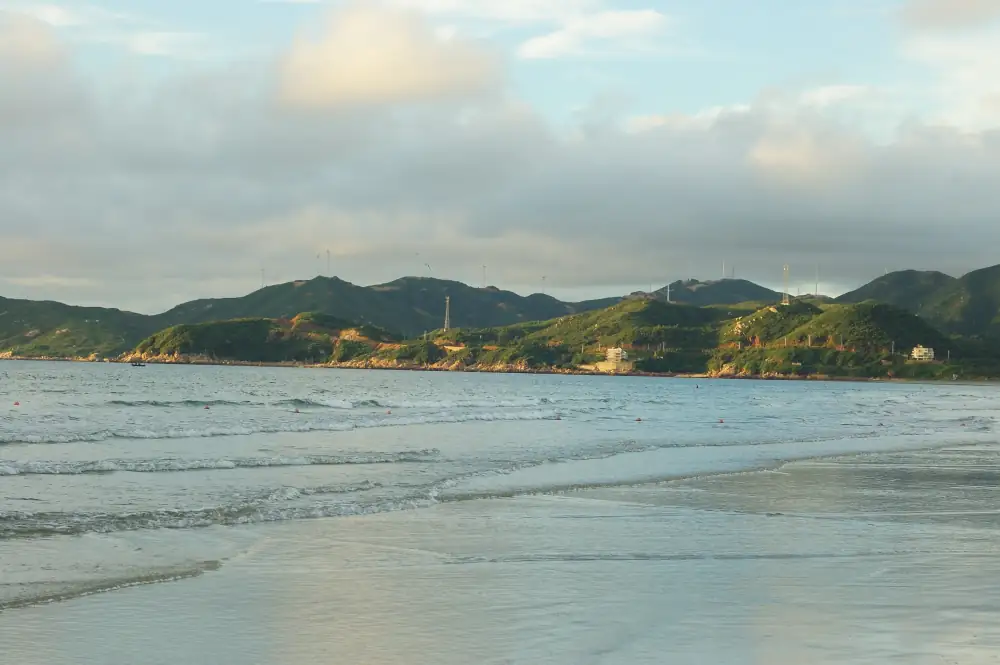
From Guangzhou:
- By bus: Express buses from Guangzhou Tianhe Bus Terminal or Fangcun Bus Terminal; 2–2.5 hours; departures every 30 minutes; tickets ¥60–80
- By train: High-speed train from Guangzhou South to Taishan North Station; about 1.5 hours; ¥80–120
From Zhuhai/Macau:
- About 1.5 hours by bus; convenient for travelers arriving from or heading to Macau (Taishan is a natural add-on to a Macau trip)
- Taishan to Macau: ¥60–90; frequent departures
From Hong Kong:
- Buses from Hong Kong’s cross-boundary coaches take about 3 hours (including the border crossing); ¥150–200
Getting around Taishan:
- The city center is compact and walkable
- Hot springs resorts are 20–40km from the city center; taxi or hire car recommended (¥60–120 round trip)
- Many heritage villages are accessible by local bus (¥8–20) or motorcycle taxi
The Overseas Chinese Museum (台山华侨博物馆)
The best starting point for understanding what makes Taishan distinctive is this museum in the city center. The collection documents the history of Taishanese emigration with unusual depth and — unusually for Chinese official institutions — considerable nuance.
The exhibition:
- Documents the “Gold Mountain” (金山) migration wave beginning in the 1850s; “Gold Mountain” (金山) was the Taishanese term for California and later for America generally
- The hardships of early immigration: discriminatory laws, exclusion acts, racial violence, working conditions on the railways
- The remittance economy: how money sent back from abroad transformed Taishan’s built environment and social structure
- Family separation: the practice of leaving wives and children in Taishan while the men went abroad, sometimes for decades
Exhibits include:
- Photographs of early Chinese American life (many showing Taishanese-origin families)
- Letters and remittance receipts
- Examples of the “Gold Mountain Letters” (金山书信) — correspondence that could take months to arrive each way
- The “Paper Son” documentation — forged family papers used to circumvent the Chinese Exclusion Act
Entry: Free
Hours: 9:00am–5:00pm (closed Mondays)
The Overseas Chinese Architecture (华侨建筑)
The remittance money that flowed back to Taishan from North America and Southeast Asia from the 1880s onward funded an extraordinary building boom in the villages surrounding the city. The result is a distinctive architectural style — stone and brick buildings combining Cantonese vernacular construction with Western architectural elements (classical columns, arched windows, Art Deco ornament) that the emigrants had encountered abroad.
Chikan Old Town (赤坎古镇): About 20km from Taishan city, Chikan is the best-preserved example of this overseas Chinese architectural heritage. The main street has a continuous colonnade of multi-story shophouses built between 1920 and 1940 — each building is slightly different, each showing a different interpretation of the East-meets-West aesthetic.
- Several buildings are now cafes, boutique shops, and guesthouses
- The Guanhai Lou (观海楼) — a multi-story watch tower built by a returned overseas Chinese in 1920 — offers rooftop views of the old town
- Entry to Chikan: free for general entry; ¥50 for the main heritage buildings
Dioulu (碉楼 / Watchtowers): Scattered throughout the Taishan countryside are hundreds of multi-story fortified towers — dioulu — built by returned overseas Chinese to protect their wealth and families from bandits and warlords. These towers combine defensive functionality with architectural ambition, incorporating gun ports, reinforced floors, and elaborate exterior ornament. The best-preserved cluster is at Kaiping (开平), about 30km north, which has UNESCO World Heritage status; but Taishan itself has dozens of excellent examples accessible from secondary roads.
Taishan Hot Springs (台山温泉)
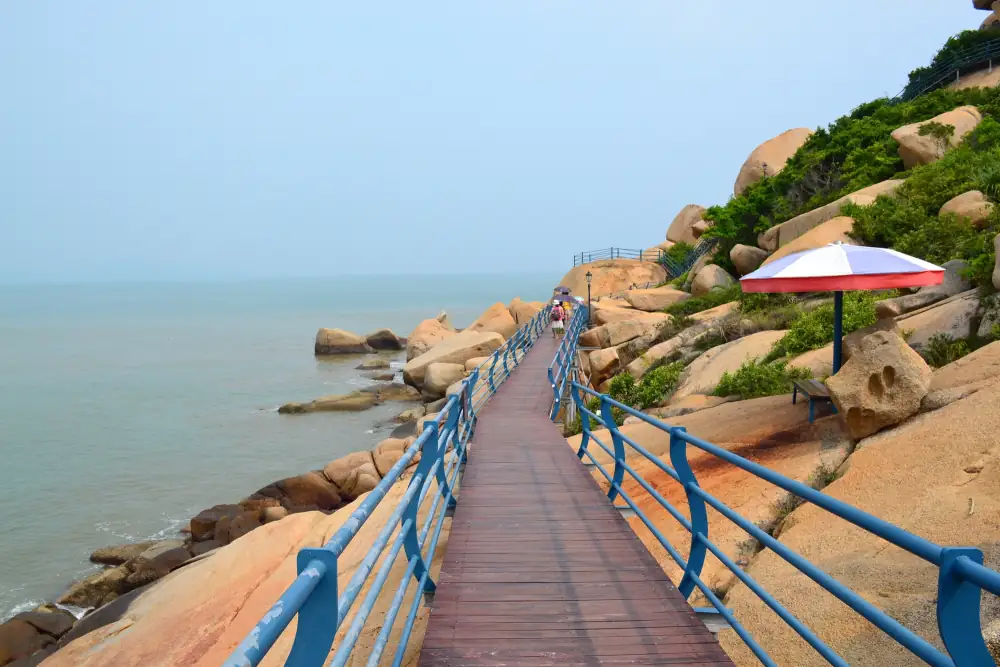
Taishan has one of the highest concentrations of geothermal activity in Guangdong, with multiple distinct hot spring resorts operating in the surrounding hills.
Tiantian Hot Spring Resort (天天温泉): The most popular and accessible option, located about 25km from the city center:
- Multiple outdoor pools at different temperatures (38°C to 45°C)
- Indoor and outdoor options; some pools are mineral-rich with sulfur content
- Evening illuminated pool sessions are popular; the resort stays busy until 11pm
- Entry: ¥80–150 per person (depending on day/time); private hot spring villa rooms available (¥350–600/night)
Shuikou Hot Spring (水口温泉): A more upscale resort with natural mineral water pools; located in a forested setting; ¥120–200 per person entry.
Tonggu Chong Hot Spring (铜鼓冲温泉): Less developed and more natural-feeling; good option for those who find the larger resort atmosphere too commercial; ¥60–80 per person.
Best time for hot springs: Any time of year, but autumn and winter (October–March) are especially popular — soaking in warm mineral water while cool air provides a temperature contrast is the ideal experience.
Taishan Food Culture

Taishanese cuisine is a subset of Cantonese but with distinctive characteristics — particularly the influence of ingredients and techniques brought back by overseas Chinese, and the unique hot pot traditions.
Taishan Hot Pot (台山打边炉): The Taishanese version of hot pot (called “dabian lu” in Cantonese — literally “hit the side stove”) uses a thin, clear broth and focuses on extremely fresh seafood and premium meats. The Taishan area’s coastal access means the seafood quality is excellent.
- Typical ingredients: Live prawns, fresh fish sliced to order, oysters, crab, and seasonal vegetables
- Broth: Light and clean, designed not to overpower delicate seafood flavors
- Sauce: Simple dipping sauce of soy, ginger, and spring onion; the quality of the ingredients speaks for itself
Good hot pot restaurants in Taishan city center: expect to pay ¥100–200 per person for a full dinner with fresh seafood.
Taishan Sausage (台山腊肠): The local dried sausage is considered among the finest in China. Fatter and sweeter than Cantonese lap cheong, with a distinctive caramelized flavor from sugar and preserved orange peel. Buy at the city market (¥80–150/500g); excellent as a gift.
Taishan Dumplings (台山鱼饺): Fish paste dumplings wrapped in a thin skin made from fish paste rather than wheat flour; light, slightly translucent, and distinctive in texture.
Visiting the Overseas Chinese Villages
The actual villages that produced Taishan’s diaspora are still there — small settlements surrounded by rice paddies and fruit orchards, now home mainly to elderly residents. The most atmospheric are:
Doushan (斗山): Known for its concentration of dioulu towers and its market town atmosphere unchanged since the 1940s
Guanghai (广海): A coastal town 40km south of Taishan city with fishing harbor, old town streets, and a fortress built to defend against Japanese piracy in the Ming Dynasty
Chikan-Duhu area: The cluster of villages around Chikan old town contains dozens of dioulu towers in various states of preservation, many still occupied by elderly residents
A note on visiting villages: Many overseas Chinese families with Taishan roots make “root-seeking” pilgrimages to find their ancestral villages. The local tourism bureau (台山市文化旅游局) has a service to help connect overseas families with their village of origin, including access to clan genealogy records.
Practical Tips
Best season: October to April (dry season); the summer monsoon makes hot spring visits less pleasant and some village roads muddy.
Taishan dialect: Although Mandarin works fine in the city and tourist sites, elderly village residents may speak only Taishanese (台山话) or Cantonese. A translation app helps.
Currency: Cash is widely used in village restaurants and markets; Alipay and WeChat Pay work in the city center.
Stay: Several comfortable hotels in Taishan city center (¥200–400/night). Hot spring resort accommodation (¥350–800/night) is a popular choice if budget allows — many resorts include unlimited hot spring access with room bookings.
Combine with: Kaiping UNESCO dioulu (30km north), Jiangmen city (45km), and Zhuhai (90km) make good additions to a Taishan trip.