
China’s cities are layered with history, and the best way to uncover them is on foot. In the Pearl River Delta, two destinations offer especially rich self-guided cultural walks: the old heart of Guangzhou and the dynamic town of Guicheng in Foshan. These routes weave through centuries of architecture, local food traditions, and living communities — perfect for travellers who want to go beyond the tourist trail.
Table of contents
Open Table of contents
- Why Walk? The Appeal of Urban Cultural Routes
- Route 1: Guangzhou’s “Disappeared Gates” — From West Gate to Temple
- Route 2: Guicheng’s “Dragon Soaring” Walk — Water Villages and Modern Lights
- Route 3: Guicheng’s Jade Walk — From Market to Museum
- Route 4: Guicheng’s Food Walk — A Taste of Cantonese Heritage
- Practical Tips for Self-Guided Walks
- Where to Stay
- Conclusion
Why Walk? The Appeal of Urban Cultural Routes
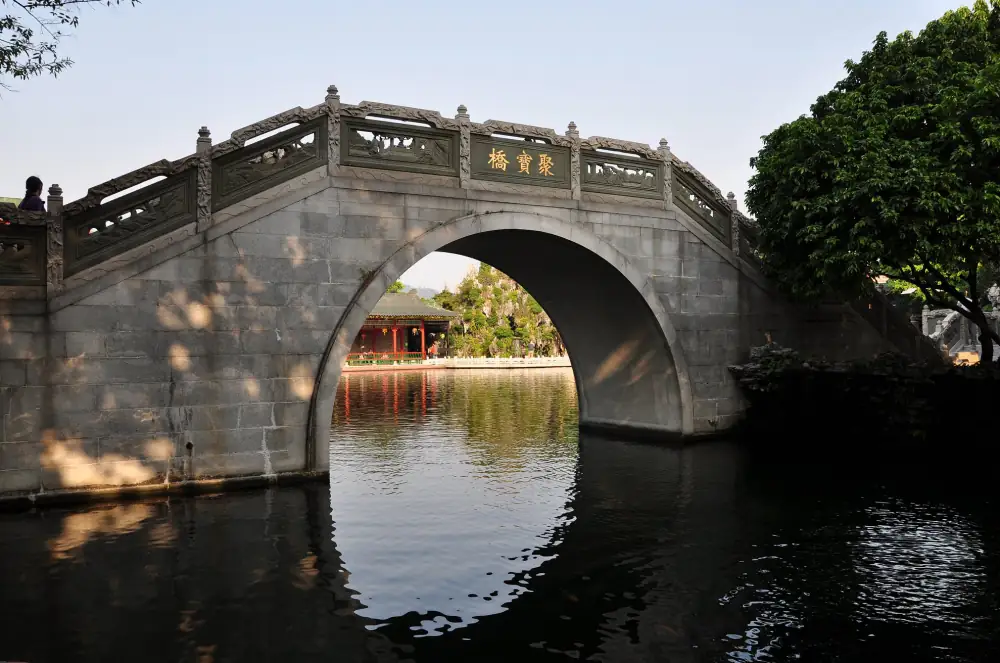
Self-guided walking tours let you set your own pace, linger where you like, and discover hidden corners that buses and taxis skip. In Guangzhou and Guicheng, the streets themselves tell stories of migration, trade, and innovation. You’ll encounter Ming dynasty city walls, colonial-era华侨 (overseas Chinese) villas, ancient Buddhist temples, and buzzing wet markets — all within a few kilometres.
Route 1: Guangzhou’s “Disappeared Gates” — From West Gate to Temple
This evening walk (about 2 hours) traces the vanished gates of Guangzhou, starting at the trendy Huiji West area and ending at the site of the old West Gate. It’s a journey through 1,300 years of urban history.
Start: Huiji West (惠吉西, Huìjí Xī)
Metro: Line 1 to Ximenkou Station, Exit A. Meet under the Huiji West archway (near Yeji Sweet Soup shop).
Huiji West was once the seat of Nanhai County, which governed half of Guangzhou from the Sui dynasty (581–618) until 1920. Today, it’s a leafy enclave of red-brick华侨 houses built in the 1920s and 1930s. The area feels like a time capsule: art deco details, coffee shops, and music studios nestle beside century-old homes.
Highlights:
- Yeji Sweet Soup (业记甜汤) — a family-run dessert shop that started as a pushcart 40 years ago. Try the black sesame paste (芝麻糊, zhīmahú) for ¥8.
- 36SML Old Object Café — a 1923华侨 townhouse turned café, filled with vintage radios and Cantonese opera records.
- The Site of Ta Kung Pao (大公报) — the famous newspaper once operated from Huiji West’s No. 2 Lane.
Stop 2: Guangxiao Temple (光孝寺, Guāngxiào Sì)
Walk south along Guangxiao Road. The temple is one of Guangzhou’s oldest, dating to the 4th century. It’s known as the “ancestral temple of Zen Buddhism” — in 676 AD, the Sixth Patriarch Huineng gave his famous “wind or flag?” sermon here, leading to his ordination under a bodhi tree. The hair-burial pagoda (瘗发塔) still stands.
Tip: Entry is free with registration. Dress modestly (no shorts above the knee). Incense is provided.
Stop 3: Guangxiao Church (光孝堂, Guāngxiào Táng)
Just steps from the temple, this Gothic-style Protestant church was built in 1924 by overseas Chinese Christians. It’s a symbol of self-determination — entirely funded and designed by Chinese believers. The interior features stunning stained glass and a pipe organ.
Note: Open to visitors; check for service times if you want to hear the choir.
End: West Gate Walled City Site (西门瓮城遗址, Xīmén Wèngchéng Yízhǐ)
At the intersection of Zhongshan Qi Road and Renmin Bei Road, a small park hides the remains of Guangzhou’s Ming dynasty (1380) city gate. The gate was demolished in 1918 during urban modernisation, but the red sandstone foundation survives. Look for the “city wall” line in the pavement — it marks where the old city ended and the bustling Xiguan commercial district began.
Route summary: Huiji West → Guangxiao Temple → Guangxiao Church → West Gate site. Distance: ~1.5 km. Best done late afternoon to evening (start 5:30 pm).
Route 2: Guicheng’s “Dragon Soaring” Walk — Water Villages and Modern Lights
Guicheng (桂城, Guìchéng) is a wealthy suburb of Foshan, about 30 minutes from Guangzhou by metro. Despite its modern skyline, it preserves a network of narrow canals where dragon boats race. This walk follows the “Dragon Soaring a Thousand Lights” route, blending ancient water villages with the futuristic Qian Deng Lake.
Start: Diejiao Water Village (叠滘水乡, Diéjiào Shuǐxiāng)
Take Foshan Metro Line 3 to Diejiao Station, then walk 10 minutes. Diejiao is famous for its extreme dragon boat racing — 25-metre-long boats navigate hairpin turns in canals only 4–5 metres wide. Even when there’s no race, the canals are lined with banyan trees, ancestral halls, and old houses.
Highlights:
- Diejiao Village History Museum — free entry; learn about the dragon boat culture and local history.
- Jiang’s Ancestral Hall (江氏大宗祠) — built in the Ming dynasty, honouring the “father of Cantonese cuisine” Jiang Kongyin.
- Shuntai Pawnshop Tower (顺泰大押) — a 23-metre Qing dynasty watchtower.
Midway: Tujia Guild Hall (图甲会馆) and Local Eats
This restored Qing office now houses a restaurant serving Guicheng winter melon pot (冬瓜盅, dōngguā zhōng) — a hearty soup cooked inside a whole melon. Try the “one pot, four flavours” set for ¥68.
End: Qian Deng Lake (千灯湖, Qiān Dēng Hú) and Kui Xing Pavilion
Walk 20 minutes east (or take a 5-minute taxi) to Qian Deng Lake. This free public park features 1,300 lights that illuminate the waterfront at dusk. Climb the seven-storey Kui Xing Pavilion (魁星阁) for panoramic views of the city.
Evening option: Rent a pedal boat (¥50/30 min) or visit the Whisky Street (灯湖·樽岸) for a nightcap.
Route 3: Guicheng’s Jade Walk — From Market to Museum
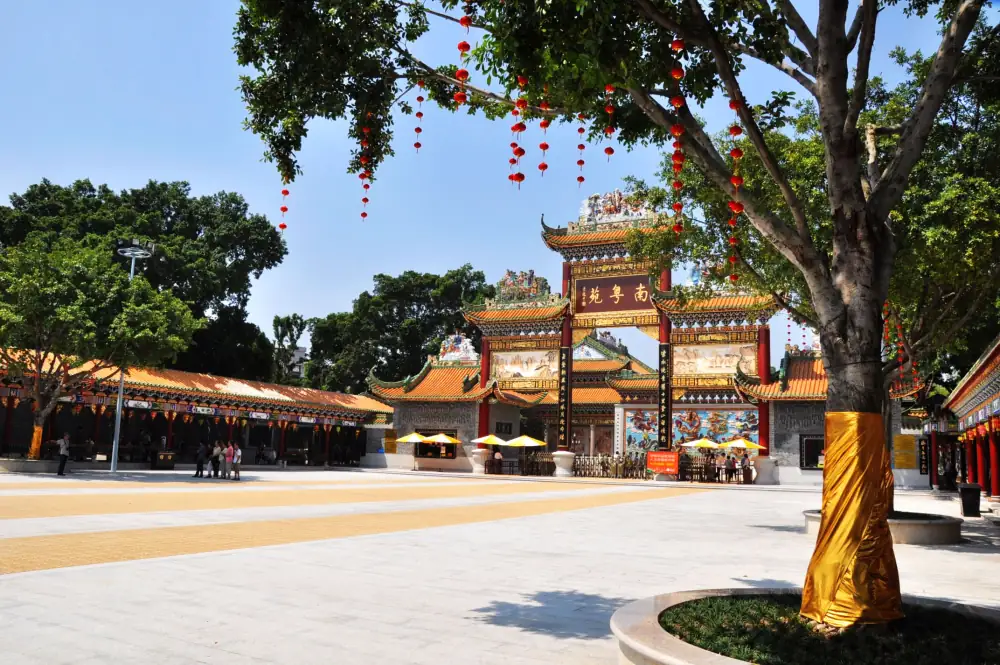
Guicheng is known as the “Hometown of Chinese Jade Bangles.” This walk traces the jade trade from raw market to high-end gallery.
Start: Pingzhou Jade Street (平洲玉器街, Píngzhōu Yùqì Jiē)
Metro: Guangfo Line to Nangui Lu Station, then bus 232. This street is the birthplace of Pingzhou’s jade industry. Bargain hunters can browse “one-metre stalls” selling bangles and pendants. Tip: Haggle politely; cash is preferred for small purchases.
Stop: Huijade Plaza (汇玉广场) and Chenbaolai (琛宝来)
Huijade hosts a dawn market (6–8 am) for wholesale deals. Chenbaolai is a modern mall with fixed prices and the Chen · Jade Culture and Art Museum on the top floor — free entry, with exhibits on jade carving history and a display of auction-grade pieces.
Lunch: Dapu Hoey (大圩Hoey) — a creative park in a former condensed milk factory. Try the fusion Cantonese restaurant.
Afternoon: Xiajiao Grain Garden (夏漖粮园)
A converted 1920s rice mill with red-brick silos, now a “love-themed” cultural park with a bridge for couple’s locks and a wishing tree.
Route 4: Guicheng’s Food Walk — A Taste of Cantonese Heritage
Food is the heart of Guicheng. This walk focuses on traditional dim sum and local specialities.
Morning: Traditional Tea House
Start at Shuangxi Restaurant (双溪酒家), a 133-year-old tea house in Diejiao. Order har gow (shrimp dumplings, ¥28) and char siu sou (barbecue pork pastries, ¥18). All dim sum is handmade.
Midday: Sweet Soup and Street Snacks
Walk to Dieshui · Luyu Tea House (叠水·陆羽茶居) for pig liver siu mai (猪润烧卖, ¥22) and traditional egg puffs (沙翁, ¥12).
Dinner: Modern Cantonese
For a contemporary twist, visit Mingchu Zhiwei (铭厨致味) in the Qian Deng Lake CBD. Their tasting menu (¥288) features reinvented classics like lobster noodles with aged tangerine peel.
Practical Tips for Self-Guided Walks
| Aspect | Details |
|---|---|
| Best time | October–December and March–May for mild weather. Avoid summer heat (35°C+). Evening walks are ideal June–September. |
| Getting around | Guangzhou Metro (Line 1 to Ximenkou) and Foshan Metro (Line 3 to Diejiao). Use Alipay’s transport code or buy a Yangchengtong card. |
| Mobile payment | Alipay and WeChat Pay are essential. Top up at convenience stores or link your international card (Visa/Mastercard work on Alipay). |
| Costs | Free entry for most sites; guided walks ¥138/person; food ¥30–100 per meal. |
| Etiquette | Remove shoes before entering temples; don’t point at Buddha statues; ask before photographing people. |
| Language | Few locals speak English. Download a translation app (e.g., Pleco). Key phrases: “Hello” (你好, nǐ hǎo), “thank you” (谢谢, xièxie). |
Where to Stay
For Guangzhou walks, stay near Ximenkou or Liwan (old town). Budget: Yi Hotel (¥300/night). Mid-range: Garden Hotel (¥600). For Guicheng, the Hilton Foshan (¥500) is near Qian Deng Lake.
Conclusion
These self-guided routes offer a deep dive into the Pearl River Delta’s layered history — from Guangzhou’s vanished gates to Guicheng’s dragon-boat canals and jade markets. Each step reveals how tradition and modernity coexist in China’s most dynamic region. For more walking itineraries, see our Guangdong guides or urban culture walks.