
Table of contents
Open Table of contents
Understanding the Zhangjiajie Area
First, the terminology. “Zhangjiajie” refers to multiple things:
- Zhangjiajie City (张家界市): The administrative city, including the tourist service center
- Wulingyuan Scenic Area (武陵源景区): The main tourism zone, covering most of the famous pillar landscapes
- Zhangjiajie National Forest Park (张家界国家森林公园): The most-visited sub-area within Wulingyuan — often what people mean when they say “Zhangjiajie”
- Tianmen Mountain (天门山): A separate, independently ticketed mountain on the outskirts of Zhangjiajie City
Understanding which area you’re talking about matters for tickets and logistics.
The Three Main Parks
1. Zhangjiajie National Forest Park (张家界国家森林公园) ⭐⭐⭐⭐⭐
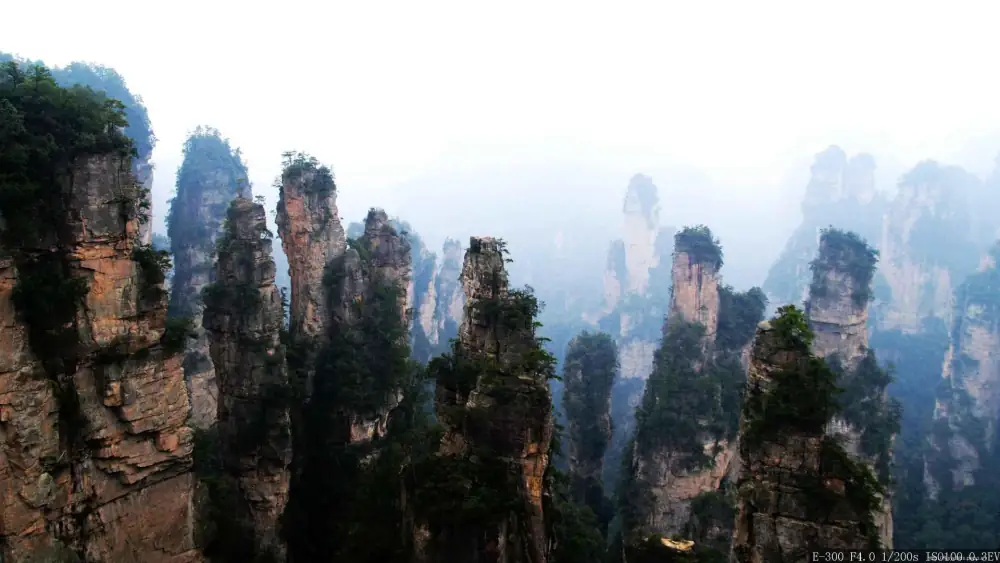
The original park, and the most famous. The pillar landscapes here — thousands of sandstone columns rising to 200m or more, draped in hanging vegetation and often shrouded in mist — are the defining images of Zhangjiajie.
Key areas within the park:
- Yuanjiajie: The highest plateau area, with the famous pillar views and the Avatar Hallelujah Mountain. Accessible by cable car or stairs.
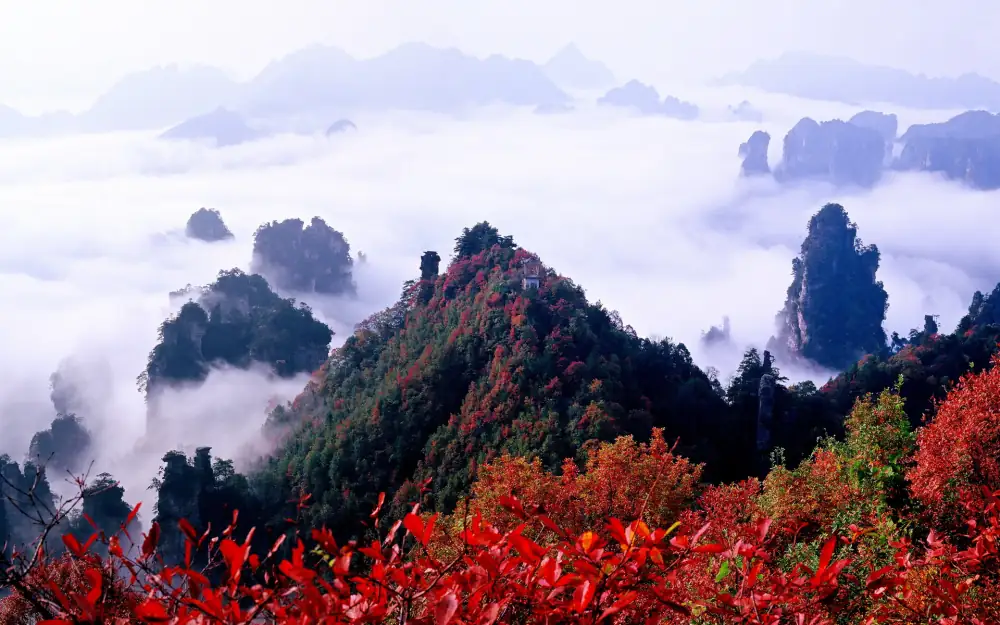
- Tianzi Mountain (天子山): Famous for the “sea of clouds” when fog fills the valleys between the pillars. Separate cable car.
- Suoxi Valley (索溪谷): More forests and valleys, including the impressive Golden Whip Stream (金鞭溪) walking trail.
Entry ticket: ¥245/person (valid for 4 consecutive days). This is the combined Wulingyuan Area ticket that covers all sub-areas.
Cable cars (not included in main ticket):
- Yuanjiajie Cable Car: ¥88 up, ¥72 down
- Tianzi Mountain Cable Car: ¥72 up, ¥54 down
- Bailong Elevator (百龙电梯): ¥72 round trip — the world’s tallest outdoor elevator, built into the cliff face. Takes you from valley floor to ridge in 2 minutes. Spectacular and slightly terrifying.
Eco-buses within the park: ¥50 for unlimited rides within the zone.
2. Tianmen Mountain (天门山) ⭐⭐⭐⭐
Separate from Wulingyuan, Tianmen Mountain offers a very different experience — more dramatic cliff-edge engineering, less ancient forest atmosphere.
Highlights:
- Tianmen Cave (天门洞): A massive natural arch 131m high through which steps lead — the “gateway to heaven”
- Glass walkway (玻璃栈道): A glass-floored walkway cantilevered over a cliff face at 1,430m elevation. Not for the acrophobic.
- Coiling Dragon Cliff (盘山公路): The access road makes 99 turns up the mountain — itself a spectacle, visible from below
Getting there: The Tianmen Mountain Cable Car from the city center is one of the world’s longest passenger cable cars (7.5km). It passes over the entire old city of Zhangjiajie below.
Entry ticket: ¥258/person (includes cable car, in-mountain transport, and access to all areas). Open 7:30am–6pm.
Recommendation: Worth a full half-day or full day, separate from Wulingyuan. The glass walkway is distinctively terrifying; the cave is spectacular.
3. Zhangjiajie Grand Canyon (张家界大峡谷) ⭐⭐⭐
A more recent attraction featuring a glass bridge over a gorge (Zhangjiajie Glass Bridge, opened 2016 — the world’s longest glass bridge at 430m). The bridge was designed by Israeli architect Haim Dotan and is genuinely impressive engineering.
Entry ticket: ¥138 (glass bridge + park access). Reservations required in peak season.
Recommendation: Worth a half-day if you haven’t seen glass bridges/walkways elsewhere. Skip if you’re only spending 2 days in the area.
Recommended Itineraries
2-Day Minimum
Day 1: Arrive, Tianmen Mountain (full day) Day 2: Wulingyuan/National Forest Park — prioritize Yuanjiajie plateau and Bailong Elevator
This gives you the key experiences but feels rushed.
3-Day Recommended
Day 1: Tianmen Mountain — cable car, cave, glass walkway Day 2: Zhangjiajie National Forest Park — morning at Yuanjiajie (cable car up, Bailong Elevator down), afternoon along Golden Whip Stream Day 3: Tianzi Mountain — early morning for sea-of-clouds shots, afternoon Suoxi Valley
4–5 Day Thorough Visit
Add the Grand Canyon and glass bridge, longer hikes in the park, and day trips to Fenghuang Ancient Town (2 hours away).
Photography: Getting the Best Shots
The Sea of Clouds
The most photographed condition at Zhangjiajie is the “sea of clouds” — when early morning mist fills the valleys between pillars, leaving only the tops visible above white cloud. This creates the Pandora/Avatar effect that made the landscape famous.
The sea of clouds typically forms:
- In autumn and winter mornings (October–February) after cool nights
- After rain as the humidity lifts
- Most reliably in Tianzi Mountain area from the viewing platforms
Strategy: Stay in accommodation near the Tianzi Mountain cable car base station. Start ascending at 6am to be at the viewpoint for sunrise. The mist is often gone by 9–10am.
Mist and Rain
Counterintuitively, overcast and lightly misty days (not heavy rain) can produce better landscape photos than clear days. The soft light and partial cloud reveal the pillars in layers of tone, creating depth that flat sunshine doesn’t. Clear skies flatten the landscape.
Best Viewpoints
- No. 1 Bridge (一号桥, Yuanjiajie): The classic view of the pillar called Avatar Hallelujah Mountain. Crowds gather early but disperse if you wait.
- Tianzi Mountain Viewing Platform: The best sea-of-clouds viewpoint
- Bailong Elevator viewpoint at the top: Looking back at the valley you rose from
- Golden Whip Stream at dawn: The stream between towering pillars, completely deserted at opening time
Avoiding Crowds
Zhangjiajie is one of China’s most popular domestic tourism destinations and can be overwhelmingly crowded. Strategies:
- Visit in shoulder season: October (early, before Golden Week) or March–April are the best quality-crowd balance.
- Avoid Golden Week: October 1–7, the park is at absolute capacity. Don’t go unless you’re specifically interested in the festival atmosphere.
- Start early: The park opens at 7am. Being at the cable car before 8am puts you ahead of tour groups by 1–2 hours.
- Counter-route: Most tour groups follow the same route (cable car up, elevator down). Go the other direction.
- Stay inside the park: Several guesthouses operate inside the scenic area. Staying inside means you can access the trails at 6am and after 5pm when day visitors have left. Evening and dawn light in the pillar landscape are extraordinary.
Accommodation
Outside the Park (Zhangjiajie City)
Most visitors stay in Zhangjiajie City (张家界市), specifically the Wulingyuan Town area (武陵源镇) near the park entrance.
- Budget (¥100–180/night): Multiple guesthouses, basic quality
- Mid-range (¥200–450/night): Several chain hotels including Pullman and Wanda. The Pullman Zhangjiajie is excellent, from ¥380/night.
- Luxury: Pipaxi Hotel (琵琶溪度假酒店) inside the scenic area, from ¥600/night — the best location of all
Inside the Park
Staying inside is highly recommended if budget allows. Pipaxi Hotel and several smaller guesthouses are inside the park boundaries. Book 2–3 months ahead for peak season.
Getting to Zhangjiajie
By Air
Zhangjiajie Hehua Airport (张家界荷花机场, DYG) has direct flights from most major Chinese cities:
- Beijing: 2.5 hours, from ¥400
- Shanghai: 2.5 hours, from ¥350
- Chengdu: 1.5 hours, from ¥300
- Guangzhou: 1.5 hours, from ¥250
From the airport to Wulingyuan: About 45 minutes by taxi (¥80–100) or bus.
By High-Speed Train
The Zhangjiajie Station (张家界西站) is served by the Zhangjiajie-Jishou high-speed rail. Connecting to the national HSR network via Changsha or Yichang.
- From Changsha: About 2.5 hours, ¥120
- From Wuhan: About 3.5 hours via connecting services
Combine with Fenghuang Ancient Town
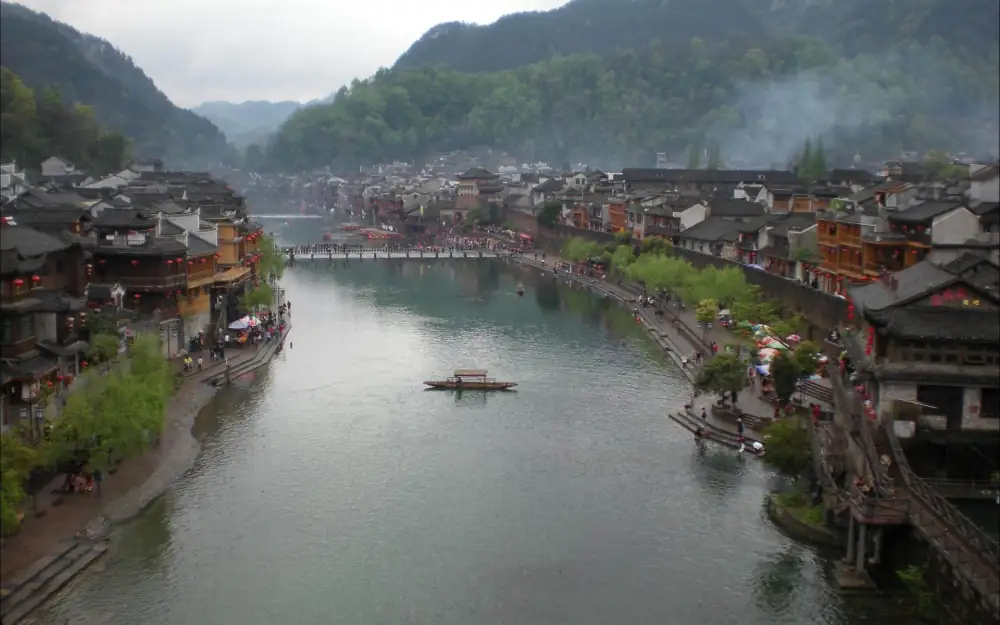
Fenghuang (凤凰古城) is 2 hours from Zhangjiajie by bus (¥40–60) and is one of China’s most atmospheric historic towns — wooden stilt houses over a turquoise river, Miao minority culture, and ancient streets. Adding 2 days in Fenghuang to a Zhangjiajie trip makes for an excellent Hunan itinerary.
Practical Tips
Best seasons overall: Spring (April–May) for green forests and fewer crowds; Autumn (October) early weeks for clear skies and cooler temperatures. Avoid summer (humid) and Golden Week.
Physical fitness: The park involves significant walking and climbing if you use hiking routes rather than all cable cars. Comfortable shoes required.
Altitude: The park reaches 1,262m. Not a problem for most, but noticeable if combined with other activities.
Plan for weather delays: Mist and rain are common. Having a day’s buffer in your schedule prevents frustration.
Cash: Some smaller vendors inside the park still prefer cash. Have ¥200–300 in cash available.
Zhangjiajie is extraordinary. The landscape is genuinely unlike anything else on earth — ancient, massive, and strangely alive-feeling. Come prepared for the logistics and it will exceed your expectations.