
Table of contents
Open Table of contents
The Main Sites in Shaoshan
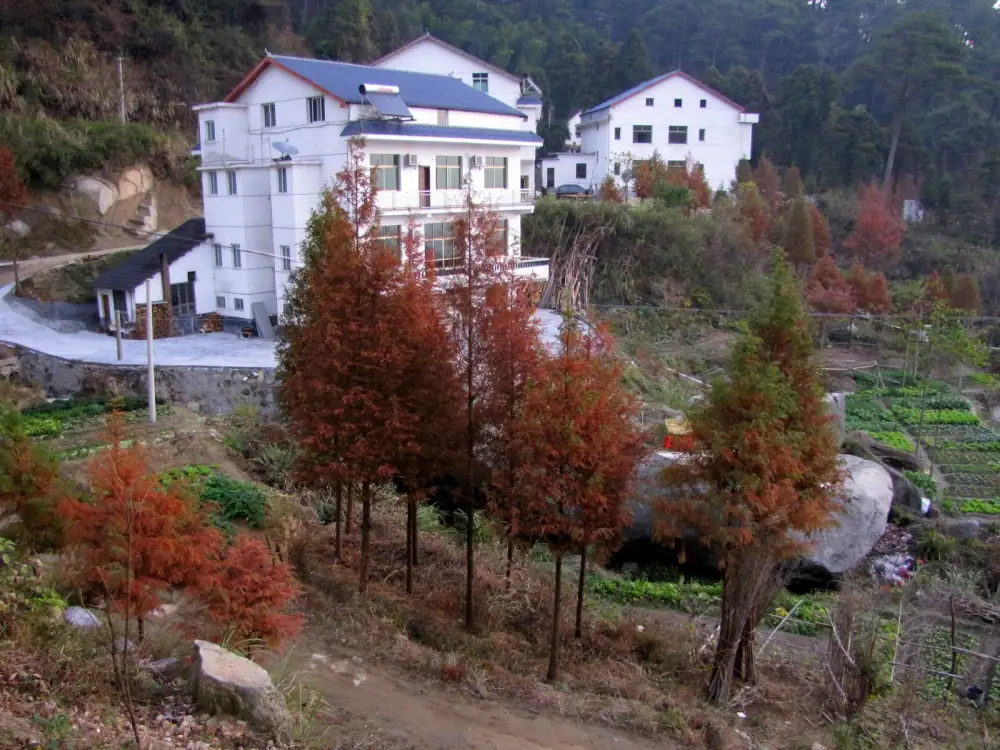
Mao Zedong’s Childhood Home (毛泽东故居)
The original family home where Mao was born and grew up until leaving for school in 1910 is preserved almost exactly as it was in the early 20th century: a modest L-shaped farmhouse with several rooms including a kitchen, family dining area, sleeping quarters and storage. It stands in a courtyard bordered by paddy fields and hills covered in pine trees.
Visiting is free. You queue, shuffle through the interior rooms (no photography allowed inside), and emerge into the garden. The atmosphere is one of collective pilgrimage — expect long queues on weekends and during national holidays, when the wait can exceed two hours.
The house: Free admission. Open daily 08:00–17:30. Photography allowed in the courtyard and garden.
Mao Zedong Memorial Museum (毛泽东同志纪念馆)
The main museum near the birthplace traces Mao’s life from Shaoshan farm boy through revolutionary leader, military strategist, poet and ruler of the People’s Republic. The collection includes personal artefacts, military maps, letters and photographs, presented within the framework of official Party historiography.
For international visitors, the museum offers the most coherent narrative of what Shaoshan represents within Chinese national identity. The exhibitions are dense with Chinese text; the English labelling is minimal but improving. Consider hiring a guide who speaks English (¥150–¥250 for 2 hours at the museum).
Tickets: ¥30 ($4). Open daily 08:30–17:00.
Shaoshan Mao Zedong Statue (毛主席铜像)
The central plaza statue — erected in 1993 for Mao’s centenary — stands 10.1 metres tall on a 4.1-metre plinth. The numbers are carefully chosen: 10.1 references October 1st (National Day) and 4.1 represents April 1st (though this is disputed in various accounts). What’s unambiguous is the scale: the statue dominates the town centre and is perpetually surrounded by visitors laying wreaths and bowing in obeisance.
Watching the pilgrimage behaviour around this statue is one of the more thought-provoking experiences available to a traveller in contemporary China. No charge to view; open air.
Mao Zedong Ancestral Memorial Hall
About 500 metres from the birthplace, this hall commemorates Mao’s ancestors through multiple generations. The architecture is traditional Hunan ancestral-hall style — a serious stone courtyard complex rather than a theme park construction. Less visited than the main sites, which means a more contemplative atmosphere.
Shaoshan Village Valley Walk
Beyond the monuments, Shaoshan is genuinely beautiful countryside. The valley is surrounded by low hills, terraced rice paddies and traditional Hunan village architecture. A 5–8 km walk through the village and up into the surrounding hills requires no entrance fee and provides a very different perspective on the place Mao grew up.
The walking trails are accessible from the main square area. Ask at your guesthouse for the path toward Shaoshan Chong (韶山冲), the original valley name — this heads away from the tourist infrastructure into quieter agricultural land.
Dripping Water Cave (滴水洞)
About 6 km from the main Shaoshan sites, Dripping Water Cave (滴水洞) is where Mao retreated for 11 days in June 1966, just before launching the Cultural Revolution. He composed poetry, swam in a natural pool and reportedly planned the movement that would convulse China for a decade.
The site has been developed as a scenic area with the residential compound preserved (but not the most architecturally interesting thing you’ve ever seen) and pleasant hiking through the surrounding hills. The cave itself is a natural rock shelter with a dripping spring — modest but atmospherically placed.
Tickets: ¥60 ($8). Scenic bus from Shaoshan town: ¥10.
Getting to Shaoshan
From Changsha (the main gateway)
High-speed rail (recommended): Changsha South to Shaoshan North takes just 27 minutes on the dedicated Changsha–Shaoshan High-Speed Railway, which opened specifically to serve red tourism traffic. Trains run approximately every 30–60 minutes; tickets ¥54–¥80 ($7.5–$11). From Shaoshan North station, the town centre is 5 km by taxi or tourism bus.
Regular train: Changsha to Shaoshan by slower train takes about 1.5 hours; tickets ¥20–¥30 ($3–$4). Less frequent but more scenic.
Tourism bus: Direct buses from Changsha’s Xingsha Station run to Shaoshan; journey 1.5–2 hours, ¥35–¥50 ($5–$7). Useful if high-speed train timing doesn’t suit.
Self-drive: About 130 km from Changsha on expressways; 1.5–2 hours. Parking is available near the main sites.
From Other Cities
- Wuhan: High-speed rail to Changsha South (1 hour), then connecting service to Shaoshan. Total approximately 2 hours.
- Zhangjiajie: No direct high-speed link; travel via Changsha.
- Guangzhou: High-speed to Changsha South (2.5 hours), connect to Shaoshan.
Where to Stay
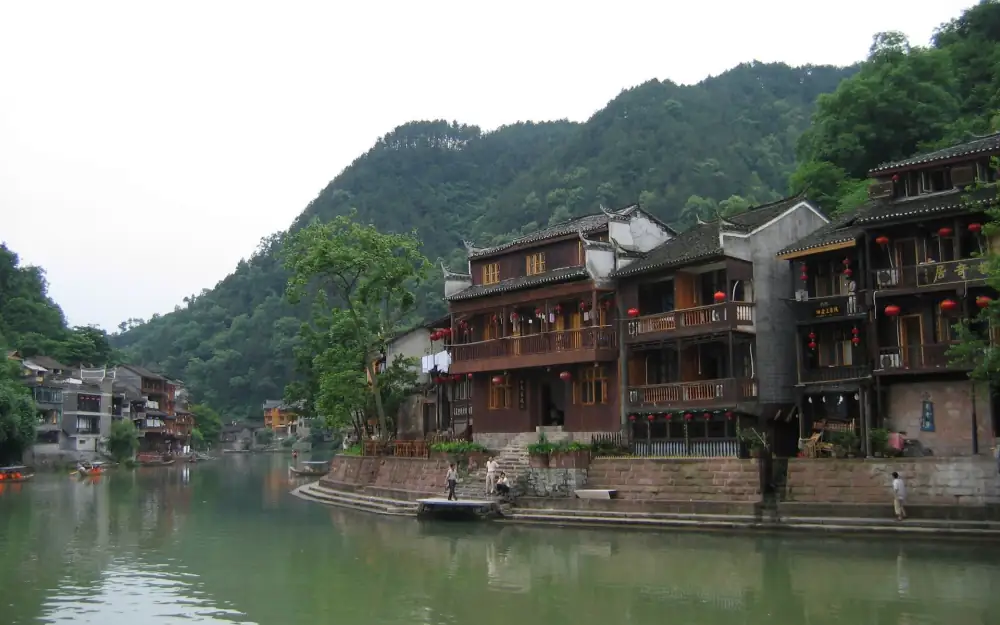
Shaoshan is most commonly visited as a day trip from Changsha, but staying overnight gives you access to the early morning quieter atmosphere at the birthplace — before the day-trip crowds arrive.
Budget: Multiple hostels and small hotels near the main square from ¥120–¥200/night ($17–$28). Basic but functional.
Mid-range: Shaoshan International Hotel (韶山国际大酒店) — ¥380–¥580/night ($53–$81). The best mid-range option with decent restaurant.
Upscale: The China Executive Leadership Academy Shaoshan (中国浦东干部学院韶山基地) occasionally takes non-cadre bookings; ask through their website. Otherwise, stay in Changsha and day-trip.
Best Time to Visit
Weekdays in spring or autumn: The birthplace is free but the queues can be extreme on weekends and Chinese national holidays (particularly October 1–7). A Tuesday or Wednesday visit in October after the holiday week sees dramatically shorter waits.
December 26: Mao’s birthday is the busiest single day at Shaoshan. Hundreds of thousands of visitors converge; the atmosphere is extraordinary but logistics are challenging.
Avoid: The October Golden Week (October 1–7) and the Spring Festival period unless you enjoy serious crowds. Daily visitor numbers can exceed 100,000 in peak periods.
Practical Tips for International Visitors
- Photography: The birthplace interior prohibits photography; outside is generally fine. Be respectful when photographing pilgrimage behaviour — people treating this as a genuine sacred site.
- Context: Reading some background on Mao before visiting (even a brief encyclopedia summary) makes the experience substantially more meaningful. The museum narrative is internally consistent but partial — having some external context helps.
- Guides: English-speaking guides can be arranged through Changsha travel agencies (¥200–¥400 for a full day) and are worth it for the museum. Ask at major Changsha hotels.
- Local food: Shaoshan has a cluster of restaurants serving Mao’s alleged favourite dishes — notably red-braised pork (红烧肉), which Mao reportedly ate daily and credited with his excellent memory. It’s a marketing angle, but the red-braised pork in Hunan is genuinely excellent. Budget ¥80–¥150 for lunch for two.
- Shopping: Red memorabilia is everywhere — Mao badges, posters, busts, quotation books. Quality varies enormously. The museum shop has slightly more reliable items.
- Connectivity: Good 4G/5G coverage throughout Shaoshan. WeChat Pay accepted at most restaurants and shops.
The Broader Red Tourism Context
Shaoshan sits at the centre of China’s “red tourism” (红色旅游) industry — a government-backed initiative that encourages visits to sites associated with Communist Party history, framed as patriotic education. The infrastructure investment has been substantial: the dedicated high-speed railway, numerous museums, statue plazas and visitor centres all serve a system designed to perpetuate collective memory and national identity.
For international visitors, this context is part of what makes Shaoshan so interesting. You’re not just seeing a birthplace — you’re seeing how a modern nation-state manages its mythological infrastructure, and how millions of people engage with that mythology in very personal ways. The grief around the statue, the reverence at the farmhouse door, the elderly visitors who remember the Mao era as young adults — it’s a complex, human tableau.
Combine With
Changsha (湖沙): An underrated city with excellent food (Hunan cuisine is arguably China’s most characterful), a vibrant arts and culture scene, the Yuelu Academy and the Hunan Provincial Museum (which houses the famous Mawangdui Han Dynasty silk corpse — one of the world’s most remarkable archaeological exhibits).
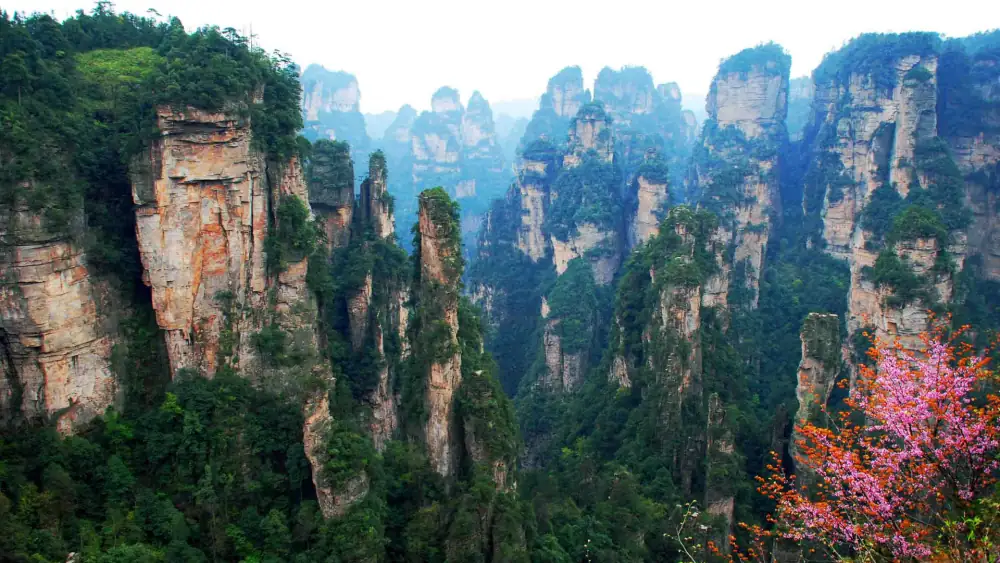
Zhangjiajie National Park: A 2.5-hour drive or train from Changsha, the dramatic sandstone pillars that inspired Avatar’s floating mountains.
Final Thought
Come to Shaoshan with open eyes and an open mind. Whatever your political views on Mao Zedong’s legacy, this is one of the most illuminating experiences available to a traveller in modern China — and the countryside is genuinely lovely.