
Table of contents
Open Table of contents
Taipa Village: The Macau That the Casino Billboards Hide
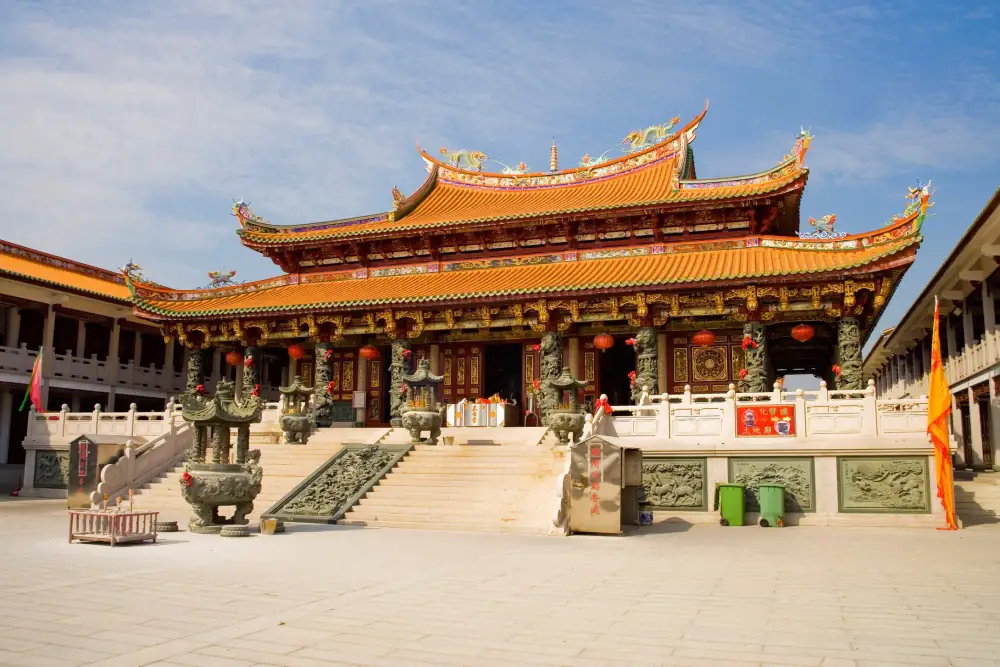
Most first-time visitors to Macau have a predictable experience: cross from Hong Kong or mainland China, marvel briefly at the scale of the casino developments, eat some egg tarts, and leave somewhat underwhelmed. The Macau they came looking for — the Macau of faded colonial charm, bacalhau cod fish, and crumbling Portuguese manor houses — seems to exist only in travel brochures.
It exists. It’s in Taipa Village.
Connected to the Macau Peninsula by three bridges and flanked on two sides by the Cotai Strip’s casino towers, Taipa Village (氹仔舊城區) somehow maintains its identity as a genuine neighbourhood where people live, argue, cook, and pray in much the same way they have for generations. The streets are too narrow for tour buses. The houses are painted in the distinctive yellows and greens of Portuguese-influenced Macau architecture. The bakeries have been run by the same families for decades.
The village dates to the late 18th and early 19th centuries when Taipa was an island separate from Macau Peninsula (land reclamation eventually connected the territories). Portuguese administrators, merchants, and mixed-heritage Macanese families built colonial houses in the Portuguese style, adapted to the subtropical climate. Many of these buildings survive today, and several have been converted to museums, restaurants, and cultural venues.
The Streets and Architecture
Rua do Cunha (俾利喇街)
The main pedestrian street running through the heart of Taipa Village. This is where the village concentrates most of its food vendors, souvenir shops, and the crowds that visit them. The street itself is not quiet — this is the tourist spine of the village — but the architecture on both sides is genuine Portuguese-Macanese style.
The street is famous for its pork chop bun shops. Every shop has its version of the classic pork chop bun (豬扒包) — a crisp Portuguese roll filled with a fat boneless pork chop. The queue at the most famous shops can stretch 20–30 people deep.
Avenida de Carlos da Maia (卡路士•馬利亞大馬路)
The quieter main street running parallel to Rua do Cunha, lined with old residential buildings in various states of renovation. More atmospheric than the busier tourist street, and where you find the Taipa Houses Museum.
The Back Streets
Turn off the main tourist routes and the village’s residential character becomes apparent. Elderly residents sit in doorways. Laundry dries from upper windows. Small altars to local deities are mounted on the outside walls of houses. These back streets are the real reason to spend time in Taipa rather than rushing through on a casino shuttle.
Key Attractions
Taipa Houses Museum (龍環葡韻)
Five beautifully preserved Portuguese colonial mansions facing the waterfront, converted into a museum complex that tells the story of Macanese domestic life in the colonial period. The houses date from 1921 and offer a remarkably intact picture of how affluent Macanese families lived in the early 20th century: formal parlours with imported European furniture, traditional Macanese kitchen equipment, family religious altars, and domestic servants’ quarters.
Entry: Free Opening hours: 10:00 AM – 8:00 PM, closed Mondays Photography: Permitted throughout
Our Lady of Carmo Church (嘉模聖母堂)
The main Catholic church in Taipa, built in 1885 in a neoclassical Portuguese style. The white and yellow facade is one of the most photographed buildings in Macau. The interior is simple and serene. Masses are celebrated in Portuguese, Cantonese, and Mandarin.
Entry: Free (small donation appreciated) Hours: 9:00 AM – 6:00 PM daily
The church square in front is a favourite photography location particularly in early morning and at golden hour when the yellow facade catches warm light.
Pak Tai Temple (北帝廟)
A Taoist temple dedicated to the deity Pak Tai (Northern God), patron of the sea — appropriate for a fishing village community. The temple dates from 1844 and contains exquisite ceramic figurine decorations on the roof ridge. During the Pak Tai Festival (typically April–May in the lunar calendar), the temple and surrounding streets come alive with processions, opera performances, and traditional celebrations. Entry free.
Taipa Village Cultural Association Mansion (龍環葡韻對面的老宅)
Tucked behind the main street, an early 20th-century mansion now houses a cultural association. Occasionally open for exhibitions and events.
Food and Drink: Taipa’s Best Eating
Macanese Cuisine: What You Need to Know
Macanese cuisine is one of the world’s most fascinating fusion traditions — a product of five centuries of Portuguese colonialism interacting with Cantonese, Malay, Indian, and African culinary influences. The food cannot be found anywhere else in quite this form, and Taipa Village is the best place in Macau to eat it.
Key dishes to seek out:
Minchi (免治): Ground pork or beef fried with diced potatoes, onion, soy sauce, and Worcestershire sauce. Often served with a fried egg on top. A Macanese comfort food classic. ¥60–80 at traditional restaurants.
Bacalhau (Portuguese salted cod): Multiple preparations available — braised with potato and olives, croquettes, and the classic Bacalhau à Brás (shredded cod with egg and potato). The Portuguese obsession with salted cod crossed the Pacific and Atlantic to take root in Macau’s kitchens.
Galinha à Portuguesa (Portuguese chicken): Chicken braised in a turmeric-yellow coconut milk sauce with potatoes and olives. Mild, aromatic, and unlike anything in the Chinese culinary tradition. ¥80–120 per dish.
African Chicken (非洲雞): A Macanese-invented dish that became a local classic — chicken grilled with a peri-peri-inspired sauce combining chilli, peanut, and coconut. Probably not from Africa at all, but named for the African territories that passed through Portuguese hands. ¥100–150.
Best Restaurants in Taipa Village
Restaurante António: One of Macau’s most celebrated Macanese restaurants. Traditional setting, excellent bacalhau preparations, good wine list, and desserts including the famous serradura (biscuit cream pudding). Budget ¥300–500 per person. Book in advance.
Lord Stow’s Bakery (安德鲁饼店): The legendary egg tart bakery founded by British pharmacist Andrew Stow in 1989. The Macau-style egg tart — flaky caramelised pastry shell, just-set creamy filling — is the original version that inspired egg tart variations across Asia. Queue is expected. Price: ¥15–20 per tart.
Café Nga Tim (雅憩花園餐廳): An unpretentious café on the village square serving Macanese dishes, Portuguese pastries, and good coffee. Reliable and authentic at reasonable prices (¥100–200 per person).
The Pork Chop Bun Trail
Several shops on Rua do Cunha compete for the title of best pork chop bun. The main contenders are Peng Kei (炳記食店) and several adjacent shops. The buns are best fresh from the oven — crispy roll, juicy grilled pork chop, sometimes with a slightly sweet marinade. ¥25–35 each.
Getting to Taipa Village
From Macau Peninsula
The Taipa Village shuttle bus (route 28A, 33, and others) runs regularly from the Lisboa Hotel area on the Peninsula. Journey 15–20 minutes. Fare MOP$6 (Macau Pataca).
From Cotai Strip Casinos
All major casino-hotels have free shuttle buses connecting to Taipa Village. The Galaxy, Venetian, and other properties run regular shuttles. Ask at the hotel concierge for the shuttle schedule.
On Foot from Cotai
The Cotai Strip casino resort area is about 15 minutes’ walk from the village centre through modern shopping areas. The contrast when you arrive at the village streets is dramatic.
Taxi
From the Macau Ferry Terminal: approximately MOP$80–100. From the Cotai Strip major casinos: MOP$30–50.
Combining Taipa Village with Other Macau Attractions
Cotai Strip Walk-Through
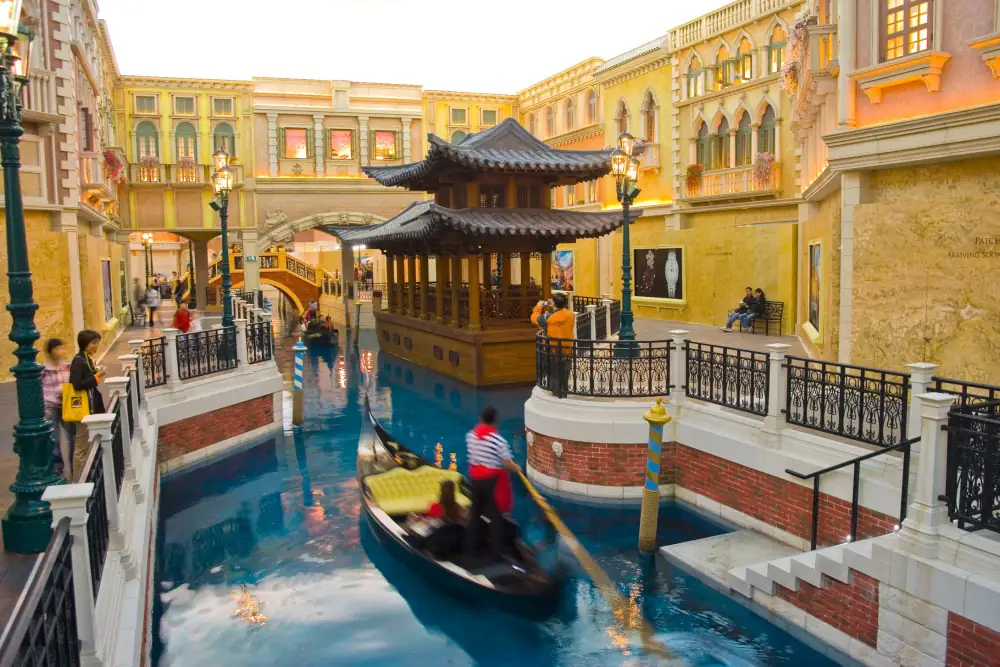
Having seen the village, walking through the neighbouring Cotai casino mega-resorts gives a fascinating perspective on Macau’s contemporary identity. The Venetian Macao alone is worth 30 minutes of aimless wandering for its sheer scale.
Cotai Walk to Coloane Village
From Taipa Village, a bus or taxi reaches Coloane Village (路環村) in 15–20 minutes. Coloane is even quieter than Taipa and has its own excellent Macanese restaurants and the famous Fernando’s restaurant overlooking the beach. A Taipa-Coloane combination makes for a perfect Macau day.
Historic Centre of Macau
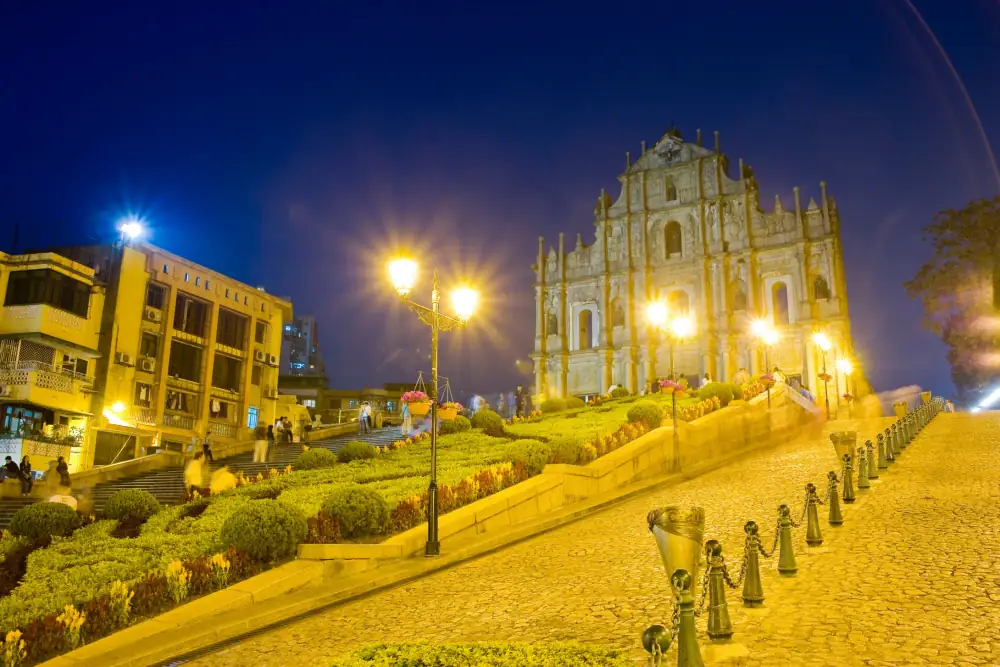
The UNESCO-listed Historic Centre on the Macau Peninsula — including the ruins of St Paul’s Church, Senado Square, and multiple old churches — is a separate half-day. Combined with Taipa Village, the Historic Centre and Taipa give you the essential Macau cultural experience.
Practical Information
Best time to visit: Weekday mornings offer the most relaxed atmosphere in the village. Weekend afternoons are significantly crowded.
Currency: The Macau Pataca (MOP) is the official currency; Hong Kong Dollars are accepted at most places. Credit cards are accepted at restaurants and larger shops, less so at small food stalls.
Weather: Subtropical with hot, humid summers and mild winters. October–March is the most comfortable time. Summer brings typhoon risk.
Language: Portuguese signs are common but Cantonese is the working language. English is widely spoken in restaurants and tourist services.