
No Chinese city has a more committed relationship with duck than Nanjing. The city consumes an estimated 12 million ducks a year — across the population, that works out to about three ducks per person annually. Every part of the bird is used: neck, blood, liver, gizzard, head, feet, tongue. Duck is served cold, hot, braised, spiced, and incorporated into soups. Understanding Nanjing food means understanding what a city does when it devotes centuries of culinary tradition to a single bird.
Table of contents
Open Table of contents
Nanjing Salted Duck (盐水鸭, Yánshuǐ Yā)
Nanjing salted duck is the city’s defining food and one of China’s most famous preserved meats. The duck is rubbed with salt and five-spice powder, rested for 24-48 hours, then poached whole in seasoned broth. It’s served cold, sliced, without any additional sauce.
The result is pale, subtly flavoured, with a clean salt-and-spice character very different from the rich lacquered Peking duck or the spiced Cantonese roast goose. The fat layer under the skin is one of the best things about it — creamy and delicate.
How to eat it: Cold, in thin slices, alongside congee or steamed buns as a meal component. It’s not a standalone dish — it’s part of a cold plate to start a meal, or taken home from a market as a meal component.
Where to buy: The duck shops near Fuzimiao (Fuzi Temple) sell pre-cooked salted duck by weight — typically ¥45-75 for half a duck (约500g). The quality varies; shops with the longest queues of local customers are the reliable indicators.
Du Yi Chu (都一处) near the Drum Tower and Han Fu Duck (汉府鸭子) have established reputations. The Shisanyou Salted Duck (十三香 variant) is a spicier version using thirteen-spice blend rather than plain salt brine.
Duck Blood Vermicelli Soup (鸭血粉丝汤)
Ya xue fen si tang (鸭血粉丝汤, duck blood vermicelli soup) is Nanjing’s breakfast. The bowl arrives as a clear, slightly rich broth — made from duck bones — containing rice vermicelli, cubes of silken duck blood (bright red, soft as tofu), duck liver, duck intestine, duck gizzard, and scallion.
This is the kind of dish that requires an open mind if you haven’t eaten blood curd before. Duck blood has essentially no strong flavour of its own — it absorbs the broth, and its texture is soft and smooth rather than meaty. The combination of textures (silky vermicelli, smooth blood, chewy gizzard) in the clean broth is what makes the dish work.
Price: ¥10-18 per bowl at street stalls and small restaurants. Larger portions with more duck parts cost more.
Where to go: The Laomenjing alley area (老门东) in Qinhuai District has several old-school duck blood soup shops. The Confucius Temple area (Fuzimiao) has visible tourist-facing versions at higher prices. For the real local experience, ask at your hotel/hostel for the nearest residential stall.
Fuzi Temple Food Street (夫子庙小吃街)
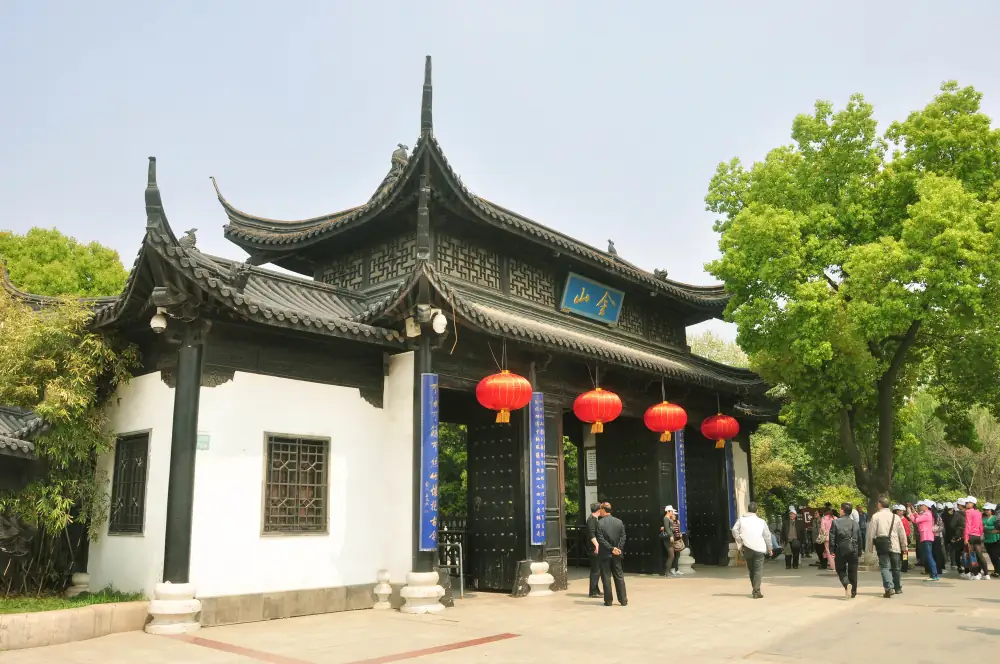
Fuzimiao (夫子庙, Confucius Temple) and the surrounding Qinhuai River area is Nanjing’s main tourist food zone. The food street running along the river has been serving snacks for hundreds of years, though the current commercialised version is significantly more polished than historical accounts suggest.
What to eat here:
Tangbaozi (汤包子) — soup dumplings similar to Shanghai’s XLB but the Nanjing version uses slightly thicker skin and a different spice profile in the broth. ¥20-35 for a basket.
Yuhua stone candy (雨花石糖) — hard candy shaped and coloured like the famous Yuhua pebbles. More novelty than gastronomy. ¥15-30.
Pan-fried bao (煎包) — smaller pan-fried dumplings with pork and ginger filling. ¥10-18.
Xiao Long Bao — XLB here is cheaper than Shanghai’s famous versions, ¥15-25 for a basket, and quality at the better shops is genuinely competitive.
The tourist premium here is real — prices are 30-50% higher than equivalent food elsewhere in the city. Go for the atmosphere and the Confucius Temple setting, but don’t judge Nanjing food by these prices.
The Laomenjing Hutong Area (老门东)
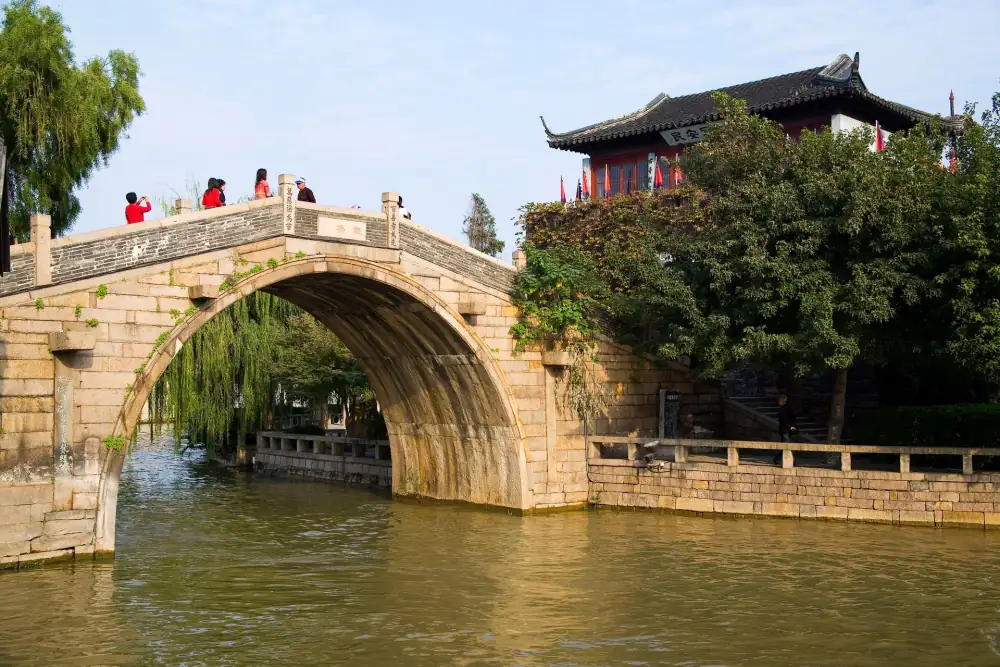
Laomenjing (老门东, “Old East Gate”) is Nanjing’s restored traditional neighbourhood near Fuzimiao — the Ming dynasty street grid with old-style architecture, converted into a food and craft area. Less aggressively commercialised than Fuzimiao itself.
Here you’ll find duck blood soup shops in traditional settings, small hot pot places, and several good mid-range Jiangsu restaurants. The area is more pleasant for a long food wander than the main snack strip.
Worth trying here:
Pan Ruan Su (软水饺) — water dumplings with a uniquely soft skin that’s thicker and more doughy than the northern style. Local tradition.
Nanjing soup-filled bun variations — different from Shanghai’s XLB in ways that locals will debate at length.
What Else Nanjing Does Well
Duck gets most of the attention, but Nanjing has other food traditions worth knowing.
Crispy duck skin (鸭皮, yā pí) — rendered duck skin, sometimes crisped separately, served as a snack. The best versions have a light crunch and intense umami. ¥25-40.
Nanjing-style lion’s head meatballs (狮子头, shīzitóu) — massive, soft pork meatballs braised with Chinese cabbage in clear broth. A Huaiyang cuisine classic. ¥60-90 per portion.
Sesame oil plum chicken (梅子鸡) — cold poached chicken with a plum and sesame dressing. A summery starter found at traditional Jiangsu restaurants.
Yangtze fish — like Wuhan, Nanjing’s Yangtze River position means excellent freshwater fish. Jiangxi restaurant areas do whole-fish steamed dishes at ¥80-150.
Jiangnan spring rolls (春卷) — the Jiangsu style, with a thin, crispy wrapper and a filling of pork, bamboo shoots, and wood ear mushrooms. Not the battered lumps of the takeaway world.
Practical Nanjing Food Notes
The duck buying experience: The vacuum-packed salted duck sold in tourist shops is inferior to the freshly prepared versions from proper duck shops. If you’re taking duck home as a food souvenir, buy from a specialist duck shop and ask for it to be vacuum-packed on site (many will do this for ¥3-5 extra).
Duck-free options: Despite the city’s obsession, Nanjing has excellent non-duck food. The city’s substantial Muslim community (Huimin community near Shatan Street) has halal beef and lamb options.
Jiangsu cuisine in general: Nanjing is part of the Jiangsu culinary tradition — light, sweet-savoury, ingredient-forward. If you enjoy delicate flavours over aggressive seasoning, Nanjing will suit you better than northern or Sichuan cuisine.
Meal budget: Breakfast ¥8-20. Lunch ¥30-65. Full duck-focused dinner ¥80-150 per person. Fuzi Temple tourist area: add 30-50% to those figures.