
Table of contents
Open Table of contents
Who Was Sun Yat-sen and Why Does His Tomb Matter?
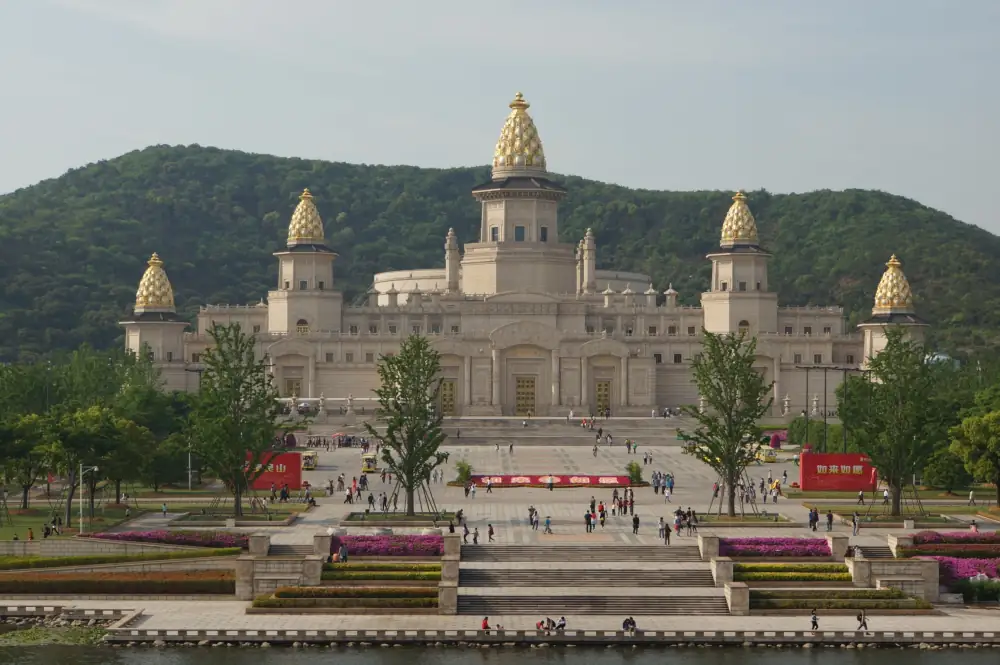
Few figures in modern Chinese history are as universally respected across the political spectrum as Sun Yat-sen (孫中山, Sūn Zhōngshān). Born in Guangdong Province in 1866, he dedicated his life to ending the Qing dynasty’s imperial rule and establishing a modern republic based on his Three Principles of the People — Nationalism, Democracy, and People’s Livelihood.
Sun Yat-sen lived most of his adult life abroad, in exile, fundraising among overseas Chinese communities for the revolutionary cause. When the Xinhai Revolution finally succeeded in 1911 and the last Qing Emperor abdicated, Sun became the first Provisional President of the Republic of China. He resigned almost immediately in favour of the military strongman Yuan Shikai to prevent civil war — a decision that haunted Chinese politics for decades.
Sun died in Beijing in March 1925, before he could see his vision of a unified, democratic China. In his will, he asked to be buried in Nanjing, the capital of the new republic, on Purple Mountain (紫金山, Zǐjīn Shān). It took four years to build the mausoleum he deserved.
The resulting structure is one of Republican China’s greatest architectural achievements: a monumental axis of memorial halls and staircase ascending through forested mountain to a hilltop tomb, blending Chinese traditional architectural forms with Western neoclassical grandeur. Even if you have limited interest in Chinese political history, the scale and setting of this monument are genuinely impressive.
The Architecture: A Walk Through the Design
The Memorial Archway (博爱坊)
The approach begins with a white marble archway inscribed with the characters 博爱 (Bó Ài) — “Universal Love.” This was one of Sun Yat-sen’s personal mottos. The archway frames the view up the grand approach to the mountain.
The Ceremonial Gate (陵门)
A three-bay gate in blue glazed tile and white marble. The blue tiles represent the blue sky of the Kuomintang flag; the white marble represents virtue and purity. The combination of these national colours continues throughout the complex.
The Stele Pavilion (碑亭)
A square pavilion housing a massive stone stele inscribed with the circumstances of Sun’s funeral procession and interment. The structure combines Chinese pavilion form with classical detailing.
The Grand Staircase (石阶)
The central experience of visiting the mausoleum is climbing the 392 steps from the ceremonial gate to the tomb chamber. The steps rise 73 metres in elevation, broken into eight flights with terraced platforms between them. From the bottom, only the flights below and the sky above are visible — the intermediate platforms and ultimate destination are hidden, suggesting infinite ascent. From the top looking back, the entire memorial axis is visible including the distant city.
The staircase is challenging. Take it slowly, especially in summer heat. Water vendors operate along the path, and rest benches are available on platforms.
Shortcut option: An electric cart (¥10) and small ropeway (¥15 one-way) offer alternatives to the full stair climb. Most visitors do the stairs at least one-way.
The Sacrificial Hall (祭堂)
At the summit, a blue-tiled hall contains a marble statue of Sun Yat-sen seated. The hall walls are inscribed with the full text of his Three Principles of the People (三民主义). The scale of the statue and the solemnity of the inscriptions create a powerful effect.
The Tomb Chamber
Through a door behind the statue, a domed chamber contains the marble sarcophagus of Sun Yat-sen with a reclining figure carved above it. This is the actual burial location. The chamber is modelled in simplified form on the Lincoln Memorial chamber in Washington DC — an appropriate parallel given Sun’s admiration for Lincoln.
Entry to the sacrificial hall and tomb: ¥80 additional ticket required beyond the park entry.
Admission Prices (2026)
- Zhongshan Scenic Area entry (purple mountain park): ¥80 comprehensive ticket
- Mausoleum entry (included in comprehensive ticket during busy season, or separate ¥80)
- Mausoleum cable car: ¥15 one-way
- Electric cart within scenic area: ¥10
The comprehensive ticket is worth buying if you plan to visit multiple sites within the Purple Mountain area. Individual site tickets add up quickly.
Free entry days: The mausoleum is free on several national holidays and Dr Sun Yat-sen’s birthday (November 12) and death anniversary (March 12). Expect very large crowds on these dates.
Purple Mountain: The Full Scenic Area
The Sun Yat-sen Mausoleum is the centrepiece of a much larger scenic area on Purple Mountain. Allow a full day to see the main highlights.
Ming Xiaoling Mausoleum (明孝陵)
The tomb of the Zhu Yuanzhang, founder of the Ming dynasty, and a UNESCO World Heritage Site. Significantly older and arguably more atmospheric than the Sun Yat-sen tomb, the Ming mausoleum features a famous Sacred Way lined with carved stone animals and officials, ancient cypress forest, and imposing brick burial structures. Entry ¥70 (or included in comprehensive ticket). Allow 2–3 hours.
Spirit Way of the Ming Mausoleum (神道)
The famous procession of carved stone animals — lions, elephants, camels, and mythical creatures — lining the approach to the Ming mausoleum is one of the most photographed sites in Nanjing. The ancient gnarled trees alongside the stone figures create a particularly dramatic atmosphere in early morning mist.
Linggu Temple and Pagoda (灵谷寺和灵谷塔)
An ancient Buddhist temple and a Republican-era pagoda commemorating soldiers who died in the Northern Expedition. The pagoda can be climbed for views over the mountain forests. Entry included in comprehensive ticket.
Sun Yat-sen Memorial Concert Hall (音乐台)
A white marble amphitheatre set in forest, built in 1932 as a memorial to Sun Yat-sen. Free concerts and cultural performances are held here in warmer months. The architectural composition of the stage, colonnade, and surrounding trees is elegant.
Getting to Purple Mountain
Metro
Nanjing Metro Line 2 has a station at Xiamafang (下马坊) near the east entrance to the scenic area. From Nanjing South Railway Station, take Line 1 to Sanshanjie (三山街) and transfer to Line 2. Journey about 30 minutes total. Fare ¥4–6.
Tourist Shuttle
A dedicated tourist shuttle bus service connects major sites within the Purple Mountain area, operating roughly every 20 minutes. Convenient for moving between the various sub-sites without excessive walking.
Taxi/Didi
From Nanjing South Railway Station: approximately 20–25 minutes, ¥30–40. From central Nanjing (Xinjiekou): 15 minutes, ¥20–30.
Timing Your Visit
Best Season
Spring (March–April): Cherry trees and plum blossoms bloom across the mountain. The annual Plum Blossom Festival (Meihualun) in nearby Meijaling draws visitors in February–March.
Autumn (October–November): Forest colours are outstanding. The combination of brilliant autumn foliage and the mountain’s serious, memorial atmosphere creates a particularly affecting experience.
Avoid: Chinese National Holiday (October 1–7) brings enormous crowds to all Purple Mountain sites. The staircase can become so crowded that progress slows to a shuffle.
Best Time of Day
Early morning (8–10 AM on weekdays) allows a calm, even contemplative experience of the mausoleum. The staircase climbed alone in morning light, with birdsong and mist, is moving in a way that the mid-afternoon tourist rush cannot be.
Combining with Other Nanjing Attractions
Confucius Temple (夫子庙) and Qinhuai River
The beautiful riverside district around the Confucius Temple complex is the liveliest part of old Nanjing. About 10km from Purple Mountain by metro. Evening river cruises, traditional snack streets, and historic buildings. Entry free to the main area; individual attractions from ¥30.
Nanjing Massacre Memorial Hall (侵华日军南京大屠杀遇难同胞纪念馆)
One of the most important and sobering historical sites in China, commemorating the victims of the 1937 Nanjing Massacre. Soberly designed and deeply affecting. Free entry. A necessary counterpoint to the republican grandeur of Purple Mountain.
Presidential Palace (总统府)
The former headquarters of the Republic of China government — used successively by the Taiping Heavenly Kingdom, the Republican government, and various warlords. A fascinating palimpsest of modern Chinese history in a single architectural complex. Entry ¥70.
Practical Tips
Wear comfortable shoes: The 392 steps plus walking between sites will clock 15,000+ steps. Flat comfortable footwear is essential.
Water and snacks: Carry water as the staircase climb is thirsty work, especially in summer. Vendors operate throughout the scenic area at tourist prices.
Photography: The view back down the staircase from the summit is the classic shot — the ceremonial alignment of gates and steps descending to the archway, with the city visible beyond. Use a wide-angle lens.
Combination: Many visitors combine the Purple Mountain sites with Nanjing’s old city wall walk (one of the best-preserved in China) for a full-day historical immersion. The wall’s eastern section passes near the Purple Mountain area.