
Tucked inside the sprawling commercial maze of the Old City Bazaar, Yuyuan Garden (豫园) is a 450-year-old classical garden that feels like it has been transported from Suzhou — perfect ponds, whitewashed walls capped with dragon-spine ridges, and pavilions connected by zigzag bridges over lotus-filled water. Then you look up and see the neon signs of the shopping complex surrounding it.
This contrast — ancient garden dropped inside a 21st-century tourist bazaar — is precisely what makes Yuyuan interesting. Understanding both layers of the place makes for a much better visit.
Table of contents
Open Table of contents
Essential Information
| Detail | Info |
|---|---|
| Address | 278 Anren Street, Huangpu District, Shanghai |
| Opening hours | 9:00 AM – 5:00 PM daily (last entry 4:30 PM) |
| Tickets | ¥40 per adult; free for children under 1.3m and seniors 70+ |
| Metro | Line 10 to Yuyuan Station (direct); Line 14 to Yuyuan also works |
| Best time | Weekday mornings; early spring (March) for plum blossoms; lantern festival (Lunar New Year) |
| Recommended duration | 1.5–2 hours for the garden; extra time for the bazaar |
Book tickets online via the Yuyuan Garden WeChat mini-program or Damai to guarantee entry during peak season. Tickets can sell out on national holidays and weekends.
The Garden: History and Layout
Yuyuan Garden was built between 1559 and 1577 by Pan Yunduan, a government official of the Ming Dynasty, as a private garden for his elderly parents to “enjoy peace and comfort” — hence the name (yu = peace and comfort for the elderly). After falling into disrepair multiple times over the centuries, it was restored repeatedly, most recently and comprehensively in the 1950s–1960s.
The garden covers only 2 hectares — small by Imperial garden standards — but the Jiangnan (江南) classical garden design methodology makes it feel much larger. The defining technique: borrowed scenery and spatial sequence. Each courtyard, pond, and viewing pavilion reveals the next space as a surprise — a window framing a rockery, a moon gate revealing a courtyard, a narrow passage suddenly opening onto a lake.
Key Structures
Exquisite Jade Rock (玉玲珑): The most famous object in the garden — a single piece of Taihu Lake limestone approximately 3 metres tall, riddled with 72 holes in all directions. The perforations mean that burning incense placed at the base sends smoke rising through all holes simultaneously; pouring water over the top creates 72 waterfalls. One of the three most famous Taihu rocks in China.
The Grand Rockery (大假山): A 14-metre artificial mountain of Zhejiang yellow stone, the largest Ming Dynasty artificial rockery surviving in China. Paths wind through its interior and up to the summit — the view from the top gives the best aerial perspective of the garden.
The Hall of Ten Thousand Flowers (万花楼): One of the oldest structures in the garden, dating to the original Ming construction. The carved wooden screens and windows display over 10,000 individual floral motifs, each carved without repetition.
Inner Garden (内园): A separate, smaller garden within the garden — enclosed behind its own wall and entered through a separate gate. Built in 1709, slightly later than the main garden, and with a distinctly different character: denser planting, more intimate scale, and ornate theatrical rockeries. Many visitors miss this section. Take the path east from the main garden courtyard to find it.
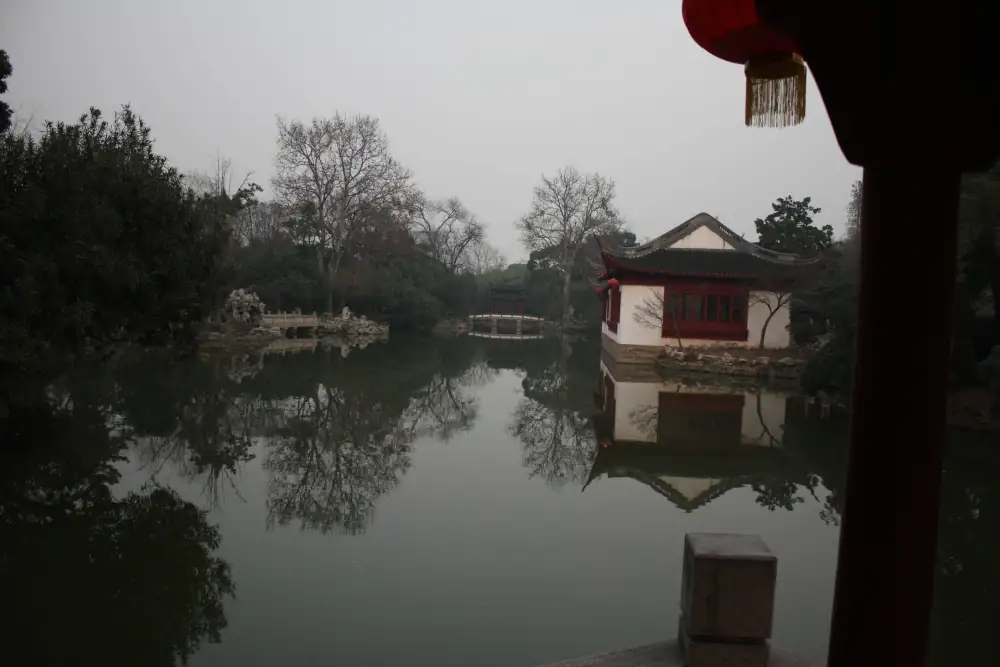
The Zigzag Bridge (九曲桥): Nine-turn stone bridge over the central lotus pond, leading to the Huxinting Teahouse — a genuinely beautiful example of a pavilion sitting over water. The bridge is narrow and very crowded; cross it early morning.
The Bazaar: Managing the Commercial Surround
The 40,000 square metre Old City God Temple Tourist Area (城隍庙旅游区) surrounding Yuyuan is a large-scale commercial district themed on Ming-Qing architecture. It contains hundreds of shops, restaurants, and snack stalls, ranging from artisan craft stores to mass-market souvenir factories.
The bazaar is simultaneously overwhelming and worth exploring. Strategy matters.
What to Eat
Xiaolongbao (小笼包): The Yuyuan area’s most famous food. Steam-cooked pork soup dumplings eaten with ginger and black vinegar. Several shops around the garden claim to be the “original” — the most reliable:
- Nanxiang Mantou Dian (南翔馒头店): The 130-year-old establishment facing the zigzag bridge. The ground floor is the queue for takeaway (¥58/16 pieces); the upper floors are a sit-down restaurant with a wider menu. Expect queues of 30–90 minutes on weekends. Worth it.
- Nanxiang Xiaolongbao on the 2nd floor of the multi-story restaurant nearby is calmer and takes reservations.
Crab Roe Soup Dumplings (蟹粉小笼): The premium autumn version made with hairy crab roe. Only available September–November when hairy crabs are in season.
Tangchaoli (糖炒栗子): Stalls throughout the bazaar sell sugar-glazed chestnuts in winter, roasted in large woks with black pebbles and syrup. Sold by weight, ¥20–30 per 250g.
Niangao (年糕): Glutinous rice cakes stir-fried with pork and vegetables — a Shanghai staple; good from the stalls in the covered market alleys east of the garden.
Shopping
The bazaar contains too many shops to evaluate individually. The most useful areas:
- Antiques and collectibles: The upper floors of several buildings around the central plaza host dedicated antique markets. Quality varies hugely; bargaining expected. Serious collectors should visit the Dongtai Road Antique Market instead (Line 13 to Luban Road).
- Traditional crafts: Genuine cloisonné, embroidery, and lacquerwork available from shops on the main plaza — prices are elevated but the quality is real.
- Avoid: The mass-market “silk” and “jade” shops along the main tourist axis — almost all goods are low-quality or fake at high prices.
Combining with the Old City
Yuyuan sits within Shanghai’s historic Old City (老城厢), the area that was the independent Chinese municipality before the foreign concessions absorbed the surrounding areas. Outside the tourist zone, the neighbourhood retains something of pre-modern Shanghai — narrow streets, traditional medicine shops, steamed bun stalls, and small temples.
Recommended short extension: Walk south from the Bazaar exit along Fangbang Middle Road (方浜中路) — a reconstructed Qing-style pedestrian street with genuinely old temples embedded between newer shops. The City God Temple (城隍庙) itself (¥10) is a functioning Taoist temple with genuine religious activity, worth visiting.
Practical Tips
Arrive at opening time (9:00 AM) for the garden itself. The bazaar fills with tour groups from around 10:30 AM onwards.
The Lantern Festival (Yuanxiao, January/February): Yuyuan hosts one of China’s most elaborate lantern festival displays — elaborate light sculptures covering the entire bazaar and garden. Tickets are more expensive (¥100+) and the crowds are enormous, but the atmosphere is extraordinary. Book well in advance.
Photography: The best light is on the central pond from 9–11 AM (eastern light). The zigzag bridge shot with the Huxinting Teahouse is best from the western bank.
Rainy days: The garden is significantly more beautiful in rain — reflections in the ponds, empty paths, steam rising from food stalls. Pack an umbrella.
Combination: Yuyuan is 15 minutes by taxi from the Bund and 20 minutes by metro from Tianzifang. Works well as a morning visit before lunch at Nanxiang and an afternoon at Tianzifang.
Yuyuan rewards patience. The crowds around the zigzag bridge and Nanxiang restaurant are real — but 50 metres away, in the Inner Garden or on the path around the Grand Rockery, you can have the space almost entirely to yourself. This is a garden designed to be discovered gradually, and that’s still true.
Last updated: May 2026