
Luoping (罗平) in eastern Yunnan, where the province borders Guizhou and Guangxi, is for most of the year an unremarkable agricultural county. Then February arrives, and the rapeseed (油菜, canola) flowers bloom across the valley floor and lower hillsides — and Luoping becomes one of the most visually overwhelming landscapes in China.
The scale is difficult to convey. Over 600,000 mu (about 100,000 acres) of rapeseed flowers bloom simultaneously in the Luoping basin, filling the broad valley between the karst peaks with an unbroken sea of bright yellow. The conical limestone peaks that rise from the yellow fields — the same karst formations as Guilin, but at higher density — create a visual effect that is unique in Chinese landscape photography. The combination of yellow flowers, green peaks, blue sky, and occasional white clouds has become one of China’s most iconic natural images.
Table of contents
Open Table of contents
Getting to Luoping
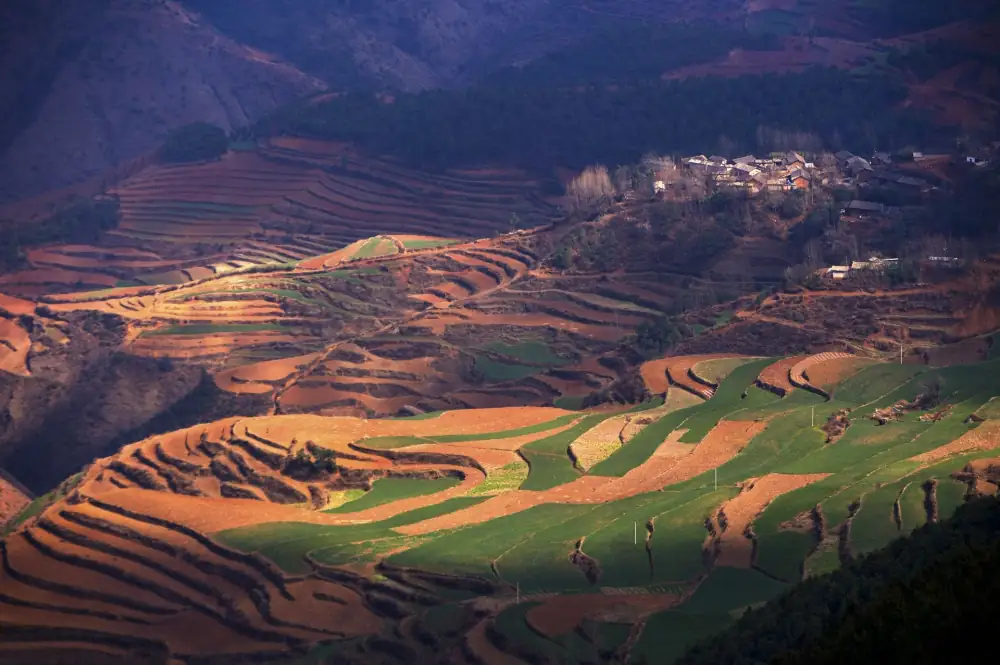
By train:
- From Kunming: About 3–4 hours by standard train; ¥50–80; several departures daily
- There is no high-speed rail connection to Luoping yet; the standard rail line is adequate but not fast
- Luoping Station is about 2km from the town center; taxis ¥10
By bus:
- From Kunming: About 4–5 hours; ¥60–90; departures from Kunming East Bus Station
- From Xingyi (Guizhou): About 2.5 hours; ¥50–70
By car:
- From Kunming: About 3 hours via the G78 expressway
Getting around Luoping: The flower fields and waterfalls are scattered across the county; transport options include:
- Motorcycle taxi for nearby viewpoints (¥20–40/trip)
- Hired car with driver (¥300–500/day; recommended for covering multiple sites)
- Bicycle rental from Luoping town (¥30–50/day; feasible for closer viewpoints)
The Rapeseed Flower Fields (油菜花海)
The rapeseed flowers typically begin blooming in early February and peak between mid-February and mid-March. The exact timing varies annually with the weather — a warm January brings earlier bloom; a cold one delays it. The bloom lasts approximately 3–4 weeks at peak intensity.
Best viewpoints:
Jinji Peak Cluster (金鸡峰丛): The single most photographed view in Luoping. A cluster of karst peaks rising from the flower fields, viewed from a ridge on the main road about 10km northeast of town. The standard photograph — rows of conical peaks rising from a yellow carpet — is taken from here.
- Best time: Sunrise (6:30–8:00am) when morning mist lingers between the peaks; the light at this hour transforms the yellow fields
- Getting there: 15 minutes by car/motorcycle from Luoping town; walk up the ridge viewing platform (5-minute climb)
- Entry: Free from the roadside; ¥20 for the formal viewing platform
Niujie Screw Field (牛街螺丝田): A terraced field area about 10km north of town where the rapeseed fields form spiral patterns on terraced hillsides — the curves of the terraces create a pattern reminiscent of a screw thread. Best viewed from the road above the terraces.
- Best time: Afternoon light (3:00–5:00pm)
- Getting there: 15 minutes from town
Ten-Thousand Peak Lake (万峰湖): A reservoir area where the flower fields extend to the water’s edge, with karst peaks reflected in the still water. About 20km from town; requires hired transport.
Jiulong Waterfalls (九龙瀑布群)
The Jiulong (Nine Dragon) Waterfalls are a series of 10 waterfalls on the Jiulong River, about 20km northeast of Luoping town. The tallest single drop is 56 meters, and the total cascade length is about 2km. During the spring rapeseed bloom, the waterfalls are framed by yellow flowers, creating one of the most photogenic waterfall settings in China.
The waterfall trail:
- A maintained path follows the river upstream, passing all 10 waterfalls
- Total walking time: 2–3 hours for the full circuit
- The trail is well-maintained with stairs and viewing platforms at each fall
- The largest falls (Dragon Gate Falls, 神龙瀑) has a 56-meter drop and a deep pool at its base
Entry fee: ¥80 per person
Opening hours: 8:00am–5:30pm
Getting there: 30 minutes by car/motorcycle from Luoping town; some tour buses run from the town center
Flow rate: The waterfalls are most powerful in spring (March–May) and after summer rain. In winter, the flow reduces significantly.
Duoyi River (多依河)
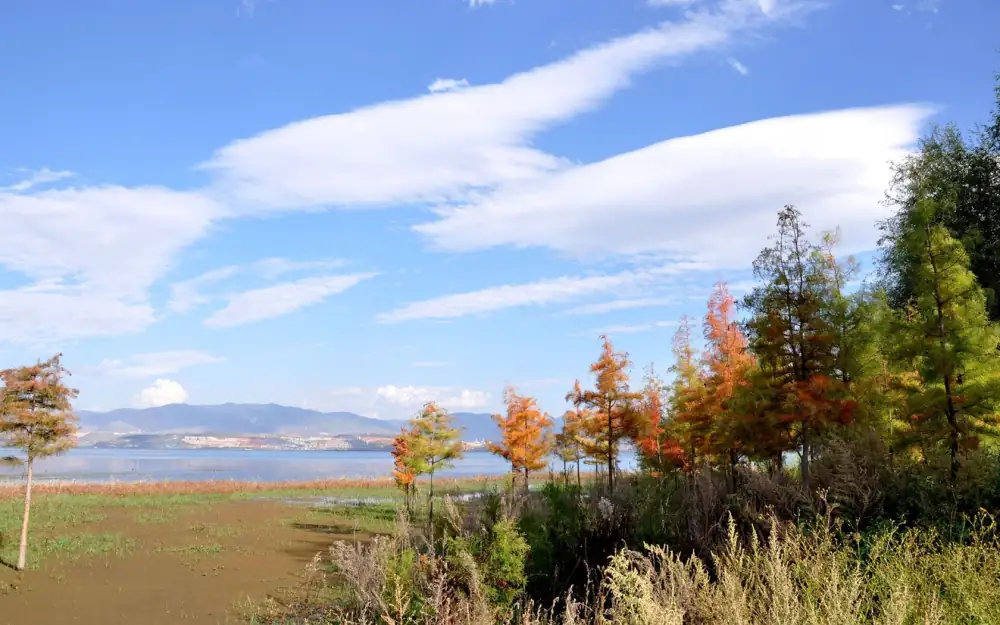
The Duoyi River flows through a scenic valley about 30km southeast of Luoping, near the Guizhou border. It’s a quieter, more intimate landscape than the flower fields — a clear river winding through bamboo groves and small Buyi minority villages, with small waterfalls and natural swimming holes.
What to see:
- Bamboo raft trips on the river (¥60 per person for a 40-minute ride)
- Buyi minority villages with traditional stone architecture
- The river’s distinctive blue-green water
- Small hydro-powered grain mills still operated by local families
Entry fee: ¥60 per person
Getting there: About 45 minutes by car from Luoping town
Luoping Town
The town itself is functional and not especially atmospheric — a standard small Chinese county seat with busy markets, hotels, and restaurants. But the morning market is worth visiting:
Luoping Morning Market (罗平早市): From about 6:30am, local farmers bring in fresh produce, wild mushrooms (in season), honey, and preserved foods. The market provides a genuine slice of local life and an opportunity to taste regional specialties.
Local food:
- Five-color rice (五色花饭): Glutinous rice dyed with natural plant extracts into five colors; a specialty of the local Buyi minority; ¥10–15 per portion
- Rapeseed oil dishes: The county’s rapeseed is also pressed into cooking oil; local dishes are cooked in fresh-pressed rapeseed oil, which has a distinctive nutty flavor
- Wild vegetable dishes: Spring brings edible wild greens to the markets; restaurants will prepare them simply — stir-fried or in soup
Photography Tips for Luoping
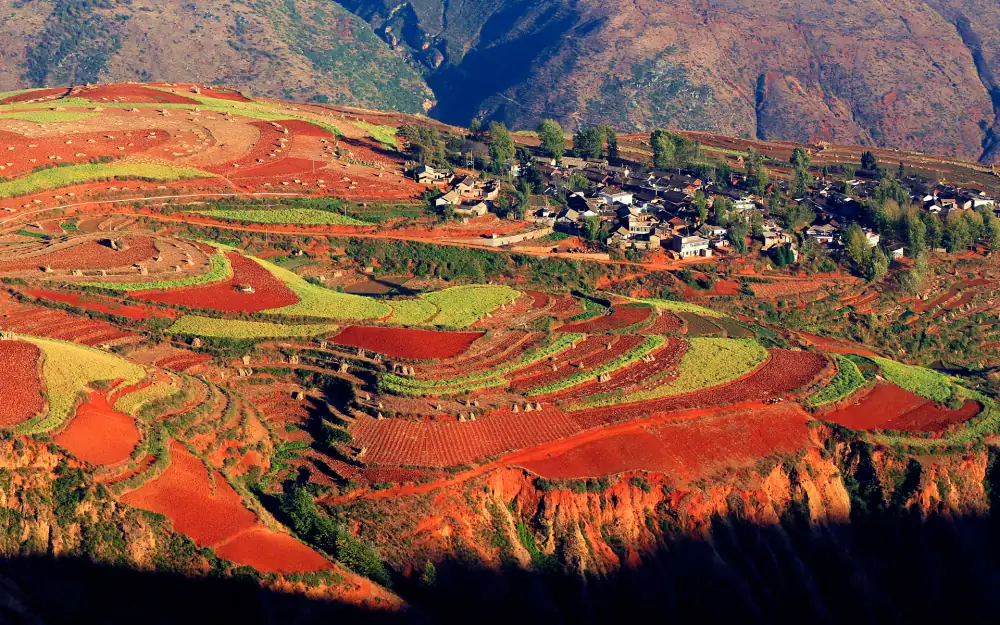
Essential timing:
- Sunrise at Jinji Peaks: Arrive by 6:30am; the mist between the peaks dissipates quickly once the sun rises
- Afternoon at Niujie: The west-facing terraces are best lit in afternoon
- Overcast days: Don’t despair — the soft, even light is actually excellent for flower photography; the colors are richer without harsh shadows
Equipment:
- Wide-angle lens for the panoramic flower field views
- Telephoto for compressing the layers of karst peaks
- Tripod for sunrise and golden-hour shots
- Polarizing filter to reduce glare from the flower fields
Composition: The classic shot is foreground flowers, mid-ground karst peaks, distant sky. But consider also: close-ups of individual flower clusters against peak backdrops, the terraced patterns at Niujie, and the waterfalls with yellow flowers.
When to Visit Luoping
The critical window: Mid-February to mid-March for the rapeseed bloom
Sub-periods within the bloom:
- Early February: Flowers beginning; not at full coverage yet; fewer visitors
- Late February–early March: Peak bloom; the most photographed period; weekends are very crowded with Chinese tour groups
- Mid-March: Blooming begins to fade; some fields already harvested; still photogenic but declining
Other seasons:
- Summer (June–August): Green fields replace yellow; waterfalls at peak flow; less visited
- Autumn: Harvested fields; golden stubble; pleasant walking weather
- Winter: Bare fields; fog; atmospheric but not colorful
Practical Tips
Accommodation: Luoping has limited accommodation; during the bloom season, book at least 2 weeks ahead:
- Standard hotels in town: ¥150–350/night
- Guesthouses and homestays: ¥80–200/night
- Prices increase significantly during the peak bloom weekends
Transport strategy: The most efficient approach is to hire a car with driver for 1–2 days (¥300–500/day); they know the best viewpoints and the timing for optimal light.
Combine with: Luoping pairs naturally with Xingyi in Guizhou (2.5 hours by road) for a karst-focused photography trip, or with Kunming and Stone Forest for a broader eastern Yunnan circuit.
Festival: The Luoping Rapeseed Flower Tourism Festival (罗平油菜花文化旅游节) runs during the bloom period with cultural performances, photography competitions, and food fairs. Check dates annually.