Guangzhou is the birthplace of dim sum (点心, diǎnxīn) culture. This is where the tradition of yum cha (饮茶, yǐn chá — “drinking tea”) originated: gathering in a teahouse from dawn to noon, ordering small dishes brought round on bamboo steamers, and spending hours eating and talking. The Guangzhou yum cha experience is different from what you’ll find in Hong Kong restaurants or international Cantonese restaurants — richer, louder, more traditional, and deeply embedded in daily life.
Table of contents
Open Table of contents
What is Yum Cha?
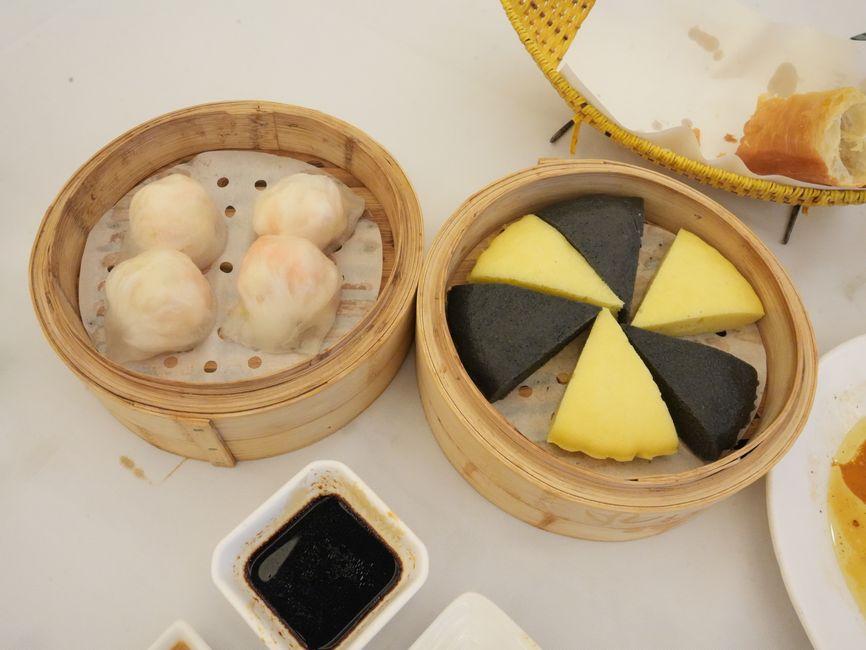
Yum cha literally means “drink tea” — the tea is theoretically the main event; the food is the accompaniment. In practice, the food takes centre stage, but the tea is genuinely important and the ritual of pouring and serving tea at the table is observed.
When to go: Traditional yum cha is a breakfast and lunch affair. Most teahouses open from 7am–2pm for breakfast dim sum. Some serve an afternoon tea (下午茶) session 2–5pm and an evening dim sum (晚市) session.
The social ritual: Guangzhou yum cha is unhurried. A family might spend 2–3 hours at the table. Don’t rush; the point is the gathering.
How the System Works
The teahouse format
- Arrive and queue (for popular venues, especially on Sunday mornings, expect a 15–60 minute wait)
- Choose your tea: orders are taken by a tea pourer before food. Classic choices:
- 普洱 (Pu-erh): earthy, dark, cuts through oily food — the classic choice
- 菊普 (Chrysanthemum Pu-erh): Pu-erh mixed with dried chrysanthemum flowers; lighter
- 水仙 (Narcissus): floral oolong; fragrant
- 铁观音 (Tieguanyin): roasted oolong; more common in northern China
- Order tea, pay for tea separately: a cover charge (茶位费) covers tea refills and is ¥8–¥20 per person
- Order dim sum: via paper checklist, verbal order, or from circulating carts
The tea table ritual
When your tea arrives:
- Tapping the table (叩手礼) — when someone pours tea for you, tap two fingers on the table as a gesture of thanks. This originated from a story about an emperor incognito who poured tea for his subjects; they tapped their fingers to “bow” without revealing who he was.
- Rinsing utensils — at traditional teahouses, pour a small amount of hot tea over chopsticks, spoon, and bowl before eating. This is a traditional hygiene custom.
- Who pours — the youngest at the table traditionally pours for elders first

What to Order: The Essential Dim Sum
Steamed
Har Gow (虾饺, xiā jiǎo) — benchmark dish. Crystal-skin dumplings filled with whole prawn. The skin should be translucent, thin, and slightly sticky; the prawn filling should be fresh and bouncy. A teahouse is judged by its har gow.
Siu Mai (烧卖, shāo mài) — open-topped dumpling of pork and prawn, topped with a dot of fish roe or carrot. At least 3–4 per piece should be standard.
Cheung Fun (肠粉, cháng fěn) — silken rice noodle rolls filled with prawn, beef, or char siu pork, drizzled with sweet soy sauce. The noodle should be almost translucently thin. Order one of each variety.
Liu Sha Bao (流沙包) — salted egg yolk custard bun. Bite in and molten golden custard flows out. A more modern addition to the dim sum canon but now ubiquitous.
Lo Mai Gai (糯米鸡, nuò mǐ jī) — glutinous rice stuffed with chicken, mushroom, and egg, wrapped in lotus leaf and steamed. Filling; order one to share.
Baked and pan-fried
Char Siu Bao (叉烧包, chā shāo bāo) — BBQ pork buns. The steamed version has a white, soft skin that opens like a flower at the top; the baked version (焗叉烧包) has a glazed, golden exterior.
Dan Ta (蛋挞, dàn tà) — Cantonese egg tarts with flaky shortcrust pastry. A legacy of Portuguese influence via Macau. Best eaten hot.
Turnip Cake (萝卜糕, luóbo gāo) — pan-fried compressed radish cake with dried shrimp and preserved sausage. Crisp outside, soft inside.
Cold and braised
Phoenix Claws (凤爪, fèng zhuǎ) — chicken feet in black bean sauce, steamed until the skin is gelatinous and almost melts. A test of adventurous eating; the texture is initially confusing but becomes addictive.
Spare Ribs with Black Bean (豉汁排骨) — steamed chopped pork ribs in fermented black bean and garlic sauce.
Cheung Tsoi Gao (韭黄饺) — yellow chive dumplings, delicate and fragrant.
The Best Dim Sum Teahouses in Guangzhou
Lian Xiang Lou (莲香楼)
Founded in 1889. The most historically significant teahouse in Guangzhou, spread across multiple floors of a colonial-era building in the Xiguan (西关) neighbourhood. No English menu; point at neighbouring tables’ dishes or use translation camera. Best for: authentic experience, historical atmosphere
Bao She (炳胜品味)
Considered by many food critics to serve Guangzhou’s most technically accomplished dim sum. Modern interior, impeccable har gow, ingredients sourced from across Guangdong. Reservation essential. Best for: quality-focused visitors, splurging on excellent food (¥100–¥150 per person)
Pan Xi Restaurant (泮溪酒家)
A large traditional restaurant in a classical Lingnan garden setting, with a lake and pavilions. Popular for weddings and family gatherings. The dim sum is excellent and the setting is beautiful. Best for: experiencing dim sum in a traditional Cantonese garden setting
Dim Sum at 5-Star Hotels
Guangzhou’s White Swan Hotel and Garden Hotel have excellent dim sum restaurants popular with business travellers — English menus, staff who speak English, high quality. More expensive but stress-free.

Beyond Dim Sum: Cantonese Cuisine in Guangzhou
Roast Meats (烧腊)
Cantonese roast meat — char siu (BBQ pork), roast goose, crispy pork belly — is an art form in Guangzhou. Look for 烧腊 stalls outside wet markets (morning) or in market halls. Eat with plain white rice and chilli sauce.
Where: Panfu Road (泮塘路), Liwan District — a famous roast meat cluster
Cantonese Congee (粥)
Guangzhou’s rice porridge (粥, zhōu) is silky smooth from long slow cooking. Classic varieties: 皮蛋瘦肉粥 (preserved egg and pork), 鱼片粥 (sliced fish), 及第粥 (offal). Order from a congee restaurant (粥店) early morning.
Zhujiang (Pearl River) Seafood Night Market
Guangzhou’s Dongting seafood restaurant area near the Pearl River is where local families eat fresh-caught seafood. Pick live fish and shellfish from tanks, negotiate prices, have them cooked to order. Best experienced: 7pm onwards.
Practical Tips for Dim Sum
Arrive early for best selection: dim sum is prepared in batches; arriving after 9:30am means some items may have sold out or be sitting in warmers.
The bill: at most traditional teahouses, keep all your order cards as the waiter stamps each dish. The total is tallied from cards at the end.
Weekday vs weekend: weekday mornings are quieter and have better availability. Weekend yum cha is a major social event — expect 30–90 minute waits at popular venues from 8–11am.
Dress code: none — Guangzhou teahouses are democratic. Locals come in everything from pyjamas (literally, at 7am) to Sunday best.
Last updated: May 2026 · Guangzhou’s food scene is the most dynamic in China. Restaurant-specific information may change.