
The Yellow River (黄河) is China’s second longest river and one of the most historically significant waterways in East Asia — the cradle of early Chinese civilization, the source of devastating floods, the boundary that defined the north from the south for millennia. For most of its length, the river flows through agricultural plains and industrial cities that are historically significant but not visually dramatic.
The exception is the section where the river cuts through the Qinling and Taihang mountain ranges in western Henan, creating a series of gorges with red sandstone cliffs, deep-cut canyon sections, and the powerful visual drama of China’s second largest river squeezed between rock walls. Tianmen Gorge (天门峡) is the most accessible of these canyon sections for visitors, and its glass-floored cliff walk suspended over the river is one of the more visceral natural experiences in central China.
Table of contents
Open Table of contents
Getting to Tianmen Gorge
By train to Sanmenxia (三门峡): Tianmen Gorge is most easily reached via Sanmenxia, the nearest city:
- From Zhengzhou: 1.5 hours by high-speed train (¥80–130); very frequent departures
- From Xi’an: 1 hour by high-speed train (¥60–100)
- From Luoyang: About 1 hour by high-speed train (¥50–80)
From Sanmenxia to Tianmen Gorge:
- By taxi from Sanmenxia station: about 30 minutes (¥50–70 to the entrance)
- By bus: Bus 1 or 6 from Sanmenxia to nearby Shanxian County (陕县) stops, then a local bus or taxi to the gorge entrance (¥20–30)
- Tour buses from Sanmenxia’s main hotels run morning excursions to the gorge; about ¥80–120 per person including transport and entry
From Luoyang: Some tour operators in Luoyang offer one-day combination tours to Tianmen Gorge plus Sanmenxia’s yellow swan reserve (October–March) — convenient if you’re using Luoyang as a base.
Tianmen Gorge Scenic Area (天门峡景区)
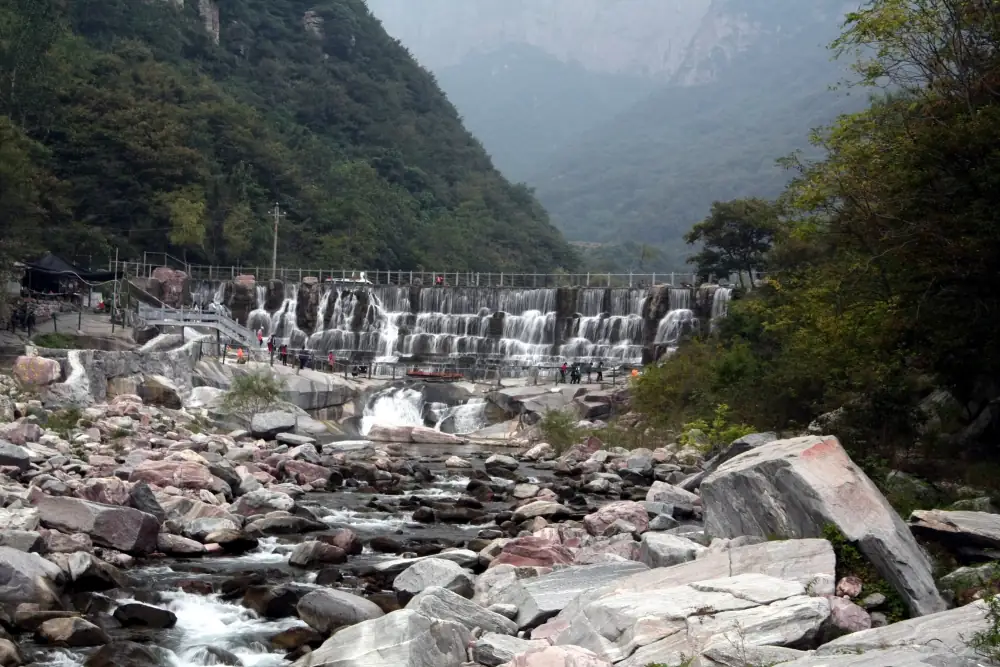
The main attraction is the Yellow River canyon section where the gorge walls are sheer sandstone cliffs dropping directly to the river’s edge, with the access path literally cut into the cliff face.
The cliff walk:
- Distance: Approximately 3km one-way along the cliff-face path
- The path descends from a ridge viewpoint down to river level, with sections suspended on steel walkways bolted to the cliff face
- A glass-floored section (约100m) near the midpoint of the walk offers direct views straight down to the river surface 50–80 meters below
- The river itself is visible in various stages of color — from yellow-brown with silt to a surprising green-blue in calmer sections
- At river level, the gorge walls rise nearly vertically on both sides; the sensation of the river’s power and the canyon’s scale is impressive
Key viewpoints:
- Summit observatory (观景台): The highest point, reached by a short ascent from the main entrance; views downstream to where the gorge opens
- Dragon Gate narrows (龙门峡): The narrowest section of the gorge, where the river is compressed between cliff faces 100 meters apart
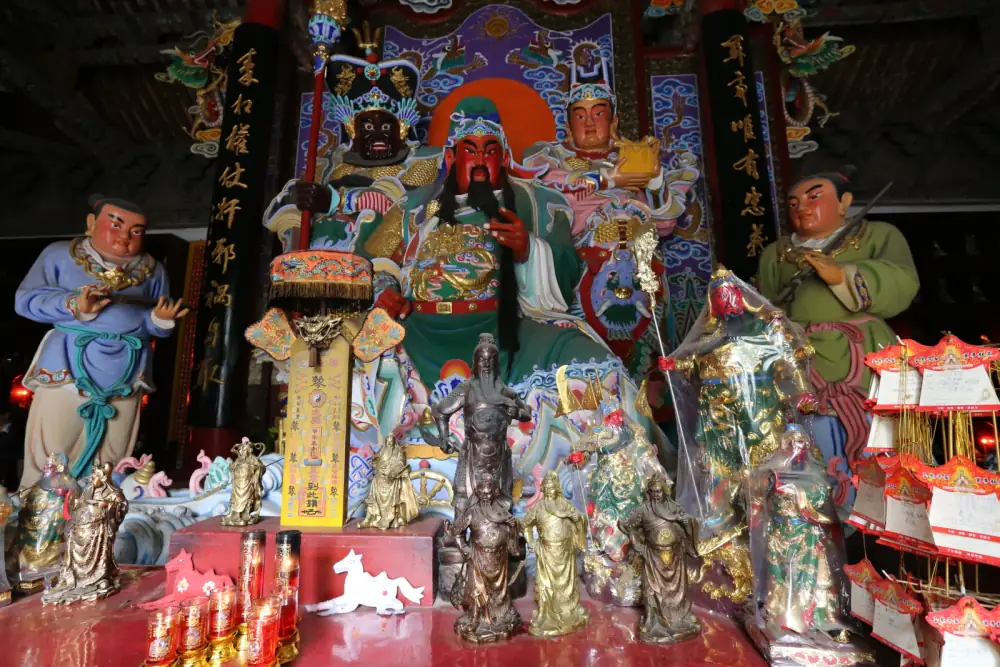
- Temple Cave (天门庙): A small cliff-face shrine carved into the sandstone; incense burners and deity figures in niches in the rock
Entry fee: ¥85 per person
Opening hours: 8:00am–6:00pm
Physical requirements: The cliff walk involves steep sections; comfortable footwear required; the glass floor section is not for those with severe vertigo
Sanmenxia White Swan Reserve (三门峡白天鹅自然保护区)
From October through March, the Sanmenxia section of the Yellow River hosts the largest wintering population of whooper swans in China, with peak numbers exceeding 10,000 birds.
Why swans in Henan? The relatively warm microclimate of the reservoir section of the Yellow River around Sanmenxia — the water temperature remains above 4°C even in the coldest months — combined with abundant aquatic vegetation in the shallower reservoir margins creates ideal wintering conditions. The swans migrate here from breeding grounds in Siberia and Central Asia.
Viewing: The best viewing area is along the Yellow River wetlands north of Sanmenxia city, particularly at the Sanmenxia Swan Lake (天鹅湖) urban wetland park:
- Entry: ¥30
- Best viewing times: Dawn (6:30–9:00am when swans arrive at feeding areas) and late afternoon (3:00–5:00pm when they return to the river)
- Numbers peak in December–January; March sees northward migration beginning
Photography: Telephoto lens (300mm+) is standard equipment for swan photography here. Some photographers specifically make trips from Zhengzhou and Xi’an for this spectacle.
Shanxian Earthen Caves (陕县地坑院)
About 12km from Sanmenxia city, in Shanxian County (陕县), is one of the most unusual surviving vernacular architectural traditions in China: underground pit courtyard dwellings (地坑院, digeng yuan).
What they are: Rather than building upward, the residents of this loess plateau region dug downward — excavating a rectangular pit 8–12 meters deep and about 10–12 meters across, then carving rooms into the pit’s vertical walls. The result is a courtyard dwelling that is entirely underground — invisible from the surrounding plateau surface except for the chimney vents that poke up through the fields.
Why underground: The loess plateau has unique geological properties — it’s stable enough to carve and holds its shape reliably, while providing thermal mass that keeps the underground rooms warm in winter and cool in summer. The tradition developed over at least 2,000 years and may be older.
The village of Miaoshang (庙上村): The best-preserved cluster of digeng yuan is at Miaoshang, now managed as a heritage and tourism site. About 100 underground courtyards survive, many still inhabited by elderly residents.
- Walking tour of the village: about 1.5 hours
- Entry: ¥50 per person
- Overnight stays in converted digeng yuan guesthouses: ¥200–350/night; the experience of sleeping underground in a traditional pit house is unusual and memorable
Getting there from Sanmenxia: Bus or taxi from Sanmenxia South Bus Station; about 30 minutes (¥25–35 by taxi).
Xiaolangdi Dam and Reservoir (小浪底水库)
The Xiaolangdi Multipurpose Dam, about 40km downstream of Sanmenxia, created a massive reservoir stretching 130km upstream — one of China’s major hydraulic engineering projects. The reservoir has altered the landscape dramatically, but the scenery created — an inland sea surrounded by loess hills — is striking.
The Yellow River Scenic Area at Xiaolangdi: Boat trips on the reservoir provide views of the flooded valley, submerged village remnants visible through the water at low water levels, and dramatic canyon sections above the water line.
The seasonal flood discharge (泄洪): Every June, the dam operators conduct a controlled “flushing” of silt from the reservoir through the spillways. The resulting discharge creates a spectacular display — the Yellow River downstream of the dam runs with hundreds of thousands of cubic meters of mud per second for several days, looking like a liquid wall of chocolate. Viewing crowds arrive from across China for the event.
Practical Information
Combining sights: A practical two-day itinerary from Zhengzhou:
- Day 1: Train to Sanmenxia; afternoon Tianmen Gorge cliff walk; evening in Sanmenxia
- Day 2: Morning digeng yuan at Miaoshang; afternoon back to Zhengzhou or continue to Xi’an
From Xi’an perspective: Tianmen Gorge makes an excellent day trip from Xi’an (1 hour by high-speed train to Sanmenxia). Combine with a Sanmenxia lunch.
Accommodation in Sanmenxia:
- Multiple mid-range hotels near the railway station (¥150–350/night)
- No luxury options but adequate comfort available
Best times to visit:
- Spring (March–May): Pleasant temperatures; flowers on the loess plateau slopes; river levels moderate
- Autumn (September–November): Best light for canyon photography; comfortable hiking temperatures
- Winter (October–March): For the white swans at Swan Lake
- Avoid: July–August peak heat and flood season; the river can be at high water and some access points may be closed
Food in Sanmenxia: The city is known for its flatbreads (锅盔), lamb dishes, and the local Yellow River carp — the fish from this section of the river has a distinctive flavor attributed to the particular mineral content of the water.