
Shanghai Jing’an District: Where Old Shanghai Meets Modern Luxury
Jing’an (静安) sits at the heart of Shanghai’s most dynamic tension — the ancient versus the ultramodern. Within a few blocks, you can stand before a gilded Buddhist temple, enter one of China’s highest-end shopping malls, duck into a lane of 1930s Art Deco mansions, and find a third-wave coffee shop that could hold its own in Melbourne or Portland.
For first-time visitors to Shanghai, Jing’an often surprises. It lacks the postcard-ready riverfront of the Bund or the manicured gardens of Yu Garden. What it offers instead is the authentic daily life of prosperous, cosmopolitan Shanghai — the city as Shanghainese people actually live it.
Understanding Jing’an’s Geography
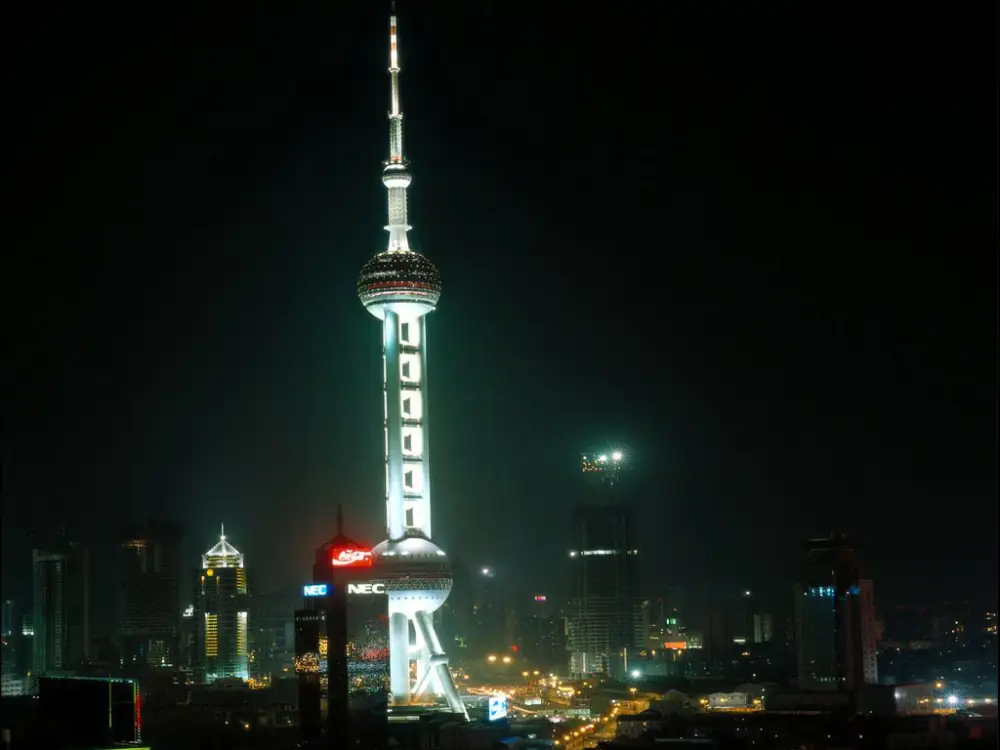
Jing’an district stretches north from the former French Concession, bounded roughly by Suzhou Creek to the north and Yan’an Elevated Road to the south. The main artery is Nanjing West Road (南京西路), which runs east-west through the district’s commercial heart.
The district divides naturally into several zones:
- Nanjing West Road corridor: luxury shopping, hotels, business
- South Jing’an (former Jingan area): older residential lanes, boutique retail
- North Jing’an: more local, less touristy, great food streets
Jing’an Temple: The Neighborhood’s Ancient Heart
Jing’an Temple (静安寺) is one of Shanghai’s oldest Buddhist temples, with origins dating to the 3rd century CE, though the current golden-roofed complex was rebuilt and expanded in the 1990s and 2000s. Its gleaming exterior, covered in real gold tiles, creates one of Shanghai’s most striking visual contrasts — a devout Buddhist site wedged between a luxury mall and a metro station.
What to expect inside: Three main halls house impressive bronze Buddhist statues. The main hall features a 9-meter bronze Sakyamuni Buddha. Despite the commercial surroundings, worshippers genuinely come here to pray — incense smoke fills the courtyards throughout the day.
Visiting tips:
- Entrance fee: ¥50 (includes a short incense stick ceremony)
- Opening hours: 7:30 AM – 5:00 PM daily
- Best time: Early morning before tour groups arrive, or weekday afternoons
- Metro: Line 2/7, Jing’an Temple Station, Exit 1
Nearby: The temple square hosts occasional outdoor markets and performances on weekends. The Jing’an Sculpture Park across the road offers a pleasant green escape.
Nanjing West Road: Shanghai’s Luxury Corridor
Nanjing West Road is Shanghai’s answer to Paris’s Avenue Montaigne or Tokyo’s Omotesando — a high street lined with flagship stores, international luxury brands, and premium malls. Even non-shoppers find the architecture and energy worth experiencing.
The Malls
Plaza 66 (恒隆广场): Shanghai’s most prestigious luxury mall, home to Hermès, Chanel, Louis Vuitton, and Cartier. The twin towers above are recognizable from across the city. The atrium design by Kohn Pedersen Fox creates dramatic interior spaces.
CITIC Square (中信泰富广场): Slightly more accessible price points, with mid-luxury brands and a good food court in the basement. Apple Store is here.
Westgate Mall (梅龙镇广场): Japanese department store Isetan anchors this mall, making it popular with Shanghai’s significant Japanese expat community. Strong food and cosmetics sections.
Grand Gateway 66 (港汇恒隆广场): Technically in Xuhui district but often considered part of this shopping zone.
Beyond the Chains
Between the mall anchors, smaller streets yield more interesting retail. Wujiang Road (吴江路) — now partly pedestrianized — was historically a famous street food alley. It’s been somewhat gentrified but retains a busy, street-level energy different from the malls.
The Art Deco Residential Lanes
What many visitors miss about Jing’an is its extraordinary collection of 1920s–1940s residential architecture. Shanghai was the Asian hub of Art Deco design, and Jing’an preserves some of the finest examples.
Wukang Road area (武康路): Technically bleeding into Xuhui district, but the spirit extends into southern Jing’an. Plane tree-lined streets with restored colonial villas, now housing boutiques, galleries, and cafes.
Changshu Road (常熟路): A quieter alternative to Wukang Road, with less Instagram tourism and more authentic daily life.
The Jing’an Heritage lanes: Around Shanxi North Road (陕西北路) and Jiaozhou Road (胶州路), several preserved lilong (弄堂, traditional Shanghai lane houses) still function as residences. These are not tourist attractions per se, but walking through them offers a glimpse of pre-high-rise Shanghai life.
Specialty Coffee Culture in Jing’an
Shanghai has China’s most developed specialty coffee scene, and Jing’an is the epicenter. The density of quality independent cafes here rivals any coffee city in Asia.
Standout Cafes
Seesaw Coffee (喜茶 Seesaw): Multiple locations in Jing’an. Shanghai’s homegrown specialty chain that predates the third-wave coffee trend in China. Excellent pour-overs using single-origin beans, including some sourced directly from Yunnan farmers.
%Arabica: Japanese chain known for minimalist design and carefully sourced beans. The Jing’an location has a beautiful interior. Expect a queue on weekends.
Manner Coffee: The story of Manner is one of Shanghai’s modern startup legends — began as a tiny 2-square-meter kiosk in 2015, now hundreds of locations across China. The original vibe (good coffee, no frills, low prices by specialty standards) survives in many Jing’an branches.
Confessional Coffee: A smaller indie roaster with a dedicated following. The roasting process is visible through a glass window, and the baristas are genuinely passionate about education.
Finding Local Gems: The best approach is simply to walk the smaller lanes (particularly around Yanping Road 延平路 and Changde Road 常德路) and duck into any cafe that looks interesting. The quality level in Jing’an is uniformly high.
Dining in Jing’an
High-End Chinese
Fu He Hui (福和慧): One of Shanghai’s most celebrated vegetarian fine dining restaurants. Buddhist-inspired cuisine presented with artistic precision. Reservation essential. Located in a renovated villa on Xinhua Road.
Ultraviolet by Paul Pairet: Shanghai’s most experimental restaurant — a 10-seat tasting menu where each course is accompanied by audio-visual projections that transform the dining room. Three Michelin stars. Extremely difficult to book, but worth understanding as a reference point for Shanghai’s culinary ambition.
Mid-Range Favorites
Jesse Restaurant (吉士酒家): Classic Shanghai home-style cooking (本帮菜) at its most reliable. Try the braised pork belly with rock sugar (红烧肉) and the hairy crab in season (October-November).
Commune Social (食社): Jason Atherton’s casual spin-off, featuring a tapas-style menu with strong cocktails. Popular with the international crowd. The tapas bar area is more accessible than the restaurant proper.
Street-Level Eating
Yuyuan Road (愚园路) food cluster: A stretch of small restaurants and snack shops popular with locals. Look for the small noodle shops (面馆) serving authentic Shanghai-style thick noodles.
Wujiang Road food stalls: Despite gentrification, some original street food vendors remain. Shengjianbao (生煎包, pan-fried pork dumplings) are the essential Jing’an street food experience.
Art and Culture
Yuz Museum (余德耀美术馆): Technically in Xuhui’s West Bund area, but Shanghai’s art spaces are so interconnected that serious art visitors treat the whole city as one scene. Jing’an has several galleries worth exploring.
James Cohan Gallery: One of New York’s prominent contemporary galleries with a Shanghai outpost. International caliber exhibitions.
Jing’an Culture Park (静安文化公园): A small but thoughtfully designed park with an outdoor amphitheater used for community events.
Getting Around Jing’an
Metro: Lines 2, 7, and 12/13 serve the district exceptionally well. Jing’an Temple Station is the main hub.
Walking: Southern Jing’an is highly walkable. The lanes between Nanjing West Road and Yan’an Road are best explored on foot.
Cycling: Shared bikes (Meituan/Hello) are abundant and work well for the flat terrain. Cycling the river paths along Suzhou Creek to the north is a pleasant morning activity.
Day-in-Jing’an Itinerary
Morning: Start at Jing’an Temple (7:30 AM opening), walk the grounds before crowds arrive. Coffee at Seesaw or a nearby specialty cafe. Explore the back lanes around Jiaozhou Road.
Late Morning: Walk west along Nanjing West Road, window-shopping and people-watching. Turn onto Wujiang Road for snacks.
Lunch: Jesse Restaurant for classic Shanghai home cooking.
Afternoon: Explore the Art Deco streets south of Yan’an Road. Browse boutiques on Changshu Road. Coffee and people-watching in a window-seat cafe.
Evening: Pre-dinner cocktails at a rooftop bar (several in the Nanjing West Road hotel towers), followed by dinner at your choice of cuisine level. Jing’an’s international restaurant scene handles everything from ramen to modern European.
Practical Information
Best time to visit: Jing’an is year-round. Spring (March-May) and autumn (September-November) offer the best weather for walking. Summer is hot and humid; winter is cold but the heated shopping malls make it comfortable.
Budget considerations: Jing’an can be expensive or budget-friendly depending on your choices. The luxury mall restaurants and international cafes are priced at international rates. The local noodle shops and street food stalls are extremely affordable.
Accommodation: Several of Shanghai’s finest hotels are in Jing’an (Four Seasons, W Hotel, Jing’an Shangri-La). Mid-range options exist on the district’s quieter streets. Airbnb-style apartments in the converted lane houses can be an atmospheric choice.
Jing’an rewards visitors who look beyond the obvious shopping-mall exterior. Spend half a day wandering without a specific destination, and you’ll find a Shanghai that most tourists completely miss.