
Pudong (浦东) is the proof of concept for modern China. In 1990, the land east of the Huangpu River was rice paddies and small villages. The Special Economic Zone designation in 1992 triggered the fastest urban development in history — by 2010, the Lujiazui financial district contained three of the world’s ten tallest buildings. Today it is one of the most recognizable skylines on earth.
Visiting Pudong is different from visiting the rest of Shanghai. There are few historical sites and little charm in the conventional sense. Instead, there is scale — the raw physical statement of what 35 years of economic transformation looks like built in glass and steel.
Lujiazui Financial District
Lujiazui (陆家嘴) is the triangle of skyscrapers at the bend of the Huangpu River — the visual opposite of The Bund. Viewed from The Bund’s western bank, it creates the “new vs. old Shanghai” photograph that appears on every travel magazine cover.
The three landmark towers:
- Shanghai Tower (上海中心): 632 metres, second tallest building in the world. The double-skin spiralling glass exterior twists 120 degrees from base to top. The observation deck on floors 118–119 (546 metres) is the highest accessible public viewpoint in China. On clear days, visibility extends 30–40km.
- Shanghai World Financial Center (环球金融中心, “Bottle Opener”): 492 metres, distinctive trapezoidal opening at the summit. The “skywalk” on the 100th floor has glass floor sections.
- Jin Mao Tower (金茂大厦): 420 metres, pagoda-inspired stepped design. The Grand Hyatt Shanghai occupies floors 53–87 — the atrium from the 87th floor looking down through 56 stories is extraordinary.
Which observation deck to choose: Shanghai Tower’s 118F deck gives the most comprehensive view (including looking down at Jin Mao and the SWFC). Book online in advance; queues on weekends can be 1+ hour.
Oriental Pearl Tower (东方明珠塔)
The Oriental Pearl Tower — the pink-tinted space-needle with spheres — opened in 1994 and was Shanghai’s first modern landmark. The middle sphere (263m) has a glass floor section; the upper sphere (350m) has the highest views in the tower. The base has a Shanghai History Museum with recreations of the pre-1949 city.
The tower now looks slightly retro compared to its taller neighbours, which is part of its charm — it’s a time capsule from 1990s Shanghai’s first wave of ambition.
Shanghai Natural History Museum (上海自然博物馆)
Hidden in Century Park’s northwestern corner, this RTKL-designed museum (opened 2015) is one of the world’s best natural history museums architecturally — a spiral glass building inspired by the nautilus shell. Five floors covering geological history, prehistoric life, human evolution, and ecosystems. The dinosaur section is excellent.
Century Park and Expo Area
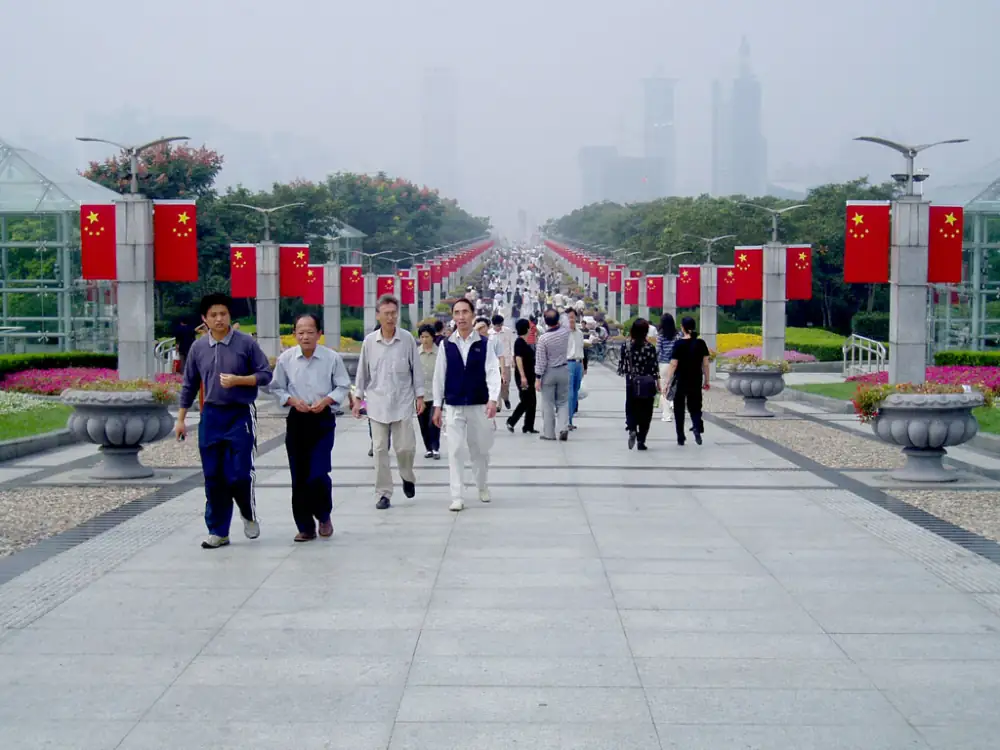
Century Park (世纪公园) is Pudong’s 140-hectare public park — Shanghai’s largest green space within the urban core. Walking paths, paddleboats, and the occasional weekend event. Less remarkable than Fuxing or Zhongshan Parks in the old city but pleasant for a morning run.
The 2010 World Expo Site is now partially developed as a cultural district. The China Pavilion (中华艺术宫, now China Art Museum) is the largest contemporary art museum in Asia and worth 2–3 hours.
Getting to Pudong
Maglev from Pudong Airport: The Shanghai Maglev Train (磁浮列车) connects Pudong International Airport to Longyang Road station in 7 minutes at 431 km/h — the world’s fastest commercially operated train. From Longyang Road, Metro Line 2 continues to Lujiazui (2 stops) or to the city centre.
Metro: Line 2 runs through Lujiazui; Line 14 and others serve broader Pudong.
From The Bund: The Bund Sightseeing Tunnel (外滩观光隧道) — a themed underground cable car — connects The Bund to Lujiazui. Kitsch but functional. ¥35. Alternatively, the metro is faster.
Also see: Shanghai Bund Night View Guide | Shanghai Travel Guide | Shanghai 5-Day Itinerary