
Tianzifang (田子坊) is a labyrinth of lanes within a 1930s shikumen (石库门, stone gate house) residential block in the heart of Shanghai’s French Concession — the most successful conversion of original Shanghai lane-house architecture into a creative and commercial district.
Tianzifang: The Architecture
Shikumen buildings are Shanghai’s signature housing type — rows of 2-3 story lane houses with stone gate frames (the “stone gate” from which the name comes) arranged in a grid of interior alleyways (里弄, lǐlòng). Built from the 1850s to the 1940s, they combined Jiangnan architectural tradition with Western terraced-house planning and represent the most significant vernacular architecture type in modern Chinese urban history.
Tianzifang preserves approximately 200 such units in a block covering 7,000 sq metres. The lanes are at arm’s width — you brush walls on both sides. Original residents live upstairs; commercial uses occupy the ground floor. The layering of habitation and commerce, the scale, and the warmth of the exposed brick and timber are completely different from any other Shanghai experience.
What’s in the lanes: Independent art galleries, design studios, craft jewellery workshops, speciality coffee, authentic Cantonese tea shops, small restaurants, and souvenir shops of varying quality. The quality varies considerably — the lanes furthest from the main entrance gates have the better independent character.
The French Concession Art Gallery Circuit
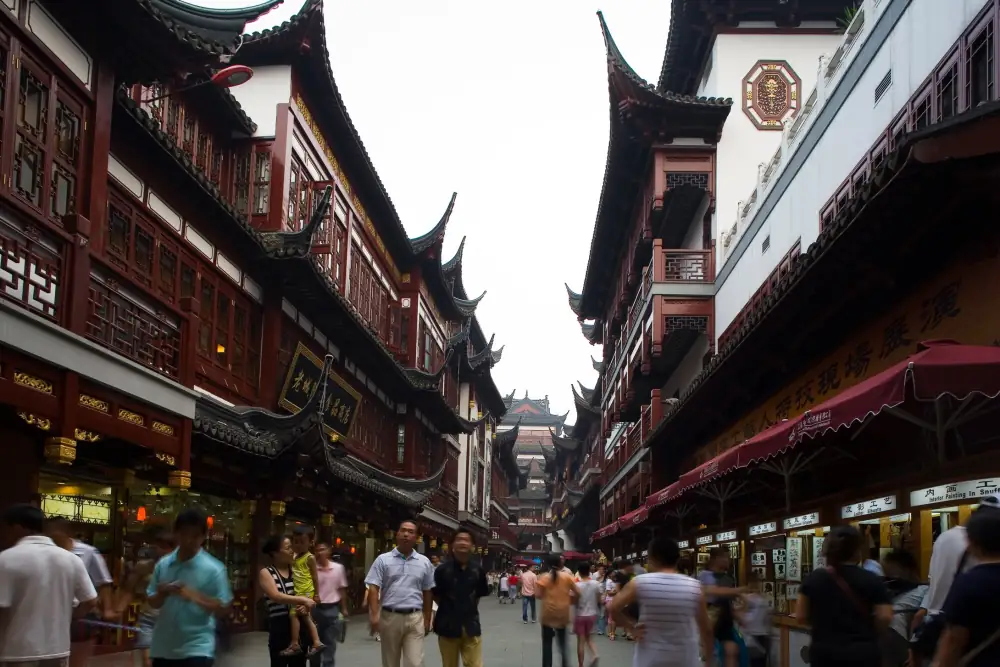
The French Concession’s residential streets have the highest density of independent contemporary art galleries in Shanghai. No formal gallery district exists — they’re scattered through the residential blocks, often with minimal signage.
Fuxing Road (复兴路) circuit: Several galleries between Sinan Road and Ruijin Road.
Julu Road (巨鹿路): More bohemian character than the main Huaihai Road commercial strip — independent bookshops, lifestyle stores, design galleries.
Leo Gallery (亮画廊) and The Art Architecture Foundation: Two of the stronger independent galleries in the Jing’an area, consistently showing serious contemporary Chinese work.
Power Station of Art (上海当代艺术博物馆): The former South Expo Power Station on the Huangpu River — Shanghai’s official contemporary art museum, in a massive industrial space. Major international exhibitions, free on some days. Worth visiting for large-scale installation shows.
Design Culture
Shanghai has China’s strongest contemporary design culture — product design, furniture, graphic design, and fashion design firms are concentrated in the French Concession area.
Design Republic (设计共和): The most influential design shop in Shanghai — furniture, objects, books, and accessories representing the Chinese design generation. Located in the former French Consul General’s residence building.
WonderWorks: Multi-brand concept store in Xintiandi — curated selection of Chinese and international design objects.
Shanghai Fashion Week (October, second week): The intersection of global fashion and Chinese design identity is most visible during Shanghai Fashion Week shows and events. Non-accredited visitors can access many events and after-parties in the Xintiandi and Jing’an areas.
Recommended Walking Route
Start at Tianzifang South gate (Taikang Road). Walk all interior lanes. Exit north to Julu Road (15-minute walk). Walk east to Sinan Mansions (思南公馆, restored 1930s villas). Continue to Xintiandi for lunch. Afternoon: walk north through the Fuxing Park area to Jing’an district galleries.
Also see: Shanghai Pudong Guide | Shanghai Jing’an District Guide | Shanghai 5-Day Itinerary