
Suzhou is 30 minutes from Shanghai by high-speed train and a century away in atmosphere. The city that imperial administrators retired to when they tired of Beijing — building private gardens of extraordinary refinement — still carries that quality of intentional beauty. This is a place where someone once devoted 16 years to designing a single garden’s water views.
For international visitors, Suzhou offers something most Chinese cities cannot: a historical urban core largely intact, where classical architecture, canal waterways, and silk culture coexist with a working modern city. Most visitors come as a day trip from Shanghai. Those who stay overnight discover a completely different city — calm, lit by stone lanterns, and almost empty by 8pm.
Table of contents
Open Table of contents
Essential Background
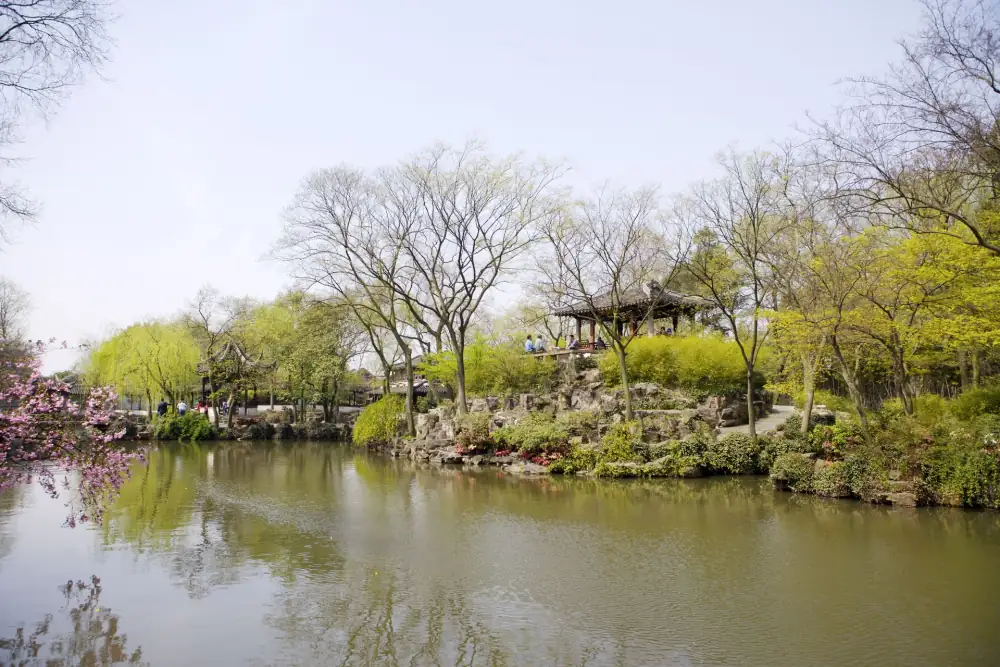
Location: Suzhou is in southeastern Jiangsu Province, 100km west of Shanghai, part of the Yangtze River Delta megalopolis. Population: approximately 5.5 million.
Why it matters historically: Suzhou was one of China’s wealthiest cities during the Ming (1368–1644) and Qing (1644–1912) dynasties. Silk merchants and retired officials built private gardens as statements of wealth, taste, and philosophical refinement. Nine Suzhou gardens are collectively designated a UNESCO World Heritage Site. The city was also the birthplace of the Kunqu opera form (the oldest surviving form of Chinese opera) and remains China’s primary silk production centre.
How to think about it: Suzhou is not one sight — it is an accumulation of smaller experiences: a garden contemplated at its own pace, a silk museum, a canal street at dusk, an evening of Kunqu opera. Allow at least one full day, preferably a night.
The Classical Gardens
Suzhou has over 60 classical gardens, of which 9 are UNESCO listed. For most visitors, three are essential.
Humble Administrator’s Garden (拙政园 Zhuōzhèng Yuán)
The largest classical garden in Suzhou (5.2 hectares) and widely considered the finest in China. Built in the early 16th century by a retired official, the garden’s name is a deliberate act of irony: “humble administration” refers to cultivating vegetables — the owner’s pointed commentary on political life.
The garden divides into three areas. The central zone is the most photographed: a large central pond reflecting pavilions, covered walkways, and the Distant Fragrance Hall. Lotus flowers cover the pond in July–August. The western zone is more intimate, with a series of smaller linked gardens that feel like rooms. The eastern zone is quieter and less visited — worth exploring for solitary moments.
Practical: Open daily 7:30am–5pm (last entry 5pm). Tickets ¥90 (peak season April–October), ¥70 (November–March). Combined tickets with other gardens are available but rarely cost-effective unless you are visiting many.
Best time inside: Arrive when it opens (7:30am) and you will have the central pond largely to yourself for the first 45 minutes. By 9:30am, tour groups begin arriving in earnest.
Photography: The covered walkways frame the pond perfectly. The small ornamental doorways (called moon gates and vase gates) that connect the garden sections create natural portrait frames.
Lingering Garden (留园 Liú Yuán)
Where the Humble Administrator’s Garden impresses with scale, the Lingering Garden seduces with detail. The garden’s most celebrated feature is a 6-metre tall, 3.5-metre wide naturally shaped Tai Lake rock called the Crown of Clouds Peak — considered the finest standing rock in any Chinese garden.
The garden’s sequence of spaces — alternating between compressed corridors and sudden open courtyards — is a masterpiece of spatial design. The effect is that you continuously feel you are about to emerge into the garden’s full extent, only to find another room, another framing view, another carefully composed tableau.
Practical: Open daily 8am–5pm. Tickets ¥45.
Master of the Nets Garden (网师园 Wǎngshī Yuán)
The smallest of the major gardens (0.5 hectares) and the most intimate. A retired admiral’s private retreat, it is a demonstration that maximum effect can come from minimum space. The main pool is tiny — perhaps 20 metres across — yet the garden’s design creates an impression of spacious water and sky.
The evening program: On selected evenings (late April through October), the garden hosts traditional Chinese performing arts performances in its pavilions — kunqu opera, pipa music, Chinese dance — with small audiences gathering at each performance point around the garden. This is one of the most atmospheric evening experiences in China. Tickets sell through the garden’s official channels and through hotel concierges.
Practical: Regular visiting hours 8am–5pm, tickets ¥30. Evening performances (7:30–10pm) ¥100. Check current schedule at the garden ticket office.
Tiger Hill (虎丘 Hǔ Qiū)
Technically not a classical garden but the most symbolic sight in Suzhou. Tiger Hill is a 36-metre natural hill topped by the Yunyan Pagoda — China’s leaning tower, tilted 3 degrees off vertical over its 1,000 years of existence.
The hill is closely associated with He Lu, the King of Wu who established Suzhou in 514 BC and is said to be buried beneath it with 3,000 swords. A white tiger reputedly appeared on the hill three days after the burial — hence the name.
The hill’s garden and woodland setting, combined with the leaning pagoda, creates an atmosphere unlike the enclosed classical gardens. It is more open, more ancient-feeling, and somewhat less crowded.
Practical: Tickets ¥80.
The Old Canal Districts
The Ping Jiang Road (平江路 Píngjiāng Lù) is Suzhou’s best-preserved historic street — a 1.6km canal-side lane where the waterway runs parallel to the stone-paved pedestrian path, lined by whitewashed Ming and Qing residences, teahouses, silk shops, and small restaurants.
Unlike the more commercial Shantang Street (山塘街), Ping Jiang Road still has residents living in the historic houses. Early morning (7–8am) or late evening (8–10pm), the street belongs to the locals: old men on folding chairs, women hanging washing over canal water, cats on windowsills.
What to do on Ping Jiang Road:
- Walk the full length and back (about 1 hour at an unhurried pace)
- Take tea at one of the canal-side teahouses (¥20–40 for a pot, extended sitting welcome)
- Browse the silk scarf shops — Suzhou silk is genuine here at more reasonable prices than tourist markets
- Cross the canal at the stone bridges for views back along the canal
Shantang Street (山塘街)
More commercial than Ping Jiang Road but genuinely beautiful, particularly in the evening. The 3.5km street was originally built on a causeway constructed by the Tang dynasty poet Bai Juyi when he governed the city. Evening lantern light reflects in the canal; gondola-style boats carry tourists along the water for ¥70–100 per person.
The Suzhou Silk Museum
One of China’s best specialist museums — small, well-curated, and free. Covers 4,000 years of Chinese silk history from the neolithic discovery of the silkworm to the contemporary industry. The live silkworm demonstration (spring and early summer) is genuinely interesting.
Practical: 661 Renmin Road, near Tiger Hill. Open daily 9am–5pm. Free admission.
Day Trips from Suzhou
Tongli Water Town (同里 Tónglǐ)
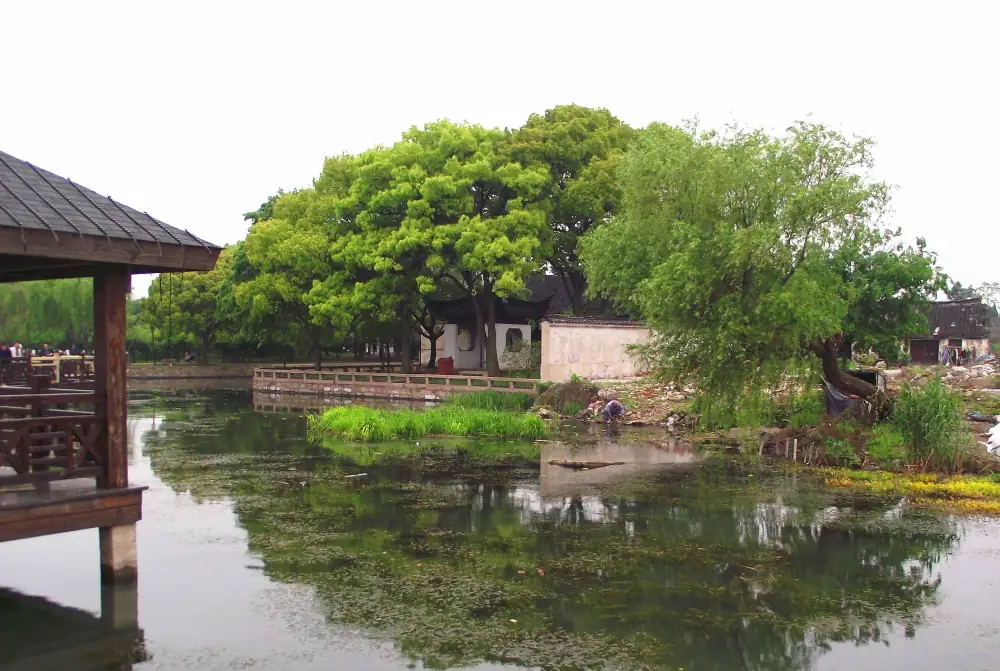
30 minutes from Suzhou by bus, Tongli is the most romantic of the Jiangnan water towns for overnight stays. The town is built on five islands connected by 49 stone bridges, with canal traffic, Ming and Qing residences, and a genuine quality of quiet that larger towns like Wuzhen have lost to the tourism economy.
The Tuisi Garden (退思园) in Tongli is a UNESCO World Heritage garden — smaller and more intimate than Suzhou’s famous gardens, and dramatically less visited.
Getting there: Buses from Suzhou South Bus Station, approximately every 30 minutes. Alternatively, arrange through your hotel.
Zhouzhuang Water Town (周庄 Zhōuzhuāng)
The original “Venice of the East” designation — now genuinely overcrowded during weekends and holidays but still beautiful on weekday mornings. The Double Bridge (双桥) reflected in the canal is the image most associated with Jiangnan water towns globally (it appeared on early Chinese banknotes). Worth a morning visit.
Getting there: Bus from Suzhou Beisita Bus Station.
Wuzhen, Zhejiang
Further from Suzhou (about 90 minutes) but the best-preserved of all the Jiangnan water towns for atmospheric walking. The night scenery — lantern-lit canals, silhouetted old bridges — is extraordinary. Requires an overnight to experience properly.
Where to Stay in Suzhou
Within the old city (recommended):
- The Grand Canal Boutique Hotel — canal-side rooms, Ming-dynasty influenced design, central location
- Pingjiang Lodge (平江客栈) — within the Ping Jiang Road historic area, canal views from some rooms, authentic atmosphere
Upscale:
- Suzhou Marriott Hotel — reliable business hotel, convenient for the garden district
- Pan Pacific Suzhou — within the Suzhou Industrial Park, more modern feel
For water town immersion:
- Stay within Tongli town in one of the traditional guesthouses (民宿 mínsu) — book through Booking.com or contact directly, ¥250–500 per night
Getting to Suzhou
From Shanghai: High-speed train from Shanghai Hongqiao or Shanghai station to Suzhou station — 25–40 minutes, trains every 15–30 minutes throughout the day. Tickets ¥34–75 depending on speed. No advance booking required (buy on the day at the station or on the Trip.com app). This is the standard access method — Suzhou is an easy day trip or overnight from Shanghai.
From Nanjing: High-speed train, approximately 1 hour.
From Beijing: High-speed trains to Shanghai, then connection. Or direct trains to Suzhou from some Beijing stations (4–5 hours).
Getting around within Suzhou: The main garden district, Ping Jiang Road, and the canal areas are walkable from each other. DiDi for Tiger Hill (further west) or to reach bus stations for day trips.
How to Spend One Day in Suzhou
7:30am: Arrive at the Humble Administrator’s Garden for opening. Walk the garden for 1.5 hours before groups arrive.
9:30am: Walk to Lingering Garden (15-minute walk or DiDi). 45 minutes to 1 hour.
11am: Walk to Suzhou Silk Museum (10 minutes). 45 minutes.
12pm: Lunch on Ping Jiang Road — choose a canal-side restaurant and order Suzhou braised fish head and red-braised pork ribs (two local specialties).
1:30pm: Walk Ping Jiang Road in both directions. Browse silk shops. Canal boat if you want the water perspective (¥70–100).
3pm: Master of the Nets Garden. 45 minutes–1 hour.
4:30pm: Tiger Hill for the pagoda view. 45 minutes.
7:30pm (seasonal): Evening performance at the Master of the Nets Garden.
Suzhou Food
Suzhou cuisine sits at the sweet end of the Jiangnan flavour spectrum: dishes here use more sugar than most Chinese regional cuisines, creating a balance of sweet-savory that characterises the local style.
Must-try dishes:
- Braised fish head (红烧鱼头) — a rich stew, sweet and savoury
- Suzhou-style steamed dumplings (汤包) — soup dumplings lighter in style than Shanghai’s Nanxiang version
- Sweet osmanthus cake (桂花糕) — an autumn speciality when the osmanthus trees in the gardens bloom
- Beggar’s chicken (叫化鸡) — whole chicken sealed in clay and baked for hours; a regional classic
- Biluochun tea — grown in the hills west of Suzhou, one of China’s ten famous teas; any teahouse will serve it
Practical Information
Best time to visit: April–May (garden peonies and wisteria, warm days) and September–October (clear skies, osmanthus bloom in October).
Avoid: Chinese Golden Week (October 1–7) — the gardens become very crowded and accommodation prices spike.
Currency and payment: Suzhou accepts Alipay, WeChat Pay, and major cards at larger establishments. See our China payment guide for setup.
Language: English is minimal outside larger hotels and the most tourist-facing shops. The Amap navigation app (in English) handles getting around without Mandarin.
Weather: Suzhou is in the humid subtropical zone. Summers are hot and humid (June–August). Winters are cold and occasionally icy (December–February). Spring and autumn are the most comfortable seasons.