
Xicheng District (西城区) is Beijing’s most atmospheric residential district — the western half of the old inner city, where traditional grey-tiled courtyard houses (四合院) still line the hutong alleyways around the Shichahai lakes, and where the pace feels closest to what Beijing was before the modernisation of the last 40 years.
The district contains three of Beijing’s most significant experiences for visitors: Beihai Park, the Shichahai lake complex, and the densest surviving hutong neighbourhood in any Chinese city.
Beihai Park (北海公园)
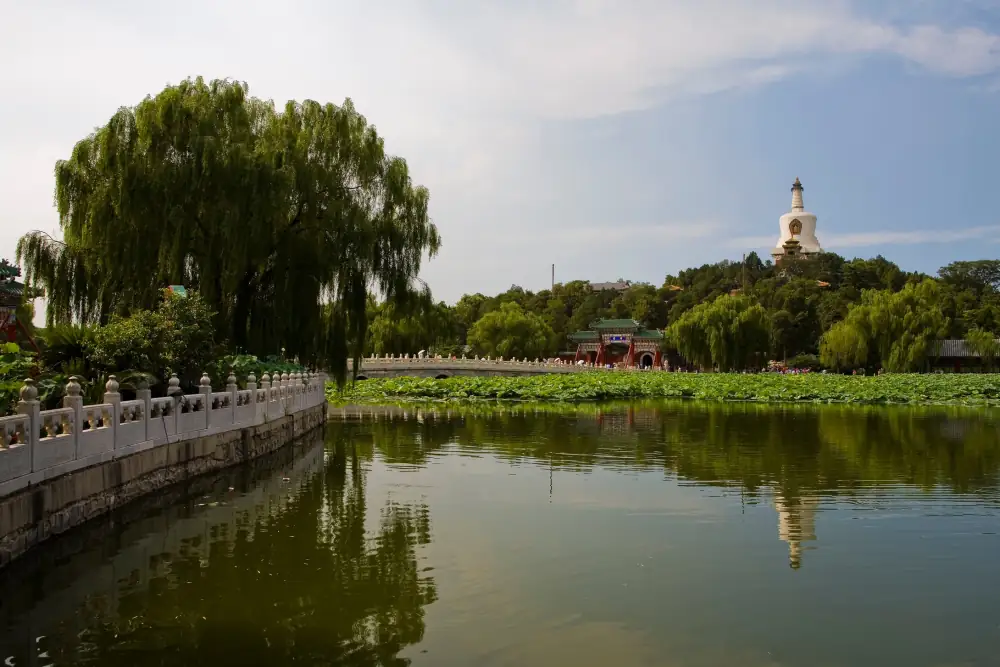
One of the oldest imperial parks in China, Beihai (literally “North Sea”) was a pleasure garden for emperors from the 10th century onwards. The central island with its White Pagoda (白塔) is the visual centerpiece — the 36-metre-tall Tibetan-style stupa was built in 1651 to celebrate the Dalai Lama’s first visit to Beijing.
What to see:
- White Pagoda Island: Boat across the lake (¥10) or walk the bridge to the island. The circular path around the base of the pagoda provides views over the lake and the Forbidden City’s yellow roofs to the south.
- Nine Dragon Screen (九龙壁): A 25-metre-long glazed tile screen built in 1756, featuring nine intertwined dragons. One of only three such screens surviving in China.
- Round City (团城): The small fortified mound south of the main park entrance, with a jade Buddha vessel dating to Kublai Khan’s Yuan dynasty.
Best time: Early morning — locals practice tai chi, row boats, and do water calligraphy on the stone paths. On weekday mornings, the park has a genuine serenity that the main tourist sites lack.
Shichahai Lakes (什刹海)
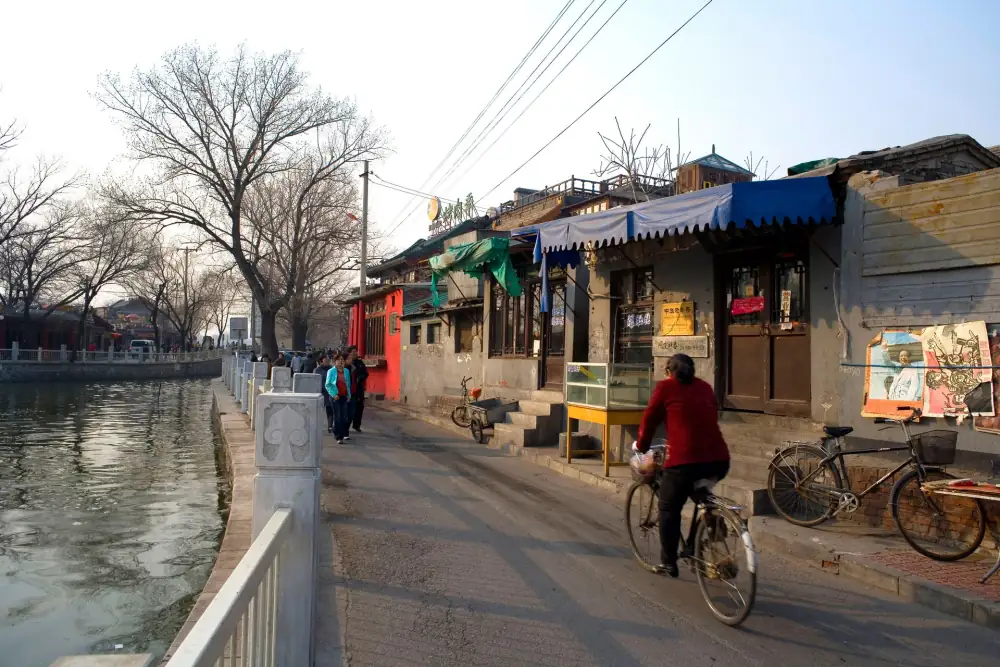
Three connected lakes — Qianhai (前海), Houhai (后海), and Xihai (西海) — form the recreational heart of old Beijing. Willows drape over the water; historic courtyards crowd the shoreline; the Bell Tower and Drum Tower mark the northern boundary.
Evening bar scene: The southern shores of Houhai and Qianhai have a lively but accessible bar strip — outdoor terraces on the waterfront, Chinese blues bands, and the illuminated White Pagoda visible across the water. Less raucous than Sanlitun; comfortable for most ages.
Hutong exploration: The alleys branching off the lake shore are among the most intact in Beijing. Yandai Xiejie (烟袋斜街, Tobacco Pouch Street) is a curved lane of indie shops; Mao’er Hutong (帽儿胡同) has some of the best-preserved courtyard architecture.
Rickshaw tours: Available from vendors near the Drum Tower. A 1-hour circuit covers the key hutong courtyards, the former mansion of Prince Gong (恭王府 — the most impressive surviving Qing prince’s residence in Beijing), and the lake shoreline. About ¥120–180 per person.
Drum Tower & Bell Tower (鼓楼/钟楼)
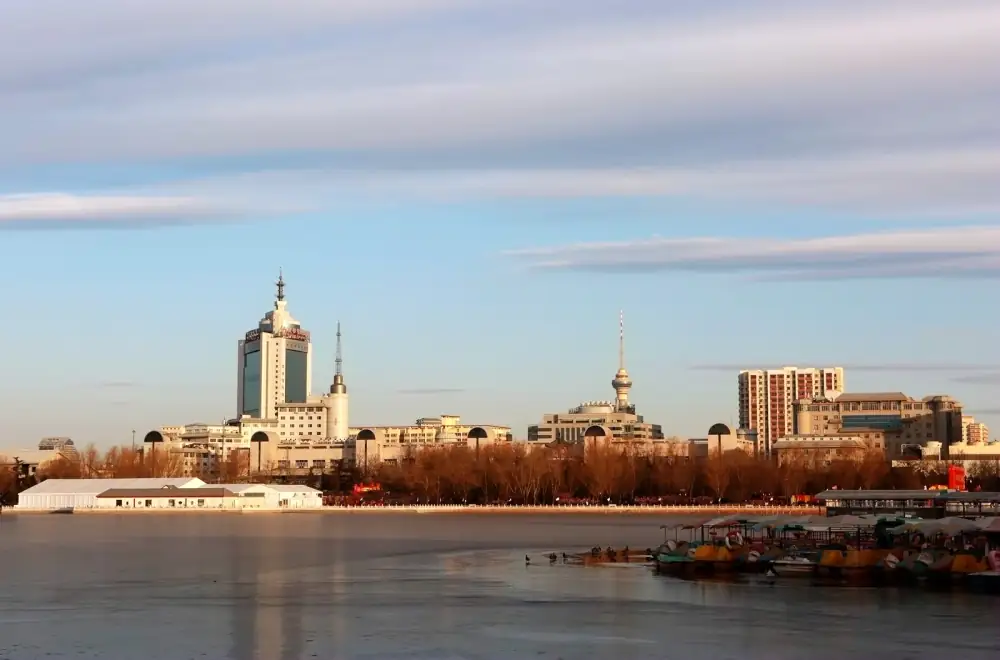
The Drum Tower (鼓楼) and Bell Tower (钟楼) stand at the northern end of Beijing’s historical central axis — the geometric spine that runs from Yongdingmen in the south through Tiananmen and the Forbidden City to here. Regular drum performances (hourly) at the Drum Tower; the Bell Tower’s ancient bronze bell is 63 tonnes.
Entry: ¥20 each (or combined ticket ¥30). Climbing the Drum Tower’s steep stairs provides the best ground-level view over the surrounding hutong roofscape — a sea of grey tiles spreading in every direction.
Prince Gong’s Mansion (恭王府)
The largest and best-preserved Qing dynasty noble residence in Beijing. Built for Heshen, the corrupt minister of Emperor Qianlong, later given to Prince Gong (a key figure in late Qing modernisation efforts). The complex covers 60,000 square metres with 30 buildings and three garden sections.
The western garden — with its curving rockery, corridor walls, and the Fu (福) character stone inscription said to have been written by Emperor Kangxi — is the most beautiful section.
Also see: Beijing Forbidden City Hutong Guide | Beijing Nanluoguxiang Guide