
Table of contents
Open Table of contents
Where Sichuan Meets Tibet
Barkam (马尔康, Ma’erkang in Chinese) is the capital of Aba Tibetan and Qiang Autonomous Prefecture (阿坝藏族羌族自治州), and stepping off the bus here feels like crossing an invisible border. The signs switch to Tibetan script, the restaurants serve yak butter tea alongside Sichuan hotpot, and the faces in the street are predominantly Tibetan. Geographically still in Sichuan, culturally Barkam is firmly Tibetan — and it’s one of the most accessible places to experience Tibetan plateau culture without the permit complications of the Tibet Autonomous Region.
The region around Barkam is known for two extraordinary things: the ancient stone watchtowers of Danba (丹巴) and the traditional Tibetan stone villages that dot the river valleys. These towers, some standing over 30 metres tall and dating back 800+ years, are unique to this corner of western Sichuan and have no equivalent anywhere else in the world. Combined with the dramatic valley scenery, the vibrant Tibetan culture, and the increasingly good road connections from Chengdu, Barkam and its surroundings deserve a prominent place on any western Sichuan itinerary.
The Watchtowers of Danba
Suopo Watchtower Group (梭坡碉楼)
About 7 km from Danba town, the Suopo village watchtower cluster is the most dramatic example of these ancient structures. Over 80 towers — some standing, some crumbling — rise from the hillside above the Dadu River valley, creating a skyline that looks like a medieval fortress designed by someone with a very tall imagination.
The towers range from 10 to 30+ metres in height, built from local stone laid without mortar. Their construction is remarkably sophisticated — the walls taper inward as they rise, creating a natural stability that has allowed some towers to survive centuries of earthquakes. The interiors are typically 4-5 storeys, connected by internal wooden ladders, with small windows serving as both ventilation and defensive firing positions.
Who built them and why? This remains debated. The most widely accepted theory is that they were defensive structures, built by local Tibetan chieftains during periods of inter-tribal warfare between the 11th and 18th centuries. Some towers show signs of habitation, suggesting they were also used as fortified residences. The Qiang people, who predate the Tibetans in this area, may have originated the building tradition.
Entrance fee: ¥15 ($2.10 USD) to walk through the village. You can enter some towers (with care — the wooden ladders are old and steep) for an additional ¥10 ($1.40 USD).
Jiaju Tibetan Village (甲居藏寨)
About 8 km from Danba, Jiaju is frequently listed as one of China’s most beautiful villages, and it’s easy to see why. Traditional Tibetan stone houses — white-washed with distinctive red, black, and yellow painted trim — cascade down a steep hillside above a deep river valley. The houses are lived in, not museum pieces, and the village maintains a working agricultural rhythm that’s increasingly rare in touristified rural China.
The houses of Jiaju are architectural marvels in their own right. Each one is built from local stone, typically 3-4 storeys, with flat roofs used for drying grain and a ground level for livestock. The distinctive colour scheme — white walls with red and black bands — follows traditional Tibetan symbolic conventions. The red represents fire and protection, the black represents earth and stability.
Entrance fee: ¥50 ($7 USD) per person, which includes access to the village. Parking ¥10 ($1.40 USD).
Staying overnight: Several families offer homestay accommodation from ¥80-150 ($11-21 USD) per person including dinner and breakfast. This is the best way to experience the village — wake up to roosters and mountain mist, eat home-cooked Tibetan food, and watch the sunset paint the valley walls gold.
Zhuokeji Chieftain’s Official Residence (卓克基土司官寨)
About 8 km from Barkam, this is one of the most impressive historical buildings in western Sichuan. The Zhuokeji Tusi (土司, native chieftain) residence is a massive five-storey stone structure that served as the administrative centre and residence of the local Tibetan ruler from the 13th century until the chieftain system was abolished in the 1950s.
The current building dates primarily from the 18th and 19th centuries, with significant renovations in the 1930s. It’s a remarkable blend of Tibetan and Han Chinese architectural styles — the overall form is Tibetan (stone walls, flat roof, inward-tapering profile), but the interior decoration incorporates Chinese carved wooden screens, painted beams, and furniture.
What you’ll see:
- The chieftain’s reception hall, with its ornate wooden throne and painted ceiling
- The Buddhist chapel, still containing original murals and ritual objects
- Residential quarters showing how the chieftain’s family lived
- Defensive features including watchtower and fortified walls
- Exhibits on the tusi system and local Tibetan culture
The building gained additional fame when the Red Army stayed here during the Long March in 1935. Mao Zedong reportedly spent a week in the residence and was impressed by its grandeur.
Entrance fee: ¥60 ($8.30 USD). Allow 1.5-2 hours. Limited English signage — consider hiring a local guide for ¥100 ($14 USD).
Monasteries and Religious Sites
Changlie Monastery (昌列寺)
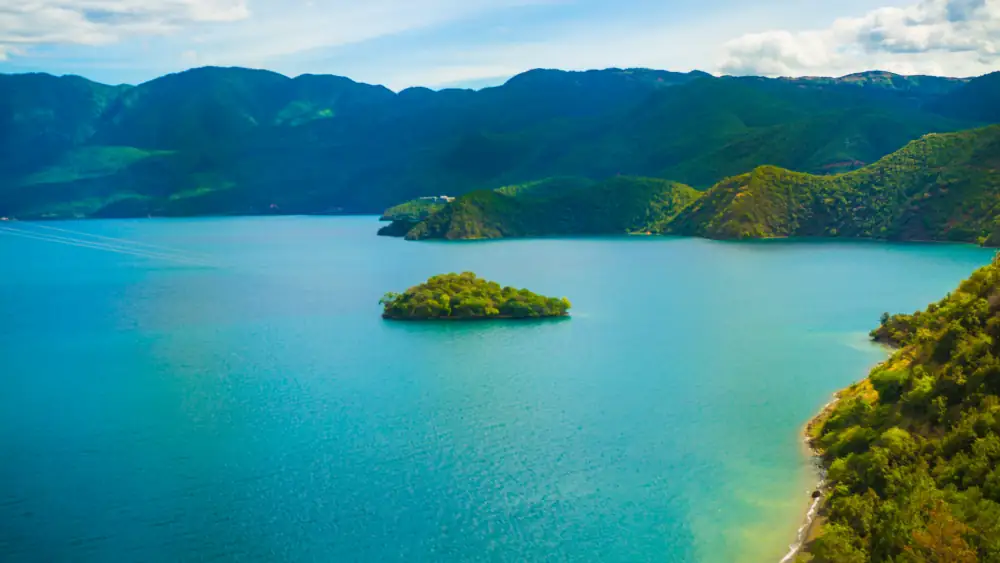
Perched on a hilltop about 10 km from Barkam, Changlie Monastery is a significant Gelug-sect monastery with about 300 monks. The original monastery was destroyed during the Cultural Revolution but has been rebuilt with impressive grandeur. The main assembly hall contains a massive golden Buddha statue and elaborate murals.
The monastery is particularly worth visiting during religious festivals, when masked cham dances are performed in the courtyard. The most important festival is the Monlam Chenmo (Great Prayer Festival), held in the first month of the Tibetan calendar (usually February or March).
Entrance: Free. Open during daylight hours. Dress modestly and ask before photographing monks.
Dagu Monastery
A smaller, more intimate monastery about 20 km from Barkam, in a beautiful forested valley. The monastery has a more contemplative atmosphere than Changlie and is a good place to simply sit and absorb the rhythm of monastic life. The walk from the road to the monastery takes about 30 minutes through old-growth forest.
Trekking and Outdoor Activities
Bipeng Valley (毕棚沟)
About 50 km from Barkam (and more commonly accessed from Chengdu via Wenchuan), Bipeng Valley offers some of the most accessible alpine scenery in western Sichuan. The valley features pristine lakes, waterfalls, and dramatic peaks, with well-maintained trails suitable for day hikes.
Entrance fee: ¥80 ($11 USD). Shuttle bus ¥60 ($8.30 USD).
Mengtun River Valley Trekking
A less-developed trekking area near Barkam that follows the Mengtun River through forest and meadow to a high pass at about 4,200 metres. This is a 2-3 day trek that can be done independently or with a local guide (¥300-500/$42-69 USD per day). The route passes through traditional Tibetan villages and offers stunning mountain scenery.
Food — Tibetan Meets Sichuan
The cuisine in Barkam reflects its position at the cultural crossroads:
Yak Meat in All Forms: Boiled, dried, stir-fried, in dumplings, in soup. The yak meat here is superb — lean, flavourful, and far more interesting than beef. ¥30-60 ($4.20-8.30 USD) per dish.
Yak Butter Tea: Salty, rich, and essential at altitude. Most restaurants serve it. ¥5-10 ($0.70-1.40 USD).
Tibetan Dumplings (Momo): Large, crescent-shaped dumplings filled with yak meat and onions. Steamed or fried. ¥15-25 ($2.10-3.50 USD) for 8-10.
Sichuan Dishes: Standard Sichuan fare is widely available and generally good. Mapo tofu and kung pao chicken are reliable choices. ¥20-40 ($2.80-5.50 USD) per dish.
Highland Barley Wine (青稞酒): A mild, slightly sweet alcoholic drink made from highland barley. The local version is usually homemade and varies widely in quality and potency. ¥10-20 ($1.40-2.80 USD) per small bottle.
Recommended Restaurants
Barkam Tibetan Kitchen: Near the main square. Good for momos and yak butter tea. Meals ¥20-40 ($2.80-5.50 USD) per person.
Aba Hotel Restaurant: Inside the Aba Hotel. More Chinese-oriented menu but reliable quality. Meals ¥30-60 ($4.20-8.30 USD) per person.
Practical Information
Getting to Barkam
By bus from Chengdu: Buses depart from Chadianzi Bus Station, taking about 8-10 hours via Wenchuan and Li County. Tickets ¥120-150 ($17-21 USD). The road is well-paved and the scenery is spectacular.
By hired car: The most flexible option. ¥800-1,200 ($111-166 USD) per day from Chengdu, allowing stops at Wenchuan, Li County, and Danba en route.
From Danba: About 3 hours by road (120 km). Buses ¥40 ($5.50 USD) or shared taxi ¥60-80 ($8.30-11 USD).
Getting to Danba
Danba is about 6-7 hours by bus from Chengdu (¥120-150/$17-21 USD from Chadianzi Bus Station). It’s also reachable from Kangding (4 hours, ¥50-70/$7-10 USD).
Accommodation
In Barkam:
- Aba Hotel (阿坝宾馆): The best in town. Doubles from ¥200-400 ($28-55 USD)
- Barkam Guesthouse: Budget option. Doubles from ¥80-150 ($11-21 USD)
In Danba:
- Danba Jiaju Village Homestays: ¥80-150 ($11-21 USD) per person including meals
- Danba County Hotel: Doubles from ¥150-300 ($21-42 USD)
In Jiaju Village:
- Multiple homestay options. ¥80-150 ($11-21 USD) per person with meals
Best Time to Visit
- Spring (April — May): Pear blossoms in Danba villages — the hillsides turn white with bloom
- Autumn (October — November): The best season — clear skies, golden leaves, and comfortable temperatures (5-18°C)
- Summer (June — August): Green and lush, but rainy. Some road disruption possible
- Winter: Cold and some road closures, but dramatically beautiful with snow on the peaks
Budget Estimate (4 Days)
| Item | Budget (¥) | Mid-Range (¥) |
|---|---|---|
| Bus from Chengdu (round trip) | 300 | 2,400 (private car) |
| Accommodation (3 nights) | 300 | 900 |
| Meals | 300 | 600 |
| Entrance fees | 125 | 125 |
| Local transport | 150 | 400 |
| Total | ¥1,175 ($163 USD) | ¥4,425 ($613 USD) |
The Edge of Tibet
What makes the Barkam and Danba region special isn’t any single sight — it’s the cumulative experience of traveling through a landscape where culture and geography are inseparable. The watchtowers exist because the valleys required defence. The stone houses exist because the stone is right there in the mountains. The yak butter tea exists because at 3,000 metres, you need the calories. Nothing here is decorative or performative — it’s all functional, all rooted in the land, and all the more beautiful for it. Come to see the towers, but stay for the feeling of being somewhere that makes perfect, uncompromising sense.