
Table of contents
Open Table of contents
The Food You Must Eat

Let’s start with what matters most.
Rou Jia Mo (肉夹馍) — “Chinese Burger”
Often called the world’s oldest sandwich, rou jia mo is braised pork (or beef/lamb for halal versions in the Muslim Quarter) stuffed into a freshly baked flat bread. The pork version is everywhere in Xi’an; in the Muslim Quarter, the meat is always beef or mutton, spiced with cumin, chilli and star anise. The bread (mo) should be soft inside with slightly crispy exterior. Perfect rou jia mo — hot, fragrant, with a small amount of green chilli — is one of China’s most satisfying street foods.
Best places: Stalls on Beiyuanmen main pedestrian street; Zhifeng Rou Jia Mo (质峰肉夹馍) is widely recommended. ¥12–¥18 per mo ($1.7–$2.5).
Yangrou Paomo (羊肉泡馍)
The signature dish of Xi’an and arguably of the entire northwest: a mutton broth soup in which you break two large flat breads (馍, mo) into very small pieces by hand. The waiter takes your bowl of bread pieces to the kitchen; the broth, braised mutton, glass noodles and pickled garlic are added on top. The whole process is meditative.
The broth is rich, slightly gamey, warming. The pickled garlic is a necessary counterpoint. Budget 15–20 minutes for the bread-breaking process. ¥30–¥50 ($4–$7) per bowl at established restaurants.
Best places: Lao Sunjiaguan (老孙家馆), in operation since 1898, is the most famous paomo restaurant in Xi’an. Located on Dong Dajie, not far from the Muslim Quarter. ¥35–¥50.
Biangbiang Noodles (biángbiáng面)
Thick, wide, hand-pulled noodles (often as wide as a belt) in a chilli oil sauce. The character ‘biang’ is one of the most complex Chinese characters, containing 57 strokes — deliberately created for a word that has no literary precedent. The noodles are served with a vinegar-and-chilli sauce poured over, sometimes with tomato and egg, sometimes with braised pork. ¥15–¥25 per bowl.
Liangpi (凉皮) — Cold Noodle Skin
Cold wheat or rice starch noodles dressed with rice vinegar, chilli oil, sesame paste, cucumber and bean sprouts — refreshing, slightly numbing and addictive in hot weather. The Xi’an variant is Qin Zhen Liangpi (秦镇米皮): rice-based, softer than the wheat version, paired with gluten pieces (面筋). Sold from carts throughout the quarter; ¥10–¥15 per portion.
Xi’an-Style Stuffed Flatbread (油泼辣子夹馍)
A simpler version of rou jia mo: the hot flat bread stuffed with fried egg and spiced oil. Street food at its most direct. ¥5–¥8.
Mutton Skewers (羊肉串)
Available from dozens of charcoal grill carts throughout the Muslim Quarter. Xi’an mutton skewers are seasoned with cumin and chilli; the meat is lean and tender. ¥3–¥5 per skewer; eat them standing at the cart.
Date Pastries and Sweet Items
Multiple shops in the quarter sell traditional pastries: date-stuffed shortbreads, sesame biscuits, walnut cakes (核桃饼) filled with walnut paste, honey cakes and rose-flavoured sugar. Good gifts and snacks; budget ¥20–¥50 ($3–$7) for an assortment. To drink, look for suan mei tang (酸梅汤) — a dark, tart plum drink sold the traditional way from large clay jars at several old shops on Beiyuanmen.
Great Mosque of Xi’an (清真大寺)
The centrepiece of the Muslim Quarter is the Great Mosque, founded according to tradition in 742 AD. Whether or not the current structures date to the Tang Dynasty, the mosque as it exists is primarily Ming Dynasty (14th–17th centuries) in its architecture — and it is extraordinary.
The mosque is built entirely in Chinese architectural style (not Arabic) — pagoda minarets rather than onion domes, tile-roofed prayer halls rather than Middle Eastern arches — while maintaining all the functions of a Muslim house of worship. It’s one of the clearest examples in China of how a religion can fully adapt its visual expression to a new cultural context while maintaining doctrinal integrity.
Layout: A series of four successive courtyards aligned on an east-west axis, each more intimate and sacred as you move west toward the main prayer hall. The three-storey wooden tower (sometimes called the minaret) in the third courtyard is the visual centrepiece.
The prayer hall: Non-Muslim visitors may not enter the main prayer hall during prayer times but can view the interior from the threshold. The hall accommodates over 1,000 worshippers.
Ticket: ¥25 ($3.5). Open daily 08:00–21:00 (19:00 in winter). The mosque is a working religious institution — respectful dress and behaviour is required. Photography allowed in outer courtyards; ask for permission before photographing worshippers.
Prayer times: The five daily prayers bring worshippers through the mosque; the Friday noon prayer (Jumu’ah) is the most significant, with the quarter filling with residents.
Beiyuanmen (北院门) Pedestrian Street
The main pedestrian street through the Muslim Quarter, running north from the Drum Tower (鼓楼), is Beiyuanmen. Despite heavy tourism, the street maintains its character: the buildings are genuinely old (Ming and Qing period), the families running the stalls are Hui residents, and the food is the real thing.
The street is busiest from 17:00 to 22:00 when the food stalls are fully operational and Xi’an’s evening promenade culture fills the lanes. If you need a quieter experience, come at 08:00–09:00 when breakfast stalls are setting up.
Side alleys: Turning off Beiyuanmen into the residential lanes to the east and west reveals the actual neighbourhood — quieter streets, traditional courtyard houses, children playing, elderly men at tea shops. These alleys are where the quarter’s genuine community life is most visible.
Beyond the Main Street
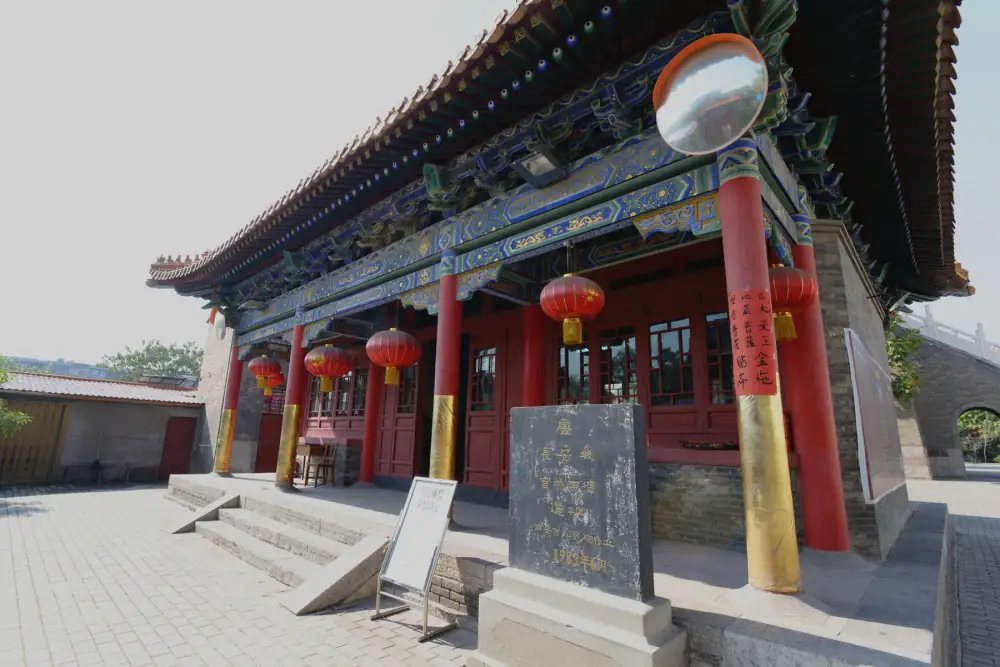
Huajue Lane (化觉巷)
The lane leading directly to the Great Mosque entrance; lined with shops selling traditional handicrafts, Hui religious items and increasingly tourist-oriented goods. The small antique market at the lane’s entrance is worth browsing early morning.
Laodong Hutong and Surrounding Residential Areas
The residential blocks north and west of Beiyuanmen contain the highest density of original Ming-Qing architecture in the quarter. Some blocks retain their original courtyard house rows intact. The lanes north of the Great Mosque — Xuanfeng Alley (旋风巷), Dapiyuan Street (大皮院) and Xibei Xiang (西北巷) — are the actual living neighbourhood: children at courtyard schools, the smell of fresh bread from family ovens, elderly men in white prayer caps playing chess at street corners. Walking here with awareness of being in a living neighbourhood (not gawking or photographing residents intrusively) provides the most authentic encounter with the community.
Drum Tower and Bell Tower Context
The Muslim Quarter sits immediately north of Xi’an’s Drum Tower (鼓楼) and Bell Tower (钟楼) — the two central monuments of the Ming Dynasty city. Both towers are excellent for viewing the spatial relationship between the old city and the quarter.
Drum Tower: ¥45 ($6). Regular drum performance shows every 30 minutes; good evening views over Beiyuanmen.
Bell Tower: ¥45 ($6). The bell performance at sunset with the city walls as backdrop is a Xi’an highlight.
When to Visit
Evening (17:00–21:00): The Muslim Quarter’s optimal time. The food stalls are all operating, the lanterns are lit, the crowds are a mix of locals and visitors, and the food culture is at its most vivid.
Early morning (07:00–09:00): Best for the Great Mosque (quiet before tourist groups) and for atmospheric photography. Breakfast stalls serving rou jia mo and paomo are in full operation.
Avoid: Chinese national holidays (October 1–7 Golden Week and Spring Festival) when the quarter is completely overwhelmed. Friday noon around prayer time can be crowded near the mosque if you’re visiting then.
Practical Tips
- Halal only: The entire Muslim Quarter is halal. No pork anywhere; all meat is beef or lamb. This is not a limitation — the food is outstanding as-is.
- Budget: You can eat extremely well here for ¥50–¥80 per person ($7–$11). Don’t pay tourist prices at restaurants with pictures on the menus; follow the locals to the stalls.
- Bargaining: Souvenir and craft shops expect mild bargaining. Food stalls do not; the prices are fair already.
- Photography: Always ask before photographing individuals. Food stalls are generally fine; inside the mosque, people in prayer require respect and discretion.
- Getting here: The Muslim Quarter is a 10-minute walk north from the Bell Tower. Metro Line 2 or Line 6 to the Bell Tower (Zhonglou) stop, then walk north on Xida Street to find the Drum Tower.
Accommodation Near the Muslim Quarter
Staying near the quarter gives you early morning access for the best mosque atmosphere and evening food culture without commute.
Budget: Several small guesthouses within walking distance of Beiyuanmen; from ¥100–¥200/night ($14–$28).
Mid-range: Bell Tower Hotel (钟楼饭店) is a Xi’an institution with rooms from ¥400–¥650 ($56–$91); the location directly adjacent to the Bell Tower couldn’t be more central.
Upscale: Sofitel Xi’an and Grand Hyatt Xi’an are within 10 minutes; from ¥800+ ($112+).
Final Word
The Muslim Quarter is one of China’s most enduringly satisfying street experiences — a place that repays repeated visits because the food is genuinely excellent, the Great Mosque is genuinely moving and the community life is genuinely alive. Whatever else you do in Xi’an (and you must see the Terracotta Warriors), save an evening and a morning for this quarter.
Eat the rou jia mo standing at the stall. Order the paomo and break the bread yourself. Walk to the back of the Great Mosque at dusk. This is what the Silk Road left behind.