
Shamian Island (沙面岛, Shāmiàn Dǎo) is a 0.3 km² sandbank in the Pearl River in central Guangzhou that served as the British and French Foreign Concession from 1859 to 1945. The island contains over 150 European-style colonial buildings — churches, consulates, banks, hotels and residences in Italian Baroque, Gothic Revival, Art Deco and French Colonial styles — preserved with unusual completeness as a cultural heritage zone.
Historical Background
Following China’s defeat in the Second Opium War (1856–1860), Britain and France established separate concession zones on the small island. The British occupied the larger western section; the French the eastern quarter. A wall and canal separated the foreign concession from the Chinese city.
The foreigners built their corner of Europe in the Pearl River: the Christ Church of Shamian (1865, Anglican), the French Catholic church (1890s), the Victoria Hotel (now the White Swan Hotel), private residences for merchants and officials, and a consular complex with shaded verandas designed for the subtropical climate.
The concession ended when the Japanese occupied Guangzhou in 1938; after 1945 the buildings passed to various Chinese state uses and much of the residential fabric has been conserved.
The Architecture
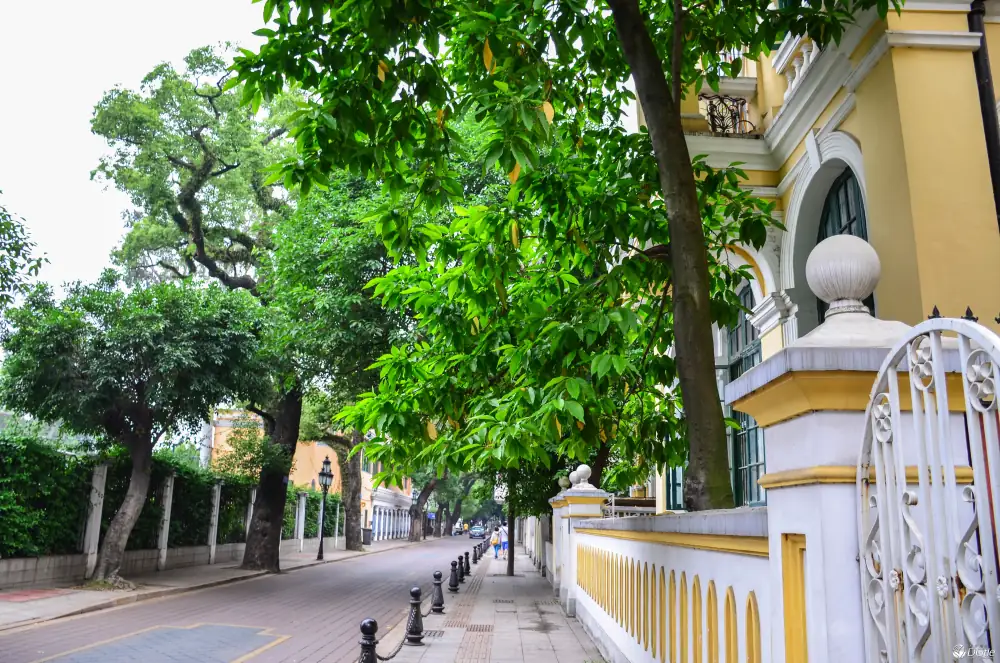
British Section (western ¾ of the island): The most extensive colonial streetscape. The buildings along Shamian Dajie (沙面大街) are the most photographed — long horizontal facades with French windows, wrought iron balconies, shuttered jalousies and tropical garden settings. The scale is domestic rather than imperial: these were comfortable merchant residences, not grand administrative statements.
Christ Church (基督教堂): Gothic Revival brick church with pointed windows and small tower; still functions as a church. The interior retains original wooden pews and stained glass.
French Section (eastern quarter): The Immaculate Conception Cathedral (现在的天主教圣母无原罪堂) is the visual anchor — a yellow stucco French Colonial church with twin towers and a plaza.
Former Victoria Hotel: The building that became the White Swan Hotel (1983) — China’s first joint-venture luxury hotel — is on the western tip of the island. The building has been expanded and modernized but the original colonial structure is incorporated.
Visiting Today
Shamian Island is a functioning residential area with cafes, restaurants, boutique hotels and studios alongside the historic buildings. Unlike many Chinese historic preservation districts, it doesn’t feel artificially staged — people live and work here.
Walking the island: The full circuit of the island takes 40–60 minutes at a leisurely pace. The tree-lined south boulevard (沙面南街) along the Pearl River is the most attractive walk — banyan trees shade the promenade, the river is visible between buildings, and the contrast between the European island and the dense Chinese city across the water is vivid.
Best time: Morning (08:00–10:00) when light is soft and before tourist groups arrive; evening (17:00–19:00) when the golden light is on the west-facing facades and café terraces are full.
Photography: The island’s scale and quality of preservation make it outstanding for architectural photography. The combination of tropical vegetation (huge banyans, ancient ficus) with European-style facades produces an aesthetic found nowhere else in China.
Cafes and Food
Shamian has become one of Guangzhou’s more interesting café scenes, partly because the colonial buildings provide excellent spatial settings:
- Several specialty coffee shops in converted colonial residences
- Afternoon tea at White Swan Hotel (expensive but theatrical in the grand hotel lobby)
- Guangdong-style casual lunch restaurants on the north bank
Near the island: The Qingping Market (清平市场) on the mainland side of the island is a traditional Cantonese dry goods and herbal medicine market — interesting if you’re curious about the TCM and Chinese food culture context.
Shangxiajiu pedestrian street (上下九步行街): 15 minutes walk northwest, the famous Cantonese snack street with century-old facades and excellent dim sum.
Practical Information
Getting there:
- Metro Line 1 to Huangsha Station (黄沙) — exit toward the Pearl River; Shamian Island is a 10-minute walk south.
- Or Line 6 to Wenhua Gongyuan (文化公园) and walk 5 minutes.
Entry: Free (public island, no gate)
Best combined with:
- Chen Clan Academy (陈家祠, Line 1 to Chen Jia Ci) — the finest example of Lingnan folk architecture in China, 15 minutes by metro
- Qingping Market — 5 minutes walk
- Pearl River night cruise — tickets sold at the riverside near Tianzi Pier (天字码头)
For Guangzhou visitors who’ve done the standard attractions, Shamian Island offers a counterpoint — the 90-year European interlude in China’s oldest trading city, preserved in tropical light and banyan shade. A quiet hour here reorganizes the context for understanding the complexity of Guangzhou’s commercial history.