
Reed Flute Cave: Guilin’s Underground Kingdom
Five kilometres northwest of Guilin city, inside a limestone hill, a 500-metre passage winds through one of the most spectacular cave systems in China. Reed Flute Cave (芦笛岩, Lúdí Yán) takes its name from the reeds that once grew at its entrance — used by locals to make musical instruments — and has been visited by humans for at least 1,200 years. Tang dynasty graffiti carved into its walls by travellers between 792 and 849 CE is the earliest recorded tourism review in Guilin.
The Geology
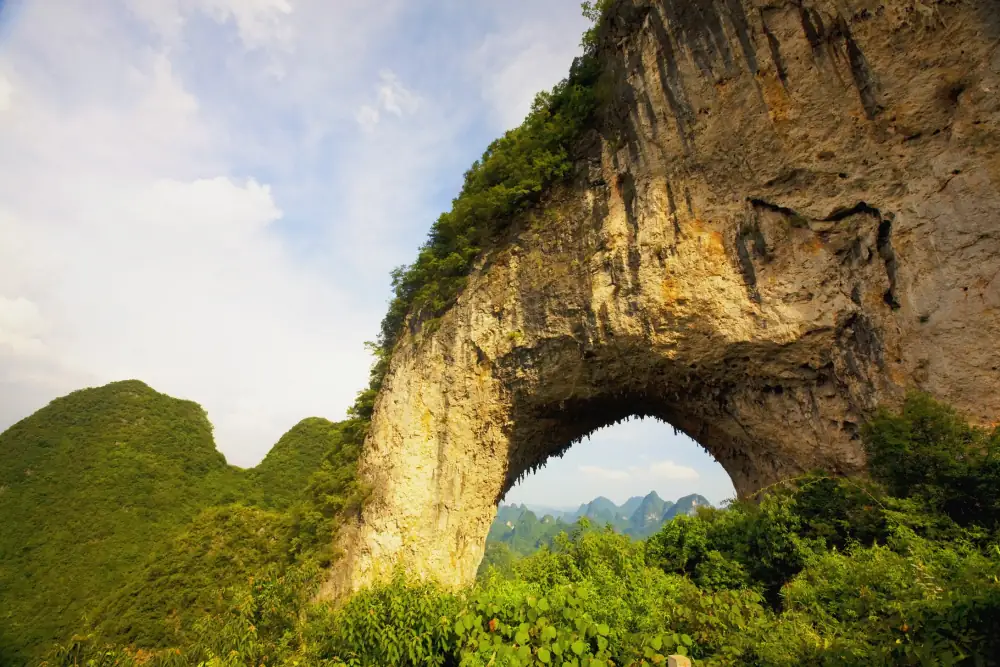
The cave was formed over approximately 180 million years as slightly acidic groundwater dissolved the limestone bedrock. The formations inside are the result of mineral-rich water dripping and depositing calcium carbonate over millennia:
- Stalactites: Hanging from the ceiling; grow downward at approximately 0.1mm per year.
- Stalagmites: Rising from the floor; grow upward where drops land.
- Columns: Formed where stalactites and stalagmites meet and merge.
- Cave curtains: Sheet formations created by water flowing down sloping surfaces.
The cave contains exceptional examples of all these types, including a 7-metre-tall stalagmite nicknamed the “Crystal Palace Pillar.”
The Crystal Palace Chamber

The highlight of the cave is the Crystal Palace (水晶宫) — a chamber approximately 90 metres wide and 14 metres high, containing dense clusters of stalactites and stalagmites arranged in what appears, under coloured lighting, as an underwater palace. The chamber holds over 1,000 people simultaneously.
The coloured LED lighting system (which replaced older fluorescent lights) cycles through sequences of blue, green, purple, and gold that transform the same formations into different visual experiences depending on the light colour. Photography here is either spectacular or garish depending on your aesthetic preferences — the formations are spectacular regardless of lighting.
The Circuit
The guided walking circuit is approximately 500 metres and takes 40–60 minutes with a guide narrating the formations’ shapes and names. As with most Chinese caves, the naming tradition is richly imaginative: “Lion Riding an Elephant,” “Virgin Forest,” “Red Mountain Maple,” and “Flower and Fruit Mountain” (a Monkey King reference) are among the more evocative designations.
The circuit is entirely paved and accessible; no crawling or low passages.
Practical Information
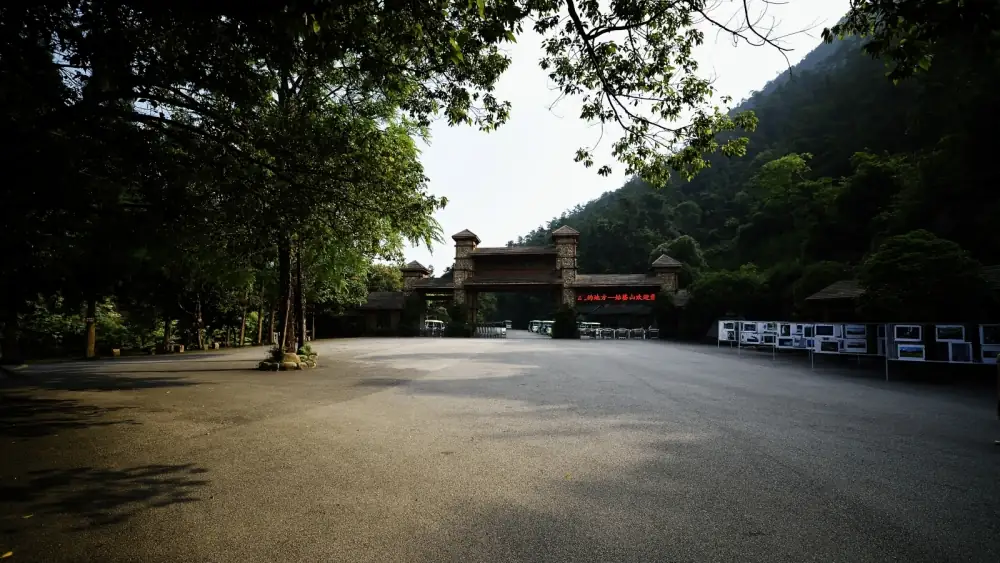
Getting there: Bus 3 from central Guilin (20 min); taxi ¥15–20. Admission: ¥75. Hours: 8:00–18:00 (last entry 17:00). Best time: Weekday mornings to avoid the largest tour groups. Photography: Bring a wide-angle lens; the cave’s chambers are too large for a standard kit lens to capture fully. Tripod not permitted.
Combining with Guilin’s Other Sights
Reed Flute Cave combines well with:
- Seven Star Park (七星公园): Another cave system plus karst landscape park in the city’s east.
- Two Rivers and Four Lakes (两江四湖): The central city waterway circuit for evening boat rides.
- Elephant Trunk Hill (象鼻山): The city’s symbol; a karst hill shaped exactly like an elephant drinking from the Li River.
Reed Flute Cave is one of those places where the natural world reveals an architectural capability that puts human construction in perspective. The Crystal Palace took 180 million years to build; the entrance ticket took 30 seconds to scan.