
Table of contents
Open Table of contents
In Zhengzhou City
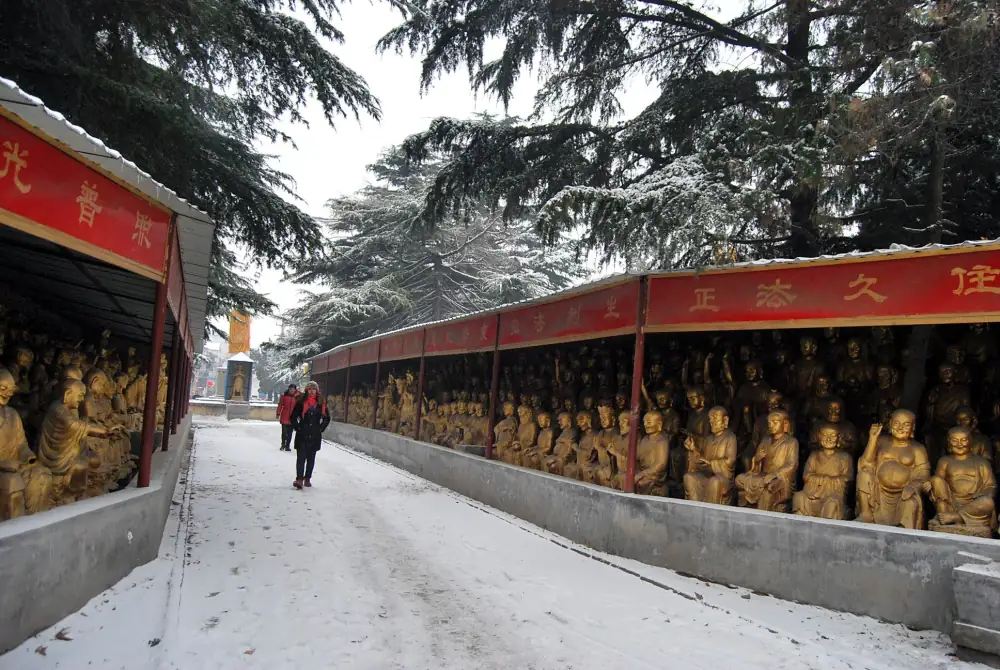
Henan Museum (河南博物院)
The flagship cultural institution of China’s most historically significant province, the Henan Museum houses an extraordinary collection of archaeological artifacts spanning 5,000 years. The highlights include:
- Shang Dynasty bronzes: Among the finest surviving examples of China’s Bronze Age, including the massive Simu Wu Ding (actually housed in Beijing’s National Museum, but replicas and related pieces are here)
- Neolithic jade: From the Yangshao culture (5,000–3,000 BCE)
- Han Dynasty ceramics and stone carvings
- Tang Dynasty three-colour glazed ceramics (三彩): Luoyang production at its height
The new main building is architecturally striking — designed to resemble a pre-historic Chinese ritual jade bi disc (璧). Allow 3–4 hours for the full collection.
Tickets: Free (registration required). Open Tuesday–Sunday 09:00–17:00.
Shang Dynasty Ruins and Museum (郑州商城遗址)
Beneath modern Zhengzhou lie the ruins of an ancient Shang Dynasty city, dating to approximately 1600 BCE. The earthen city walls — once 9 metres high, enclosing an area of 25 square kilometres — are partially reconstructed and visible at several points around the city. The associated museum is small but provides good context.
Erqi Square and Memorial Tower (二七广场)
Zhengzhou’s city centre memorial to the 1923 railway workers’ strike — an important moment in the founding narrative of the Chinese Communist Party. The twin-tower memorial pagoda is a Zhengzhou landmark.
Day Trips: The Heart of the Matter
Most visitors come to Zhengzhou specifically as a base for these day trips.
Shaolin Temple (少林寺) — Mount Song
The Shaolin Temple is simultaneously the birthplace of Chan (Zen) Buddhism and Chinese martial arts — a combination that has made it the most internationally recognised religious site in China after the Great Wall.
The current temple complex is a working Shaolin monastery with active monks and genuine kung fu training. The tourist infrastructure is substantial — the area has been heavily developed, with multiple scenic zones, cable cars and performance theaters — but the core temple buildings are authentic and the resident monks are the real article.
Key sites at Shaolin:
- Main temple complex: The central monastery buildings including Thousand Buddha Hall
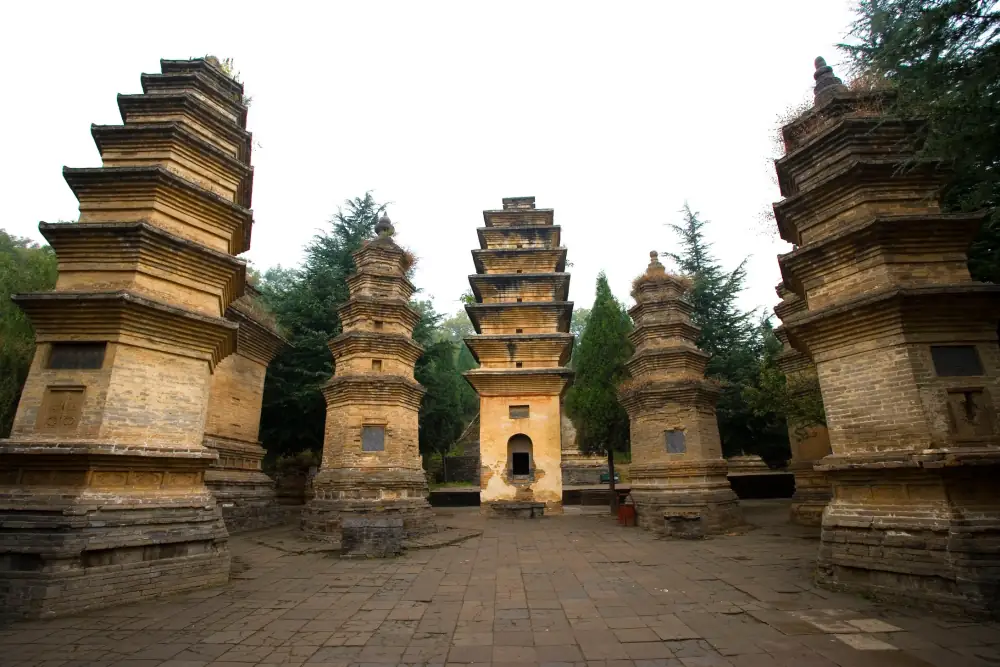
- Forest of Stupas (塔林): Over 240 memorial pagodas for senior monks spanning the Tang to Qing Dynasties — one of the most remarkable architectural assemblages in China
- Dharma Cave (达摩洞): The cave above the temple where Bodhidharma reputedly meditated for nine years
- Martial arts performance: Daily performances by actual Shaolin monks; genuinely impressive
Tickets: ¥100 ($14) for the scenic area; cable car to Dharma Cave ¥60 additional. Allow a full day.
Transport from Zhengzhou: High-speed rail from Zhengzhou East to Dengfeng North, approximately 40 minutes, then local bus to Shaolin (¥10). Total: approximately 1.5 hours. Or direct tourist bus from Zhengzhou Baimatou Bus Station (¥35–¥50 round trip; buses throughout morning).
Yellow River Scenic Area (黄河风景名胜区)
About 30 km north of central Zhengzhou, the Yellow River reaches an accessible point with a viewing platform, hiking trails, and a substantial exhibition on Yellow River culture and hydrology. The river here, during normal flow, is genuinely one of the most dramatic things in China: an immense brown torrent carrying more sediment than any other river on earth, moving with a weight that feels almost geological.
The viewpoint at Mangshan Hill (邙山) gives the classic panoramic view. Boat trips on the river are available (¥40–¥80 per person, seasonally dependent).
Tickets: ¥35 ($5) for the scenic area. Bus from Zhengzhou’s Yellow River Tourist Bus Terminal.
Songshan Mountain and Central Sacred Mountain (嵩山)
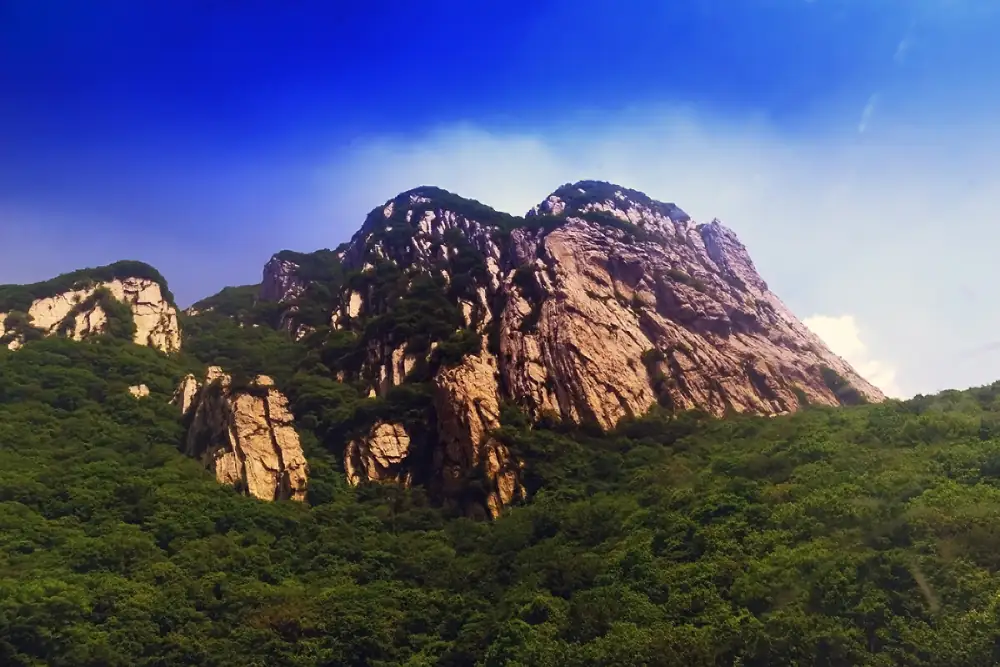
The “Central Peak” of China’s Five Sacred Mountains, Songshan is a complex of mountains hosting both the Shaolin Temple and several other important religious sites. The full Songshan scenic area includes:
- Zhongyue Temple (中岳庙): The main Taoist temple on Songshan, a massive complex dating to the Han Dynasty; one of the largest Taoist temples in China
- Songyue Pagoda (嵩岳寺塔): China’s oldest surviving multi-eaved brick pagoda (523 CE, Northern Wei Dynasty) — a remarkably important piece of architectural history
- Songyang Academy (嵩阳书院): One of China’s four great classical academies, established in the Song Dynasty
Zhengzhou Food
Henan cuisine is hearty and staple-focused — wheat cultivation dominates the province, giving rise to extraordinary noodle culture.
Must-eat:
- Huimian noodles (烩面): Zhengzhou’s signature dish: thick pulled wheat noodles in a rich mutton or beef broth. Available everywhere; the best are in dedicated huimian restaurants. ¥15–¥25 per bowl ($2–$3.5).
- Steamed buns with sauced meat (卤肉夹馍): Similar to Xi’an’s rou jia mo but with Henan spice mix
- Spiced mung bean jelly (凉粉): A summer street food classic
- Sweet red bean filling buns (豆沙包): Kaifeng influence
Restaurant areas: The Dehua Street (德化街) area in Erqi District has excellent concentration of traditional Henan restaurants.
Getting to Zhengzhou
Zhengzhou Dongzhan (East Station) is one of China’s busiest high-speed rail hubs. It’s on virtually every major HSR corridor.
- From Beijing: Beijing West to Zhengzhou East, approximately 2–2.5 hours; tickets ¥180–¥300 ($25–$42)
- From Xi’an: Xi’an North to Zhengzhou East, approximately 1.5–2 hours; tickets ¥140–¥220 ($20–$31)
- From Shanghai: Shanghai Hongqiao to Zhengzhou East, approximately 3.5–4 hours; tickets ¥250–¥400 ($35–$56)
- From Wuhan: Wuhan to Zhengzhou East, approximately 1.5 hours; tickets ¥130–¥200 ($18–$28)
By air: Zhengzhou Xinzheng International Airport (CGO) has extensive domestic connections and growing international routes including London (seasonally), Dubai and many Asian destinations.
Where to Stay
Budget (¥120–¥220 / $17–$31): Chain hotels near Zhengzhou East Station are convenient for the day-trip logistics. 7 Days Inn, Hanting options near the station.
Mid-range (¥280–¥550 / $39–$77): Crowne Plaza Zhengzhou Sofitel is a central mid-range option. Novotel Zhengzhou Convention Center is reliable for transit travellers.
Upscale (¥700+ / $98+): Marriott Zhengzhou, InterContinental Zhengzhou and the Crowne Plaza Zhengzhou are the flagship properties.
Best Time to Visit
Spring (April–May): Warm and relatively dry; good for Yellow River scenery and mountain hiking on Songshan.
Autumn (September–October): The best overall season — comfortable temperatures, good air quality, and the October harvest landscape in the Henan countryside is beautiful.
Winter: Cold but manageable; the Shaolin Temple is atmospheric with fewer tourists. Consider an early-January visit before Chinese New Year travel.
Avoid: July–August is extremely hot and humid (35–40°C) with potential flooding. The worst period for outdoor activities.
Planning Suggestions
One day in Zhengzhou: Henan Museum in the morning, Shaolin Temple as a day trip (most of the day), huimian dinner in the evening.
Two days: Day 1 as above. Day 2: Yellow River Scenic Area + Zhongyue Temple + Songyue Pagoda.
Three days: Add Luoyang as an overnight extension for the Longmen Grottoes and Old Town (1.5 hours by high-speed rail from Zhengzhou to Luoyang Longmen Station, ¥65).
Final Word
Zhengzhou is a transport node first and a tourist destination second — but that needn’t reduce its appeal. The combination of the excellent Henan Museum, the Shaolin pilgrimage and the Yellow River gives it a one or two day program that covers some of China’s most significant historical and natural sites. The huimian noodles alone are worth the stop.