
Table of contents
Open Table of contents
Anyang — Where China Learned to Write
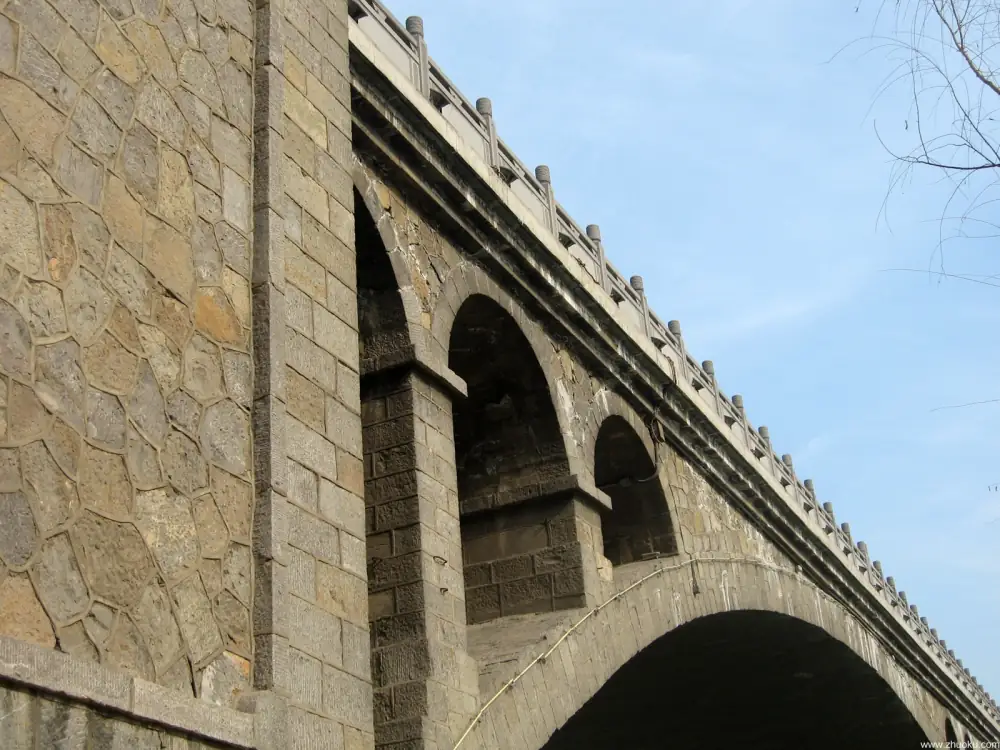
If you want to understand the deep roots of Chinese civilisation, you need to come to Anyang (安阳). This city in northern Henan Province was the capital of the Shang Dynasty (商朝) from approximately 1300 to 1046 BC, making it one of the oldest continuously significant urban areas in the world. More importantly, it was here that the earliest known Chinese writing — the oracle bone script (甲骨文) — was discovered, pushing the history of Chinese literacy back over 3,300 years.
Anyang doesn’t have the visual drama of Xi’an’s Terracotta Warriors or the fame of Beijing’s Forbidden City. What it has is something more fundamental: the origin point of the world’s oldest continuous writing system. Every Chinese character used today — over 50,000 of them — traces its lineage to the scratchings on turtle shells and ox bones found in the fields outside Anyang.
I came to Anyang as a linguistic tourist, curious about the origins of the characters I’d been struggling to learn. I left with a much deeper appreciation for just how ancient and remarkable Chinese civilisation is. Standing in the museum, looking at a 3,300-year-old bone inscribed with characters I could almost read — the connection across millennia was genuinely spine-tingling.
The Yin Ruins (殷墟)
UNESCO World Heritage Site
The Yin Ruins (殷墟, Yinxu) are the remains of the last capital of the Shang Dynasty, inscribed as a UNESCO World Heritage Site in 2006. The site covers about 36 square kilometres and has been under archaeological investigation since 1928, making it one of the longest-running excavations in Chinese history.
What was discovered here:
- The earliest known Chinese writing (oracle bone inscriptions)
- Massive royal tombs containing bronze vessels, jade ornaments, and human sacrifices
- The foundations of palace complexes
- Workshops for bronze casting, jade carving, and pottery
- Chariot burials — the earliest known in China
What You’ll See
The Yin Ruins site is divided into several areas connected by shuttle bus:
The Palace-Temple Area (宫殿宗庙遗址): The most important section, containing the foundations of royal buildings and the famous oracle bone pit where thousands of inscribed bones were found. A reconstructed palace building gives a sense of the scale and layout of the Shang court. The Fu Hao Tomb (妇好墓) — the undisturbed burial of a Shang queen and military general — is a highlight, with its extraordinary collection of bronze and jade artefacts.
The Royal Tomb Area (王陵遗址): About 5 km from the palace area, this contains 13 large royal tombs and over 2,000 sacrificial pits. The scale of human sacrifice practised by the Shang is sobering — some tombs contained over 100 human victims. The largest tomb, belonging to King Wu Ding, measures over 20 metres in length.
The Oracle Bone Pit (甲骨窖穴): A covered excavation site where over 17,000 oracle bones were found in a single pit. The bones are displayed in situ, giving a visceral sense of the archaeological discovery.
Entrance fee: ¥70 ($9.70 USD) including shuttle bus between areas. Allow 3-4 hours.
Note: Many of the most important artefacts from the Yin Ruins are displayed in the National Museum of Chinese Writing and the Henan Museum in Zhengzhou, rather than on-site. Visit both the ruins and the museum for the complete picture.
National Museum of Chinese Writing (中国文字博物馆)
A Temple to the Written Word
This extraordinary museum, opened in 2009, is dedicated to the history and development of Chinese writing. It’s one of the finest museums in Henan and a must-visit for anyone interested in language, history, or Chinese culture.
Key exhibits:
Oracle Bones Gallery: The museum’s crown jewel — a stunning collection of inscribed oracle bones, many still bearing the original scratches made by Shang diviners 3,300 years ago. The gallery explains the divination process (questions were inscribed on bones, which were then heated until they cracked; the cracks were interpreted as answers from ancestors) and shows how the oracle bone script evolved into modern Chinese characters.
Bronze Inscriptions Gallery: Shows the development of writing on bronze vessels during the Zhou Dynasty, when characters became more standardised and ornamental.
Evolution of Script Gallery: Traces the development of Chinese writing from oracle bones through bronze script, seal script, clerical script, regular script, running script, and cursive script — the complete evolutionary chain that produced modern Chinese characters.
Minority Scripts Gallery: Features writing systems used by China’s ethnic minorities, including Tibetan, Uyghur, Mongolian, and Naxi pictographic scripts.
Interactive Section: Try writing with a brush on a digital screen, or attempt to decipher oracle bone characters. Surprisingly addictive.
Entrance fee: Free (reservation required through official WeChat account). Open 9:00 AM — 5:00 PM, closed Mondays. Allow 2-3 hours.
The Red Flag Canal (红旗渠)
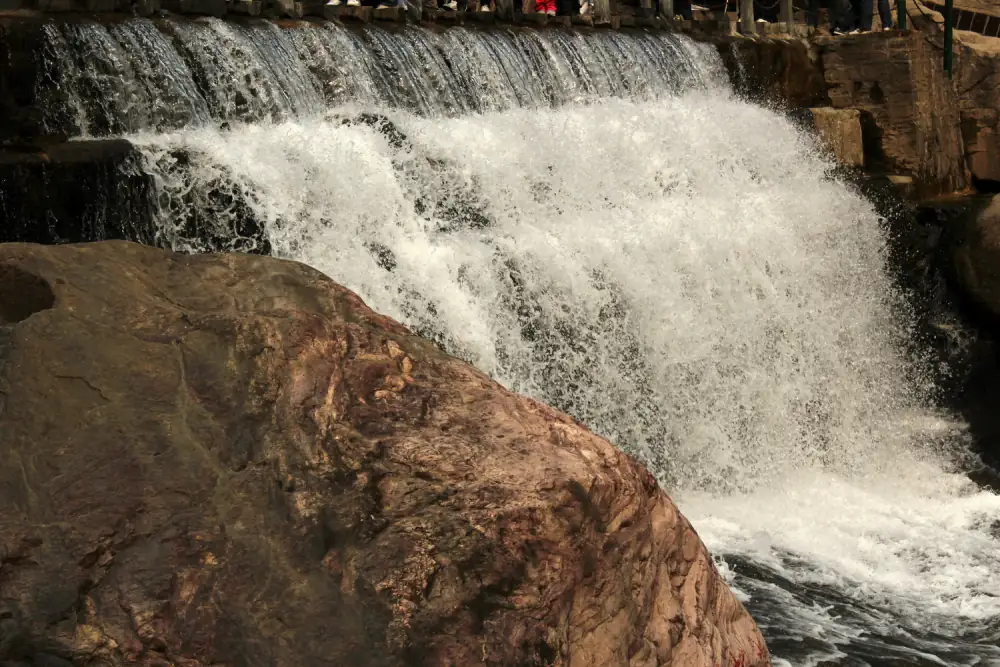
Engineering Against Impossible Odds
About 60 km from Anyang city, the Red Flag Canal (红旗渠) is one of the most extraordinary engineering projects in modern Chinese history. Built between 1960 and 1969 by 100,000 workers using hand tools, the canal channels water from the Zhang River through the Taihang Mountains to the arid Linxian basin.
The canal is 71 km long, carved into cliff faces and tunnelled through mountains. At its highest point, the water channel runs along a cliff face 400 metres above the valley floor. The construction was phenomenally dangerous — 189 workers died during the 10-year project.
What to see:
- The Youth Cave (青年洞): A 616-metre tunnel bored through solid rock by 300 young volunteers over 17 months
- The Cliffside Channel: A section where the canal runs along a sheer cliff face, supported by stone arches. Terrifying and magnificent.
- The Red Flag Canal Memorial: A museum documenting the construction with photographs, tools, and personal testimonies
Entrance fee: ¥80 ($11 USD) including shuttle bus. Allow 3-4 hours.
Getting there: About 1.5 hours by road from Anyang. Hired car ¥300-400 ($42-55 USD) for the day trip.
Anyang’s Other Attractions
Wenfeng Tower (文峰塔)
A distinctive five-storey pagoda in the city centre, built in 952 AD during the Five Dynasties period. Unusually for a Chinese pagoda, it’s wider at the top than at the bottom — an inverted shape that makes it architecturally unique. ¥15 ($2.10 USD).
Yuan Shikai’s Tomb (袁林)
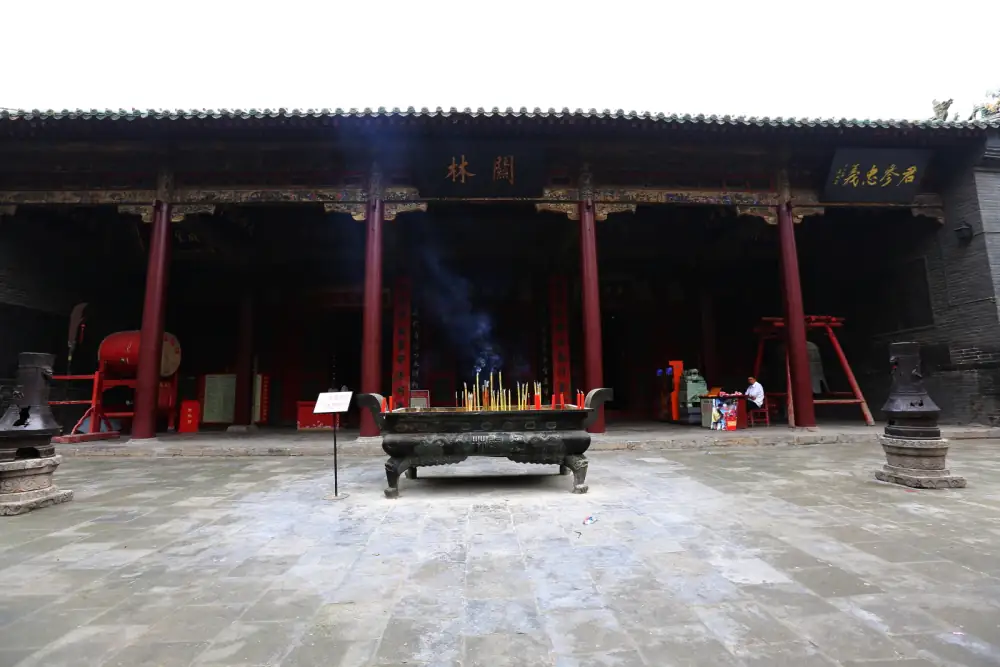
The elaborate tomb of Yuan Shikai, the controversial general who became the first president of the Republic of China and then briefly declared himself emperor in 1915. The tomb blends Chinese and Western architectural styles in a way that perfectly reflects Yuan’s own confused legacy. ¥30 ($4.20 USD).
Anyang Cuisine — Hearty Henan
Anyang Three Treasures (安阳三熏): Smoked chicken, smoked pork, and smoked egg — a traditional local speciality. Available at most restaurants and from street vendors. ¥20-35 ($2.80-4.90 USD) per plate.
Bianfen (扁粉菜): A breakfast dish of flat rice noodles in a spicy broth with pig blood curd, tofu, and vegetables. Acquired taste but beloved locally. ¥8-12 ($1.10-1.70 USD).
Daokou Roast Chicken (道口烧鸡): From the nearby town of Daokou, one of China’s most famous roast chickens — tender, fragrant, and deeply seasoned. Half chicken ¥25-40 ($3.50-5.50 USD).
Anyang Flatbread (安阳烧饼): Sesame-coated flatbread, crispy outside and soft inside. ¥2-3 ($0.30-0.40 USD) each.
Hu Mian (烩面): Henan’s signature noodle dish — broad flat noodles in a rich lamb broth with vegetables and sometimes egg. ¥12-18 ($1.70-2.50 USD).
Practical Information
Getting to Anyang
By High-Speed Train: Anyang East Station on the Beijing-Guangzhou line. From Beijing: 2.5 hours, ¥200-350 ($28-48 USD). From Zhengzhou: 40 minutes, ¥50-80 ($7-11 USD). From Xi’an: 3 hours.
By Air: Anyang doesn’t have a commercial airport. Fly to Zhengzhou and take the high-speed train (40 minutes).
Accommodation
Anyang International Hotel: The best in town. Doubles from ¥200-400 ($28-55 USD).
Budget hotels: Numerous options from ¥80-180 ($11-25 USD).
Best Time to Visit
- Spring (April — May) and Autumn (September — November): The best weather for visiting outdoor sites like the Yin Ruins and Red Flag Canal.
- Summer: Hot and humid; indoor museums are comfortable.
- Winter: Cold but the museums are uncrowded.
Budget Estimate (2 Days)
| Item | Budget (¥) | Mid-Range (¥) |
|---|---|---|
| High-speed train from Beijing (round trip) | 400 | 700 |
| Accommodation (1 night) | 100 | 300 |
| Meals | 120 | 280 |
| Yin Ruins entrance | 70 | 70 |
| Museum (free) | 0 | 0 |
| Red Flag Canal (with transport) | 300 | 400 |
| Local transport | 30 | 60 |
| Total | ¥1,020 ($141 USD) | ¥1,810 ($251 USD) |
The Beginning of Everything
Anyang may not be glamorous, but it’s foundational. Every time someone writes a Chinese character — whether on paper, on a phone screen, or carved in stone — they’re participating in a tradition that began in the fields outside this modest Henan city. The oracle bones prove that 3,300 years ago, people were asking the same questions we ask today: Will the harvest be good? Will the king recover? Is it safe to travel? The medium has changed, but the human impulse to communicate, to record, to make meaning through marks on a surface — that’s eternal. Anyang is where China discovered that impulse, and visiting is like meeting civilisation at its source.