
Hong Kong Night Markets: Temple Street, Ladies’ Market, Fa Yuen Street & the Jade Market
Hong Kong’s night markets are concentrated in Kowloon, close enough together that a determined visitor can walk through all four of the main ones in a single evening — and different enough in character that doing so never feels repetitive. Temple Street is the atmospheric original: fortune tellers, Cantonese opera and seafood under awnings. The Ladies’ Market in Mong Kok is the high-volume clothing and souvenir bazaar. Fa Yuen Street is where locals buy sportswear and household goods. And the Jade Market, a covered hall in Yau Ma Tei, trades in one thing only.
This guide covers each market — what to buy, when to go, and how to get there — followed by the practical details (cash, haggling, hours) that apply to all of them. For a broader introduction to the city, see the Hong Kong travel guide.
Table of contents
Open Table of contents
Temple Street Night Market
Temple Street is the night market most visitors mean when they say “the Hong Kong night market”, and it earns the status. Between roughly 16:00 and midnight, a 600-metre stretch of Temple Street in Jordan–Yau Ma Tei fills with awning-covered stalls selling electronics accessories, watches, lighters, clothing and leather goods. Around the stalls, the market’s stranger elements operate: fortune tellers reading palms and birth charts at folding tables, elderly enthusiasts singing Cantonese opera under portable lamps at the northern end, and open-air seafood restaurants spilling tables onto the side streets.
The market takes its name from the Tin Hau Temple that bisects the street, and it has traded here in some form since the early 20th century. It remains genuinely working-class Kowloon — less polished than the Ladies’ Market, more interesting for it.
Getting there: MTR Jordan Station (Tsuen Wan Line), Exit A or D — the market entrance is a two-minute walk. Yau Ma Tei Station Exit C drops you at the northern end near the Jade Market.
Hours: Stalls set up from 14:00–16:00, full swing by 18:30–19:00, most close around 23:00–00:00.
For the full breakdown — the fortune tellers’ row, the opera, the dai pai dong and what to pay for each — see the dedicated Temple Street Night Market guide.
Ladies’ Market (Mong Kok)
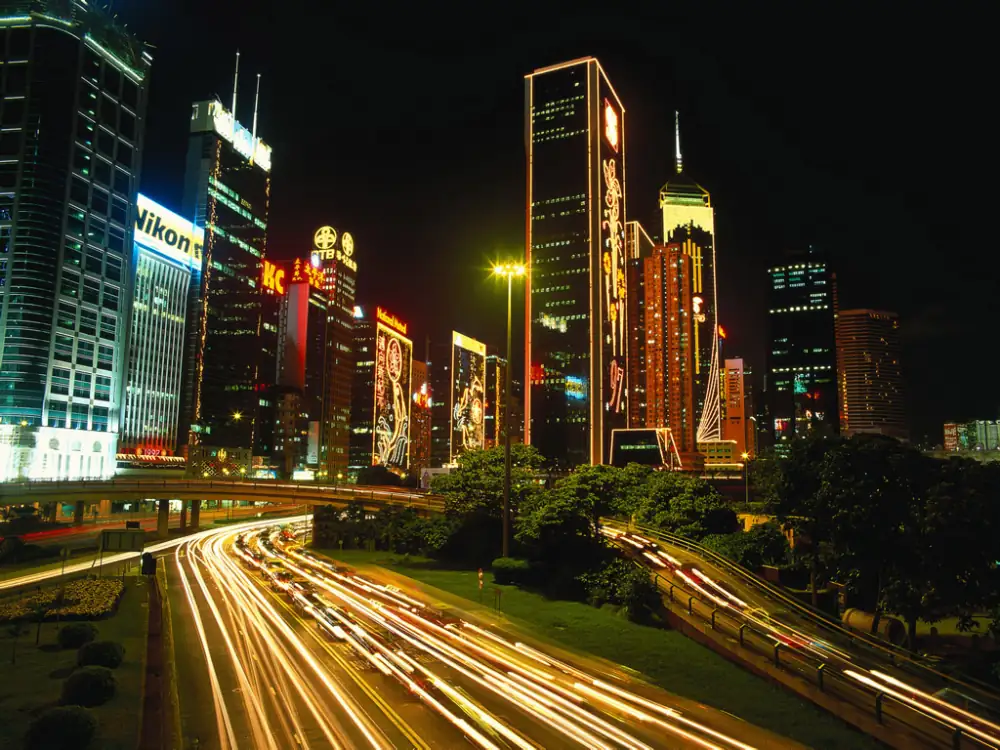
The Ladies’ Market runs along Tung Choi Street in Mong Kok, roughly one kilometre of stalls between Argyle Street and Dundas Street. The name is historical — it originally sold women’s clothing and accessories — but today the stock is broad: T-shirts, hoodies, bags, phone cases, toys, souvenirs, and a large quantity of goods aimed squarely at visitors.
This is the highest-volume, most tourist-oriented of Hong Kong’s night markets. The upside is range and convenience; the downside is that much of the stock is identical from stall to stall, and first quoted prices are the most inflated in the city. Haggling here is not optional — it is the pricing mechanism. Sellers expect it and build it in.
What to buy: Casual clothing, souvenirs, inexpensive bags and accessories. Quality is variable; check stitching and zips before agreeing a price.
Getting there: MTR Mong Kok Station, Exit E2 — the market is directly ahead. The street is walkable from Temple Street in about 15 minutes along Nathan Road, which makes combining the two in one evening easy.
Hours: Unusually for a night market, stalls trade from late morning (around 11:00) until 23:30. The evening atmosphere is better, but the midday version is less crowded.
Fa Yuen Street
Two blocks east of the Ladies’ Market, Fa Yuen Street is the local counterweight — a street market that serves Mong Kok residents more than visitors. The southern section (between Dundas Street and Argyle Street) is a wet-and-dry street market: fruit and vegetable stalls, butchers, dried goods, and inexpensive clothing on rails. The northern section, around Mong Kok Road, has become known as Sneakers Street — a dense row of sportswear shops selling current and last-season trainers, often at prices below mall retail.
Fa Yuen Street has less spectacle than Temple Street and less tourist stock than the Ladies’ Market, but prices are lower and the goods are what Hong Kong people actually buy. It is the best of the markets for everyday clothing, kitchenware, and sportswear.
Getting there: MTR Mong Kok Station, Exit E2, then two blocks east; or Mong Kok East Station for the Sneakers Street end.
Hours: The street market runs roughly 10:00–22:00; Sneakers Street shops keep mall-like hours, typically 11:00–22:00.
The Jade Market
The Jade Market on Kansu Street in Yau Ma Tei — at the northern end of Temple Street — is a covered hall of around 400 stalls selling jade in every form: pendants, bangles, beads, carvings, and loose stones, alongside pearls, amber and other gemstones. It operates during the day rather than at night (roughly 10:00–16:00), but it pairs naturally with a Temple Street evening: arrive mid-afternoon for the jade, walk south into the night market as the stalls open.
Jade holds a particular place in Cantonese culture — worn for protection, given to mark births and birthdays — and the market is worth visiting even with no intention to buy. The stalls at the entrance carry the cheaper, more tourist-oriented stock; the dealers further in trade more serious pieces.
A caution on buying: Jade grading is genuinely difficult, treated and dyed stones are common, and certificates are easily fabricated. Unless jade quality can be assessed with confidence, keep purchases to inexpensive pieces — small carved pendants and bead bracelets in the ¥100–¥500 range — where the risk-reward calculation is acceptable.
Getting there: MTR Yau Ma Tei Station, Exit C — a five-minute walk.
Eating at the Night Markets
The markets double as some of the city’s best cheap eating. Temple Street’s open-air seafood restaurants and dai pai dong serve salt-baked crab, char siu and wonton noodles until late; the Temple Street Cooked Food Market beside it packs licensed stalls into a government building with shared tables. Around the Ladies’ Market and Fa Yuen Street, the side streets of Mong Kok hold the city’s densest concentration of snack shops — curry fish balls on skewers, egg waffles eaten walking, and pineapple buns from the bakeries on every corner.
For the full picture of what to eat and where, see the Hong Kong street food guide. Budget ¥60–¥150 per person for a market dinner; ¥10–¥30 covers most walking snacks.
Practical Tips: Cash, Haggling and Hours
Cash is essential. The overwhelming majority of market stalls in Hong Kong are cash-only. Withdraw Hong Kong dollars before the evening begins — the ATMs nearest Temple Street and the Ladies’ Market develop queues after dark. Octopus cards work on the MTR, in convenience stores and in some cooked food centres, but not at street stalls.
Haggling rules. At Temple Street, the Ladies’ Market and Fa Yuen Street, the first quoted price is typically 30–50% above the real selling price. A workable approach: show interest without urgency, offer around 60% of the asking price, and settle somewhere in the middle. Walking away is a legitimate tactic and often produces a better offer. Food stalls, restaurants and the Sneakers Street shops have fixed prices — haggling there does not apply.
Timing. The single best window is 19:00–21:30 on a weeknight: everything is open, the atmosphere is at its peak, and the crowds are manageable. Weekends, the October Golden Week and Chinese New Year make movement through Temple Street and the Ladies’ Market genuinely difficult.
Combining the markets. An efficient evening route: Jade Market in the late afternoon, Temple Street as it opens at dusk, then the 15-minute walk north along Nathan Road to the Ladies’ Market and Fa Yuen Street to finish. The whole route sits within the Jordan–Mong Kok corridor covered in the Hong Kong travel guide.
Safety. The markets are crowded but safe; the standard pickpocket precautions of any dense market apply. Keep bags zipped and phones in front pockets.
For more on the city, browse the Hong Kong guides, the food articles and the shopping coverage across the site.