
Lianyungang (连云港) sits at the northeastern corner of Jiangsu Province, where the Yellow Sea coast meets the last ridges of the Shandong hills. It’s the eastern terminus of the New Eurasian Land Bridge — the rail route that runs 10,900km across Central Asia to Rotterdam, making Lianyungang the symbolic starting point of a modern Silk Road.
But for most visitors, the reason to come is literary. Huaguo Mountain (花果山, “Flower Fruit Mountain”) — the peak rising above the city — is identified in Chinese tradition as the home of Sun Wukong (孙悟空), the Monkey King from Wu Cheng’en’s 16th-century novel Journey to the West. Whether the mountain actually inspired the novel or merely claimed the association later is debated, but the identification is now total.
The coast is also notable — rocky headlands, offshore islands, and a 6.7km sea-crossing bridge connecting the mainland to Liandao Island.
Table of contents
Open Table of contents
Getting to Lianyungang
By high-speed train:
- From Nanjing: About 2 hours; ¥120–180
- From Xuzhou: About 1 hour; ¥60–90
- From Qingdao: About 2 hours; ¥100–150
- From Shanghai: About 3 hours via Nanjing; ¥180–260
By air:
- Lianyungang Huaguoshan Airport: Direct flights from Beijing, Shanghai, Guangzhou, and other major cities. Airport about 25km from city center; taxis ¥60–80.
By bus:
- From Nanjing: About 4 hours; ¥120–150; from Qingdao: about 3 hours; ¥80–110
Flower Fruit Mountain (花果山 / Huaguoshan)
Flower Fruit Mountain is the centerpiece of Lianyungang’s tourism — a natural mountain overlaid with the literary mythology of Journey to the West.
The Journey to the West connection: Wu Cheng’en’s novel describes the Mountain of Flowers and Fruit as the birthplace of Sun Wukong, born from a stone egg on the mountain top, who becomes king of the monkeys and acquires supernatural powers before his rebellion against Heaven. The novel is one of the Four Great Classical Novels of Chinese literature, and Sun Wukong is arguably the most recognizable fictional character in East Asian culture.
Key attractions on the mountain:
- Water Curtain Cave (水帘洞): The most famous spot — a natural rock overhang with water flowing over the entrance where Sun Wukong supposedly lived. You can walk behind the waterfall into the cave interior. Moderate queue at peak times.
- Jade Emperor Peak (玉女峰): The summit at 624m — the highest point on the Jiangsu coast. On clear days, the view extends to the Yellow Sea. A Sun Wukong statue crowns the peak.
- Monkey population: A troop of macaques lives on the mountain, habituated to visitors. They’re entertaining but can be aggressive about food — do not carry visible food items and keep bags closed.
- Sanqing Palace (三清殿): A Taoist temple complex on the slopes, active and atmospheric
Entry fee: ¥100 per person
Cable car: ¥35 one-way (recommended for ascent; walk down)
Opening hours: 7:00am–5:30pm
Time required: 4–5 hours for a full visit including the summit
Liandao Island & Coast (连岛)
Liandao is the largest island in Jiangsu Province, connected to the mainland by the 6.7km Liandao Bridge.
Dasu Bay Beach (大沙湾海滩): The main beach on the island’s eastern shore — a crescent of fine sand with relatively clean water. Beach facilities include umbrella rentals (¥50/day), showers (¥10). Entry ¥30.
Liandao Hiking Trail: A coastal path circles part of the island through pine forest and along rocky headlands. About 6km; 2–3 hours at a comfortable pace.
Seafood on Liandao: The island’s restaurants are supplied directly by the fishing harbor on the north side. Expect to pay ¥60–120 per person for a full meal.
The New Eurasian Land Bridge Terminal
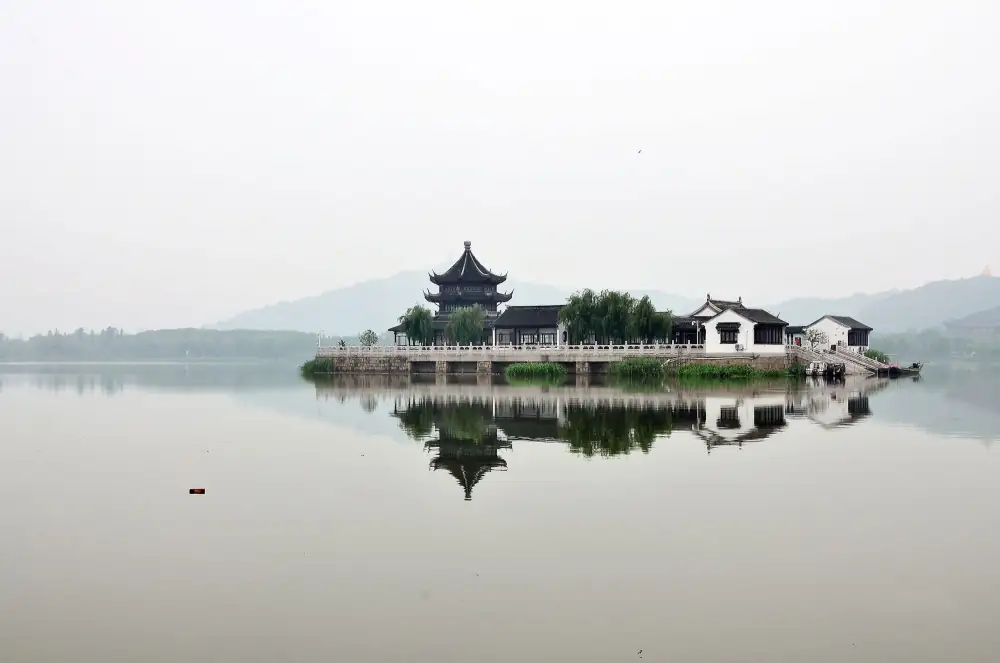
Lianyungang’s role as the eastern terminus of the New Eurasian Land Bridge is commemorated at the port area. A monument marking the zero-kilometer point stands near the container terminal — symbolically important for understanding China’s Belt and Road Initiative and the modern Silk Road logistics.
The scale of the container port — one of China’s top 10 by throughput — is impressive. Zhongyuan Square at the port entrance provides a viewpoint over the container yards.
Lianyungang Old City & Food
Haizhou Ancient City (海州古城): About 10km from the modern city center, the old town of Haizhou has preserved a section of Ming-era walls, traditional shopfronts, and a network of lanes with local character. Several small temples and clan halls are found within the old street grid.
Local food:
- Lianyungang seafood noodles (海鲜面): Wheat noodles in a rich seafood broth with local prawns, clams, and fish — a breakfast staple; ¥15–25 per bowl
- Guanyin cake (观音饼): A flaky pastry filled with sweet red bean paste; named for the area’s Buddhist associations
- Fresh Yellow Sea seafood: The harbor area restaurants serve the day’s catch — flounder, prawns, crab, and various shellfish at prices significantly lower than Qingdao or Shanghai; ¥50–120 per person for a full dinner
Restaurant strip: The area around Yanhe Road (沿河路) near the old town has the best concentration of authentic local restaurants.
Other Sights
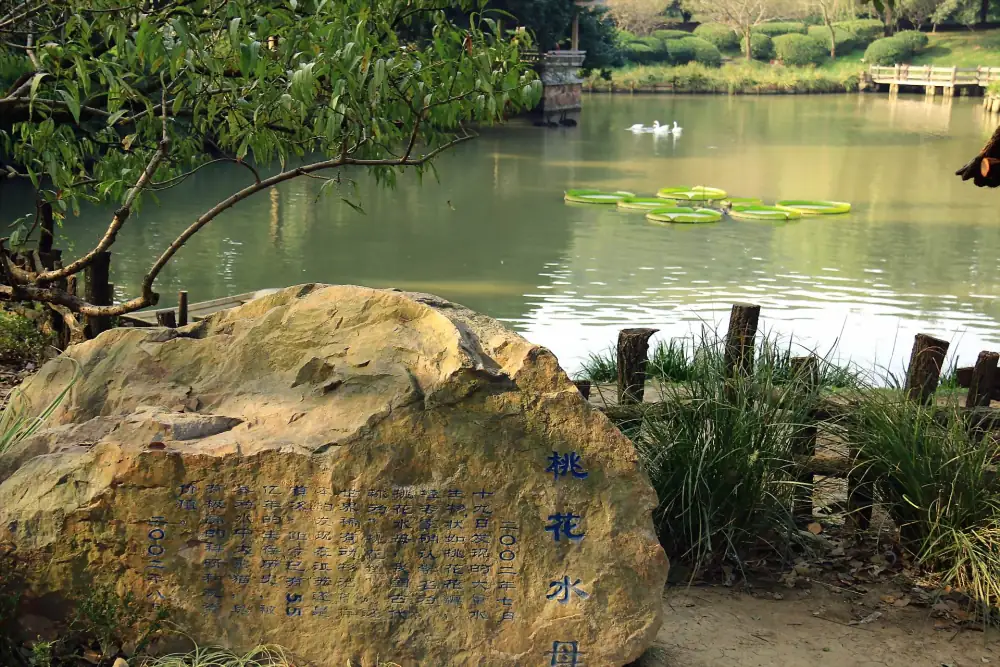
Kongwang Mountain (孔望山): A small hill about 5km from the city center with an extraordinary secret — a cliff face carved with Buddhist images dating to the Eastern Han Dynasty (1st–2nd century AD), making these some of the earliest Buddhist stone carvings in China, predating the better-known cave sites by centuries. Entry ¥30.
Donghai County (东海县): About 40km west of the city, Donghai is China’s crystal capital — the area produces high-quality quartz crystals and has a crystal market that attracts collectors. The Crystal Museum (水晶博物馆) displays some remarkable specimens. Entry ¥40.
Yuntai Mountain (云台山): Not to be confused with the more famous Yuntai Mountain in Henan, this scenic area about 15km southwest of the city has forested peaks, waterfalls, and a Taoist temple complex. Entry ¥80.
When to Visit
Best seasons: April to June, and September to November
Spring: Comfortable temperatures; the mountain is green; rhododendrons bloom in April; uncrowded on weekdays
Summer (July–August): Peak beach season; hot (30–33°C) and humid; the mountain provides cooler hiking; school holiday crowds
Autumn: The best overall season — clear skies, comfortable temperatures, golden foliage on the mountain, fewer visitors
Winter: Cold (0–5°C) but functional; the mountain can be atmospheric under light snow; beaches are empty but too cold for swimming
Practical Tips
Accommodation:
- City center hotels: ¥150–350/night year-round
- Beachfront hotels on Liandao: ¥200–500/night in summer; ¥100–250 in low season
- Book ahead for July–August and national holidays
Getting around: City buses cover the main tourist sites; taxi fares are reasonable (¥15–30 for most trips). Electric bike rental (¥50–80/day) is the most pleasant way to explore the coastal areas.
Combine with: Qingdao (2 hours by train), Rizhao (2 hours), and Xuzhou (1 hour) make a good circuit. Lianyungang is the least commercialized of the Jiangsu coast cities.
Monkey safety on Flower Fruit Mountain: This deserves emphasis — the macaques are wild animals that have learned to associate humans with food. Do not feed them; keep food concealed; do not make eye contact with aggressive individuals; carry a stick if walking the less-traveled trails.