
Table of contents
Open Table of contents
Jinshan Temple (金山寺) and Jinshan
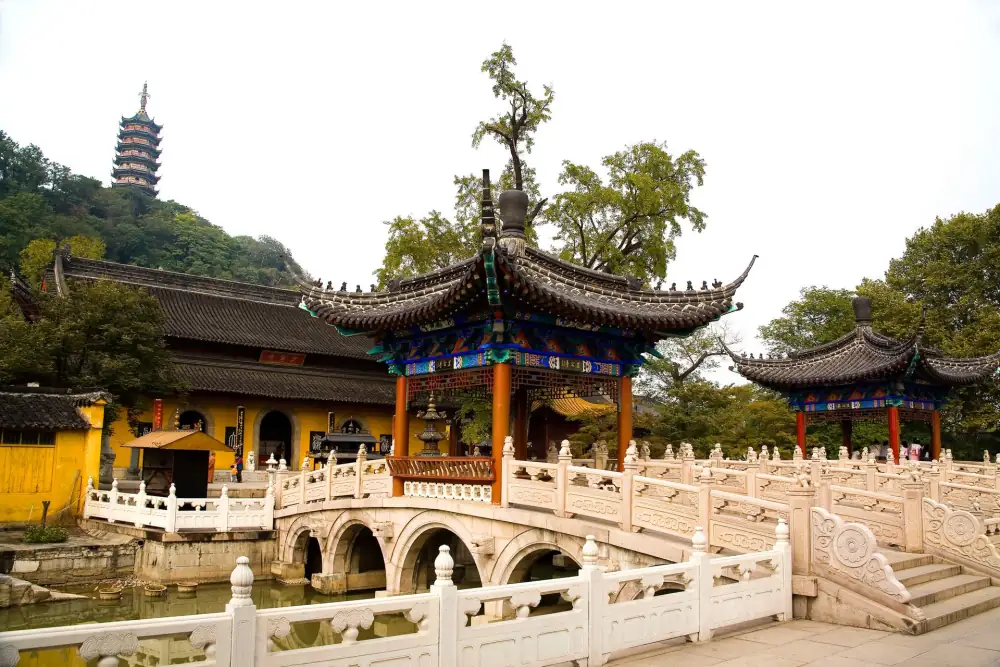
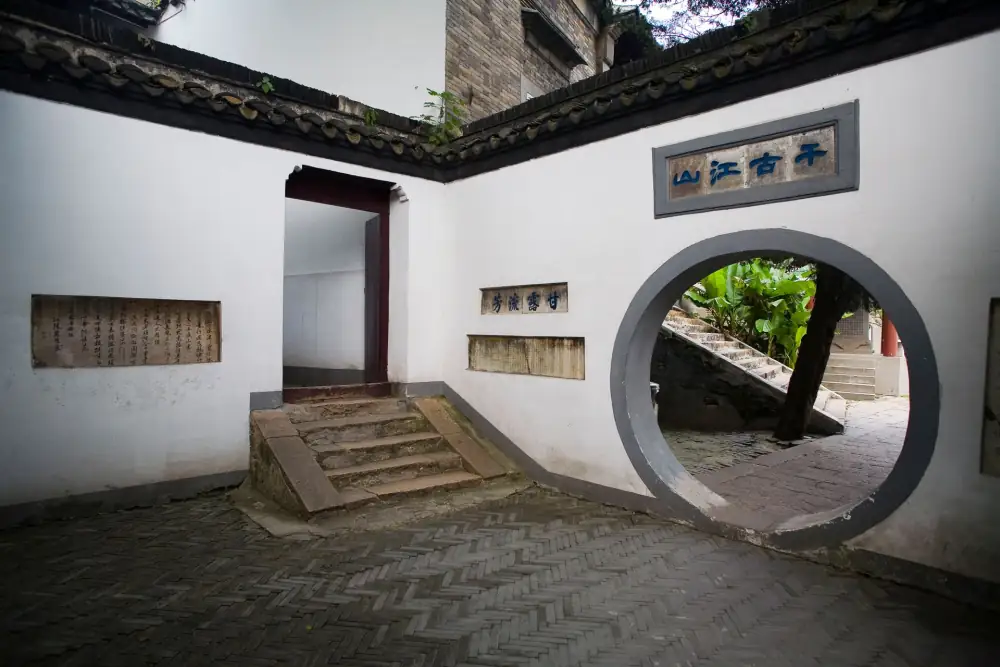
Jinshan — Golden Mountain — is the most visited of Zhenjiang’s three Yangtze-adjacent mountains. It’s significant enough that it’s technically no longer an island (Yangtze sedimentation has connected it to the riverbank), but the mountain rises steeply enough that the temple complex gives the impression of an island peak even from close up.
The Jinshan Temple, founded in the 4th century CE and rebuilt and expanded through the Tang, Song, Ming, and Qing dynasties, clings to the mountain face in a dramatic vertical arrangement of halls and pavilions that climb from the base to the summit pagoda. It’s architecturally one of the more distinctive temple complexes in eastern China.
The White Snake Legend (白蛇传) is set here: the immortal white snake spirit Bai Suzhen is imprisoned beneath the Leifeng Pagoda after pursuing her husband to Jinshan. This makes the temple a significant cultural pilgrimage for devotees of the legend.
The Cishou Pagoda (慈寿塔): The seven-storey white pagoda on the summit of Jinshan is the mountain’s visual landmark and offers the best views over the Yangtze and the surrounding city from its upper levels.
Entry: ¥65 per person. Open 8am-5pm (6pm in summer).
Jiao Mountain (焦山)
Jiao Mountain is a genuine island in the Yangtze — accessible by ferry from the riverbank (ferry ¥20 round trip). The island is small (0.49 square kilometres) but beautifully forested and home to the Dinghui Temple complex.
The island has an unusual character: more like a large garden than a mountain, with ancient trees, stone inscriptions, and the temple buildings embedded in greenery. The Ding Hui Temple’s Main Buddha Hall is one of the better examples of classic Buddhist architecture in Jiangsu.
The Cliff Inscriptions (焦山摩崖石刻): The rocky faces of Jiao Mountain bear over 260 stone inscriptions spanning the Eastern Han through the Qing dynasties — one of the largest and most significant collections of outdoor stone inscriptions in eastern China. Particularly notable is the Dharani Sutra carved in stone, one of the few surviving examples of this type.
Entry: ¥70 per person (including ferry).
Beigu Mountain (北固山)
Beigu Mountain — Northern Solid Mountain — is more about history than temple architecture. The Ganlu Temple here is where, according to historical records and the Romance of the Three Kingdoms, Liu Bei (ruler of Shu Han) came to woo his wife Lady Sun, daughter of the powerful Sun family. The mountain has dramatic cliff views north across the Yangtze.
Entry: ¥40 per person.
The Zhenjiang Vinegar Culture
Zhenjiang vinegar (镇江香醋, Zhenjiang Xiang Cu) is one of China’s “Four Famous Vinegars” alongside Shanxi’s mature vinegar, Fujian’s rice vinegar, and Sichuan’s sour vinegar. The Zhenjiang version is distinctive for its aroma — sweeter and more complex than Shanxi’s darker, more acidic product — made from glutinous rice using a process involving solid-state fermentation.
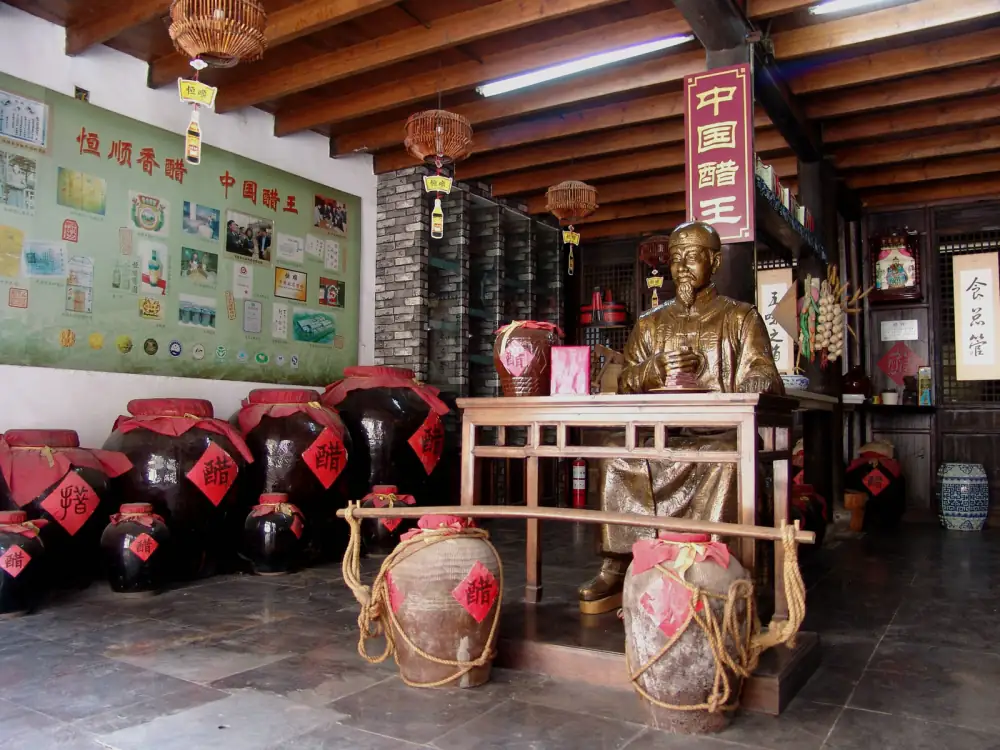
Hengshun Vinegar Museum (恒顺醋文化博物馆): The Hengshun Group, Zhenjiang’s major vinegar producer (founded 1840), operates this museum in a converted factory complex. It covers the history, science, and culture of vinegar production with working displays and tastings. Entry ¥30. You can purchase directly at the museum shop — prices are roughly equivalent to supermarkets (¥8-25 per bottle).
Vinegar in local food: Zhenjiang cuisine uses vinegar extensively — more than most Jiangsu cooking. The local pork dishes (特别是镇江肴肉) are dressed with vinegar in a way that becomes quite compelling.
Local Food
Zhenjiang Pork Trotters in Vinegar (镇江肴肉): The most famous local dish — pork trotters, hock, and head meat cooked until gelatinous and served cold with vinegar as a starter. The texture is yielding and rich; the vinegar cuts through beautifully. Widely available in local restaurants, ¥20-40 for a starter portion.
Pot-cover Noodles (锅盖面): Named for the tradition of cooking the noodles with a small wooden lid floating in the pot, these are thin wheat noodles in a clear broth with various topping options (pork, dried tofu, eggs). A Zhenjiang breakfast institution at ¥12-18 per bowl.
River fish: The Yangtze produces silver carp, mandarin fish, and the prized Yangtze River shad (刀鱼, dao yu) — only available in early spring when the fish migrates upstream. In season, a whole shad is an expensive treat (¥100-300 per fish) at riverside restaurants.
Getting to Zhenjiang
From Nanjing: High-speed train from Nanjing to Zhenjiang, approximately 20-30 minutes, tickets ¥25-45. Very frequent services. This makes a day trip from Nanjing entirely practical.
From Shanghai Hongqiao: High-speed train approximately 1.5 hours, tickets ¥80-130.
From Suzhou: Approximately 45 minutes by high-speed rail.
Within Zhenjiang: The three mountains are spread across the city and Yangtze waterfront. Taxis (¥7 starting) and Didi are practical. A one-day tricycle-style taxi tour of all three mountains and the vinegar museum can be negotiated for ¥150-200.
Where to Stay
As a day trip or transit city, most visitors don’t need accommodation. But overnight stays are straightforward:
Budget: Chain hotels near the train station (7 Days, Home Inn), ¥100-180 per night.
Mid-range: International chains (Ibis, GreenTree Plus), ¥200-350 per night.
Historic guesthouses: A few courtyard-style boutique guesthouses in the old city area, ¥250-500 per night, offer more character.
The Old City Area
Zhenjiang’s western old city district around Xijin Ferry Old Street (西津渡古街) preserves a section of the historic Yangtze ferry crossing point — one of the historically most important river crossings in China, used by travellers heading between the North China Plain and the Yangtze Delta for over a thousand years.
The street is about 1km long with Tang dynasty archaeological layers visible through glass-covered excavations in the pavement, English signage explaining the historical context of each building, and a mix of working old buildings and restored heritage structures. It’s one of the more thoughtfully presented historical streetscapes in Jiangsu outside of Suzhou.
Entry: Free.
Practical Tips for 2026
Combine the three mountains: A dedicated day allows comfortable visits to Jinshan and Jiao Mountain plus Xijin Ferry Street, with a pot-cover noodle breakfast and a lunch of pork trotters. If energy permits, add Beigu Mountain in the afternoon.
Spring river fish season: March-April brings the Yangtze shad migration. If you’re a food-focused traveller, this is the time to visit for the seasonal menu.
Photography at Jinshan: The best light on the pagoda is in the late afternoon from the east side of the mountain.
Vinegar tasting: The museum tasting is included in entry. Several grades of vinegar are available; the aged premium vinegars (¥50-200) are noticeably different from the standard product and worth buying if you have kitchen luggage space.
Zhenjiang is the kind of stop that turns a standard Nanjing-Shanghai transit into something more textured. Three Buddhist mountains on one of the world’s great rivers, one of China’s four great vinegars, a well-preserved section of historical streetscape, and a regional cuisine with genuine personality — it earns a longer look than most itineraries allow it.