
Table of contents
Open Table of contents
Top Attractions
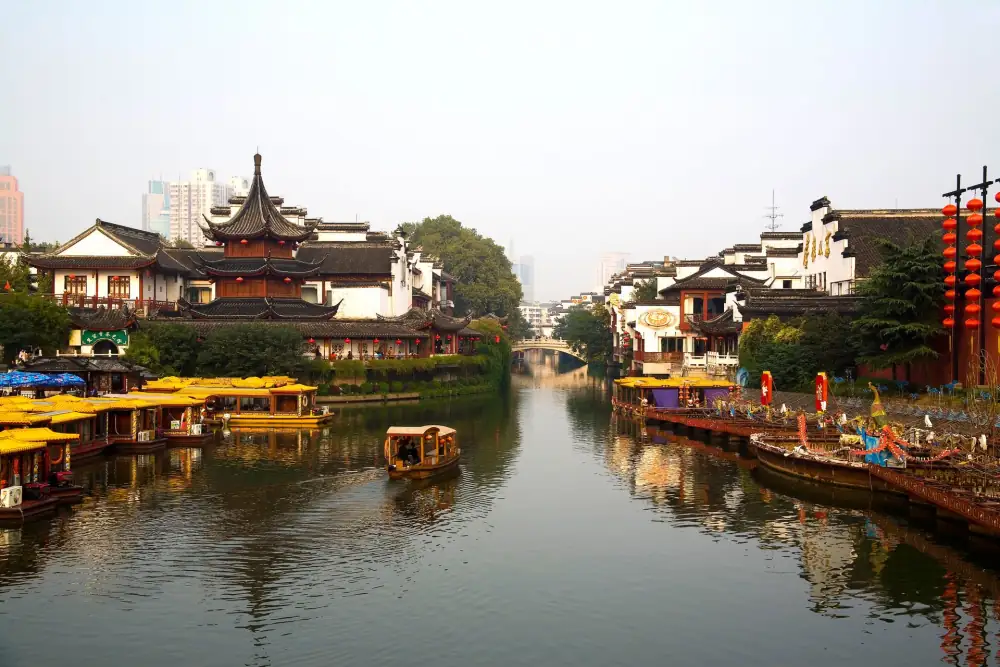
Haohe River Scenic Area (濠河风景区)
The Haohe River is an ancient moat — about 10 km in circumference — that rings the heart of the old city. It remains almost entirely intact, and the belt of parkland along both banks has been preserved and developed as one of the most pleasant urban waterway walks in Jiangsu.
Walking the complete circuit takes 2–3 hours. Along the way you pass Zhang Jian’s original city planning landmarks: the Nantong Museum (China’s first purpose-built museum, 1905), the old library, traditional residences, and several Buddhist temples. The water is clean enough that herons fish from the banks in the early morning.
Entrance: Free. The adjacent parks charge nominal fees (¥10–¥20, $1.4–$3) for individual attractions within the park zone.
Boat cruise: Electric boats cruise the Haohe for ¥40–¥60 ($6–$8) per person; a pleasant alternative to walking.
Nantong Museum (南通博物苑)
Built in 1905 by Zhang Jian, this was China’s first public museum and still occupies its original building complex on the Haohe bank. The collection focuses on natural history, local ethnography and decorative arts. The historic buildings themselves — a blend of Chinese and Western architectural styles — are as interesting as the exhibits.
Tickets: ¥20 ($3). Open Tuesday–Sunday 09:00–17:00.
Langshan Mountain (狼山)
A low hill (105m) about 15 km south of the city centre, Langshan sits directly at the Yangtze’s edge and has been a Buddhist pilgrimage site since the Tang Dynasty. The temple complex climbing the hill includes the Guangjiao Temple (广教寺), dedicated to the bodhisattva Dizang (Ksitigarbha). The view from the summit over the Yangtze and its massive suspension bridge is excellent.
Tickets: ¥30 ($4). Bus or taxi from city centre.
Zhang Jian Memorial Hall (张謇纪念馆)
A well-curated museum dedicated to Zhang Jian, whose extraordinary life and social philosophy deserve much more international attention than they receive. Zhang’s model of “industrial education charity” — using business profits to fund schools, museums, hospitals and public parks — represents an early and sophisticated Chinese approach to social entrepreneurship.
The memorial hall is housed in Zhang’s former office building, which retains original furniture and documents.
Tickets: ¥20 ($3). Open Tuesday–Sunday 09:00–17:00.
Nantong Textile Museum (南通纺织博物馆)
Nantong’s identity as the birthplace of China’s modern cotton textile industry is celebrated in this well-designed museum near the original Dasheng Cotton Mill site. Exhibits include original looms, historical photographs of the factory floor and an interesting section on how Zhang Jian’s mill influenced China’s subsequent industrial development.
Tickets: ¥15 ($2).
Dasheng Cotton Mill Historic Site
The partially preserved buildings of Zhang Jian’s original cotton mill (大生纱厂, established 1899) stand a few kilometres from the city centre. The main clock tower and several original factory buildings survive and have been converted into a small industrial heritage museum and creative park. Not as polished as Shanghai’s M50 art district, but more historically significant.
Tickets: ¥20 ($3) for the museum section; the surrounding area is open.
Yangtze Riverfront and the Bridge
The Sutong Yangtze Bridge (苏通大桥), visible from Langshan, was China’s longest cable-stayed bridge when completed in 2008 (span: 1,088m). The riverfront park at its southern anchorage on the Nantong side provides an excellent close-up view of the engineering and the river’s immense width here (about 6 km across).
A second bridge, the Huzhang Bridge, and the Sutong rail tunnel now also connect Nantong to Suzhou, dramatically improving the city’s accessibility.
Nantong Food
Nantong sits at the confluence of the Yangtze and the coast, which gives it access to both freshwater and marine ingredients. The local cuisine reflects this overlap.
Must-eat:
- Nantong river shrimp (南通河虾): Tiny, sweet shrimp from the Yangtze, stir-fried or steamed. March–June and September–October are peak seasons.
- Soybean milk cake (豆腐脑): Silken tofu with fermented toppings; the standard Nantong breakfast.
- Wensi tofu soup (文思豆腐): A Huaiyang cuisine specialty — hair-thin threads of silken tofu in a clear superior stock. Technically challenging to make; one of Jiangsu’s most refined dishes.
- Hairy crab (大闸蟹): The Yangtze estuary hairy crab season (October–November) is celebrated in Nantong with dedicated restaurants.
Restaurant areas: Haohe Park’s western bank has a cluster of good traditional restaurants. The Nantong Food Street (南通小吃街) near the old city has street food from ¥5–¥20 per item.
Getting to Nantong
From Shanghai
Express bus: Luxury coaches from Shanghai Hengfeng Road bus station to Nantong, 2–2.5 hours, ¥65–¥85 ($9–$12). The most direct option.
High-speed rail (from 2023 Sutong Rail Tunnel): Shanghai Hongqiao to Nantong East via the new rail link, approximately 1h10m; tickets ¥80–¥130 ($11–$18). A significant improvement over previous travel times.
Ferry: A Yangtze River ferry crossing from Changshu or Nantong ferry terminal provides a scenic alternative; service times vary seasonally.
From Suzhou
Rail: Suzhou to Nantong East via Sutong Rail Tunnel, approximately 45 minutes; tickets ¥55–¥80 ($8–$11).
From Nanjing
High-speed rail: Nanjing to Nantong, approximately 1.5 hours; tickets ¥100–¥160 ($14–$22).
Getting Around
Nantong city centre is compact; the Haohe scenic area and most attractions are within 5 km. DiDi is the standard option for getting between sites. The city bus system is functional but requires the ability to read Chinese stop names. A hired car for a full day costs approximately ¥300–¥400 ($42–$56) through local agencies.
Where to Stay
Budget (¥150–¥250 / $21–$35): Guesthouses and budget hotels near the Haohe waterfront and Nantong railway stations. Hanting Express is reliable.
Mid-range (¥300–¥550 / $42–$77): Jinling Hotel Nantong and Howard Johnson Nantong are well-located options.
Upscale (¥700+ / $98+): Wanda Vista Nantong is the premium business hotel choice.
Best Time to Visit
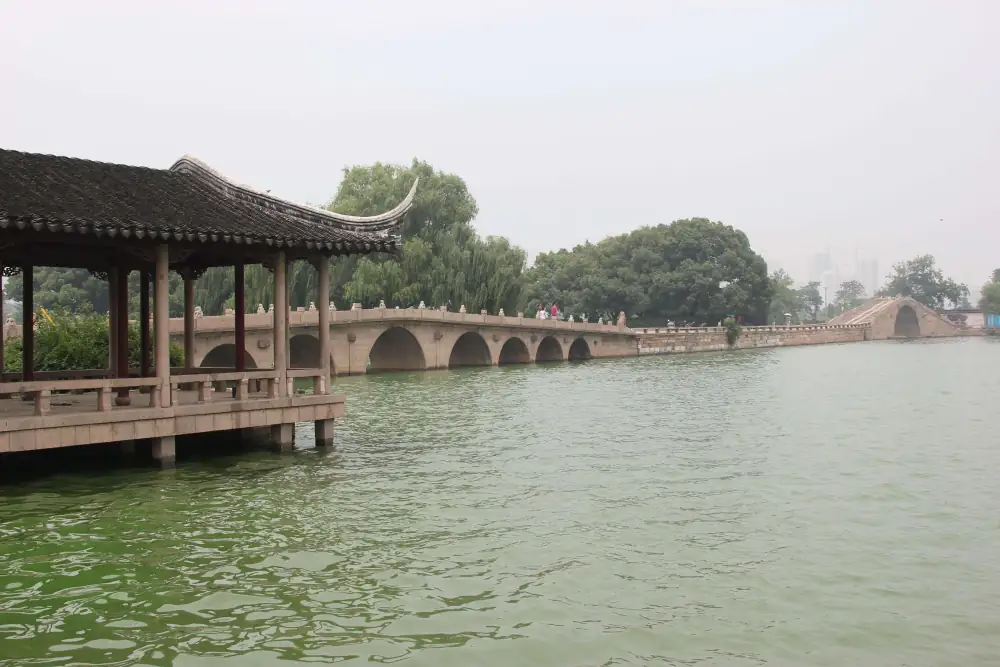
Spring (March–May): The Haohe riverbanks are beautiful with willow, cherry and plum blossoms. River shrimp season begins.
Autumn (September–November): Best overall season — comfortable temperatures, hairy crab season, Yangtze migratory bird sightings near Langshan.
Avoid August: Nantong shares Jiangsu’s stifling summer humidity; peak temperatures reach 38–40°C.
Practical Tips
- Day trip from Shanghai: Nantong can technically be done as a long day trip from Shanghai now that the rail link is faster — but a single night lets you experience the Haohe in the morning calm and the riverfront at dusk, which are the best times.
- Language: Limited English outside major hotels. DeepL or Google Translate recommended.
- Combination itinerary: Nantong pairs naturally with Suzhou (45 minutes by rail) for a Jiangsu tour covering both the classical garden city and the modern heritage city.
Final Word
Nantong rewards curiosity. It’s not a city that has been packaged and marketed at international visitors — which means arriving here feels more like genuine discovery than following a well-worn trail. The story of Zhang Jian and his one-man city-building project is one of modern China’s great untold stories, and Nantong is where you can see it preserved, lived-in and quietly celebrated.