
Putuoshan — China’s only sacred Buddhist island, dedicated to Guanyin, with over 30 active monasteries among its forested hills
Ningbo (宁波) and the Zhoushan archipelago 30 km offshore form one of the most interesting coastal zones in eastern China. Ningbo is one of China’s oldest port cities — the overseas Chinese diaspora in Southeast Asia and Japan is substantially descended from Ningbo merchants — and the Zhoushan islands contain China’s holiest Buddhist island.
Table of contents
Open Table of contents
Putuoshan (普陀山): Sacred Island of Guanyin
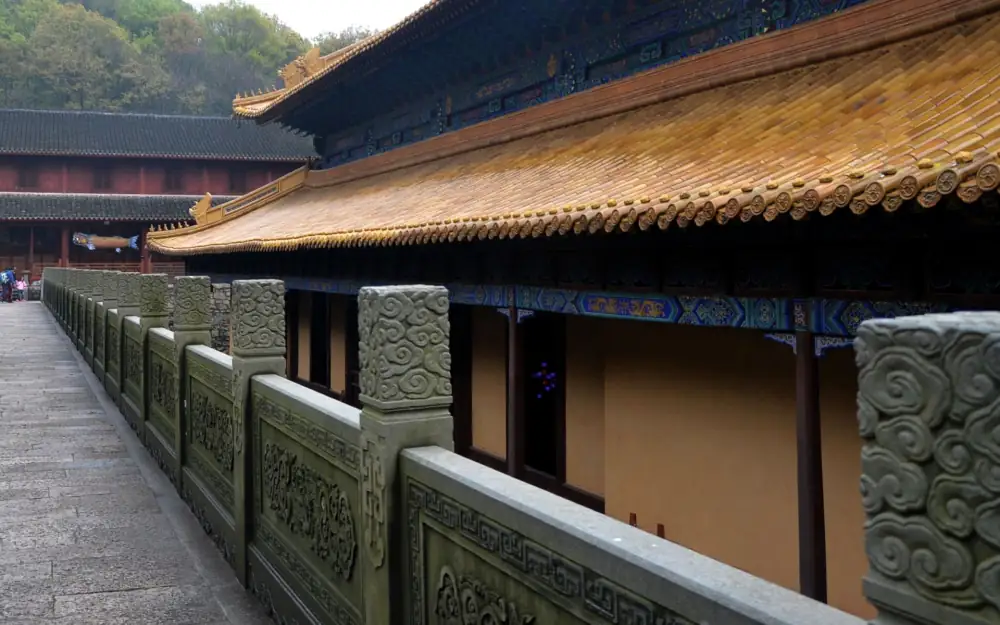
One of China’s four sacred Buddhist mountains — unique in being an island (the only one of the four that isn’t a mainland peak). Located in the Zhoushan archipelago, 130 km east of Shanghai, Putuoshan is dedicated to Guanyin (观音, the Bodhisattva of Compassion) and has been a pilgrimage destination since the 9th century.
The island: 12.5 km² of forested hills, white sand beaches, and over 30 active monasteries and hermitages. Approximately 1,000 monks and nuns in permanent residence.
Getting there: Ferry from Ningbo (2 hrs) or Shanghai Wusongkou (3 hrs); or ferry from Zhoushan island (Shenjiamen, 1 hr). The island entrance requires a conservation fee (¥160).
Puji Temple’s main hall — the 10th century monastery with its famous large bronze incense burners where pilgrims gather at dawn
Key Sites
Puji Temple (普济寺): The main monastery, founded in the 10th century, rebuilt multiple times. The bronze incense burners are the largest in any Zhoushan temple; the main hall contains a 9-metre Guanyin statue.
Fayu Temple (法雨寺): On the eastern slope — a 1600s-era monastery with an unusual “nine-dragon wall” screen and Qing imperial donations. The forest path between Fayu and Huiji Temple is one of the most atmospheric walks on the island.
Chaoyin Cave (潮音洞): A sea cave where waves crash through narrow fissures in the rock, the booming sound resembling a deep voice — the “Voice of the Tides.” In Buddhist tradition, this is where Guanyin’s presence can be heard.
Nanhai Guanyin (南海观音): The 33-metre bronze standing Guanyin statue on the southern promontory — the largest outdoor Buddhist statue in Zhejiang, visible from the sea.
Beaches: Qianbu Beach (千步沙) and Baibue Beach (百步沙) are accessible, clean, and popular. Swimming in summer; winter walks in near-solitude.
Tianyi Pavilion — the oldest surviving private library in Asia, built 1561, with a garden that achieves perfect humidity control through natural design
Ningbo City
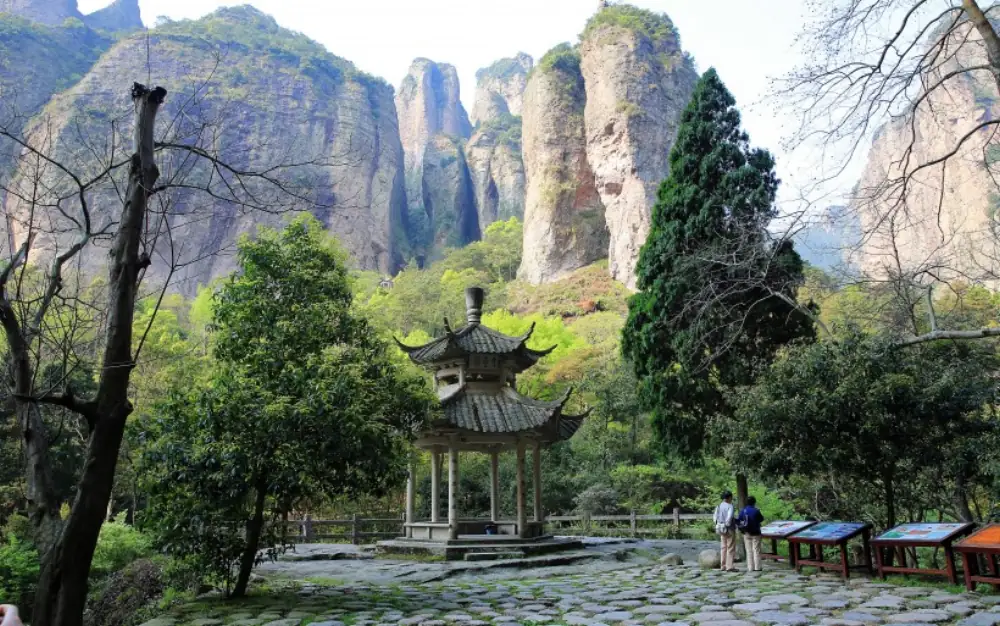
Tianyi Pavilion (天一阁)
The oldest surviving private library in Asia — built in 1561 by Fan Qin, a Ming Dynasty official who collected books obsessively. The pavilion houses over 70,000 volumes including rare government documents, local records, and imperial examination papers.
The building system is remarkable: ground floor is damp enough to discourage fire; upper floor where books are stored has perfect ventilation; the surrounding garden creates a micro-ecosystem that regulates humidity. The garden layout is extraordinary — a scholar’s garden of the highest calibre. ¥30 entry.
Baoguo Temple (保国寺)
25 km north of Ningbo — one of the oldest surviving wooden buildings in China, dating to 1013 AD. The main hall (大雄宝殿) uses a complex bracket arm system (dougong) of extraordinary sophistication — 14 varieties of dougong in the same building, all visible in the rafters.
Dongqian Lake (东钱湖)
A 20-square-kilometre freshwater lake southeast of Ningbo — the largest natural lake in Zhejiang. Lakeside cycling, hiking trails, and the Han and Song stone sculptures that line an ancient burial road along the eastern shore — an extraordinary outdoor museum of 800-year-old stone figures, animals, and grave goods displayed in situ.
Practical Tips
Getting to Ningbo: Ningbo Lishe Airport (NGB) — direct flights from major Chinese cities and some international routes. High-speed rail from Shanghai (1.5 hrs), Hangzhou (1 hr).
From Ningbo to Putuoshan: Direct ferry from Ningbo Yongjiang Passenger Terminal; journey 2 hours.
Overnight on Putuoshan: Staying on the island (guesthouses and simple hotels available) allows early morning monastery activities (4:30 AM morning chanting) and evening sunset — when the island empties of day-trippers.
Last updated: May 2026