
Dunhuang Crescent Moon Lake — a spring surrounded by 1,700-metre sand dunes for 2,000 years without being engulfed, a natural miracle at the Silk Road’s western gateway
Gansu Province (甘肃) is the neck of the bottle — the geographic corridor through which all Silk Road trade between China and Central Asia passed for 2,000 years. The Hexi Corridor (河西走廊), a 1,000 km river valley between the Tibetan Plateau and the Gobi Desert, contains the most concentrated sequence of historic sites in China outside Xi’an: Buddhist cave temples, beacon towers, Han Dynasty fortifications, and the landscape of the ancient routes.
Table of contents
Open Table of contents
Lanzhou (兰州)
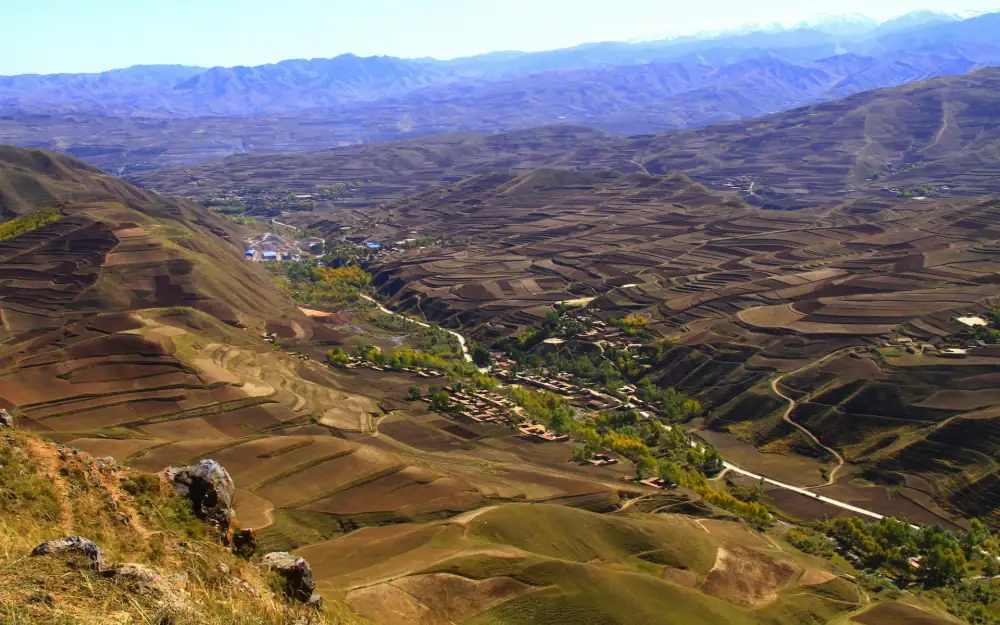
The Yellow River capital — the only major city in China through which the Yellow River runs. The riverside is developed as a continuous park; the water is brown with loess sediment from the plateau above.
Yellow River Noodles (兰州拉面)
The most replicated street food in China — hand-pulled noodles (hand-stretched at order, not pre-made) in a clear beef and mutton bone broth, with beef slices, white radish, red chilli oil, and green coriander. The authentic Lanzhou version (兰州牛肉面, technically “Lanzhou beef noodle”) differs significantly from the versions served under this name everywhere else in China: the broth is lighter, the noodles are thinner, and the preparation is faster (typically 90 seconds from order to bowl).
The five qualities of authentic Lanzhou beef noodle: 一清(汤)、二白(萝卜)、三红(辣子)、四绿(香菜)、五黄(面条) — one clear (broth), two white (radish), three red (chilli), four green (coriander), five yellow (noodles).
Available from ¥10–15 from 5 AM at hundreds of noodle houses throughout the city.
Gansu Provincial Museum (甘肃省博物馆)
Home of the Bronze Galloping Horse of Gansu (马踏飞燕) — a Han Dynasty bronze horse with one hoof resting on a flying swallow, the most reproduced image in Chinese tourism. The museum’s Silk Road collection includes Han and Wei Dynasty tomb goods, Buddhist sculpture, and textiles from the Dunhuang caves. Free.
Maiji Mountain Grottoes — 221 caves carved into a sheer 142-metre cliff face, with clay and stucco sculptures up to 15 metres tall visible from across the valley
Maiji Mountain Grottoes (麦积山石窟)
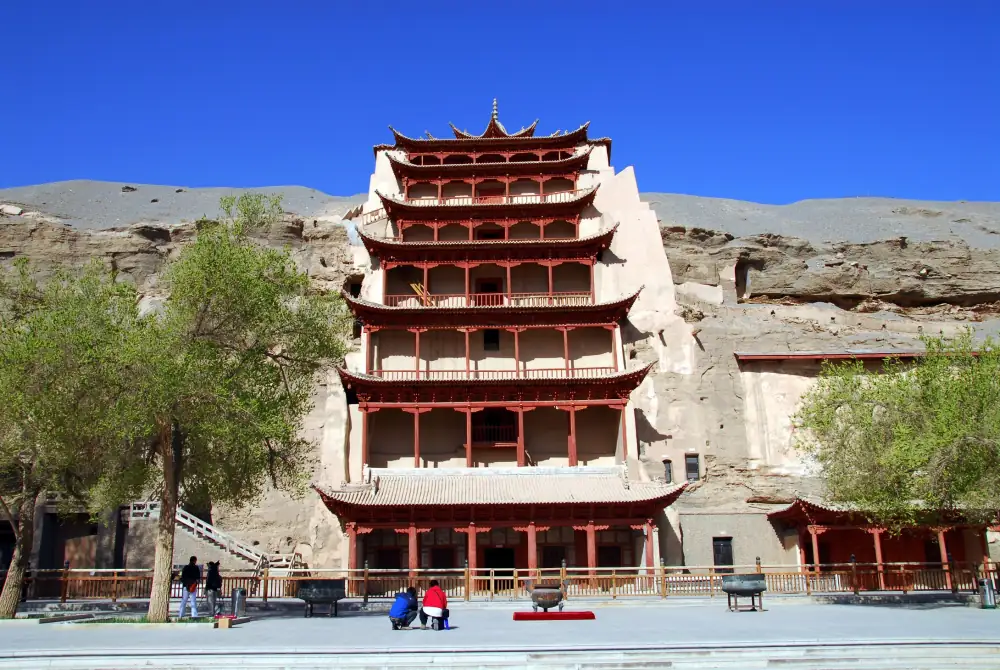
50 km southeast of Tianshui (天水) — one of the four great Buddhist cave complexes of China. The name means “haystack mountain” — the shape of the enormous sandstone butte is exactly that of a haystack, and the 221 caves are carved horizontally into its sheer face across multiple levels, connected by external walkways bolted into the rock face.
What makes Maiji unique: The scale of the exterior sculptures. While Dunhuang’s caves are primarily painting-based and Longmen is primarily carved in the cliff face, Maiji Mountain has enormous clay and stucco sculptures (some 10–15 metres) visible from across the valley. The approach — walking the forest trail from the entrance to the sudden view of the cliff face covered in Buddha figures — is one of the most dramatic moments in Chinese art history.
The precariousness: The walkways along the cliff face are narrow and exposed. Not recommended for severe vertigo sufferers. The height above the valley floor, and the visibility of all the external sculptures simultaneously from the highest walkways, is extraordinary.
Ticket: ¥90. Getting there: 20 minutes by taxi from Tianshui train station; high-speed rail to Tianshui from Lanzhou (45 min), Xi’an (2 hrs).
The Hexi Corridor Route
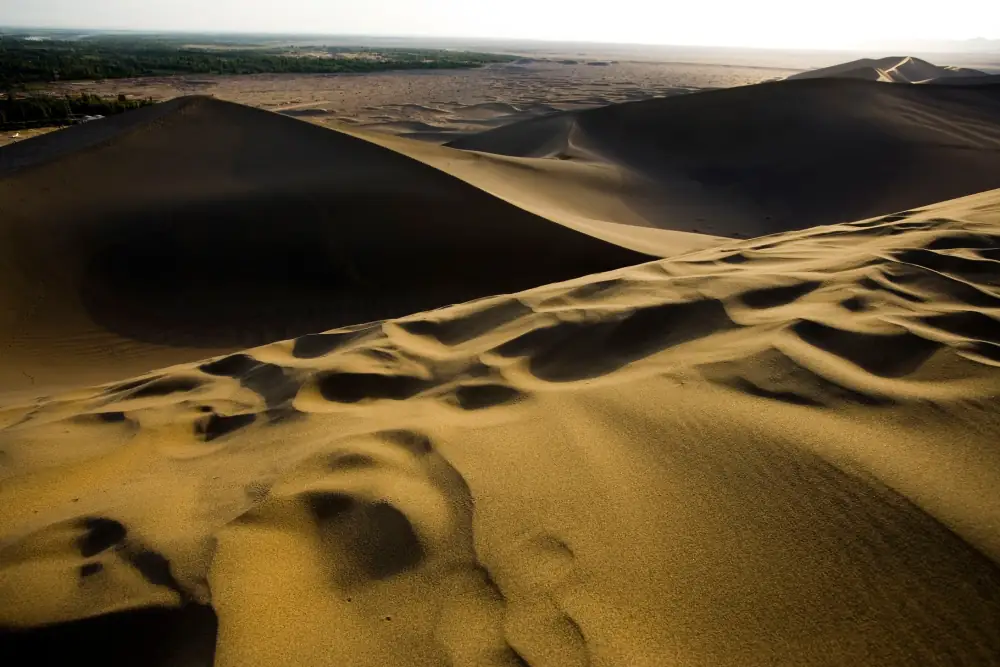
The 1,000 km route from Lanzhou northwest to Dunhuang passes through:
Zhangye (张掖): The Danxia Rainbow Mountains (already covered separately) and the largest lying Buddha in China at Dafo Temple (¥50).
Jiayuguan (嘉峪关): The western terminus of the Ming Great Wall — the Last Fortress Under Heaven. The Jiayuguan Pass fortress is the most intact and complete of all the Great Wall fortresses. ¥120 entry.
Dunhuang (敦煌): (Covered separately) — Mogao Caves, Crescent Moon Spring, and Yadan.
Practical Tips
Getting to Lanzhou: Lanzhou Zhongchuan Airport (LHW) — well-connected domestically. High-speed rail hub on the Lanzhou-Xinjiang line.
Hexi Corridor timing: Allow 5–7 days for a proper Hexi Corridor journey (Lanzhou → Zhangye → Jiayuguan → Dunhuang). The distances between stops are large.
Best season: April–June and September–October; July–August is peak summer with crowds at Dunhuang.
Last updated: May 2026