
Zhangjiajie has two distinct visitor experiences: the Avatar Mountains forest park with its pillar formations, and the Tianmen Mountain area with its glass-bottomed attractions. The glass bridge (zhangjiajie grand canyon glass bridge) opened in 2016 and was, for a time, the longest glass-bottomed suspension bridge in the world. It remains one of the most vertigo-inducing tourist experiences in China.
Zhangjiajie Grand Canyon Glass Bridge
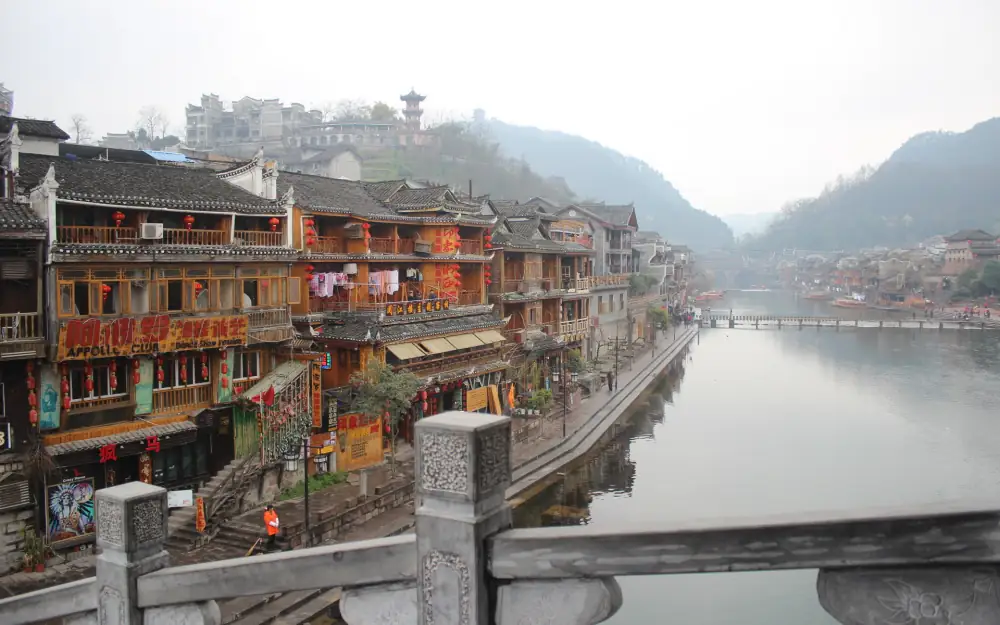
What it is: A 430-metre suspension bridge, 300 metres above the valley floor, with a transparent glass floor between the steel walkways. The bridge spans the Zhangjiajie Grand Canyon (张家界大峡谷) in Cili County — a separate destination from the Wulingyuan/Avatar Mountains area, about 35km from Zhangjiajie city.
The experience: For most visitors, the first step onto the glass section triggers genuine physical vertigo even in people who don’t normally have fear of heights — looking directly down through 300 metres of air while standing on a surface that appears to be nothing is a different sensation from most glass floor experiences. The bridge itself sways slightly in the wind.
After the bridge: Descend into the canyon by elevator and zipline (optional). The canyon floor has clear water pools and gorge walking trails. A complete canyon visit takes 3–4 hours.
Tickets: ¥138 for bridge + canyon entry. Book online (official website or through Trip.com) in advance — daily visitor cap strictly enforced. Shoes with rubber soles required (no high heels). Mandatory shoe covers provided at the bridge entrance.
Tianmen Mountain Sky Walk (天门山玻璃栈道)
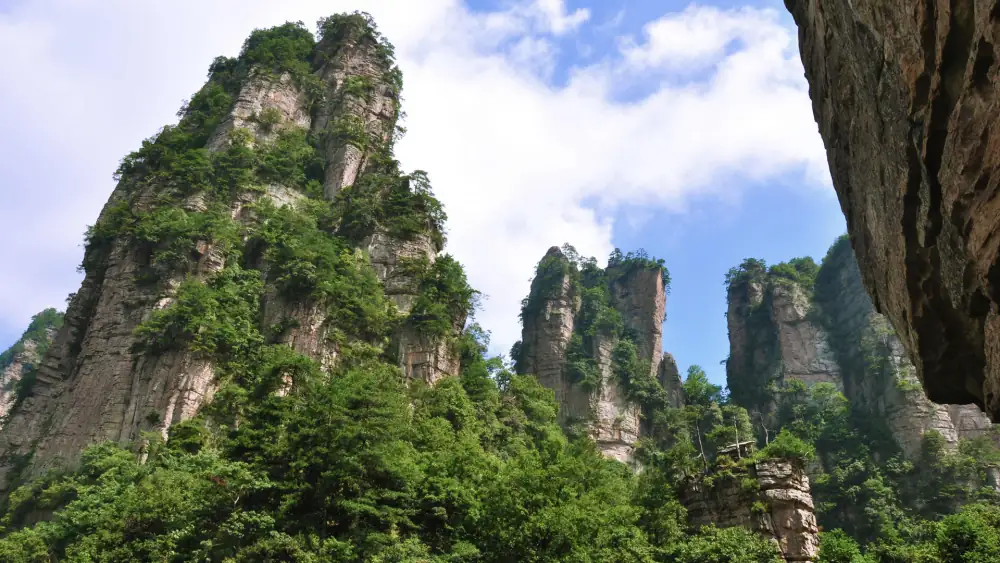
What it is: A cliff-side glass-floored walkway on the sheer face of Tianmen Mountain (1,518m), extending approximately 60 metres at a height of ~1,400 metres. Part of the larger Tianmen Mountain Scenic Area.
Getting there: The Tianmen Mountain cable car from Zhangjiajie city is the longest passenger cable car in the world — 7.5km, 30 minutes, ascending 1,279 vertical metres. The views on the ascent alone are worth the ticket price.
Tianmen Cave: The natural archway through the mountain (海拔1300米) — 131.5 metres tall and 57 metres wide — is the Tianmen Mountain area’s defining geological feature. A 999-step staircase descends through the cave to road level.
Ticket: ¥258 (includes cable car and most attractions). The cable car often has queues of 1–2 hours. Arrive early or book a time slot online.
Wulingyuan/Avatar Mountains: How They Compare
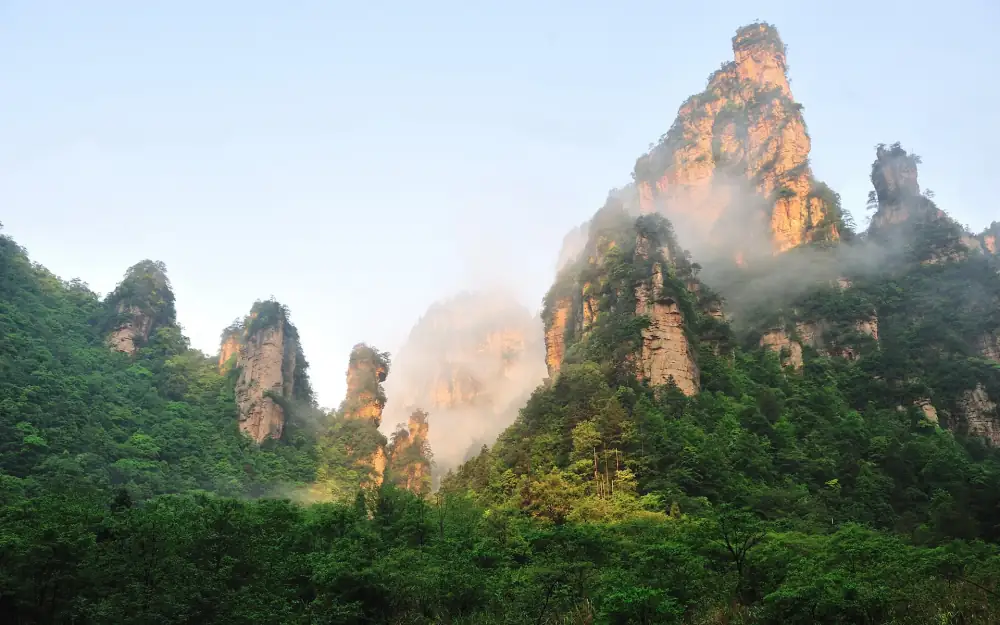
The Zhangjiajie National Forest Park (Wulingyuan area) — the Avatar Mountains — is a different ticket and a different area. The pillar formations here (quartzite sandstone columns rising 200–400 metres) are the landscape that inspired the floating Hallelujah Mountains in the 2009 Avatar film.
The two areas are 35–40 minutes apart by car. Most visitors do both in a 2–3 day trip.
For maximum impact: Do Wulingyuan/Avatar Mountains on Day 1–2 (requires extensive walking through the park), then Tianmen Mountain cable car and sky walk on Day 3, and optionally the Grand Canyon glass bridge if time allows.
Practical Information
Accommodation: Stay in Zhangjiajie city (Wulingyuan town if you want to be inside the park boundaries). The Crowne Plaza and other mid-range international hotels are in Zhangjiajie city; guest houses cluster in Wulingyuan town.
Best time: April–June (spring wildflowers, clear air), September–October (autumn colour, clear skies). Avoid July–August (hazy and crowded) and winter (cold, occasional ice closing trails).
Getting there: Flights direct to Zhangjiajie Hehua Airport from Beijing, Shanghai, Guangzhou, Chengdu. Train connections from Changsha (3.5 hours).
Also see: Zhangjiajie Avatar Mountains Guide | Zhangjiajie Tianmen Mountain Guide