
Table of contents
Open Table of contents
Beihai Park: A Thousand Years of Imperial Leisure
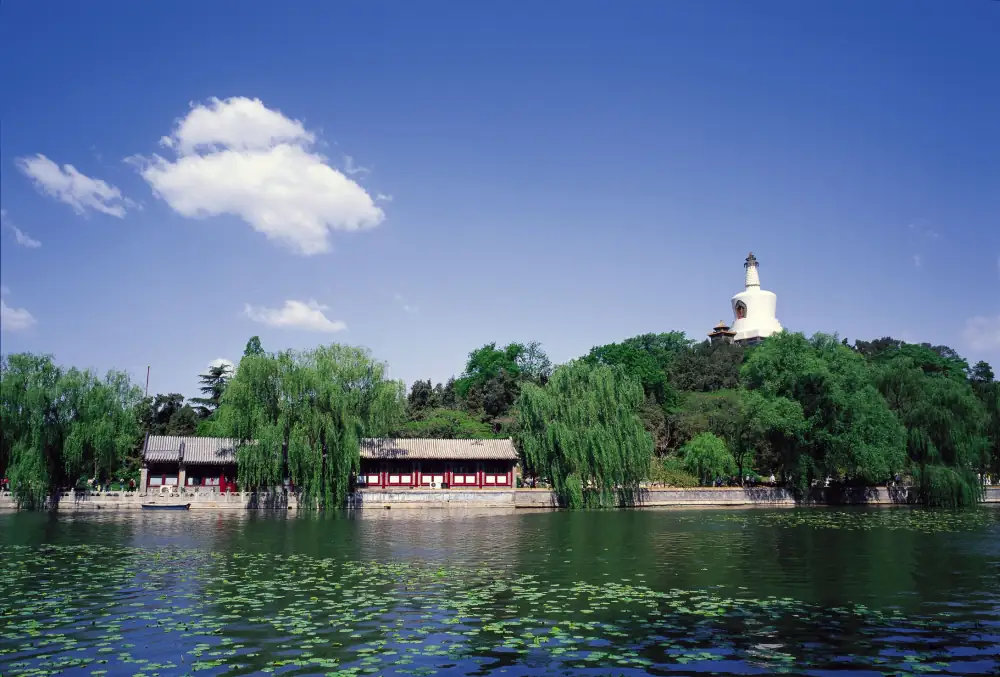
Beijing has many parks, but Beihai Park (北海公园) holds a special status. At over a thousand years old — with documented imperial use dating to the Liao Dynasty in the 10th century — it is the oldest and best-preserved imperial garden in China. It sits adjacent to the Forbidden City and Jingshan Park in the heart of the old imperial city, separated from the Imperial City proper by just a few hundred metres of ancient walls and moat.
The park centres on Beihai Lake, a 38-hectare body of water created partly by excavation and partly by damming natural springs. In the middle of the lake, Qionghua Island rises with the gleaming White Dagoba at its summit — a Tibetan-style Buddhist pagoda built in 1651 to commemorate the first visit of the Dalai Lama to Beijing. On clear days, the white stupa visible above the trees has been a landmark of Beijing’s skyline since the early Qing dynasty.
Unlike the Forbidden City, Beihai Park was a living space for imperial families to relax, walk, boat, and enjoy gardens. Emperors picnicked here, planted trees, wrote poetry, and watched fireworks from the lakeside pavilions. That sense of designed pleasure persists. Beihai Park today is busy — very busy during weekends — but it retains a quality of civilised enjoyment that Beijing’s more tourist-intense attractions sometimes lack.
Admission and Practical Information
Ticket Prices (2026)
- Park entry: ¥10 (April–October), ¥5 (November–March)
- Qionghua Island and White Dagoba: Additional ¥10
- Combined ticket (park + all attractions): ¥20 (summer season)
Opening hours: 6:30 AM – 9:00 PM (April–October), 6:30 AM – 8:00 PM (November–March)
Winter ice skating (December–February): Additional fee ¥20–40 per person for skate rental on the frozen lake. One of Beijing’s most atmospheric winter activities.
Summer boat rental: Rowing boats ¥60 per hour, electric boats ¥80 per hour. Book at the lakeside pier near the east gate.
Getting There
- Metro: Take Line 6 or Line 4 to Nanluoguxiang Station (南锣鼓巷) and walk 15 minutes, or Line 6 to Beihai North Station (北海北). The park has multiple entrances — the South Gate (南门) near the Forbidden City moat is most commonly used.
- Taxi/Didi: From Tiananmen Square approximately ¥15–20.
- On foot: A pleasant 15-minute walk from the Forbidden City’s north exit.
Qionghua Island and the White Dagoba
Climbing to the Dagoba
Qionghua Island is the centrepiece of Beihai Park. The White Dagoba (白塔, Bái Tǎ) sits at the summit of the island’s hill, visible from much of central Beijing on clear days. The climb to the base of the dagoba takes about 15–20 minutes via stone steps or a winding path.
The dagoba itself is a classic Tibetan-style stupa: white-washed, bottle-shaped, topped with a gilded umbrella. It houses Buddhist relics and has been rebuilt twice following earthquakes. Up close it is large and imposing — photographs from below often don’t convey the scale.
The summit platform around the dagoba offers panoramic views in all directions: the Forbidden City’s yellow-tiled roofscape to the south, Jingshan Park’s pavilion directly opposite, the lake spreading west and north below, and in clear weather the distant hills surrounding Beijing.
Fangshan Imperial Restaurant (仿膳饭庄)
One of Beijing’s most famous old-style restaurants, Fangshan specialises in recreations of imperial court cuisine from the Qing dynasty. The recipes were preserved by former palace cooks after 1912. Set menus start at ¥350 per person for a modest imperial meal experience. Booking essential for weekends. Even if not dining, the traditional architecture on the island’s north shore is worth seeing.
White Dagoba Temple (白塔寺) Area
At the base of the island on the north shore, several temple buildings house Buddhist statues and religious art. The Hall of the Wheel of the Law (法轮殿) contains a large bronze Buddha and is often fragrant with incense.
The Lotus Flowers: Summer’s Greatest Spectacle
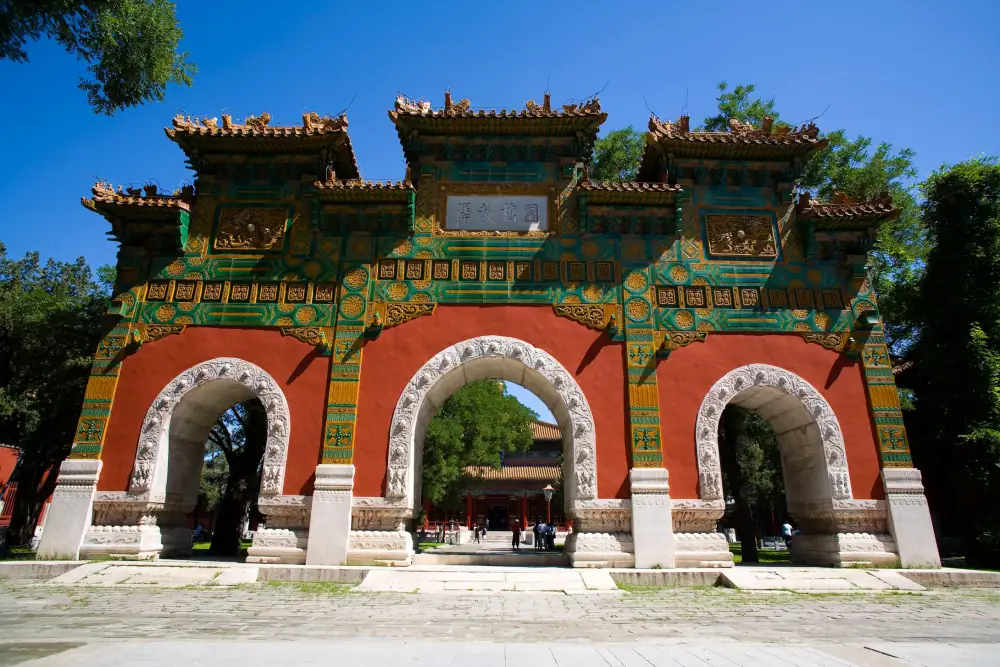
From late June through August, Beihai Lake transforms. The northern stretches of the lake become a sea of pink and white lotus flowers, the blooms rising above round green pads floating on the dark water. On still mornings before 9 AM, the lotus garden is extraordinarily beautiful — the flowers open fully in warm sunlight and close in the evening.
The lotus has deep cultural significance in Chinese Buddhism (representing purity emerging from muddy water) and in classical Chinese poetry. Walking along the north shore among the flowers, listening to the frogs croaking among the pads, is genuinely one of Beijing’s most memorable summer experiences.
Best lotus viewing: Late July to mid-August. Peak bloom varies by about two weeks year to year depending on spring temperatures. Arrive before 9 AM on weekdays for the most peaceful conditions.
Lotus photography: The north shore walkway allows getting close to the flowers. A telephoto lens captures individual blooms beautifully; wide-angle shots from the shore bridges capture the lake-scale spectacle.
The Nine Dragon Screen (九龙壁)
One of three Nine Dragon Screens in China (the others are in Datong and the Forbidden City), Beihai’s version is the largest and oldest, dating from 1402. The screen is a 27-metre-long glazed tile wall depicting nine writhing dragons in vivid blue, green, and yellow ceramic. It was built to protect a nearby temple from evil spirits by blocking their straight-line path.
The craftsmanship is extraordinary — examine the individual tiles up close to appreciate the modelling of the dragon scales and expressions. The screen stands near the North Gate of the park and is often less crowded than the island.
The Round City (团城)
Just outside the South Gate of Beihai Park, the Round City is a small, circular fortification that predates most of what surrounds it. Within its walls, a courtyard contains two remarkable trees — a white pine (白皮松) said to have been given the rank of “Brigadier General” by the Qianlong Emperor for providing shade on a hot day, and a 500-year-old Chinese juniper.
A jade bowl said to have belonged to Kublai Khan is displayed in the main hall. Entry ¥1, one of the best bargains in Beijing.
Seasonal Highlights
Spring (March–May)
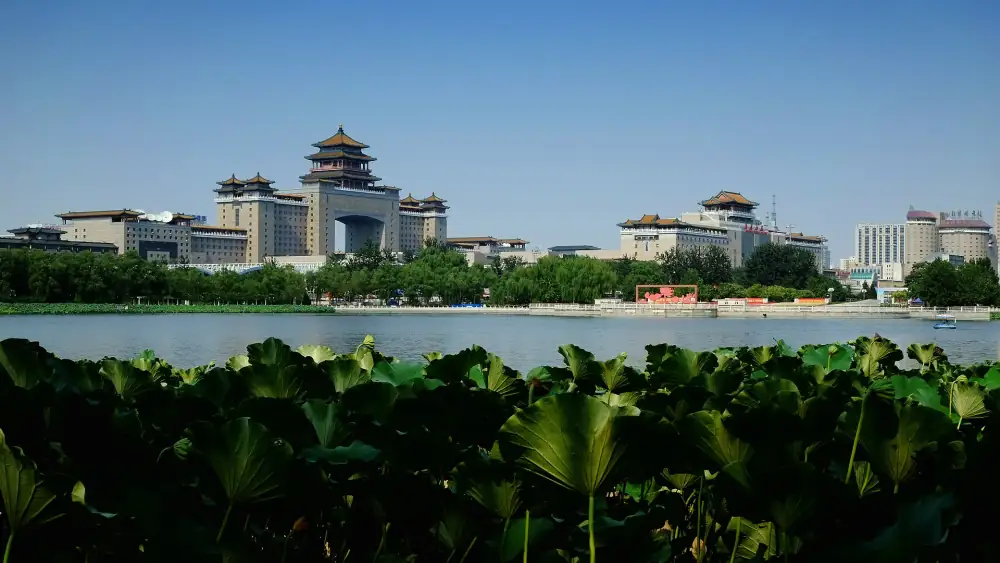
Cherry trees, Chinese crab apples, and wisteria bloom across the park from late March to May. The lakeside willows trail new green over the water. This is a beautiful time to walk around the lake edge and see Beijingers performing tai chi, flying kites, and enjoying the first warm days after winter.
Summer (June–August)
Lotus flowers dominate from July to August. Boat rental on the lake becomes popular. The park fills with families in the evenings. The summer heat can be oppressive — visit early morning or late afternoon.
Autumn (September–November)
Persimmon trees loaded with orange fruit, ginkgo trees turning golden, and chrysanthemum displays make autumn particularly pleasant. Crowds thin after October Golden Week. The air is typically clearer in autumn than other seasons.
Winter (December–February)
When the lake freezes — usually December through February in most years — the ice becomes a skating rink. Traditional wooden skating frames with hand-pushed seats (冰车) are hired at the lake’s edge for ¥20–30. This is a beloved Beijing tradition. The park in snow, with the White Dagoba rising above the frozen lake, is one of the city’s most atmospheric scenes.
Combining Beihai with Nearby Attractions
Beihai Park’s location in the heart of Beijing’s imperial district makes it natural to combine with other major sites.
Jingshan Park (景山公园): Immediately east, with the best panoramic view of the Forbidden City from its central hill pavilion. Entry ¥2. Plan 1–1.5 hours.
Forbidden City (故宫博物院): South entrance of Beihai is about 15 minutes’ walk from the north gate of the Forbidden City. Book Forbidden City tickets well in advance — they sell out weeks ahead. Plan a full day.
Shichahai Lakes (什刹海): Just northwest of Beihai, the Shichahai area (Houhai Lake) is Beijing’s most atmospheric hutong district with traditional courtyard houses, lakeside bars, and ancient narrow streets. Walk north from the North Gate. Plan 2–3 hours.
Drum Tower and Bell Tower (鼓楼钟楼): 10-minute walk from Shichahai, this pair of Yuan-dynasty towers overlooks a maze of hutong alleys. Entry ¥30 combined. Excellent views over the old city.
A full day itinerary might combine Jingshan Park (morning), Beihai Park (late morning and lunch), and Shichahai/Houhai lake area (afternoon and dinner) for a superb immersion in Beijing’s historic imperial landscape.
Practical Tips
Best day to visit: Weekday mornings are significantly calmer than weekends. Sunday afternoons in summer can feel extremely crowded.
Food within the park: Several teahouses and casual restaurants operate inside, particularly on the north shore. Prices are reasonable — a bowl of noodles ¥20–35. The Fangshan Restaurant offers the imperial cuisine experience at considerably higher prices.
Accessibility: The park is mostly flat around the lake edges, but Qionghua Island involves a significant stair climb. Wheelchair access to the island summit area is limited.
Photography: The north shore at dawn, with the White Dagoba reflected in the lotus-covered lake, is the classic Beihai photograph. Best in June–July before the lotus fully covers the water surface. Winter snow creates different but equally compelling compositions.