
Tiananmen Square (天安门广场) is the geographical and symbolic centre of China. At 440,000 square metres, it’s the world’s largest public square. It’s flanked by the Gate of Heavenly Peace (天安门) to the north, the Great Hall of the People to the west, the National Museum to the east, and Chairman Mao’s Mausoleum at the south end.
For foreign visitors, Tiananmen Square is often experienced as part of a Forbidden City visit — enter from the south side through Tiananmen Gate, walk through the square, and enter the Forbidden City through Meridian Gate. That’s a reasonable way to do it, but the square itself merits some attention.
Table of contents
Open Table of contents
The Flag-Raising Ceremony at Sunrise
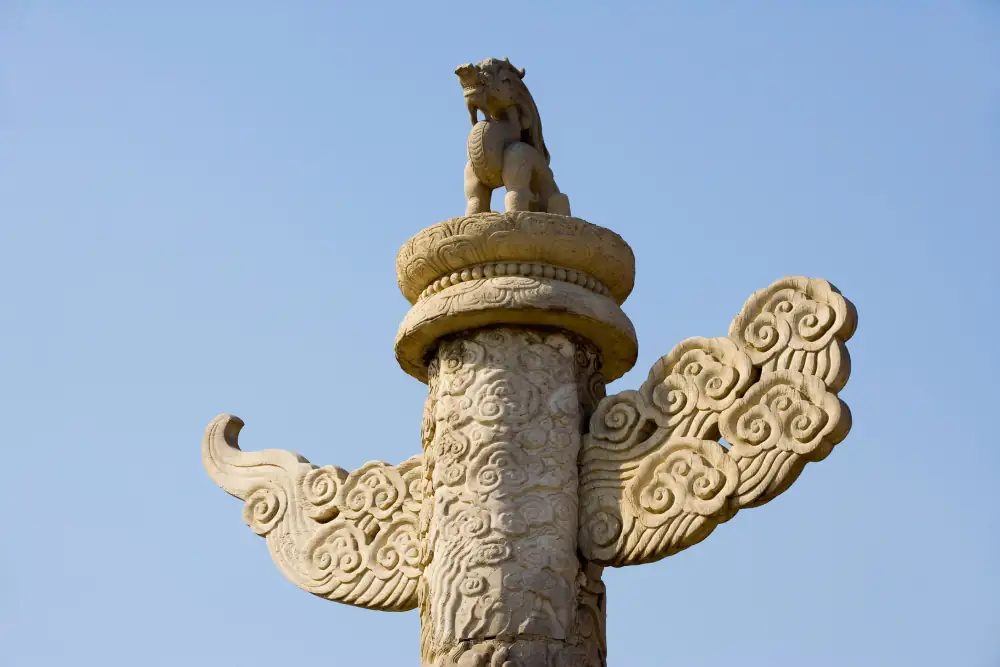
The People’s Liberation Army raises the national flag at Tiananmen Square every day at exactly the moment of sunrise (adjusted daily by the calendar). The ceremony is precise, formal, and genuinely impressive as spectacle — the soldiers emerge from the Gate of Heavenly Peace, march across the Avenue of Eternal Peace (Chang’an Avenue), and raise the flag as the sun crests the horizon.
This is one of Beijing’s most popular dawn activities and draws enormous crowds, especially on national holidays. On National Day (October 1) and Spring Festival, hundreds of thousands of people attend. On a normal weekday, a few thousand.
Practical details:
- Check sunrise time (varies by date: 4:46am in summer, 7:36am in winter)
- Arrive at least 1 hour before sunrise to get a reasonable position
- Security screening at entrances to the square (this takes time — factor it in)
- Photography of the ceremony is permitted from public areas
- The ceremony itself takes about 5 minutes
- On National Day (October 1), the security and crowd situation is extreme — arrive 2+ hours before sunrise if you want to see it at all
Summer sunrise (around 5am) makes this an early-morning commitment. The payoff is seeing Beijing before it wakes up — the square empty except for the dawn light and the flag ceremony is something most tourists never see.
What’s in the Square
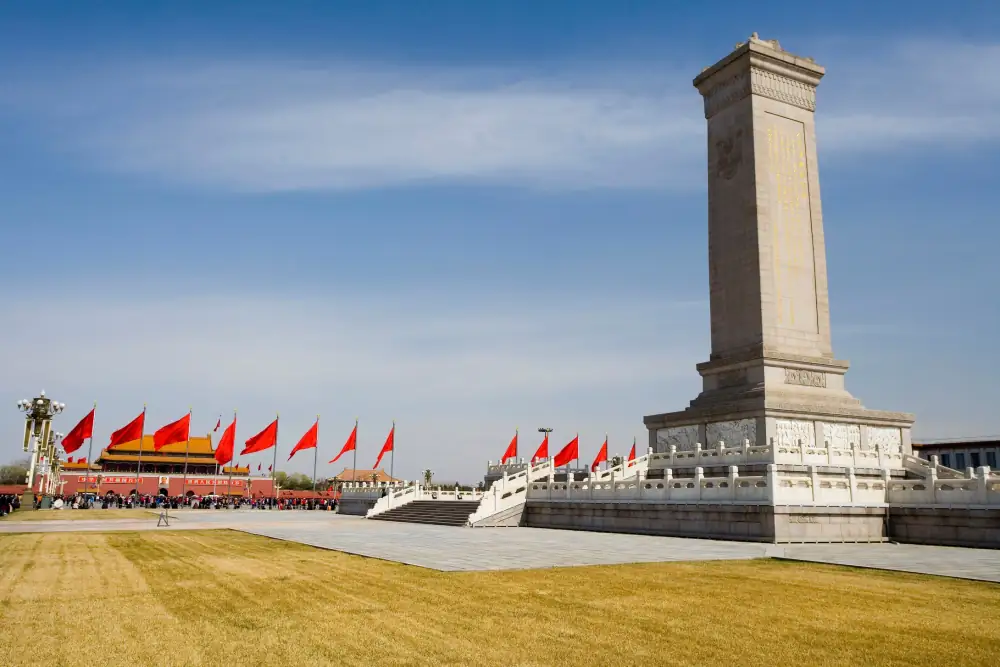
The Monument to the People’s Heroes (人民英雄纪念碑): A granite obelisk in the centre of the square inscribed with Mao’s calligraphy. 37 metres high.
Mao Zedong Mausoleum (毛主席纪念堂): Chairman Mao’s body is preserved here in a crystal sarcophagus. Free entry with queuing (often 1–2 hours wait). Photography not permitted inside. The mausoleum is open limited hours, typically Tuesday–Sunday mornings only — check current schedule. Bag storage required at designated facility nearby.
The Gate of Heavenly Peace (天安门): The gate itself with Mao’s portrait. Entrance to the platform that overlooks the square (¥15, separate from Forbidden City ticket). Worth it for the view back south across the square.
The National Museum of China (中国国家博物馆): Free entry (registration required). One of the world’s largest museums with extensive collections covering Chinese history. Allocate at least half a day — the Ancient China hall alone takes 2 hours.
The Great Hall of the People (人民大会堂): The legislative building. Open to visitors when the National People’s Congress is not in session (typically most of the year). ¥30 entry.
Security Procedures
Entering Tiananmen Square requires passing security checkpoints. You’ll need to pass through a scanner and present ID (passport for foreigners). There are multiple entry points — the north and south ends of the square, and from Chang’an Avenue on the east and west sides.
Prohibited items: Sharp objects, flammable materials, and certain other items. Standard airport-style security. Most tourists have no issues.
Rules in the square: Large gatherings, protests, and demonstrations are not permitted. Photography is generally free. Flying drones in the square requires special permits (in practice, flying a drone over Tiananmen Square without permits is not a good idea).
Combining With the Forbidden City
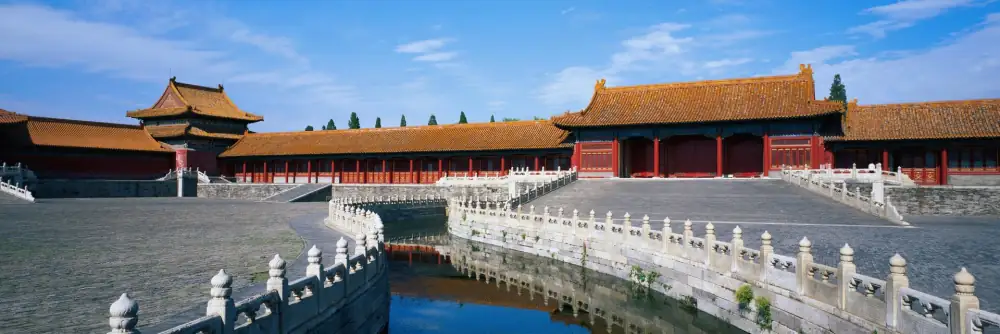
The Forbidden City (故宫) sits immediately north of Tiananmen Gate. The standard route for most visitors:
- Enter the square from the south (Qianmen area) or east
- Walk through the square north
- Pass through Tiananmen Gate (with or without going up onto the gate platform)
- Enter the Forbidden City through Meridian Gate (午门)
- Walk north through the Forbidden City
- Exit at the northern gate (Shenwu Gate) into Jingshan Park
This gives a single north-south transect of several kilometres through the heart of imperial Beijing.
Ticket booking: Forbidden City tickets must be booked online in advance (no walk-up sales). Book on the official Palace Museum website (booking.dpm.org.cn) at least 3 days ahead.
The Surrounding Area
Qianmen Street (前门大街): Immediately south of the square, a reconstructed Qing Dynasty commercial street. The pedestrian area has traditional-style facades over modern shops. Touristy but atmospheric.
Dashilar Hutong (大栅栏): Branching west from Qianmen Street, this older hutong area is more authentic. Traditional shops selling silk, medicines, and food alongside residents’ homes.
CCTV Tower: Visible from the square to the east — the distinctive double-arch headquarters of China Central Television, designed by Rem Koolhaas.
Practical Tips
- The square has no shade and minimal seating — summer visits are hot; winter visits are cold. Dress accordingly.
- The nearest metro is Line 1 Tiananmen East (天安门东) or Tiananmen West (天安门西). Both are very close to the square.
- Allow 1–2 hours for the square itself if not combining with the Forbidden City.
- The National Museum requires a separate half-day if you want to see it properly.
- Best photography light for the square is early morning — the square faces south, so the Gate of Heavenly Peace is backlit in afternoon light.