
The Dazu Rock Carvings (大足石刻) are the most undervisited major UNESCO World Heritage Site in China. While the Yungang Caves in Shanxi and the Longmen Grottoes in Luoyang attract hundreds of thousands of visitors a year, Dazu — a comparable collection that many art historians consider their equal in quality and their superior in narrative complexity — sits 90km from one of China’s busiest tourist cities and is passed over by the vast majority of visitors.
This is partly because the Dazu carvings require a day trip, partly because the county town of Dazu (大足) offers little else to draw visitors, and partly because the art requires sustained attention to appreciate fully. But if you have any interest in Buddhist art, medieval Chinese religious culture, or simply extraordinary craftsmanship, Dazu is one of the most rewarding half-days you can spend in the Chongqing area.
Table of contents
Open Table of contents
The Scale of the Work
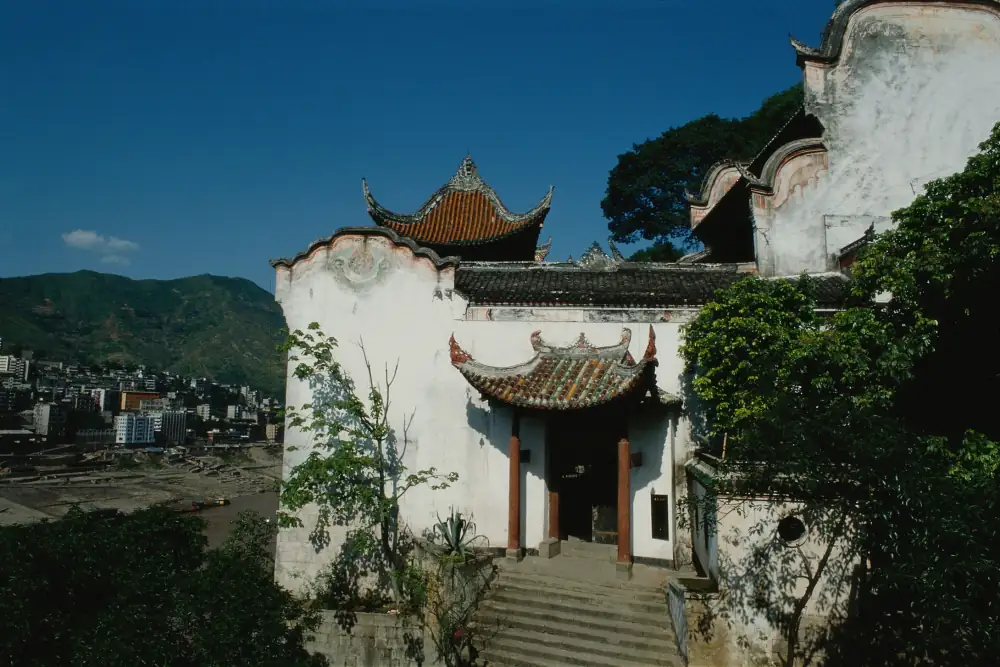
The Dazu Rock Carvings encompass over 50,000 individual sculptures distributed across 75 sites in Dazu County. They were created during the Tang, Five Dynasties, and Song Dynasty periods — roughly 7th to 13th centuries AD — by a remarkable concentration of artistic and religious effort that seems disproportionate to the region’s size and relative obscurity.
The subjects are unusually broad for a Buddhist rock carving site. While Yungang and Longmen are predominantly Buddhist, Dazu integrates Buddhist, Taoist, and Confucian imagery in ways that reflect Song Dynasty China’s religious eclecticism. The carvings also depict scenes from everyday life with unusual directness — farming, cooking, childbirth, punishment — using these scenes to illustrate moral teachings in ways that would have been legible to the largely illiterate population who came to these sites as pilgrims.
Baoding Shan: The Main Site
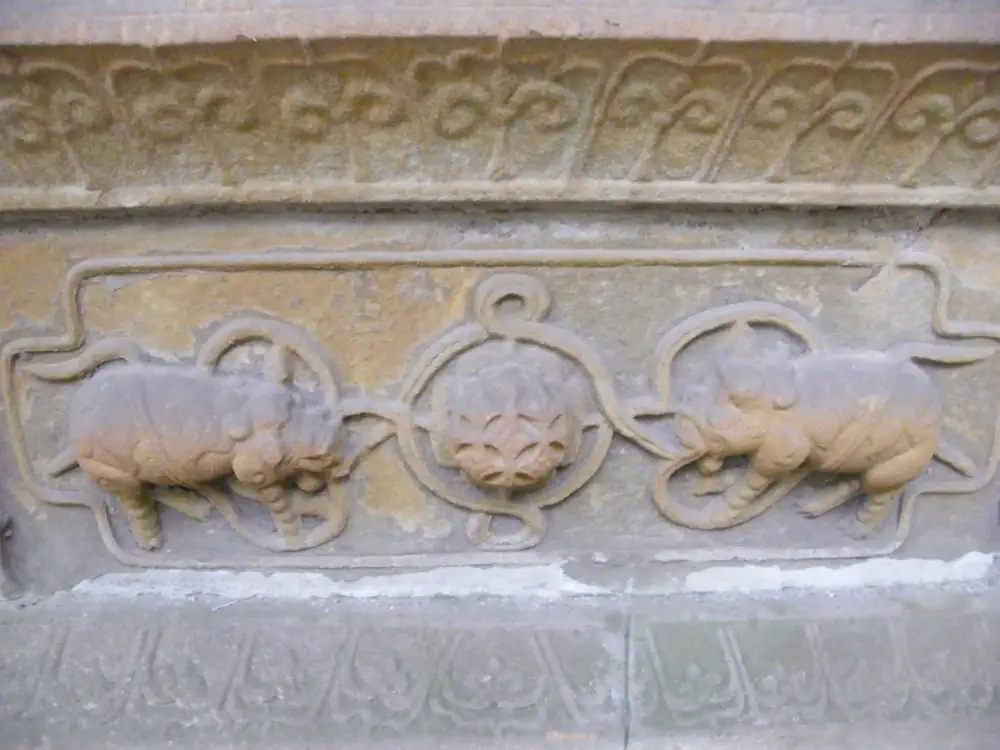
Baoding Shan (宝顶山) is where most visitors spend their time, and rightly so. Created between 1174 and 1252 AD under the direction of a single monk named Zhao Zhifeng, it is essentially a complete Buddhist teaching curriculum carved into a horseshoe-shaped cliff face over 500 metres long.
The Reclining Buddha (卧佛): A 31-metre long figure of the dying Buddha, cut from the living rock with the cliff as his bed. The figure shows Shakyamuni entering nirvana, his expression serene, his body extending so far that his feet disappear behind a “curtain” of carved rock at the right side, suggesting his infinite length. This is one of the most powerful representations of the parinirvana in all of Buddhist art.
The Wheel of Reincarnation (六道轮回图): A circular composition showing the six realms of existence in Buddhist cosmology — heaven, demigods, humans, animals, hungry ghosts, and hell. The detail is extraordinary: tiny carved figures inhabit each realm, demons torment sinners in the hell scenes with remarkable inventiveness, and the whole composition is held within the mouth of the demon of impermanence. This was the didactic heart of the site — pilgrims would study it to understand the consequences of their karma.
The Thousand-Hand Guanyin (千手观音): 830 hands carved in a sunburst pattern around the central figure of Guanyin, each hand holding a different implement symbolising the different ways this bodhisattva offers compassion. The composition has been recently restored (completed 2015 after 27 years of conservation work) and the gold leaf and coloured pigments are vivid.
The Hell Scenes: The Dazu hell iconography is detailed and, by medieval standards, graphic. The twelve illustrated crimes and their punishments include specific sins that the Song Dynasty society of the region was worried about — cutting down trees without replanting, wasting food, deceiving merchants. The punishments are carved with what appears to be considerable imagination. These scenes were specifically designed to frighten pilgrims into moral behaviour and they retain considerable impact today.
Admission: ¥115 for Baoding Shan.
Beishan & Nanshan
If your time allows, two other sites within Dazu County deserve a visit.
Beishan (北山): The older of the main sites, begun in 892 AD during the Tang Dynasty. The carvings here are less narrative and more devotional — beautiful individual figures of bodhisattvas and protective deities rather than the story cycles at Baoding. The Cave of Vairocana Buddha (毗卢道场) contains some of the finest individual figures at the entire site, with faces of extraordinary delicacy that rank among the best Tang Dynasty Buddhist sculpture anywhere.
Nanshan (南山): A smaller site primarily featuring Taoist iconography — rare in a region dominated by Buddhist carving. The Three Pure Ones (三清祖师) group here is one of the most important surviving examples of medieval Chinese Taoist sculpture.
Day Trip Logistics from Chongqing
By public transport: High-speed train from Chongqing North Station to Dazu North Station (重庆北-大足北, 40 minutes, ¥50-80). From Dazu North Station, take the scenic area shuttle bus or a taxi (¥20-30) to Baoding Shan. Total journey about 1.5 hours from central Chongqing.
By private car: Easier and faster. Most Chongqing hotels can arrange a car and driver for ¥350-600 for a full day. This allows you to visit both Baoding Shan and Beishan without waiting for buses.
By tour: Several Chongqing day tour operators offer Dazu day trips (¥200-400 per person including transport, admission, and sometimes a guide). The guided tours at Dazu are available in English on site and cost ¥100-200 per person for a 2-hour tour of Baoding.
Timing: Allow 3-4 hours at Baoding Shan to see the main works carefully. A full day including Beishan and Nanshan is comfortable and unhurried.
When to Visit
The carvings are covered by protective roofing structures, so rain doesn’t prevent a visit. However, the natural light through the overhangs makes the afternoon hours (2-4pm) particularly good for photography at Baoding — the angle of light illuminates the cliff face without harsh shadows. Weekdays see significantly fewer visitors than weekends; the site can feel almost private on a quiet Tuesday morning.
The Dazu Rock Carvings are evidence of how much remarkable Chinese art and culture exists beyond the tier-1 tourist circuit. They are a world-class collection that most visitors to Chongqing never see. That’s their loss.