
Dunhuang sits at the edge of the Gobi Desert in Gansu Province, where the Silk Road split into northern and southern routes around the Taklimakan. The city’s two defining features — the Mogao Caves (莫高窟), with 1,000 years of Buddhist cave art, and Mingsha Mountain (鸣沙山), the enormous singing sand dunes — are in opposite directions from the city centre. Your accommodation choice should be based on which experience you prioritise and how you’re managing the extreme summer heat (July and August in Dunhuang regularly exceed 40°C).
Table of contents
Open Table of contents
The Four Accommodation Zones
City Centre: Practical Base
The city of Dunhuang is small — about 180,000 residents — and the central commercial area is compact. Staying here puts you within easy taxi access of both the Mogao Caves (25km, ¥30-40 by taxi) and the Mingsha Dunes (6km south, ¥15-25 by taxi).
The city centre argument: You’re not isolated, you have access to Dunhuang’s restaurants (the night market is here, the Xinjiang-influenced lamb and noodle restaurants are in the centre), and accommodation prices are the most reasonable.
Price range: ¥200-600/night for mid-range city hotels. Budget guesthouses ¥100-200/night. International chain hotels (Holiday Inn, Hilton in Dunhuang) ¥600-1,200/night.
Best areas within the city: Around the main square (三危广场) and the Dunhuang Museum area — both have good hotel concentrations and proximity to the main night market.
Mingsha Sand Dune Resort Zone
Mingsha Mountain (鸣沙山) and Crescent Moon Spring (月牙泉) are 6km south of the city. The sight is extraordinary: massive orange sand dunes rising 250m above the desert floor, with a small crescent-shaped oasis at their base that has survived for thousands of years. At sunset and sunrise, the dune colours change from gold to deep orange to almost red.
The resort zone facing the Mingsha dunes has developed significantly over the past decade. Several large resort hotels and boutique properties have been built with their rooms and terraces facing directly at the dune face.
The Mingsha resort argument: Waking up to the view of the dunes changing colour at dawn, walking across to the dune base in 5 minutes, seeing the stars from your terrace over the desert (Dunhuang has very low light pollution). For the scenery and experience, this is the most spectacular accommodation zone.
Price range peak season (July-August):
- Budget guesthouses near the dune access: ¥400-700/night
- Mid-range dune-view hotels: ¥700-1,500/night
- Premium desert resort properties: ¥1,500-4,000/night
Price range low season (October-May, excluding Golden Week):
- Budget: ¥150-350/night
- Mid-range: ¥350-800/night
- Premium: ¥600-2,000/night
The heat issue at Mingsha: In July and August, mid-day temperatures at the sand dunes exceed 45-50°C surface temperature. The dune access is effectively closed from 11am-4pm. Activities here are for early morning (before 9am) and evening (after 4-5pm). Factor this into accommodation use — you’ll spend mid-day in air-conditioned indoor space.
Mogao Cave Area Guesthouses
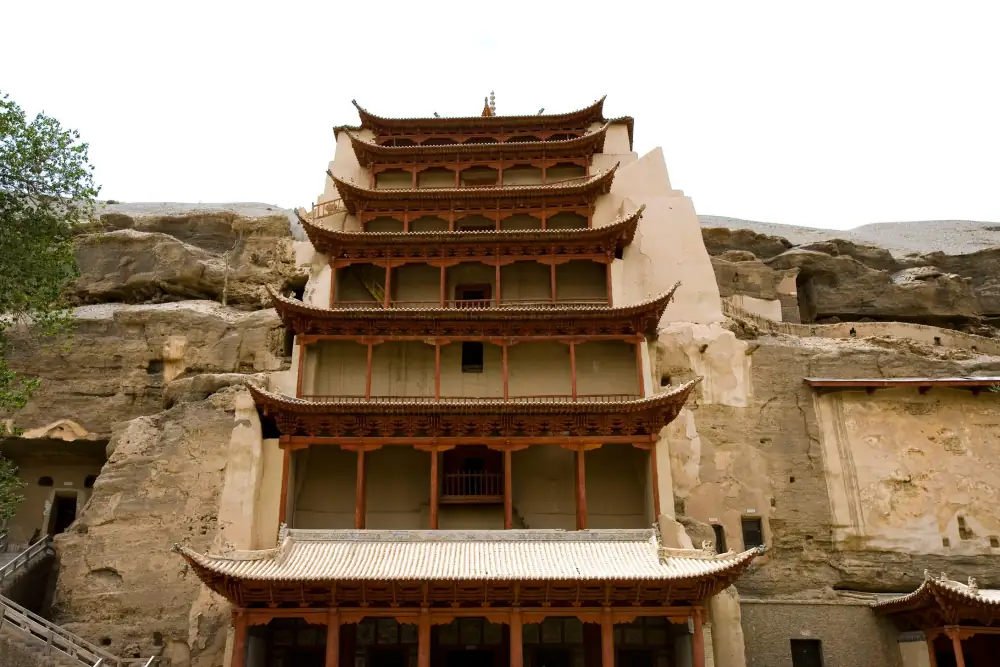
The Mogao Caves (莫高窟) are 25km south of the city on the cliff face of Mingsha Mountain’s northern extension. The visitor system at Mogao requires advance online booking — tickets sell out days to weeks ahead in peak season, and visiting is done in time-slot groups with a guide.
A small number of guesthouses and simple hotels operate in the Mogao area, primarily used by researchers and early-access visitors. For travellers, the main advantage of staying near Mogao is being there when the cave site opens at 8am — the first slot when crowds are minimal and the light is most even.
Practicality: The Mogao area accommodation is basic — this is a research site area, not a tourist resort zone. Options are limited to simple guesthouses at ¥150-300/night. Foreign-passport acceptance varies; confirm before booking.
Worth it for: Serious art history and archaeology visitors who want the maximum time at the caves. For general visitors, the 25km taxi from the city is not onerous.
New Dunhuang Museum Area Boutiques
A cluster of newer boutique hotels has opened around the Dunhuang Museum (敦煌博物馆) and the developing cultural district south of the city centre. These properties combine modern design with Silk Road aesthetic references — rough plaster walls, silk fabric details, references to the cave art colour palette.
This is Dunhuang’s emerging premium zone. Several design hotels here represent the best hospitality quality in the city.
Price range: ¥600-2,000/night for the better boutique properties.
Why consider this zone: The museum area is quieter than the city centre but equally convenient for both major sites. The boutique properties have pools (essential in Dunhuang summer) and better restaurant options.
The July-August Booking Window Problem
Dunhuang’s peak tourist season is July and August, when domestic families travel on summer holidays and the combination of Mingsha dunes and Mogao Caves draws large crowds. During these months:
- Mogao Cave tickets sell out 15-30 days ahead. Book before you book accommodation. Without a cave ticket, your trip has a significant gap.
- Dune resort properties sell out 4-8 weeks ahead for weekend nights
- City centre hotels have more availability but still fill significantly
- Prices are at annual peak — June-September commands 50-100% premium over shoulder season
The booking priority: 1) Mogao Caves tickets (mogaoku.net, online in advance). 2) Accommodation. 3) Everything else.
Shoulder season is excellent: May, June (early), September, and October have good weather, fewer crowds, and much more reasonable prices. May and September are particularly good — pleasant temperatures (25-35°C rather than 40°C+), clear visibility, and still enough visitors that services are all operating.
What Dunhuang’s Best Accommodation Looks Like
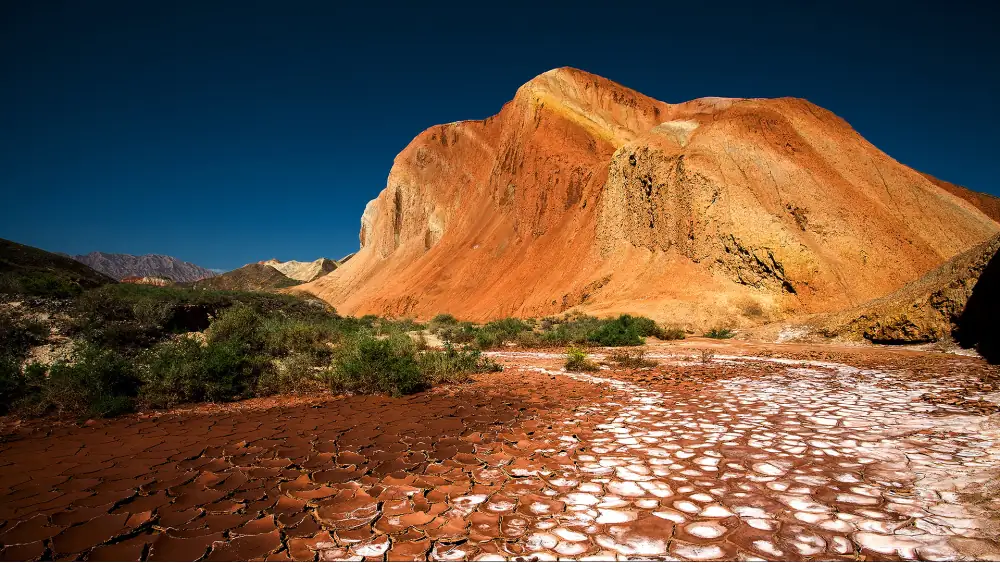
The desert setting lends itself to a specific aesthetic that the best Dunhuang properties understand:
Courtyard design: Traditional rammed-earth courtyard architecture with central garden areas. The courtyard provides shade during the day and is the social outdoor space in the cooler evening.
Pool: Non-negotiable in summer. Any property you’re considering for July-August without a pool is an oversight.
Desert views: The dune-facing properties in the Mingsha zone genuinely deliver what they advertise — you can watch the dunes from your room or terrace. The museum-area boutiques have views toward the desert and mountains.
Air conditioning: Absolutely essential in summer. Modern properties have central AC; older or more basic properties may have only window units — confirm cooling capacity before booking.
Practical Notes
Getting to Dunhuang: Dunhuang Airport (DNH) has flights from Xi’an, Beijing, Shanghai, Chengdu, Urumqi, and other major cities. Alternatively, high-speed rail to Liuyuan (柳园) station (about 130km from Dunhuang), then bus or taxi.
Transport in Dunhuang: Taxis are the primary mode. DiDi operates but driver supply is limited. ¥15-40 for most city journeys. ¥30-45 to Mogao Caves.
Mogao Caves ticket system: The standard ticket (¥258 peak, ¥168 off-peak) includes digital projection films and 8 caves. An upgrade allows entry to some of the most important caves (B-ticket system). Book both at mogaoku.net well in advance. You must show your passport to collect physical tickets.
Night market: Dunhuang’s night market (夜市) runs along Shazhou Night Market Street near the city centre. Lamb skewers, Xinjiang flatbread (囊, náng), Gansu-style noodles, and cold jellyfish salad. Best from 7pm onwards.
Camel riding at Mingsha: The classic Mingsha dune activity — camel trains depart from the dune access area. ¥100-200 per person. Book through your hotel or at the dune entrance. Limited to cooler hours (before 9am, after 4pm).