
The Hexi Corridor (河西走廊) is the geographical bottleneck through which the Silk Road passed — a 1,000km strip of land between the Tibetan Plateau to the south and the Gobi Desert to the north. For 2,000 years, every merchant, soldier, monk, and ambassador traveling between China and Central Asia walked this route. The landscape is starkly beautiful: red sandstone mesas, sand dunes, snow mountains, and ancient fortress walls.
Seven days is tight for the full corridor but covers the essential highlights efficiently by using high-speed rail. The Lanzhou-Xinjiang HSR (兰新高铁) makes what used to be a two-day journey into one-day connections.
Table of contents
Open Table of contents
Getting There & Logistics
Start: Fly into Lanzhou Zhongchuan Airport (LHW) or arrive by HSR from Xi’an (2.5 hours, ¥250) or Chengdu (via Xi’an, ~5 hours total).
Transport backbone: Lanzhou-Xinjiang HSR connects all the main Hexi Corridor cities. Journey times:
- Lanzhou → Zhangye: ~2.5 hours, ¥150-185
- Zhangye → Jiayuguan: ~1.5 hours, ¥85-115
- Jiayuguan → Dunhuang: No direct HSR. Bus (3.5 hours, ¥90-110) or take HSR to Liuyuan (柳园) and then taxi/minibus (~2 hours from Liuyuan to Dunhuang).
Dunhuang: The Mogao Caves require advance online booking. This is non-negotiable in peak season and strongly recommended at all times.
Days 1-2: Lanzhou
Lanzhou (兰州) is China’s beef noodle capital — the entire country knows Lanzhou la mian (兰州拉面), but almost none of what’s sold under that name outside Gansu resembles the original. Here, it’s a specific bowl: thin hand-pulled wheat noodles in a crystal-clear beef bone broth with paper-thin sliced beef, white radish, chili oil, green onion, and coriander. It costs ¥7-15 and is eaten for breakfast. Find a queue of locals and eat where they eat.
Yellow River Float & Binhe Road
The Yellow River (黄河) runs through Lanzhou — the city is the only Chinese provincial capital that the Yellow River passes through directly. Binhe Road (滨河路) is a promenade along the south bank. Rent a Yangpi Raft (羊皮筏子, ¥50 per person, 15 minutes) — a raft of inflated sheep skins that have been used to cross the river since the Han Dynasty. It sounds more dramatic than it is, but it’s a genuine piece of living history.
Gansu Provincial Museum
Gansu Provincial Museum (甘肃省博物馆, free) has the best collection of Silk Road artifacts outside Xi’an — the Flying Horse of Wuwei (武威铜奔马, the galloping bronze horse with one hoof on a swallow) is the national symbol of Gansu tourism. The Silk Road galleries are excellent.
Bingling Thousand Buddha Caves
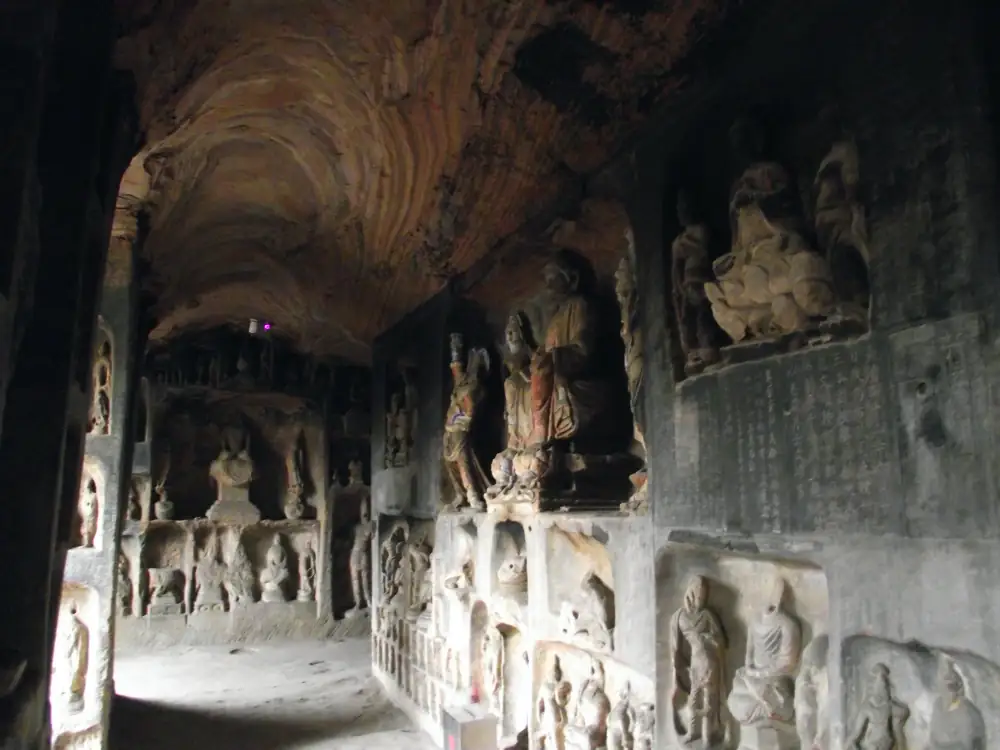
Bingling Caves (炳灵寺, ¥75) are 80km from Lanzhou on the upper reaches of the Yellow River — 694 caves cut into a 60m-high river cliff, with Buddhist carvings dating from the Western Qin Dynasty (4th century). Getting there requires a boat across Liujiaxia Reservoir (¥55 return, 2 hours). The caves are partly underground and dimly lit — bring a flashlight. Allow a full day.
Day 3: Zhangye — Rainbow Mountains
Journey: HSR Lanzhou → Zhangye West, ~2.5 hours, ¥150-185.
Zhangye (张掖) is a Silk Road oasis city famous for the Giant Buddha Temple (大佛寺, ¥41) — a 35m-long reclining Buddha, the largest clay reclining Buddha in China, dating from the Western Xia Dynasty (1100s). The complex is well-preserved and includes 72 subsidiary figures.
Zhangye Danxia Geological Park
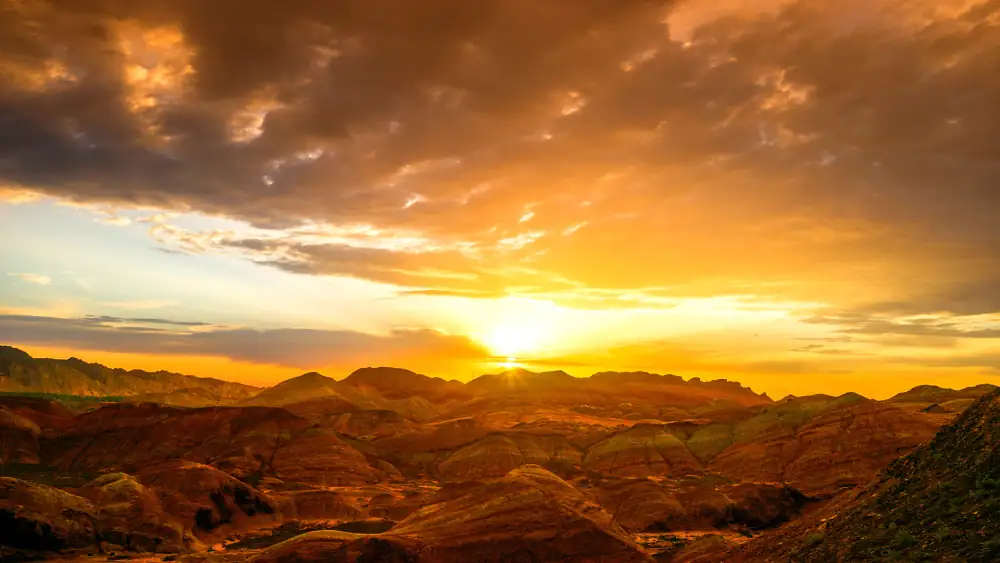
Zhangye Danxia (张掖丹霞地质公园, ¥76) — bands of red, orange, yellow, and purple in the desert landscape, the result of mineral-laden sandstone layers compressed and then eroded. This is the geological wonder that went viral internationally around 2015, when the photographs seemed too colorful to be real.
They are real. The colors vary throughout the day — the best light is 30-60 minutes before sunset (approximately 6-7pm, depending on the season). The park provides shuttle buses (¥20) between the four main viewing platforms.
Getting there: Taxi from Zhangye city center (¥50-70 one-way, 40 minutes) or join a half-day tour (¥80-120 including transport). Stay in Zhangye city (¥150-300/night for decent hotels).
Day 4: Jiayuguan
Journey: HSR Zhangye → Jiayuguan, ~1.5 hours, ¥85-115.
Jiayuguan (嘉峪关) is the western terminus of the Ming Dynasty Great Wall — the last fortress before the desert, and for 600 years the literal edge of the Chinese world. Officials banished to the western frontier passed through this gate into exile; merchants and monks passed through in the other direction, bringing silk to Rome and Buddhism to China.
Jiayuguan Fortress
Jiayuguan Fortress (嘉峪关城楼, ¥120 including all inner sites) is one of the best-preserved Ming fortresses in China. The layout is exactly as it was when built in 1372: outer walls, inner walls, towers, watchtowers, and the iconic Rouyuan Gate (柔远楼) facing west toward the desert. The military museum within the walls is informative about how the border defense system functioned.
The First Beacon Tower (悬壁长城第一墩, ¥41) is 7km south of the city where the Great Wall ends at a cliff above the Taolai River gorge — a dramatic natural termination point. The viewpoint requires a short hike.
Overhanging Great Wall (悬壁长城, ¥41) is 8km north — a section of wall climbing a 45-degree slope up a rocky ridge, restored but preserving the original military engineering. It connects to a dramatic vertical wall section that gives the complex its name.
Accommodation in Jiayuguan: Multiple mid-range hotels near the train station. Book ahead — the city is small and visitor numbers are high in peak season.
Days 5-6: Dunhuang
Journey: Bus from Jiayuguan to Dunhuang (3.5 hours, ¥90-110) or HSR to Liuyuan then taxi. Multiple daily bus departures from Jiayuguan bus station.
Dunhuang (敦煌) is the climax of the Silk Road journey — a desert oasis at the edge of the Taklamakan that for 1,500 years served as the last or first Chinese city on the route. The Mogao Caves were carved here across 10 dynasties; the sand dunes are among the world’s tallest.
Mogao Caves
Mogao Grottoes (莫高窟, ¥238 full experience) is China’s most important Buddhist art site — 735 caves cut into a 1.7km cliff face, decorated over 1,000 years with murals, sculptures, and architectural detailing. The wall paintings in the better-preserved caves are extraordinary: vivid colors depicting Buddhist cosmology, Tang Dynasty court life, and Central Asian cultural exchanges.
Booking is mandatory. Daily visitor numbers are capped at 6,000. Book at Mogao.dunhuang.com at least 1-2 weeks ahead in peak season (July-October). The standard visit includes entry to 8 open caves (rotated regularly to preserve the artwork); the premium ticket (¥400+) includes 2 special caves.
The caves are divided into two visit modes:
- Digital exhibition hall (afternoon, 2 hours): A visual introduction via high-resolution digital projections of the cave interiors
- On-site guided cave tour (morning or afternoon, 2.5 hours with licensed guide): The actual cave interiors
The digital experience is surprisingly excellent and essential context for the caves.
Crescent Lake & Mingsha Dunes
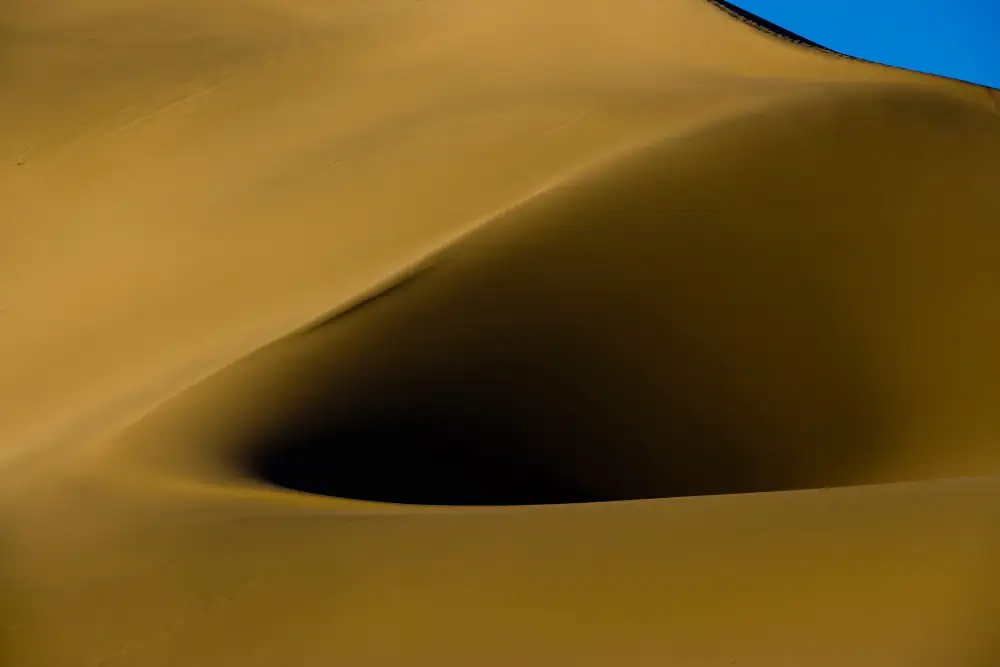
Crescent Moon Lake (月牙泉) and the surrounding Mingsha Dune Sea (鸣沙山, ¥200 combined) — sand dunes reaching 250m height surrounding a crescent-shaped desert spring that has existed for over 2,000 years without being swallowed by the encroaching dunes. The spring level has dropped significantly due to surrounding agriculture, but the visual of the crescent lake surrounded by massive sand dunes is still one of China’s most surreal landscapes.
Activities: Camel riding (¥120, 1 hour), dune boarding (¥30), paragliding (¥100-200). The sunset from the top of the highest dune is the main event — arrive 2 hours before sunset to climb.
Mogao Night
Evening light show — some tour groups arrange evening visits to the cliff face viewing the cave exteriors lit up after dark. The 700-cave facade stretching across a cliff in the desert is remarkable even from outside.
Day 7: Return Journey or Extension
Yumenguan Pass & Han Dynasty Great Wall
Yumenguan (玉门关, ¥40) — the “Jade Gate Pass” of the Han Dynasty Silk Road, 80km west of Dunhuang on the edge of the desert. An isolated square earthen fort surviving from 2,000 years ago, surrounded by absolute desert silence. The surrounding landscape includes sections of Han Dynasty mud-brick wall stretching to the horizon.
This requires a car hire from Dunhuang (¥200-300 for a driver for the day including Yumenguan, Han Great Wall, and the nearby Yang Pass).
Return: Fly from Dunhuang Airport (DNH) to Lanzhou, Xi’an, Chengdu, or Beijing. Or take the bus back to the HSR network at Liuyuan.
Practical Information
| Item | Cost |
|---|---|
| Mogao Caves (full experience) | ¥238 |
| Mingsha Dunes + Crescent Lake | ¥200 |
| Jiayuguan Fortress | ¥120 |
| Zhangye Danxia park | ¥76 |
| Bingling Caves | ¥75 |
| Lanzhou → Zhangye HSR | ¥150-185 |
| Zhangye → Jiayuguan HSR | ¥85-115 |
| Jiayuguan → Dunhuang bus | ¥90-110 |
| Budget hotel (corridor cities) | ¥150-300/night |
| Dunhuang hotel | ¥200-400/night |
Best time: April-June and September-October. July-August is extremely hot in the desert (40°C+) though manageable. Winter is cold but the dunes without summer crowds are spectacular.
Dunhuang food: Lamb dishes dominate — yang rou chuan (羊肉串, lamb skewers, ¥3-5 each), hand-torn mutton (手抓羊肉, ¥50-80), and Dunhuang noodles (敦煌拉条子, thick hand-pulled noodles with lamb and vegetables, ¥20-30) are the essentials.