
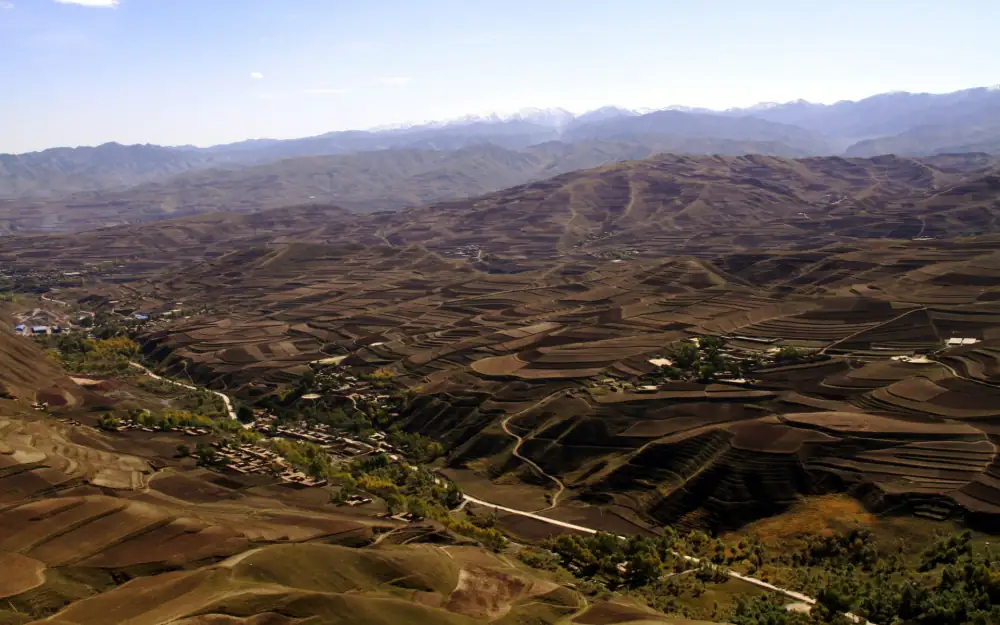
Tianshui (天水) occupies the Wei River valley at the boundary between the Loess Plateau and the Qinling-Daba Mountain complex, at the southeastern edge of Gansu Province. It’s the wettest and greenest city in otherwise arid Gansu, and for centuries it was a key node on the Silk Road — a crossing point between the dry northwest and the agricultural heartland of the Wei River basin.
It contains the Maiji Mountain Grottoes (麦积山石窟), which belong in the same conversation as Dunhuang’s Mogao Caves, the Yungang Caves near Datong, and the Longmen Caves near Luoyang as one of the great Buddhist cave art sites of China. The UNESCO designation confirmed what art historians had known for decades — but Maiji is significantly less visited than the other three, which makes it a rewarding destination for those willing to make the journey.
Table of contents
Open Table of contents
Getting to Tianshui
By high-speed train:
- From Xi’an: About 1.5–2 hours; ¥100–150 second class; multiple departures daily — this is the most convenient gateway
- From Lanzhou: About 1.5 hours; ¥80–120; frequent services
- From Chengdu: About 3 hours via the new Sichuan-Gansu high-speed line (opened 2023); ¥200–280
Getting around Tianshui: Tianshui consists of two main urban areas — Qinzhou District (秦州区, the old city) and Maiji District (麦积区) — about 15km apart. The railway station is in Maiji District.
- To Maiji Mountain: From Tianshui North Railway Station, Bus 34 goes directly to Maiji Mountain entrance; about 50 minutes; ¥8. Alternatively, taxi costs ¥40–60.
- City transit: Buses and taxis connect the two main urban areas (¥20–30 by taxi)
Maiji Mountain Grottoes (麦积山石窟)
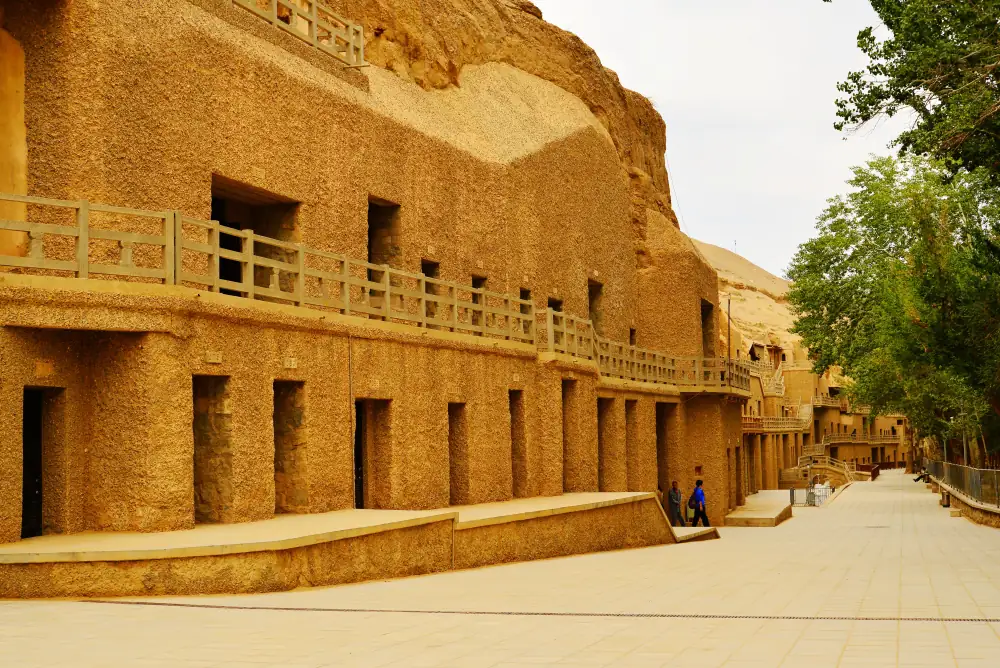
Maiji Mountain is a reddish-brown sandstone peak that rises abruptly from the surrounding pine forest, shaped — as the name suggests — somewhat like a haystack (麦积, “wheat stack”). The 194 surviving caves are carved into the cliff face of this peak, connected by a network of wooden and metal walkways that cling to the rock face at various heights.
Scale and content:
- 194 open caves out of an original larger number (some collapsed; others sealed)
- 7,200 clay sculptures spanning from the Later Qin Dynasty (4th–5th century AD) through the Qing Dynasty
- 1,300 square meters of murals
- The chronological span means you can trace 1,600 years of Buddhist artistic development in a single afternoon
What distinguishes Maiji from the other great grottoes:
- Clay sculpture emphasis: While Dunhuang is primarily celebrated for its murals, Maiji’s strength is sculpture — and the clay figures are among the finest examples of East Asian religious sculpture. The facial expressions, particularly of attendant bodhisattvas in the Northern Wei and Sui Dynasty caves, have a subtlety and psychological depth that rewards extended looking.
- Physical context: The setting — a forest-surrounded cliff face with walkways and dramatic views — is more physically dramatic than the flat-site Dunhuang or Longmen caves
- Relative uncrowding: Even in peak season, Maiji is significantly less crowded than Dunhuang or Longmen
Key caves and highlights:
Cave 133 (Nirvana Cave, 涅槃窟): Contains a 15-meter reclining Buddha in the parinirvana (final nirvana) pose — the largest figure at Maiji. The surrounding ceiling and wall murals showing the Buddha’s disciples in mourning show extraordinary emotional range.
Caves 100–133 (East Cliff Upper Section): The highest and most dramatic section of the cliff face; the walkways here provide vertiginous views. The Northern Wei Dynasty caves in this section have the most distinctive sculpture style — elongated figures with archaic smiles characteristic of the period.
Cave 4 (Scattered Flowers Building, 散花楼): A large multi-chamber cave at the high west end of the cliff; the ceiling murals show celestial musicians (apsaras) scattering flowers — among the most beautiful paintings at Maiji. Only accessible as part of the premium guided tour (¥200 per person; see booking note below).
Special access caves: Several caves at Maiji are only accessible through a separately booked specialist tour with an art history guide. These “closed caves” (密封洞窟) include some of the finest Tang Dynasty murals and the most important sculpture groupings. The premium tour must be booked in advance through the ticket office or the Maiji Mountain official website — these tours run with a maximum of 10 people and provide a much deeper experience than the standard visit.
Entry fees:
- Standard entry (main walkway circuit): ¥80 per person
- Premium guided access to closed caves: ¥200 per person (advance booking required)
- Scenic area entry (includes the forest and mountain walks): ¥30 (can be purchased separately)
Opening hours: 8:00am–5:30pm (last entry 5:00pm)
Photography: External photography of the cliff face and walkways is unrestricted. Interior cave photography is permitted in most caves with a standard ticket; no flash. The premium caves typically allow no photography.
Tianshui Old City (天水古城)
The old Qinzhou district of Tianshui has preserved a more complete historic fabric than many Chinese cities of comparable size. The main pedestrian heritage street (伏羲路 and surrounding lanes) retains Ming and Qing-era courtyard architecture.
Fuxi Temple (伏羲庙): A temple dedicated to Fuxi — the mythological progenitor of Chinese civilization, credited with inventing writing, fishing, and the Eight Trigrams (the foundation of the I Ching). Tianshui claims to be Fuxi’s birthplace, and the temple is both a significant historical monument and an active ritual site.
- The current temple complex dates primarily to the Ming Dynasty (15th century)
- The main courtyard contains ancient cypress trees said to be over 2,000 years old
- The Fuxi Cultural Festival is held in late July, drawing tens of thousands of visitors and featuring elaborate ceremonies tracing Chinese civilization’s mythological origins
Entry: ¥30 per person
Hours: 8:00am–6:00pm
Nanruo Temple (南郭寺): A Buddhist temple on the southern outskirts of the old city, associated with the Tang Dynasty poet Du Fu, who visited Tianshui during his long journey west. One of the cypress trees in the temple courtyard is traditionally identified as the one Du Fu wrote about in his poem about the city.
The Wei River Valley
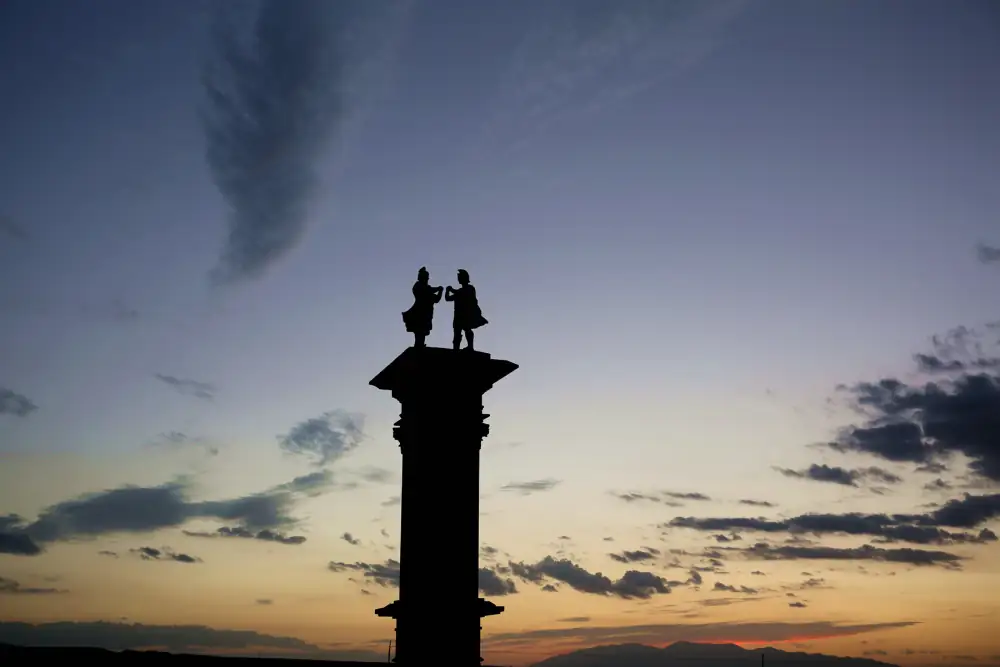
The Wei River (渭河) originates in the mountains above Tianshui and flows east through Shaanxi to join the Yellow River near Huayin. The section of the valley around Tianshui is notably green and well-watered by Gansu standards — peach and cherry trees blossom across the hillsides in spring, and the terraced agriculture on the loess slopes has a visual rhythm that photographers find compelling.
Tianshui Peach Blossom Festival (天水桃花节): Held in March or early April, the festival celebrates the peach blossom season that transforms the hillsides around the city. Several villages in the valley organize blossom walks and local food fairs. This is one of the more genuine spring blossom events in northwestern China — not artificially managed like some blossom tourism events, but a natural phenomenon of the local landscape.
Day Trips from Tianshui
Longmen Stone Carvings of Tianshui (水帘洞): About 80km northwest of Tianshui city, the Water Curtain Cave Buddhist site (水帘洞石窟) in the Zhangjiachuan area contains additional early Buddhist cave carvings in a dramatic cliff-face setting different from Maiji. Less visited and rawer in atmosphere. Requires a hired car for access.
Gangu Daxiangshan (甘谷大象山): About 45km west of Tianshui, a cliff-face Buddhist site with a large seated Buddha carved during the Tang Dynasty. Less spectacular than Maiji but combined with the drive through the Wei River valley, makes a good half-day trip.
Tianshui Food
Tianshui sits at the boundary of Gansu and Shaanxi food cultures, with elements of both:
Tianshui Mianpian (天水呱呱): The definitive Tianshui snack — irregular pasta-like pieces made from buckwheat or sweet potato starch, served cold with a sauce of chili oil, Sichuan pepper, vinegar, and salt; garnished with seeds. The texture is chewy and the flavor intensely savory and spicy.
Beef noodles (牛肉面): As elsewhere in Gansu, pulled noodles in a clear beef broth with chili oil are a breakfast staple. Tianshui’s version is slightly richer than the Lanzhou style.
Local lamb (甘谷羊肉): Lamb from the dry uplands west of Tianshui is high-quality; stewed with cumin and dried chili is the most common preparation.
When to Visit
Best seasons:
- March-April: Peach blossom season; mild temperatures; excellent for the old city
- May-June: Green and clear; the best condition for viewing the Maiji cliff face and forest
- September-October: Clear autumn light; the surrounding trees turn color; excellent photography conditions
Avoid July-August: The Wei River valley can be extremely hot and humid; occasional heavy rainstorms affect trail conditions at Maiji.
Winter: Cold (regularly below freezing) but functional; fewer visitors; the bare trees against the cliff face have their own stark beauty.
Practical Tips
Time allocation: Maiji Mountain deserves at least 4–5 hours; add 1–2 days for Tianshui old city and the valley sights. A two-night stay allows a full Maiji visit plus the old city.
Premium cave booking: Book the specialist cave access tour at least a week in advance, especially in summer. The tickets sell out.
Altitude: Tianshui is at about 1,000–1,100 meters — no altitude concerns; lower and warmer than most of Gansu.