
Table of contents
Open Table of contents
Understanding the UNESCO Designation
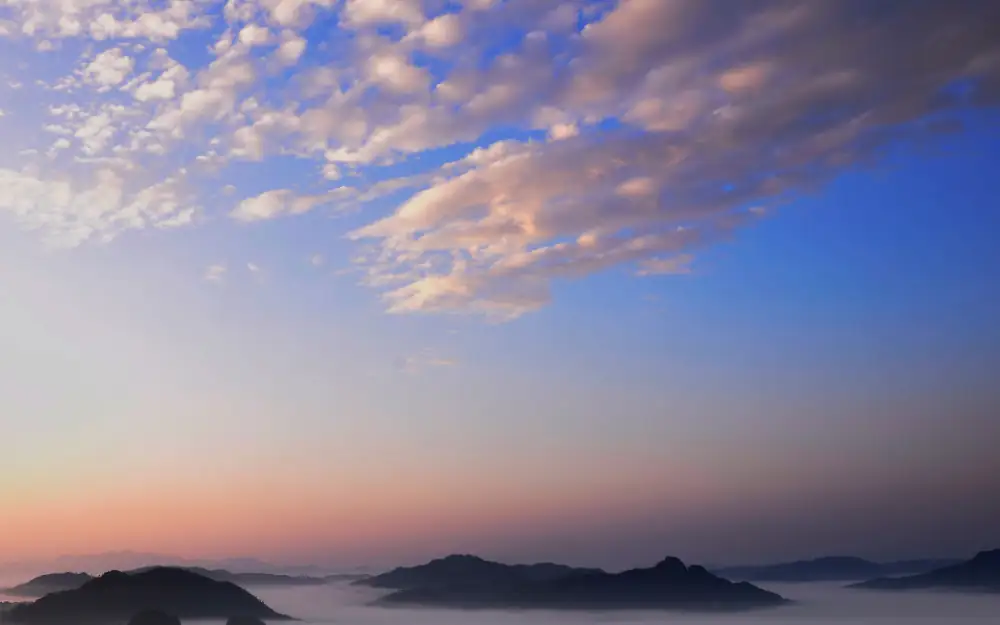
Wuyi Mountain received dual UNESCO World Heritage status in 1999: as a Cultural Landscape for its 2,000 years of human habitation and Taoist/Confucian heritage, and as a Natural Heritage site for its extraordinary biodiversity. The mountain is home to over 2,527 species of plants and 5,000 species of animals — including many species found nowhere else — within a single protected area.
The natural and cultural layers are genuinely inseparable here. The same red sandstone cliffs that shelter rare wildlife also contain the “hanging coffins” of the ancient Guyue people, the cave temples of Taoist masters, and the tea terraces that produce Da Hong Pao, one of the world’s most expensive teas.
Key Attractions
Nine-Bend Stream Bamboo Raft (九曲溪竹排漂流)
The most iconic experience at Wuyi Mountain: a 2-hour bamboo raft float down the Nine-Bend Stream (Jiuqu Xi) through the heart of the scenic area. The nine bends of the river wind past red sandstone cliffs, ancient hanging coffin sites, overhanging tea bushes, and the dramatic peaks of the Wuyi range rising directly from the water.
The raft holds 6 passengers plus a poler. The journey covers about 9.5 km and passes some of the most striking cliff scenery in China. The hanging coffin niches (some clearly visible from the raft, others requiring sharp eyes) date from the Shang Dynasty period, approximately 3,500 years ago — the purpose of their placement remains debated.
Tickets: ¥100 ($14) per person for the raft; separate from scenic area admission. Book in advance during peak season (April–May, October). Departs from Wuyi Palace area; arrive early.
Tianyou Peak (天游峰)
The most popular hiking peak in the scenic area, Tianyou offers the definitive bird’s-eye view over the Nine-Bend Stream gorge. The ascent is steep (about 820 steps) but well-maintained, taking 45–60 minutes up. The summit platform commands a 270-degree panorama that is genuinely spectacular on a clear morning or when cloud fills the valley below.
Tickets: Included in scenic area admission.
Da Hong Pao Tea Bushes (大红袍母树)
The six legendary Da Hong Pao (“Big Red Robe”) mother bushes grow on a cliff face in the Second Bend of the Nine-Bend Stream. These specific plants — said to be over 350 years old — produced the original Da Hong Pao oolong, which has become one of the world’s most celebrated teas. The bushes themselves have been retired from production since 2006 to preserve them; all commercial Da Hong Pao is now grown from cuttings.
A short path leads to a viewpoint opposite the cliff. The whole area smells of tea.
Free to view as part of scenic area admission.
Wuyi Palace and Southern Song Academy Ruins (武夷宫/朱熹书院遗址)
At the base of the mountains lies Wuyi Palace — originally a Tang Dynasty Taoist temple, rebuilt over centuries and now the centre of the scenic area’s lower zone. Nearby stand the ruins of the Zhuzi Academy, where the Song Dynasty philosopher Zhu Xi (1130–1200) developed and taught Neo-Confucianism — a philosophical system that would shape Chinese intellectual life for the next 800 years.
The ruins are genuinely moving: mossy foundations and surviving walls in a bamboo forest, marking the spot where ideas that shaped an entire civilisation were hammered out.
Free admission to the grounds.
Jiulong Nest (九龙窠)
The tea garden valley where the Da Hong Pao mother bushes grow is part of a larger protected tea-growing zone called Jiulong Nest. Walking through the valley below the cliffs, with tea terraces on the slopes above and the stream below, is one of the most beautiful experiences the mountain offers. Best visited early morning when mist hangs in the ravine.
Wuyi Mountain Tea Culture
Da Hong Pao (大红袍)
Da Hong Pao is a wulong (oolong) tea from the “rock tea” (岩茶, yancha) tradition of Wuyi Mountain. The term “rock tea” refers to the cultivation method: tea bushes grown in the crevices of the red sandstone cliffs, absorbing mineral compounds that give the tea a distinctive “rock rhyme” (岩韵) character — a mineral, roasted complexity that serious tea drinkers prize enormously.
Commercial Da Hong Pao varies enormously in quality and price: from ¥50 ($7) for 50g of decent everyday tea to tens of thousands of yuan for small quantities of the highest-grade traditional-processing yancha. If you’re buying, taste before purchasing and buy from established tea shops in the scenic area or the town rather than aggressive street vendors.
Other Wuyi Wulong Teas
Beyond Da Hong Pao, the Wuyi yancha tradition includes several other distinguished teas:
- Rou Gui (肉桂): Spicy, cinnamon-noted; excellent with a strong roast character
- Shui Xian (水仙): Floral, lighter body; longer-lasting aftertaste
- Tie Luo Han (铁罗汉): One of the original “Four Famous Wuyi Teas”
Many tea farms and production workshops in the area offer tastings. The Wuyi Mountain Tea Research Institute runs a public tasting room where you can compare different grades side by side (free tastings; purchases expected but not pressured).
Tea Farm Visits
Several farms around the village of Tongmu Guan (桐木关) — a protected nature reserve in the inner mountains — offer overnight stays and farm experience including picking (when in season, April–May), firing and rolling. These typically cost ¥300–¥500/night ($42–$70) per person including meals and tea activities. Book months ahead for the spring picking season.
Getting to Wuyi Mountain
From Xiamen
High-speed rail: Xiamen North to Wuyishan North, approximately 2 hours; tickets ¥130–¥200 ($18–$28). The most common approach.
By air: Wuyishan Airport (WUS) has direct flights from Xiamen (45 minutes), Shanghai, Beijing, Guangzhou and several other cities. Particularly convenient for visitors combining Wuyi Mountain with the coast.
From Fuzhou
High-speed rail: Fuzhou to Wuyishan North, approximately 1h20m; tickets ¥90–¥145 ($13–$20).
From Guangzhou
High-speed rail via Fuzhou or Xiamen, total approximately 3.5–4.5 hours.
Getting Around the Scenic Area
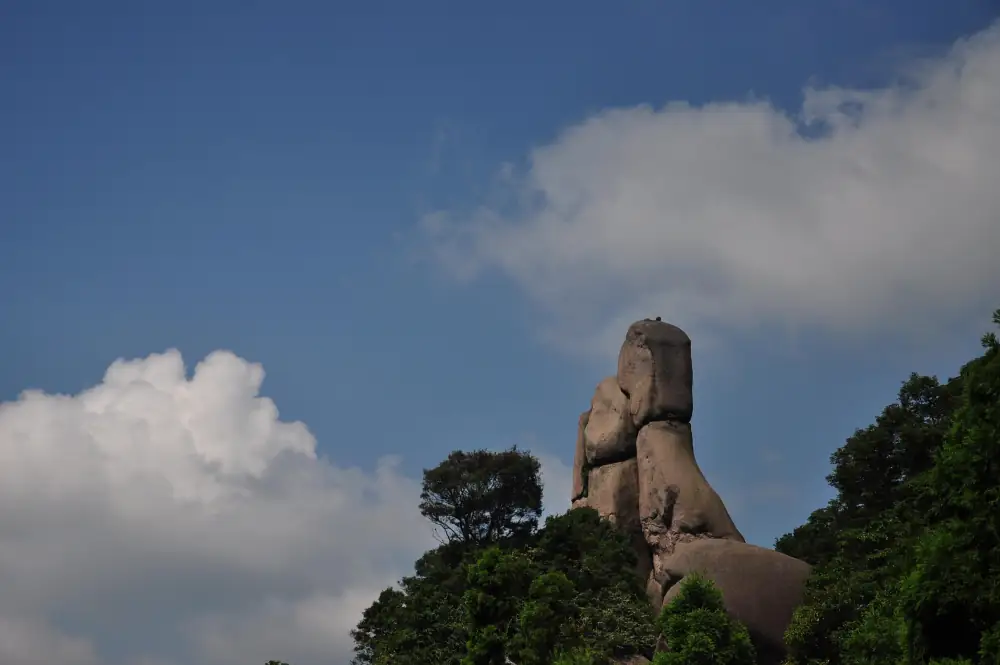
Shuttle buses: The scenic area operates a network of shuttle buses connecting the main gates to individual attraction starting points. A multi-day shuttle pass is available for ¥80 ($11).
Walking: Most sites within the central scenic area are connected by walking paths. A full day’s hiking covers the main ridge trails and valley paths; wear trail shoes and carry water.
Electric golf carts: Available for hire within the lower scenic area for visitors who prefer not to walk; ¥20–¥40 ($3–$6) per segment.
Where to Stay
Budget (¥150–¥280 / $21–$39): Guesthouses in Wuyishan Town (outside the scenic area), 3–5 km from the main gate. Plenty of options; aim for ones near the scenic area road (景区路).
Mid-range (¥350–¥700 / $49–$98): Several decent 3-4 star hotels between the town and the scenic area. Wuyi Mountain Tea Resort (武夷山茶旅小镇) is a newer development with comfortable rooms and in-house tea tasting.
Upscale (¥800+ / $112+): Club Med Wuyi (Joyview brand) offers the most polished resort experience. Wuyi Mountain Shenhe Resort is also well-regarded.
Tea farm homestays: As mentioned above — the most immersive option for serious tea enthusiasts.
Best Time to Visit
Spring (April–May): The best time by a wide margin. The spring tea picking season is underway, the valley is a vivid green, and the weather is mild (18–25°C). The trade-off is crowds — this is peak season and prices are highest.
Autumn (September–November): Second-best season. The bamboo raft is still running, temperatures are pleasant and the light is warm. October Golden Week brings crowds; aim for late October or November.
Summer (June–August): Hot and humid, with frequent afternoon thunderstorms that can close trails and suspend raft services. Not ideal.
Winter (December–February): The raft runs at reduced frequency; some trails are closed after snow. The mountain in winter mist has its own stark beauty, and tea shops offer tastings with warm fires. Very few tourists.
Practical Tips
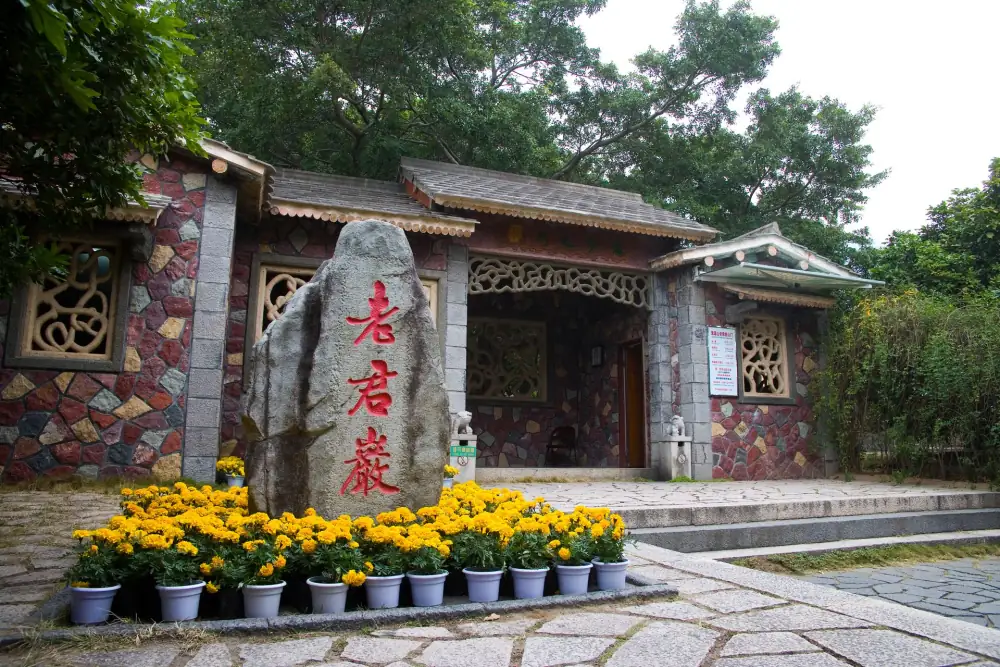
- Ticket queues: The scenic area entrance and the raft departure point have serious queues during peak season. Arrive at 08:00 or buy tickets online the day before via the official WeChat booking system.
- Sun exposure: The Nine-Bend raft has no shade. Bring a hat, sunscreen and keep your water bottle full.
- Photography: The best light on Tianyou Peak is either very early morning or the hour before sunset. The valley below fills with mist regularly in spring.
- Tea buying: Don’t rush. The enjoyment of Wuyi tea is in taking time to taste multiple grades and find what suits your palate. Avoid sellers who quote in grams of gold — they’re selling to show-off value rather than taste.
- Footwear: Proper hiking shoes for the peaks; sandals suffice for the raft. Bring waterproof footwear in case of rain.
Combining Wuyi Mountain with Other Fujian Destinations
A solid 8–10 day Fujian itinerary might run:
Xiamen (2–3 nights) → Wuyi Mountain (2 nights) → Fuzhou (1 night) → Quanzhou (2 nights)
This covers coastal Fujian, the mountain interior, the provincial capital’s Three Lanes and Seven Alleys, and the Maritime Silk Road heritage of Quanzhou.
Final Word
Wuyi Mountain is one of those rare destinations where natural beauty, cultural depth and gastronomic experience — the tea — converge into something genuinely exceptional. A traveller who devotes two full days here and makes time to sit and properly taste tea will leave with a more nuanced understanding of Chinese culture than a week in a major city can provide.
Book the raft in advance. Wake up early for Tianyou Peak. Drink the tea slowly.